 Anacortes Siding
 Fiber Cement Siding for Sedro-Woolley Homes
Sedro-Woolley sits inland from Anacortes, but it shares the same Skagit County weather pattern that drives our siding recommendations everywhere in this region: long stretches of wet weather, driving rain that comes in sideways off the water, and a moss season that can run most of the year on shaded north and west walls. Homes here take on moisture differently than homes forty miles south in drier parts of the state, and the siding you choose needs to be matched to that reality, not to a national average.
We're based in Anacortes and work Sedro-Woolley regularly as part of our normal Skagit County service area. This page covers fiber cement siding specifically for this community — what the local climate actually does to a wall assembly, what correct installation looks like, and how we approach the job from first visit to final walk-through.
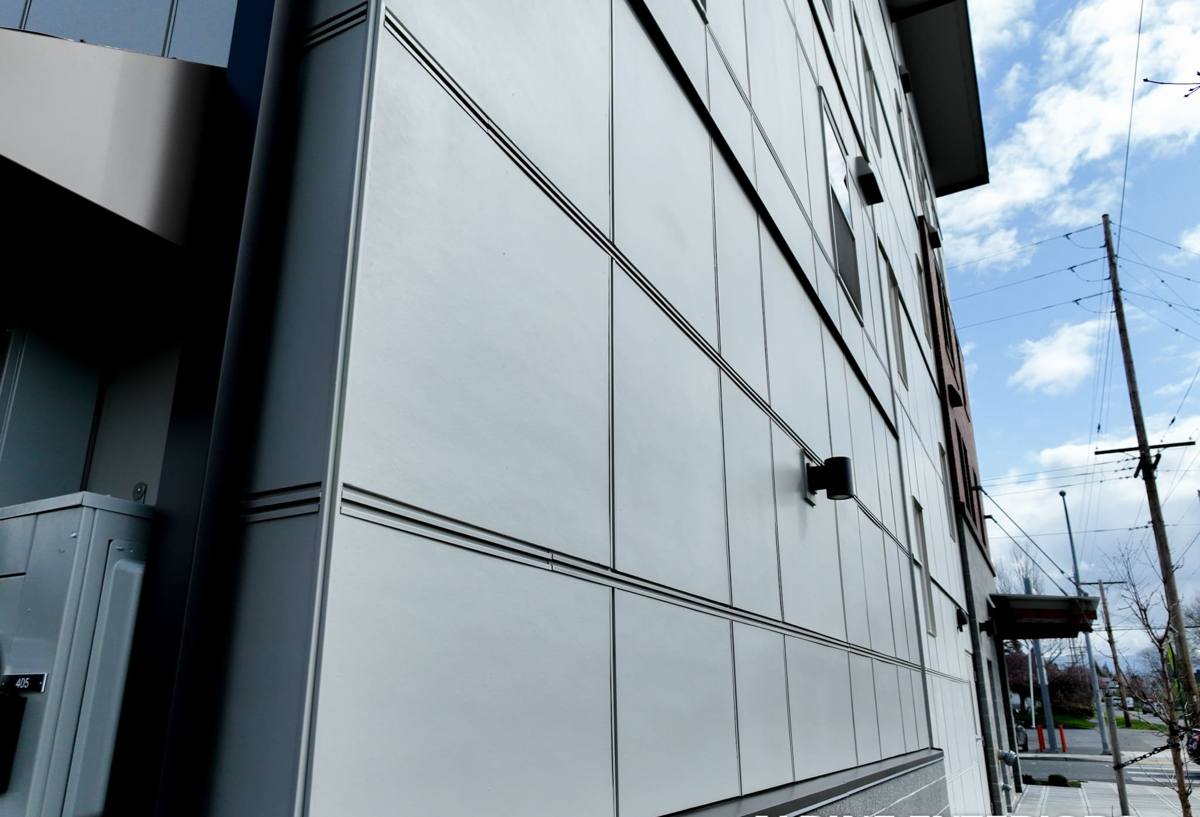
What Skagit County Weather Does to a House
Three things drive almost every siding failure we see in this part of the state, and they compound on each other.
Sustained Moisture, Not Just Rainfall Totals
It's not the total inches of rain that wears out siding — it's how many days a year the exterior of a house stays damp. Skagit County gets long stretches of low clouds, drizzle, and high humidity between storms, so wall surfaces often don't get a real chance to dry out for days at a time. Materials that absorb water and hold it — untreated wood, some engineered wood products, and poorly sealed seams on any material — pay for that in swelling, cupping, and eventual rot.
Moss and Organic Growth
Shaded siding, especially under mature trees or on north-facing walls, stays damp long enough for moss and algae to take hold and stay established for most of the year. Beyond the appearance issue, organic growth holds moisture directly against the siding surface, which accelerates whatever damage the moisture itself is already causing.
Wind-Driven Rain
Storms moving through the county regularly push rain horizontally, which means water gets forced into laps, joints, and any gap in the flashing that a calm-weather installation might get away with. A siding job that would hold up fine in a drier climate can fail here specifically because the flashing and joint details weren't built for wind-driven exposure.
None of this means Sedro-Woolley is an unusually harsh place to build — it means the margin for error in material choice and installation detail is smaller than it is in drier regions, and cutting corners shows up faster.
Why We Install Only James Hardie Fiber Cement
We standardized on James Hardie fiber cement siding for every home we work on, including in Sedro-Woolley, and we don't install vinyl, LP SmartSide, Cemplank, Allura, primed spruce, or cedar. That's not a marketing position — it's a professional standard built around what actually holds up under the conditions described above.
Fiber cement is a cement, sand, and cellulose fiber composite. It doesn't absorb and swell the way wood-based products can, and it's dimensionally stable across the wet-to-dry cycles that define our climate. James Hardie engineers specific product lines for different climate zones under its HZ5 system, which accounts for regional moisture exposure and freeze-thaw behavior rather than treating siding as one-size-fits-all. That matters in a county where a wall can stay damp for a week and then dry out fast when the sun finally breaks through.
Hardie's ColorPlus finish is baked on at the factory under controlled conditions, which gives a harder, more consistent finish than field-applied paint and comes with its own finish warranty. The material is also non-combustible, which is a real advantage during the dry, windy stretches Skagit County does still get in late summer, even though wildfire risk here is lower than east of the mountains.
We're upfront that other products have real strengths. Vinyl is inexpensive and low-maintenance in mild conditions. LP SmartSide is easier and faster to install than fiber cement. Cedar has a natural look that some homeowners specifically want. But when we weigh those advantages against how each product performs under sustained moisture, moss exposure, and wind-driven rain over a 20-30 year ownership window, fiber cement is what we're willing to put our name on.
How the Common Alternatives Hold Up Here
| Material | Moisture behavior | Moss/algae resistance | Long-term maintenance in this climate |
|---|---|---|---|
| James Hardie fiber cement | Dimensionally stable, does not swell or rot | Resists growth; factory finish sheds moss more easily than porous surfaces | Occasional wash and caulk check; ColorPlus finish resists fading |
| Vinyl siding | Doesn't absorb water, but can trap moisture behind it if installed tight against sheathing | Moderate; textured vinyl can hold moss in shaded areas | Low upkeep, but can warp or crack in temperature swings and is hard to repair invisibly |
| LP SmartSide (engineered wood) | Treated to resist moisture, but edge and cut-end exposure remains a vulnerability | Moderate; requires intact factory coating to perform | Depends heavily on caulking and coating being maintained without gaps |
| Cedar / untreated wood | Absorbs water readily; prone to swelling, checking, and rot without diligent upkeep | Low; organic surface is a natural substrate for moss and algae | Regular refinishing, sealing, and moss treatment required |
What Correct Fiber Cement Installation Actually Involves
Fiber cement's reputation depends almost entirely on installation quality. The material itself is durable, but every failure we get called out to inspect on other contractors' work traces back to a handful of installation shortcuts, not the product.
Flashing and Water Management First
Correct installation starts before a single piece of siding goes up: window and door flashing, weather-resistant barrier, and proper lapping so water is directed out and down, never trapped behind the cladding. In a climate with this much sustained moisture, this step matters more than the siding choice itself.
Clearances and Gaps
Hardie specifies minimum clearances from grade, roof lines, decks, and other transitions so water has somewhere to go and siding isn't sitting in standing moisture. We also maintain the specified gap at butt joints and trim to allow for expansion without caulk bridging and cracking.
Fastening
Fasteners need to hit framing at the correct spacing and depth — overdriven or underdriven nails are one of the most common causes of premature siding failure, since they either crack the board or leave it loose enough to move and let water in behind it.
Joint and Seam Treatment
Every horizontal and vertical joint is a potential water entry point. We use manufacturer-approved sealants and joint treatments rated for the exposure level of each wall, with extra attention on windward-facing walls that take the brunt of wind-driven rain.
Cut-Edge Sealing
Any time a board is cut on site — around windows, corners, or penetrations — the cut edge needs to be sealed per manufacturer spec before it goes up. Skipped cut-edge sealing is a quiet, common shortcut that doesn't show up as a problem for a year or two, then shows up as localized rot right at that cut.
Our Process for a Sedro-Woolley Project
- Site visit and assessment: we walk the exterior, check existing siding and sheathing condition, note moisture-prone areas (shaded walls, poor drainage, tree cover), and measure for material.
- Written estimate: scope, product line, color, and timeline laid out clearly before any work starts.
- Prep and tear-off: removal of old siding, inspection of sheathing and framing underneath for hidden moisture damage, repairs made before anything new goes on.
- Weather barrier and flashing: the water-management layer goes in correctly, since this is the part that determines long-term performance regardless of what siding covers it.
- Fiber cement installation: installed to Hardie's fastening, clearance, and joint specifications, with attention to the specific exposure of each wall.
- Trim, caulking, and finish detail: corners, window and door trim, and transitions finished cleanly.
- Final walk-through and warranty registration: we review the completed work with the homeowner and register the material for the manufacturer's warranty.
Maintenance in a Wet, Moss-Prone Climate
Fiber cement is low-maintenance compared to wood, but "low-maintenance" doesn't mean "no maintenance" in Skagit County. A simple annual routine keeps siding performing the way it should for decades.
- Rinse siding annually with a garden hose and soft brush attachment, focusing on shaded or north-facing walls where moss and algae establish first.
- Avoid high-pressure power washing directed at joints and seams, which can force water behind properly installed siding.
- Trim back vegetation and tree limbs that keep any wall shaded and damp for extended periods.
- Check and refresh caulking at trim, window, and door joints every few years, since caulk fails well before the siding material does.
- Walk the exterior after major windstorms to look for any loosened boards, trim, or flashing that wind-driven rain could exploit.
- Keep gutters and downspouts clear so roof runoff isn't discharging directly onto or behind siding.
What Affects Cost
We don't publish fixed per-square-foot pricing because every house is different, but these are the factors that actually move a Sedro-Woolley estimate up or down.
| Factor | Why it matters |
|---|---|
| Existing siding removal | Tear-off of old wood, vinyl, or damaged material adds labor and disposal cost versus installing over new construction sheathing |
| Sheathing/framing repair | Hidden rot or moisture damage found during tear-off has to be repaired before new siding goes up |
| Home size and wall complexity | Cutouts, dormers, multiple stories, and architectural detail all add labor time |
| Product line and profile | Lap width, panel style, and trim choices within the Hardie lineup carry different material costs |
| Color and finish | Factory-applied ColorPlus finish versus field-painted primed product affects both cost and long-term maintenance |
| Access and site conditions | Slopes, tight lot lines, and limited staging area can add time and equipment needs |
Why a Crew That Already Works Sedro-Woolley Matters
Siding installation quality depends on judgment calls that a spec sheet can't fully cover — how much clearance to leave on a wall that floods in a storm, which walls need extra joint sealant because of prevailing wind direction, where moss is likely to come back if drainage isn't addressed first. A crew that regularly works this part of Skagit County has already made those calls on other homes nearby and knows what this climate actually does to a wall over time, not just what a manufacturer's installation guide says in general terms.
We're also familiar with the permitting and inspection expectations that apply to exterior work in this county, which keeps a project from stalling on paperwork. And because we're based in Anacortes rather than commuting in from outside the region, warranty callbacks and follow-up questions don't turn into a scheduling problem months down the road.
Is Fiber Cement Right for Your Sedro-Woolley Home?
For most homes in this climate, the answer is yes — the combination of moisture stability, moss resistance, and factory finish durability lines up directly with what Skagit County weather demands over a multi-decade ownership window. The exceptions are usually about budget timing or a specific aesthetic preference, both of which are worth talking through honestly rather than assuming one material fits every situation.
If you're planning a siding replacement or new install in Sedro-Woolley, we're happy to walk your property, look at what your walls are actually dealing with, and give you a straightforward, no-pressure estimate. There's no obligation — just a clear look at what correct fiber cement installation would involve for your specific home.