 Anacortes Siding
 Why Sedro-Woolley Roofs Wear Differently Than You'd Expect
Sedro-Woolley sits far enough inland from the coast that people sometimes assume it's spared the worst of what Skagit County weather does to a roof. It isn't. The same weather systems that soak Anacortes push up the Skagit Valley and drop rain here for months at a stretch, and the valley's tree cover and humidity keep roof surfaces damp longer after each storm than they would stay in a drier climate. Add in the salt-tinged air that carries inland off Fidalgo Bay and Puget Sound on a west wind, and you have a combination that ages an asphalt shingle roof faster than most manufacturers' literature accounts for.
None of this means asphalt shingles are the wrong choice for a Sedro-Woolley home. They remain the most practical, cost-effective roofing material for the vast majority of houses in this area. It means the installation details matter more here than they would in a milder climate, and a roof that's installed to the letter of the manufacturer's minimum spec will underperform a roof that's installed with this region's rain and moss season in mind.
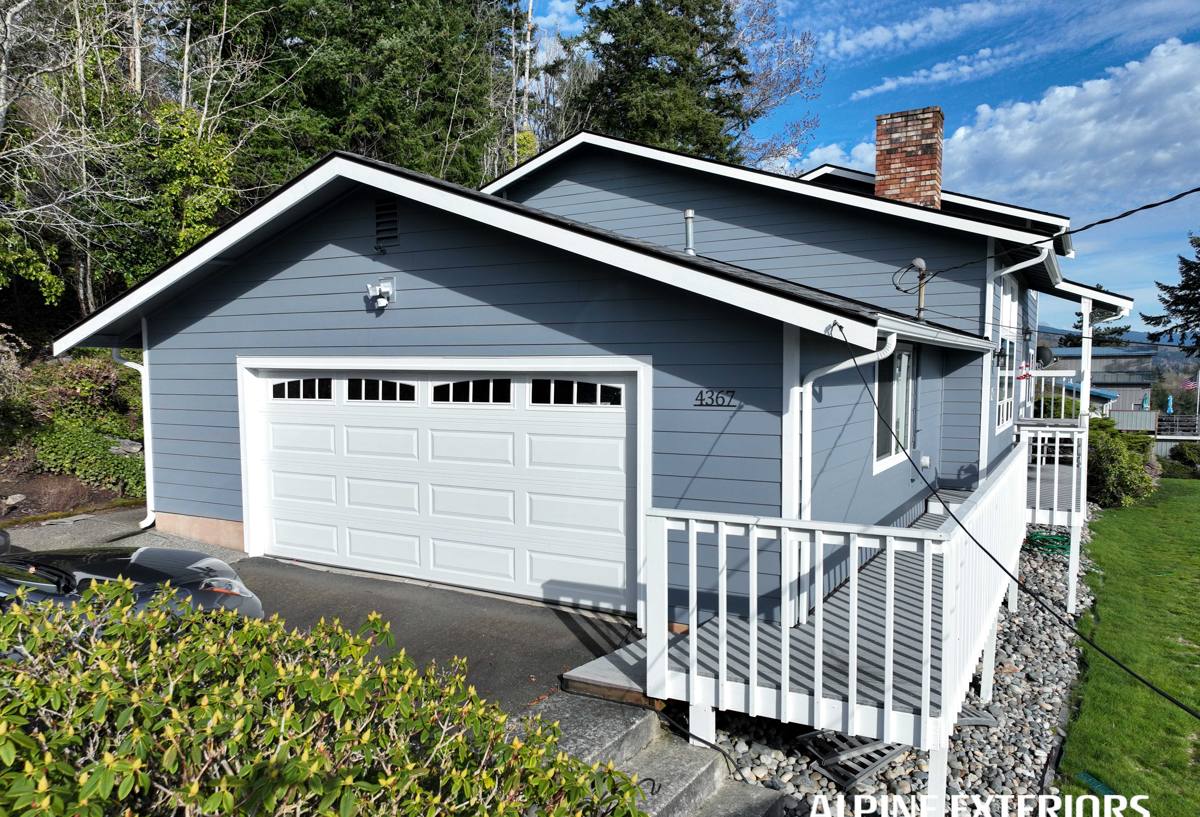
What Local Homes Actually Need From a Shingle Roof
A correct asphalt shingle installation in this part of Skagit County has to solve for three things simultaneously: prolonged wetting, wind-driven rain, and moss and algae growth that thrives in shaded, damp conditions. Skipping any one of these shows up as a problem within a few years, not decades.
Prolonged Wetting
Shingles here rarely get a chance to fully dry out between rain events during the wet months. That means the underlayment beneath the shingles, the flashing at every penetration, and the ventilation in the attic all have to be treated as primary defenses, not backups. A roof that relies on the shingles alone to keep water out is a roof that's already behind.
Driving Rain
Storms moving through the valley frequently bring rain at an angle, not straight down. Wind-driven rain finds its way under shingle tabs, around vent boots, and along valleys and edges where standard nailing patterns and minimal flashing leave gaps. This is where sealed underlayment, proper nail placement, and correctly lapped flashing stop being optional extras and start being the difference between a roof that lasts and one that leaks in year six.
Moss and Algae
Anywhere a roof stays shaded or holds moisture — north-facing slopes, areas under overhanging trees, low-slope sections — moss and algae get a foothold. Left unmanaged, moss lifts shingle edges, holds water against the roof deck, and accelerates granule loss. It's one of the most common reasons we get called out to a roof that's only ten or twelve years old but already showing damage that should have taken twenty years to develop.
Shingle Options and How They Perform Here
Not every asphalt shingle product performs the same way under Skagit County conditions. The table below compares the three tiers most homeowners in Sedro-Woolley are choosing between.
| Shingle Type | Typical Lifespan Here | Moss/Algae Resistance | Wind Rating | Best Fit |
|---|---|---|---|---|
| 3-Tab Asphalt | 15–20 years | Low unless treated | Lower | Budget-conscious, shorter-term ownership |
| Architectural (Laminate) | 25–30 years | Moderate, better with algae-resistant granules | Higher, better wind-driven rain resistance | Most Sedro-Woolley homes |
| Premium/Designer Laminate | 30+ years | Best available in asphalt, algae-resistant granules standard | Highest asphalt option | Steep-slope, shaded, or high-exposure lots |
For most homes in this area, architectural shingles with algae-resistant (AR) granules are the practical middle ground — the upgrade cost over 3-tab is modest, and the added moss and algae resistance directly addresses the biggest long-term threat to a roof here. We'll walk through your specific roof's exposure, slope, and shading before recommending a tier, rather than defaulting to the same product on every job.
How Our Installation Process Works
A roof is only as good as its weakest layer, and most of the layers that matter are invisible once the job is done. Here's what we actually do, in order.
1. Tear-Off and Deck Inspection
We remove the old roofing down to the deck rather than layering over it. This lets us inspect the sheathing for soft spots, rot, or delamination — problems that are common on older Sedro-Woolley homes where a prior roof trapped moisture against the deck for years. Any damaged sheathing gets replaced before anything new goes down.
2. Ice and Water Shield at Vulnerable Areas
Eaves, valleys, and areas around chimneys and skylights get a self-adhering ice and water membrane, not just standard felt. This is one of the details that separates a roof built for this climate from one built to a generic spec — it's the backup layer that keeps you dry if wind-driven rain or an ice dam gets past the shingles.
3. Synthetic Underlayment Across the Field
We use synthetic underlayment across the rest of the roof deck. It handles prolonged exposure to damp conditions during installation better than old-style felt, and it stays intact and slip-resistant if weather moves in mid-project — which, in this part of Skagit County, it often does.
4. Flashing at Every Penetration
Step flashing at walls and chimneys, proper valley flashing, and new pipe boots at every roof penetration. Reusing old flashing to save time is a shortcut that shows up as a leak within a few years, and it's not one we take.
5. Shingle Installation to Manufacturer Spec — and Beyond
Correct nail count and placement, proper starter strip at eaves and rakes, and hand-sealing in areas exposed to higher wind. We follow manufacturer installation requirements as the floor, not the ceiling, particularly on nailing pattern and exposure, since under-nailing is one of the most common causes of premature shingle failure we see on re-roofs in this area.
6. Ventilation Check and Correction
We evaluate intake and exhaust ventilation as part of every re-roof, not as an afterthought. More on why this matters below.
7. Final Walk-Through and Cleanup
Magnetic sweep for debris, gutters checked and cleared of installation debris, and a walk-through so you know what was done and what to watch for going forward.
Ventilation and Moisture Control: The Part Homeowners Don't See
An asphalt shingle roof depends on balanced attic ventilation to work as designed. Without enough intake at the soffits and exhaust at the ridge, moisture from daily living gets trapped in the attic, condenses on the underside of the roof deck, and slowly rots sheathing from below — while also shortening the life of the shingles from the underside out. In a climate as consistently damp as this one, an under-ventilated attic doesn't take long to become a real problem.
We check existing ventilation on every roofing project and will tell you honestly if it needs correcting, whether that means additional soffit vents, a ridge vent upgrade, or addressing insulation that's blocking airflow at the eaves. This isn't an upsell — it's part of making sure the shingle warranty you're paying for actually holds up, since most manufacturers require adequate ventilation for their warranties to remain valid.
Moss, Algae, and Keeping Your Roof Ahead of the Growing Season
Skagit County's long wet season, followed by mild, humid summers, gives moss and algae a much longer growing window here than in drier parts of the state. A few practices make a measurable difference over the life of a roof:
- Choose algae-resistant (AR) shingles, especially on north-facing or shaded slopes.
- Keep overhanging branches trimmed back to reduce shade and debris buildup on the roof surface.
- Clear gutters and valleys at least twice a year so water isn't sitting against shingle edges.
- Address moss with gentle, roof-safe methods — never pressure washing, which strips protective granules and shortens shingle life.
- Have visible moss growth treated before it spreads under shingle tabs and lifts them.
None of these steps are complicated, but they're easy to let slide, and moss problems compound quickly once they take hold. If it's been several years since anyone looked closely at your roof, that alone is worth a look before it turns into a repair.
Signs Your Sedro-Woolley Roof Needs Attention
Most roof failures in this area don't happen suddenly — they build for a season or two before they show up as an interior leak. Watch for:
- Granules collecting in gutters or at downspout outlets
- Shingle edges curling, cupping, or lifting
- Dark streaking or visible moss patches, particularly on shaded slopes
- Soft or spongy spots when walking the roof (we check this, not something to do yourself)
- Daylight visible through the attic roof deck
- Water stains on ceilings or in the attic after a heavy rain
- Flashing that's rusted, cracked, or pulling away from walls or chimneys
Catching these early is almost always a repair. Waiting on them tends to turn into a full replacement, along with drywall, insulation, or framing repair inside the house.
What Roofing Actually Costs to Do Right
Every roof is different, and we won't quote a number without seeing yours, but the factors below are what actually move the price on a Sedro-Woolley re-roof.
| Factor | Why It Matters Here |
|---|---|
| Roof size and complexity | More valleys, dormers, and penetrations mean more flashing labor and material |
| Deck condition | Rot or delamination found at tear-off requires sheathing replacement |
| Shingle tier chosen | 3-tab vs. architectural vs. premium changes both material cost and expected lifespan |
| Existing ventilation | Correcting inadequate intake/exhaust adds modest cost but protects the whole roof system |
| Access and slope | Steep or hard-to-access roofs take longer and require more safety setup |
| Layers to remove | Multiple existing layers add tear-off time and disposal cost |
We'll walk your roof, explain what we find, and give you a written estimate that breaks out these factors so you know exactly what you're paying for and why — not just a single lump-sum number.
Why a Crew That Already Works Sedro-Woolley Matters
Roofing crews that work all over Western Washington aren't necessarily wrong for the job, but a crew that regularly works Sedro-Woolley and the surrounding Skagit County area has already seen how local conditions affect roofs over time — which slopes tend to hold moss, how much ventilation correction older homes in this area typically need, and which flashing details actually hold up through a full wet season here rather than just on paper. That local pattern recognition shows up in fewer callbacks and roofs that perform the way they're supposed to for their full rated lifespan.
It also means someone local to answer questions after the job is done, whether that's a warranty question three years from now or a request to look at a section after a bad windstorm. We'd rather build that kind of relationship with Sedro-Woolley homeowners than treat a roof as a one-time transaction.
Get a Straightforward Roof Estimate
If your roof is due for a look, whether it's showing early signs of trouble or you're planning ahead for a replacement, we're happy to walk it with you and give you an honest read on what it needs. There's no pressure and no obligation — just a clear assessment from a crew that knows what Sedro-Woolley roofs are up against. Use the form below to request your free estimate.