 Anacortes Siding
 Fidalgo Island's Climate Is Harder on Siding Than Most Homeowners Realize
Fidalgo Island sits right where the marine air off Rosario Strait and the Guemes Channel meets everything that comes down off the surrounding hills. That combination means three things are working against your siding nearly year-round: salt-laden air, driving wind-blown rain, and long stretches of shade and dampness that keep moss and algae going strong for much of the year. None of these are dramatic, one-time events. They're slow, constant pressure, and siding that isn't built and installed for that pressure shows it early — usually as paint failure, swelling at the edges, or a green film that keeps coming back no matter how many times it's washed off.
We work on Fidalgo Island regularly, and the pattern we see on failing siding is almost always the same: a product or an installation detail that was fine for a drier, calmer climate, but wasn't built for salt exposure and near-constant moisture cycling. That's the starting point for everything else on this page.
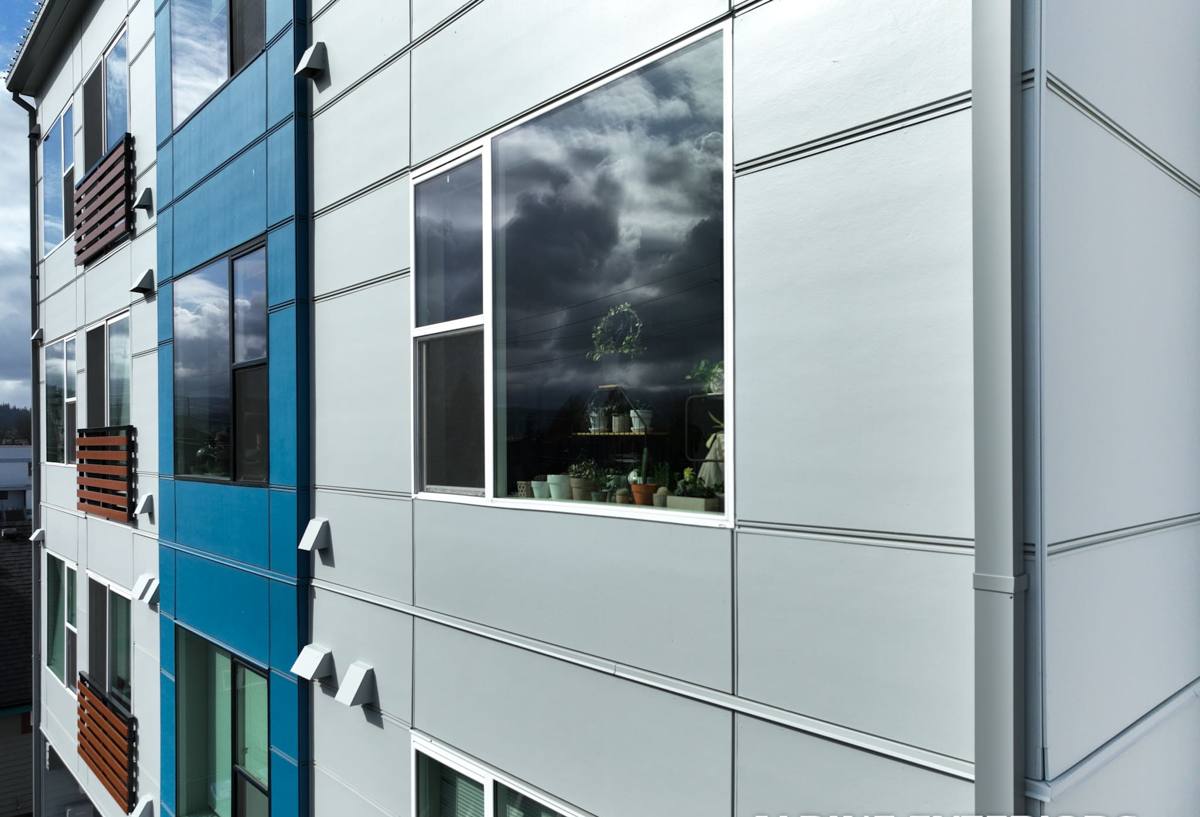
Why Salt Air Changes What "Good Siding" Means
Salt air doesn't just sit on a surface — it works its way into seams, fastener heads, and any place where two materials meet. Over time it accelerates corrosion in fasteners and trim hardware, and it breaks down lower-grade paint and coatings faster than inland exposure would. On homes closer to the water, this shows up first at the bottom courses and around window trim, where salt spray and splash-back collect.
This is one of the main reasons we install James Hardie exclusively. Hardie's fiber cement is manufactured with their HardieZone system, and homes in this region fall under the HZ5 engineering profile — built specifically for marine and high-moisture climates like the Pacific Northwest coast. It's not a marketing label; it affects the product formulation and the finish system that comes with it.
What Driving Rain Does to a Wall Assembly
Anacortes doesn't get the heaviest rainfall totals in the state, but wind-driven rain off the water pushes moisture sideways into wall assemblies in a way that straight-down rain doesn't. That means water finds horizontal laps, unsealed joints, and any spot where flashing was skipped or shortcut. A siding product can be excellent and still fail on a house if the installation didn't account for wind-driven exposure — which is a detail we'll come back to below, because it matters more than the brand of siding on the wall.
Moss Season and Why It's Not Just a Roof Problem
Homeowners here are used to thinking about moss on roofs, but north-facing and shaded siding walls on Fidalgo Island go through the same slow buildup — especially under overhangs, behind landscaping, and on walls that stay damp longer after a storm. Untreated or poorly finished siding gives moss and algae something to grip onto and feed off of. Once it's established, it holds moisture against the wall surface, which compounds the very problem that let it grow in the first place.
James Hardie's factory-applied ColorPlus finish is baked on and cured under controlled conditions, which gives it a denser, more consistent surface than field-applied paint. It doesn't make a wall moss-proof — nothing does in this climate — but a tighter, better-cured finish sheds spores and grime more easily and holds up longer under regular washing than a softer, site-painted surface.
Choosing the Right Hardie Product Line for an Island Home
James Hardie isn't a single product — it's a system of siding profiles, and the right one depends on your home's style, exposure, and how much of the wall faces prevailing wind and rain. We walk through this with every homeowner rather than defaulting to one look.
| Hardie Product | Best Use on Fidalgo Island | Notes |
|---|---|---|
| HardiePlank Lap Siding | Most homes, especially wind/rain-exposed walls | Widest range of textures and exposures; workhorse product for this climate |
| HardieShingle | Accent gables, craftsman and cottage-style homes | Good for visual interest; needs careful detailing at butt joints in wet zones |
| HardiePanel (vertical) | Modern styles, mixed-material facades | Clean lines; joint treatment matters more in driving rain |
| HardieTrim | Corners, window and door surrounds | Should always be paired with Hardie siding, not mismatched with softer trim woods |
Matching the Line to Sun and Wind Exposure
Walls facing the water or open exposure generally get more of our attention on flashing and joint sealing regardless of which Hardie profile is chosen. Shaded, north-facing walls get more attention on drainage and airflow behind the siding, since that's where moss and slow-drying moisture cause the most long-term wear.
What Correct Installation Actually Involves Here
The single biggest factor in how long siding lasts on Fidalgo Island isn't the product — it's the installation. James Hardie publishes detailed installation specifications for a reason: fiber cement performs exactly as well as the crew that puts it up.
- Proper weather-resistive barrier and drainage plane behind the siding, not just felt paper tacked on as an afterthought
- Correct fastener type and placement — under-driven or over-driven nails are one of the most common causes of early failure
- Flashing at every horizontal joint, window head, and roof-to-wall transition, sized for wind-driven rain, not just vertical runoff
- Manufacturer-specified gaps at butt joints and trim to allow for expansion without trapping water
- Bottom clearance from grade, decks, and roof lines so splash-back and standing water don't sit against the bottom course
- Caulking only where Hardie specifies it — over-caulking joints that are supposed to drain can trap moisture instead of shedding it
Every one of these details is more forgiving in a dry inland climate and far less forgiving here, where the wall assembly gets tested by wind, rain, and salt air on a regular basis, not just during the occasional storm.
Why We Only Install James Hardie — Not the Alternatives
We get asked from time to time about vinyl, LP SmartSide, or other fiber cement brands, and it's a fair question. Our answer isn't that those products are junk — it's that we've made a professional decision, based on what holds up in this specific climate, to install one system and install it correctly rather than juggle several.
Vinyl siding can crack and become brittle with UV and temperature cycling, and its seams and expansion joints give wind-driven rain more places to work its way behind the wall over time. Engineered wood products like LP SmartSide rely on their edge sealing staying intact to resist moisture — a single compromised cut edge or fastener hole in a high-moisture, high-exposure climate like this one is a maintenance risk we'd rather not build into a client's home. Other fiber cement brands may perform reasonably, but we don't have the same depth of installation experience, warranty backing, or manufacturer support with them that we do with Hardie. Standardizing on one manufacturer, in one climate zone, with one crew that installs it constantly, is how we keep the installation quality consistent — and installation quality is what actually determines how the siding performs here.
Our Process for Fidalgo Island Homes
1. On-Site Assessment
We look at your home's specific exposure — which walls take the most wind-driven rain, where shade and moss are already a problem, and what the current siding or sheathing condition tells us about moisture history.
2. Product and Color Planning
We help you choose the Hardie profile and ColorPlus finish that fits the home's style and the wall's exposure, not just what looks good in a sample book.
3. Tear-Off and Sheathing Check
Old siding comes off and we inspect the sheathing underneath for rot or moisture damage before anything new goes up — this is often where hidden problems from a prior installation surface.
4. Installation to Manufacturer Spec
Weather-resistive barrier, flashing, fastening, and joint gaps are all done to James Hardie's published specifications for this climate zone, not shortcuts based on habit.
5. Final Walkthrough
We review the finished work with you, including where caulking was and wasn't used and why, so you understand the maintenance points on your own home.
What Ongoing Maintenance Looks Like in This Climate
Correctly installed Hardie siding is low-maintenance, not no-maintenance. On Fidalgo Island specifically, a little seasonal attention goes a long way toward keeping moss and salt residue from becoming a bigger problem.
- Rinse siding with a garden hose once or twice a year, focusing on shaded walls and areas under overhangs
- Keep landscaping and irrigation from spraying directly onto siding or holding moisture against the bottom courses
- Check caulked joints annually for cracking or separation, especially after winter storms
- Watch for moss starting at trim edges or butt joints and address it early rather than letting it establish
- Repaint or touch up trim on the manufacturer's recommended cycle rather than waiting for visible failure
Cost Factors for a Fidalgo Island Hardie Project
Every home is different, but the factors that move the price on this type of project are consistent. We'll always give you a specific number after an on-site assessment — this is just to help you understand what drives the range.
| Factor | Why It Matters Here |
|---|---|
| Wall exposure to wind and rain | More flashing and joint detail work on exposed elevations |
| Existing sheathing condition | Moisture damage from prior siding adds repair scope before install |
| Product line and profile mix | Lap, shingle, panel, and trim combinations price differently |
| Home access (waterfront, hillside, tight lots) | Common on the island and affects staging and labor time |
| Color and finish choice | Factory ColorPlus vs. field-applied finish changes both cost and long-term maintenance |
Why It Matters That We Already Work This Area
A crew that mostly works drier, inland jobs can install Hardie siding competently and still miss the details that matter most in a marine climate — because those details don't show up as problems for years, in a different environment. Working Fidalgo Island regularly means we've seen where moss actually establishes on local homes, which elevations take the worst of the wind-driven rain off the water, and where salt exposure does the most damage to fasteners and trim. That local pattern recognition is part of what you're paying for when you hire a crew that already knows this stretch of Skagit County, not just fiber cement siding in general.
If you're planning a siding project on Fidalgo Island, we're happy to take a look at your home and walk you through what it actually needs. Use the form below to request a free, no-pressure estimate.