 Anacortes Siding
 Windows on Fidalgo Island Take a Different Kind of Beating
Fidalgo Island sits surrounded by Rosario Strait, Guemes Channel, and Padilla Bay, which means most homes here are never far from open salt water. That proximity is part of why people love living in and around Anacortes — but it's also why windows on the island wear out differently than windows twenty miles inland in Skagit County. Salt-laden air corrodes hardware and metal components faster than dry inland air. Wind-driven rain off the water pushes moisture into gaps and seams that would stay dry in a more sheltered location. And the long, wet Pacific Northwest fall-through-spring stretch keeps exterior wood and trim damp for weeks at a time, which is exactly the environment moss and algae need to take hold.
None of that means window replacement here has to be complicated. It means the details that get skipped on an easy inland job — fastener choice, flashing sequence, sealant selection, glazing package — actually matter on Fidalgo Island. A window that's "good enough" somewhere drier can fail early here.
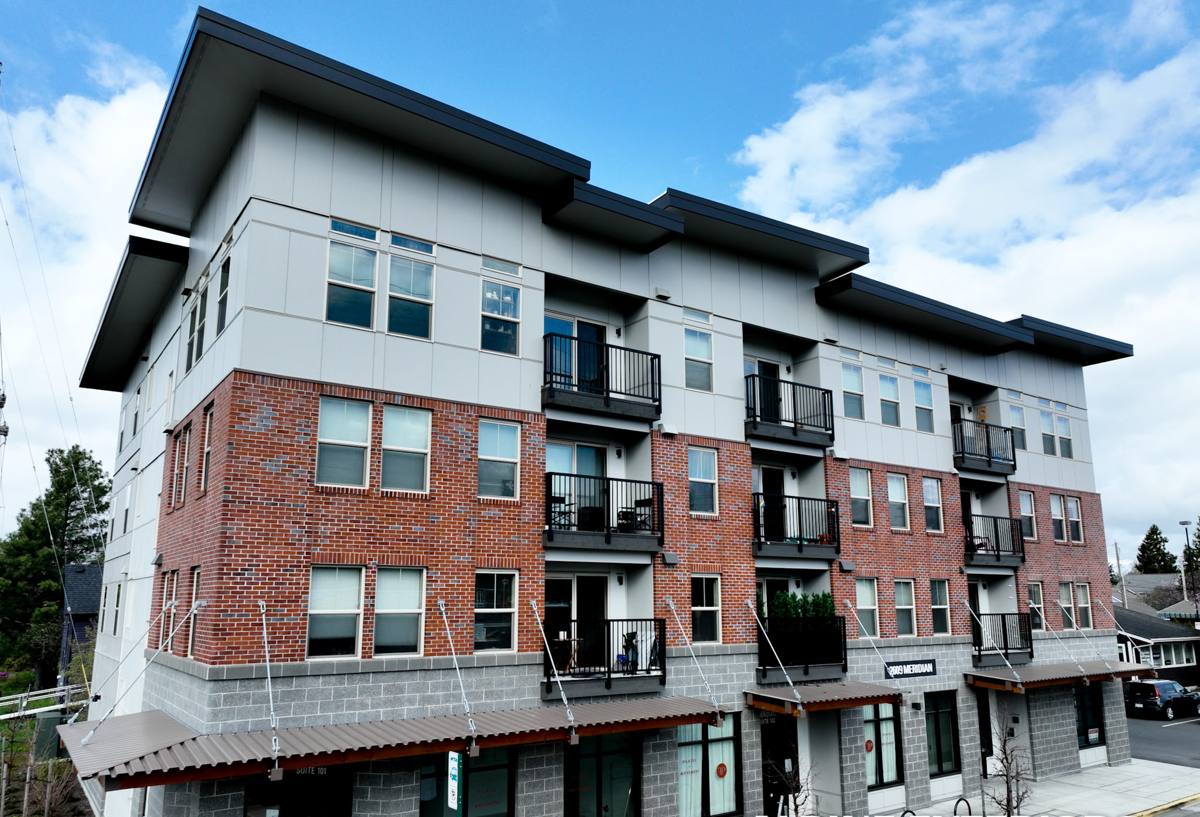
How the Local Climate Shows Up in Failing Windows
If you're not sure whether your windows are just old or genuinely failing, these are the patterns we see most often on homes around Anacortes and the rest of the island:
- Corroded or seized hardware — cranks, locks, and hinges that grind, stick, or won't fully latch anymore
- Fogging or moisture between panes, meaning the seal on an older double-pane unit has broken down
- Soft or discolored wood at the sill or bottom corners, usually from years of driving rain finding a way in
- Persistent drafts even with the window closed and locked
- Green or black staining on trim and sills that keeps coming back within a season or two of cleaning
- Paint that blisters or peels faster on the weather-facing side of the house than anywhere else
Any one of these can be a minor fix. Several at once, especially on windows more than 20 years old, usually means the window itself — not just the caulking — has reached the end of its useful life.
What a Correct Window Replacement Actually Involves
It's Not Just the Window Unit
Swapping in a new window is the visible part of the job, but the work that determines whether it lasts happens around the window: flashing that directs water down and out instead of into the wall cavity, sealant applied in the right order and to the right surfaces, and fasteners that won't corrode in a salt-air environment. A beautiful new window installed over bad flashing will leak within a few winters — often behind the wall, where you won't see it until there's real damage.
Fit Matters More on Older Homes
A lot of housing stock around Anacortes and the island predates modern window sizing standards, so openings are often slightly out of square or a nonstandard size. Getting an accurate measurement before ordering — and adjusting the installation approach for the actual condition of the opening, not just its listed dimensions — avoids gaps that get hidden with extra caulk instead of solved properly.
Choosing Window Materials for a Coastal Skagit County Home
There's no single "best" window material — the right choice depends on your home's exposure, your maintenance appetite, and your budget. Here's how the common options hold up specifically in a salt-air, high-rainfall setting like Fidalgo Island:
| Material | Coastal Durability | Maintenance | Notes for This Area |
|---|---|---|---|
| Vinyl | Very good — won't corrode or rot | Low — occasional cleaning | Our most common recommendation here; handles salt air and rain well at a moderate price |
| Fiberglass | Excellent — very stable in temperature swings and moisture | Low | Strong long-term choice for exposed, wind-facing walls; higher upfront cost |
| Wood (unclad) | Poor without diligent upkeep | High — regular painting/sealing required | We generally steer clients away from unclad wood on direct water-facing exposures; it demands more maintenance than most owners want to keep up with here |
| Wood-clad (vinyl or aluminum exterior) | Good — cladding shields the wood | Moderate | Good option when you want a wood interior look with better weather protection outside |
| Aluminum | Fair — can corrode without proper coatings, conducts cold | Moderate | Less common for residential replacement here; can feel colder near the frame in winter |
Hardware and fasteners matter just as much as the frame material. On this job we favor stainless steel or otherwise corrosion-resistant fasteners and hardware, even when it costs a bit more, because standard-grade steel hardware is often the first thing to fail in a salt-air environment.
Glazing and Energy Performance for Our Climate
Western Washington's climate is mild but consistently damp, which shapes what actually matters in a glazing package here more than raw insulation numbers do:
- Double-pane with Low-E coating is the practical standard for this area — it manages heat loss and reduces condensation risk without the added cost of triple-pane, which is rarely necessary in our winter temperature range
- Argon gas fill adds a modest efficiency boost between panes at low added cost
- Warm-edge spacers reduce the cold band around the glass edge, which is where condensation tends to start first in a humid coastal climate
- Proper weep hole placement and function matters more here than in drier climates, since the window needs to shed the water it will inevitably see
Triple-pane glass has its place, but for most Fidalgo Island homes it adds cost without a proportional benefit given our winter lows. We'll tell you honestly if your specific exposure — a north-facing wall that never sees sun, for instance — is one of the cases where it's worth the upgrade.
Our Window Replacement Process
1. On-Site Assessment
We look at each window's exposure, current condition, framing, and any signs of water intrusion before recommending anything. A window on a sheltered courtyard wall doesn't need the same spec as one facing open water.
2. Accurate Measurement and Product Selection
We measure each opening individually — older homes especially can have openings that vary by a surprising amount from window to window — and help you choose materials and glazing suited to that specific location, not a one-size-fits-all package for the whole house.
3. Careful Removal
We remove the old window and inspect the framing and sheathing underneath for hidden rot or water damage before anything new goes in. This is often the point where a problem that's been building for years actually gets found and fixed, rather than sealed over.
4. Correct Flashing and Sealing
Flashing goes in following a shingle-style sequence so water is always directed outward and down, never trapped behind the new window. Sealant is applied at the right points — not everywhere, since over-sealing can trap moisture just as badly as under-sealing.
5. Installation and Adjustment
The new window is set, shimmed level and plumb, and tested for smooth operation before final trim and finish work.
6. Cleanup and Walkthrough
We clean up the work area and walk through the finished windows with you, including how to operate and maintain them going forward.
Permits and Working Within Local Requirements
Window replacement in the City of Anacortes and unincorporated parts of Skagit County can require a permit depending on the scope of work, particularly if framing is being altered or the structure is in a designated area with additional review. We handle that process as part of the job rather than leaving it for you to sort out, so the work stays compliant and doesn't create issues later if you sell the home.
Keeping New Windows Performing in This Climate
A correctly installed window on Fidalgo Island should need very little from you — but a few habits go a long way toward getting the full lifespan out of it:
- Rinse salt residue off exterior frames and glass a few times a year, especially on wind-facing sides
- Keep weep holes clear of debris, moss, and dirt so water can drain as designed
- Check and lightly lubricate hardware annually — cranks, locks, and hinges hold up much better with occasional care in salt air
- Inspect exterior caulking once a year and touch up any cracked or separated sections before winter rains set in
- Trim back vegetation that keeps foliage or moss in constant contact with window trim
- Watch for early signs of moss or algae on nearby trim and address it before it spreads onto the window frame itself
Why It Matters to Hire a Crew That Already Works This Island
Window replacement isn't the same job in every zip code. A crew that mostly works dry, inland conditions may not think twice about fastener grade or flashing sequence — and on most of their jobs, it genuinely doesn't matter as much. On Fidalgo Island, those choices are the difference between a window that's still tight in fifteen years and one that's showing rot at the sill in five. Working this area regularly means we already know which exposures need the extra step, what materials hold up, and how to install so the work is still doing its job long after we've left. That's the standard we hold every window replacement to, whether it's one window or a whole house.
If you're weighing whether it's time to replace aging windows, or just want an honest read on what your current windows will and won't tolerate, we're happy to take a look. Reach out for a free, no-pressure estimate using the form below.