 Anacortes Siding
 Why Fidalgo Island Decks Wear Differently Than Inland Decks
A deck built ten miles inland ages differently than one built on Fidalgo Island. Homes here sit close enough to the water that salt-laden air reaches the wood, metal, and finish on a deck year-round, not just during storms. Add Anacortes' long wet season, frequent driving rain off the Strait, and the shade many island lots carry from mature evergreens, and you get a moss season that can stretch from October well into spring. None of that means a deck can't hold up here — it means the details that don't matter much in a dry inland yard matter a great deal on Fidalgo Island.
Salt air accelerates corrosion on anything metal — fasteners, joist hangers, railing hardware. Driving rain finds every gap in flashing and every end-grain cut that wasn't sealed. And moss doesn't just look bad; it holds moisture against decking boards and framing, which is exactly what starts rot in Douglas fir and lesser-grade lumber. A deck built without those three things in mind will look fine for a season or two, then start showing problems that are expensive to reach once the decking is down.
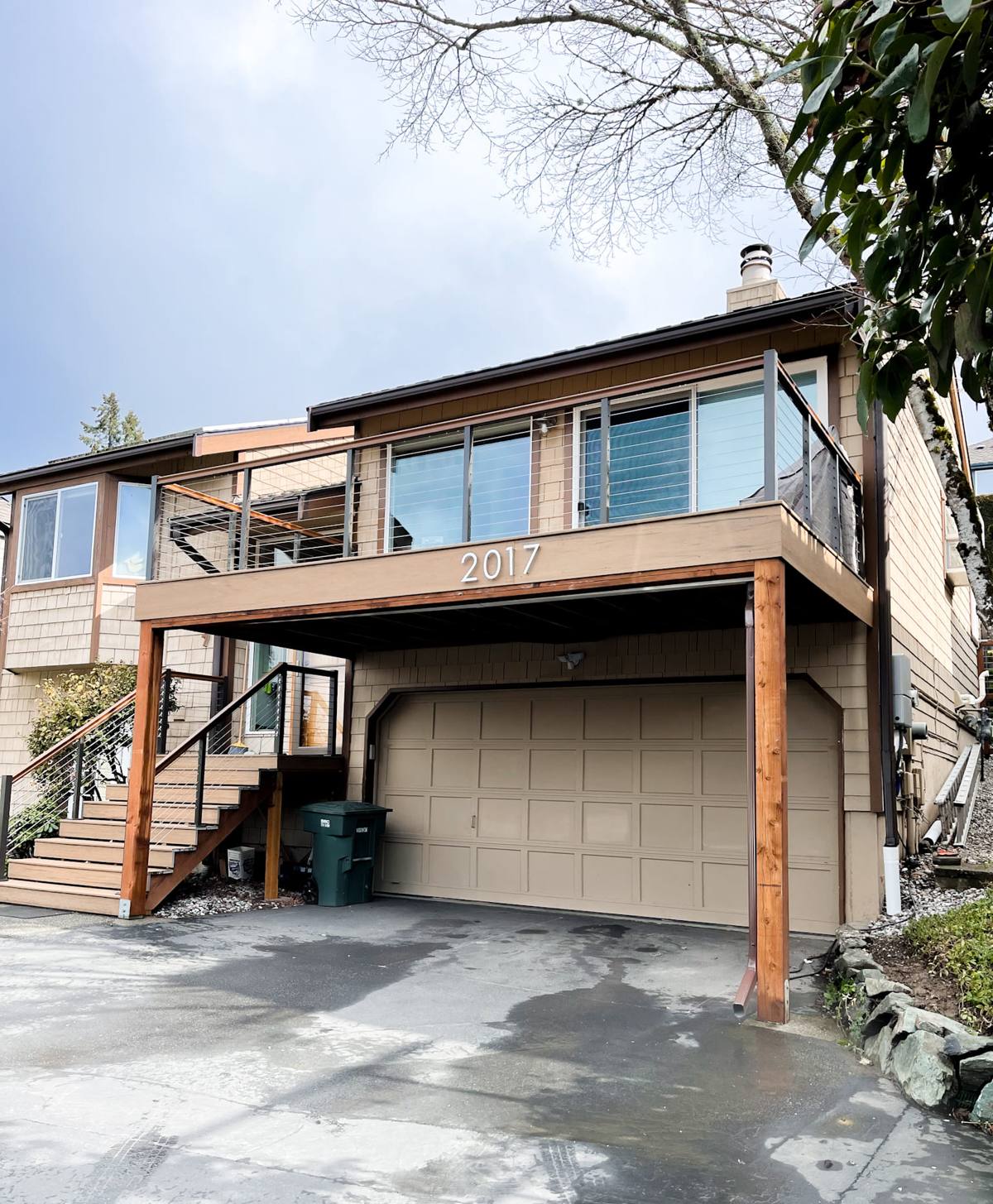
What a Deck Built for This Coastline Actually Needs
Corrosion-Resistant Hardware, Not Just Treated Lumber
Pressure-treated lumber gets a lot of attention, but the hardware holding it together often gets overlooked. On Fidalgo Island, we spec stainless steel or heavy hot-dip galvanized fasteners and connectors rated for the treated lumber's chemical makeup (many modern treatments are more corrosive to standard galvanized coatings than older formulas were). Cheaper coated screws and hangers can start rusting within a couple of seasons this close to the water, and once a fastener weakens, it's a structural issue, not a cosmetic one.
Ledger Flashing That Actually Sheds Water
Where a deck attaches to the house is the single most common point of failure we see on older Anacortes-area decks. Driving rain pushes water sideways, and a ledger board without proper flashing — or with flashing that was caulked instead of lapped correctly — lets water track behind the siding and into the rim joist. We flash ledgers so water is directed out and away from the house, every time, regardless of what the original deck (if there was one) had.
Slope and Drainage Built Into the Frame
A deck surface should shed water, not hold it. We build in a slight slope away from the house and keep gaps between boards consistent so water and debris pass through instead of pooling. Poor drainage is one of the biggest reasons moss and mildew take hold on deck surfaces here — standing water plus shade is a perfect combination for it.
Choosing a Decking Material for Salt Air and Moss
There's no single "best" decking material for every Fidalgo Island property — it depends on how much shade the deck gets, how close it is to the water, and how much maintenance you actually want to do. Here's how the common options compare for this specific climate:
| Material | Moss & Moisture Resistance | Salt Air Performance | Maintenance |
|---|---|---|---|
| Cedar | Naturally rot-resistant, but surface grays and can hold moss in shaded spots without upkeep | Good; some coastal color fading over time | Needs periodic cleaning and re-sealing |
| Pressure-treated fir/pine | Resists rot with proper fasteners, but surface texture can trap moisture and moss | Fine structurally with correct hardware | Regular cleaning, sealing every 1-2 years |
| Capped composite | Excellent — non-organic surface won't feed moss or mildew the way wood can | Very good; no corrosion risk in the board itself | Occasional washing, no sealing/staining |
| PVC decking | Excellent — fully synthetic, doesn't absorb moisture | Very good | Lowest maintenance of the group |
We install all of these and won't push a homeowner toward a product that doesn't fit their yard. A sun-exposed deck with good airflow can do fine in cedar or treated lumber with routine care. A heavily shaded deck under fir or cedar trees — common on parts of Fidalgo Island — is often better served by a capped composite or PVC board, simply because it removes the food source moss and mildew need to take hold. The trade-off is upfront cost: composite and PVC run higher per square foot than treated lumber, but they cut down on the recurring cleaning and refinishing that shaded, damp decks otherwise demand.
What We Don't Recommend for This Climate
Uncapped, budget-grade composite boards from years past had a reputation for absorbing moisture at the core and swelling or delaminating in wet climates. Modern capped composites solved most of that by sealing the core, but it's worth knowing the difference before you shop — "composite" isn't one product, and the capping is what matters most in a climate like ours. We'll walk through what a given product line actually is before it goes on your deck, not just what the brand name implies.
Framing and Structure: Where Problems Actually Start
Most deck failures don't start at the surface — they start underneath, where nobody looks until something feels soft or springy. On Fidalgo Island specifically, we pay close attention to:
- Joist hanger material and fastener compatibility with the treated lumber species used
- Post base connections kept off grade-contact soil to reduce standing moisture exposure
- Beam and joist spacing sized for our snow and wind load requirements, not just minimum code
- Under-deck ventilation so moisture doesn't get trapped against framing in shaded yards
- Proper end-grain sealing on every cut made on site, not just factory-treated faces
These aren't upgrades — they're the baseline for a deck that's going to sit through Skagit County winters for the next 20-plus years without a rebuild.
Railings and Hardware Built for Corrosion, Not Just Code
Railings take a lot of direct weather exposure and a lot of hand contact, which makes them one of the first places corrosion shows up visibly. We use fastener and bracket systems rated for coastal exposure, and we pay attention to how railing posts attach to the frame — a railing that's structurally sound today but fastened with the wrong hardware can loosen within a few years out here. Cable railing systems, a popular choice for water-view lots, need stainless components specifically; standard-grade cable and fittings corrode faster in salt air and are a poor fit for this coastline regardless of how they look when installed.
Our Process for a Fidalgo Island Deck Project
1. On-Site Assessment
We walk the property to look at sun and shade exposure, drainage patterns, proximity to the water, and how the deck will tie into the house. This is where we catch site-specific issues — like a shaded north-facing deck that's going to need different material recommendations than a south-facing one.
2. Design and Material Selection
We go over decking, railing, and framing options honestly, including cost and maintenance trade-offs, so the decision fits your budget and how much upkeep you actually want to do.
3. Permitting
Most new decks and many deck replacements on Fidalgo Island require a permit through the City of Anacortes or Skagit County, depending on your property's location. We handle that process as part of the job so it's not something you have to navigate yourself.
4. Construction
Framing first, with every connection and flashing detail inspected before decking goes down — because once boards are installed, framing issues are far more expensive to fix.
5. Final Walkthrough
We go over the finished deck together, including basic care guidance specific to the material you chose, so you know what maintenance (if any) to expect going forward.
Maintaining a Deck Through Moss Season
Even a well-built deck needs some seasonal attention on Fidalgo Island. Here's what actually matters:
- Sweep debris (leaves, needles, seed pods) off the surface regularly — decomposing organic matter is what feeds moss growth
- Rinse salt residue off railings and hardware after storms if the deck faces open water
- Check that gaps between boards stay clear so water keeps draining through
- Inspect ledger flashing and any caulked joints once a year for gaps or cracking
- Re-seal wood decking on the manufacturer's recommended schedule, don't wait until it's visibly gray
- Trim back overhanging branches where possible to reduce shade and moisture buildup
Composite and PVC decks cut most of this list down to occasional washing, which is a real factor to weigh against their higher upfront cost, especially on shaded lots.
Why Local Experience on Fidalgo Island Matters
A deck contractor who mostly works dry, inland jobs will often build a deck that meets code and looks good on day one — and still runs into moss, corrosion, or drainage problems within a few years because those weren't the conditions they were building for. Working Anacortes and the rest of Skagit County regularly means knowing which lots get heavy shade and moss, which are exposed to direct salt spray, and which permitting requirements apply on which side of the city line. It also means we're a local call away if something needs a look years down the road, not a crew that has to be found again from scratch.
If you're planning a new deck or replacing one that's showing its age, we're happy to come take a look and put together a free, no-pressure estimate — just fill out the form below and we'll get in touch.