 Anacortes Siding
 Why Decks on Fidalgo Island Fail Faster Than the Manufacturer's Warranty Suggests
Fidalgo Island sits right where Puget Sound weather does its worst work on exterior wood and hardware: salt-laden marine air, long stretches of driving rain off the water, and a moss and algae season that can run from October clear through April. A deck built to a generic national spec often doesn't account for any of that. It's built for average rainfall and average humidity, not for a site with salt exposure and months of standing damp shade.
The result is predictable. Fasteners corrode from the inside out before the surface ever shows rust. Ledger boards trap moisture against the house and rot quietly behind the decking. Moss takes hold on north-facing and shaded sections, holds water against the boards, and accelerates decay in exactly the spots you're least likely to check. By the time a deck looks bad on top, the framing underneath is often already compromised.
Replacing a deck the right way on Fidalgo Island means designing for these conditions from the ground up — not just swapping old boards for new ones and hoping the substructure holds.
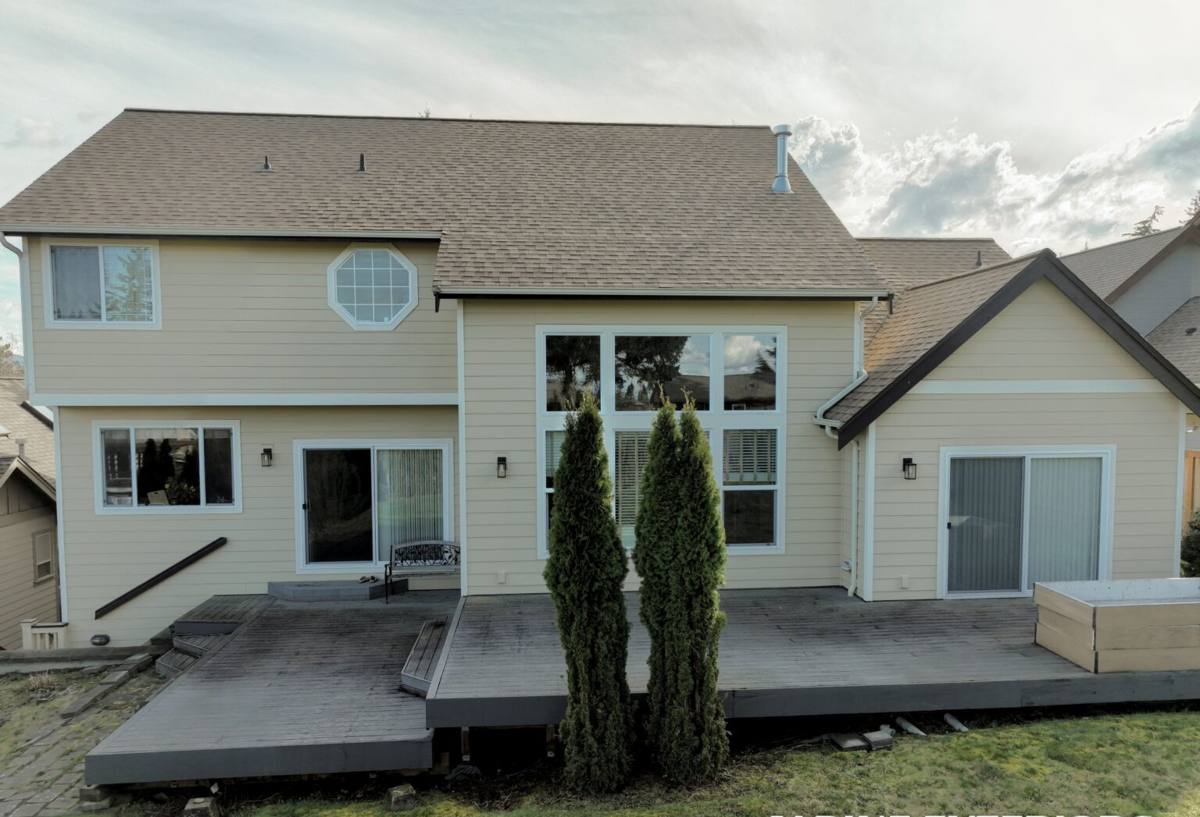
Signs Your Deck Has Crossed From "Repair" Into "Replace"
Not every worn deck needs full replacement, but on this island the window for a simple repair closes faster than homeowners expect because moisture damage spreads underneath the surface. Look for these signs before deciding:
- Soft or spongy spots when you walk the deck, especially near the house or at board ends
- Visible gaps, splitting, or cupping in more than a handful of boards
- Rust streaks below fastener heads or corroded, loose hardware
- A ledger board that looks damp, discolored, or separated from the house siding
- Wobble or movement at the railing posts or stair stringers
- Persistent moss or black-green staining that keeps coming back within weeks of cleaning
If it's one or two boards and the frame underneath is sound, repair makes sense. If the framing, ledger, or footings are showing damage — or the deck is old enough that the substructure was never built to current standards — replacement is the honest recommendation, even if it costs more up front than another round of patching.
Why "Just Resurface It" Often Backfires Here
Resurfacing over an old frame is tempting because it's cheaper and faster, but on a site with this much moisture exposure it can hide problems instead of solving them. New decking fastened to a compromised joist or a leaking ledger connection just buys a year or two before the same symptoms come back — except now they're hidden under boards that look new. We'll always tell you honestly whether your frame is a candidate for resurfacing or needs a full rebuild; we don't sell replacements you don't need, and we don't recommend resurfacing over structure we wouldn't trust with our own family on it.
What a Correct Deck Replacement Actually Involves
A deck replacement built for Fidalgo Island's climate is more than decking boards. Every layer matters:
Ledger and Flashing
The connection where the deck meets the house is the single most common failure point in this region because it's where rain, house wrap, and framing all meet. Proper flashing — installed so water sheds outward and never behind the siding — is non-negotiable. This is also where a lot of lower-cost replacements cut corners, because it's labor-intensive and invisible once the decking goes down.
Framing and Fasteners
Joists, beams, and posts should be sized and spaced to current code, not just matched to whatever was there before. Given the salt air, we favor fasteners and structural connectors rated for coastal or marine-grade corrosion resistance rather than standard exterior-rated hardware — the cost difference is small relative to the labor of replacing a deck twice.
Footings and Ground Contact
Skagit County's wet winters mean poor drainage at the footings shows up as movement and rot years before it's obvious above deck. Footings need to be sized for the soil and set below frost depth with proper drainage, not just poured to the minimum that will pass a quick look.
Decking Surface
Whatever material you choose, gaps, fastening pattern, and airflow underneath the deck all affect how well it sheds water and resists moss. A deck built tight to the ground with poor airflow will grow moss faster than an identical deck with proper clearance, regardless of material.
Choosing a Decking Material for This Climate
There's no single "best" decking material — every option is a trade-off between upfront cost, maintenance, and how it handles moisture and salt air over time. Here's how the common choices actually compare for a Fidalgo Island install:
| Material | Upfront Cost | Maintenance | How It Handles This Climate |
|---|---|---|---|
| Pressure-treated wood | Lowest | Annual cleaning, periodic staining/sealing | Needs consistent upkeep or moss and graying set in fast; good value if maintained |
| Cedar | Moderate | Regular sealing to hold color and resist moisture | Naturally rot-resistant but still needs care in a wet, shaded site |
| Composite decking | Higher | Occasional washing, no staining/sealing | Resists rot and won't splinter; some early-generation composites held moisture at fastener points, so board selection and install detail matter |
| PVC/capped polymer | Highest | Low — soap and water | Best moisture and moss resistance of the group; higher material cost offsets long-term upkeep savings |
We'll walk through these options honestly based on your budget, how much shade your deck gets, and how much upkeep you actually want to do. A lower-maintenance material is often the better long-term value here simply because Skagit County's moss season punishes anything you're not staying on top of.
Our Deck Replacement Process
- On-site assessment — we inspect the existing deck, ledger connection, framing, and footings to determine what's salvageable and what isn't.
- Honest scope and estimate — you get a clear breakdown of what's being replaced and why, in plain language, before any work starts.
- Demolition and disposal — old decking, framing, and hardware removed and hauled off; we check the site for any hidden rot or damage the old deck was masking.
- Structural rebuild — new framing, ledger flashing, footings, and connectors sized to code and to the site conditions, not just matched to what was there.
- Decking installation — boards installed with proper spacing and fastening for drainage and airflow, using the material you chose.
- Railings, stairs, and finish details — built to current code for spacing and load, finished to match the rest of the exterior.
- Final walkthrough — we go over the finished deck with you, including basic care guidance specific to the material installed.
Permits and Local Code Considerations
Deck replacement work on Fidalgo Island typically falls under Anacortes or Skagit County building requirements depending on the scope of the rebuild — full structural replacement, changes to footprint, or new railings and stairs usually require a permit, while like-for-like resurfacing on sound framing sometimes doesn't. Requirements can also depend on deck height, proximity to property lines, and whether the structure is attached to the house. We handle the permitting conversation as part of the job so you're not left guessing what's required before work starts.
Caring for a New Deck in a Marine Climate
A well-built deck still needs some seasonal attention here — that's the trade-off of living somewhere this beautiful and this wet. A short routine goes a long way:
- Sweep leaves and debris off the surface regularly, especially in fall — trapped organic matter feeds moss
- Rinse salt residue and general grime with plain water a few times a year, more often if the deck is exposed to direct wind off the water
- Check fastener heads and railing connections annually for early rust or looseness
- Keep gutters and downspouts near the deck clear so runoff isn't dumping extra water onto or under it
- Re-seal or re-stain wood decking on the schedule the product calls for — don't wait until it's visibly gray or cracking
- Trim back overhanging vegetation to let sun and air reach shaded sections where moss takes hold first
Why a Crew That Already Works Fidalgo Island Matters
Deck replacement isn't a one-size-fits-all job, and a crew that only occasionally works this area is guessing at things a local crew already knows from experience: which sides of a property catch the worst of the wind and rain, how footing drainage behaves in this soil, and which fastener and flashing choices actually hold up through a full Skagit County winter instead of just looking good on installation day. That experience shows up in the details you don't see until year three or four — the ones that separate a deck that needs work again soon from one that doesn't.
We're not interested in the fastest, cheapest version of a deck replacement that looks fine at handoff and fails early. We build for the climate that's actually here, explain the trade-offs honestly, and stand behind the work.
Get a Free, No-Pressure Estimate
If your deck is showing soft spots, rust, persistent moss, or you're just planning ahead, we're happy to take a look and give you an honest assessment — repair, resurface, or full replacement, whichever actually fits what we find. Fill out the form below to schedule a free estimate for your Fidalgo Island deck.