 Anacortes Siding
 Why Fidalgo Island Roofs Wear Differently
Fidalgo Island sits surrounded by saltwater on nearly every side, which means Anacortes homes deal with a combination of weather stress that inland Skagit County properties simply don't see as often. Salt-laden air, wind-driven rain that gets pushed sideways under normal-looking flashing, and a long, damp shoulder season that lets moss take hold all add up over time. None of this means your roof is destined to fail early — it means repairs here have to account for conditions a generic roofing crew might not think twice about.
Salt Air and Metal Fatigue
Salt in the air accelerates corrosion on exposed metal — flashing, fasteners, gutter hardware, and vent caps in particular. A repair that looks fine on a roof ten miles inland can start showing rust streaks or pinhole leaks years sooner on Fidalgo Island if the wrong fastener or flashing metal was used. This is one of the first things we check when we're diagnosing a leak: is the metal itself starting to give out, or is it just dirty?
Driving Rain and Wind Exposure
Open water exposure means storms often arrive with real lateral force behind the rain. Water that would normally run straight down a roof face gets pushed uphill under shingle edges, ridge caps, and step flashing. A repair that only addresses the visible gap — without accounting for wind-driven intrusion — tends to fail again in the next big blow.
Moss Season
Anacortes gets a long stretch of mild, wet weather that's close to ideal for moss growth on north-facing slopes and shaded valleys. Moss isn't just cosmetic — it holds moisture against the roofing material, lifts shingle edges as it grows, and can work its way under flashing over a few seasons. Roofs with established moss almost always have more going on underneath than what's visible from the ground.
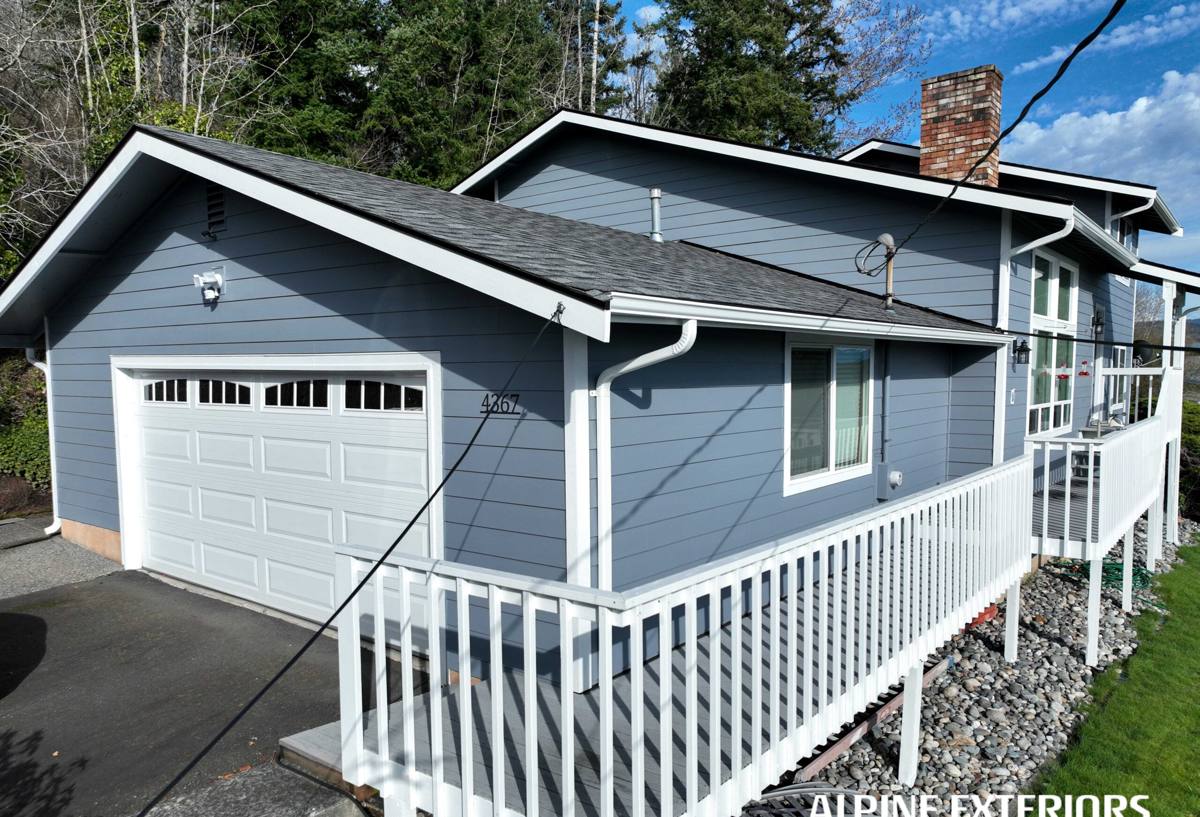
Signs a Fidalgo Island Roof Needs Repair
Most roof problems don't announce themselves with a dramatic leak — they show up as small, easy-to-dismiss signs first. Here's what we tell homeowners to watch for between inspections:
- Water stains or discoloration on interior ceilings, especially near chimneys, skylights, or where two roof planes meet
- Granules collecting in gutters or at the base of downspouts (a sign of shingle wear, not just aging color)
- Visible moss lines or dark streaking along shingle courses, particularly on shaded or north-facing slopes
- Curling, cracked, or lifted shingle edges, especially near ridges and rakes
- Rust staining around vent boots, chimney flashing, or metal valleys
- Daylight visible through the roof deck from inside an attic space
- Soft or spongy decking felt underfoot during an inspection walk
If you're seeing more than one of these, it's worth getting a proper look before the next storm season rather than waiting for an active leak.
Where Repairs Usually Start on This Island
Certain failure points come up again and again on Anacortes and Fidalgo Island roofs, mostly because of the climate factors above:
- Flashing at chimneys and walls — step flashing and counter-flashing take the brunt of wind-driven rain and salt corrosion
- Vent boots — rubber vent boot collars dry out and crack faster with UV and salt exposure than the shingles around them
- Valleys — where two roof planes meet, water volume is highest and moss tends to collect debris that traps moisture
- Ridge caps — the most wind-exposed part of the roof, and the first place fasteners back out over time
- Gutter and eave transitions — clogged or undersized gutters push water back up under the first course of shingles
What a Correct Repair Actually Involves
A repair that holds up under this climate isn't just about matching shingle color. It's about addressing the reason the original section failed. That usually means pulling back more of the surrounding roofing than a quick patch would, checking the underlayment condition underneath, and rebuilding the flashing detail correctly rather than just caulking over a gap.
Patch Job vs. Correct Repair
| Approach | What It Does | Typical Result Here |
|---|---|---|
| Surface patch / caulk over | Covers the visible symptom only | Often reopens within 1-2 storm seasons due to wind-driven rain finding a new path |
| Correct tear-back repair | Removes affected material, checks decking and underlayment, rebuilds flashing | Addresses the actual entry point; holds up through normal storm cycles |
| Moss removal without treatment | Clears visible growth | Regrowth within a season or two on shaded slopes |
| Moss removal with treatment and maintenance plan | Clears growth and slows regrowth | Meaningfully longer interval before moss becomes a problem again |
Matching Materials Correctly
Whenever possible, we match existing shingle type, color run, and profile so a repair doesn't stand out as an obvious patch. On older roofs where an exact match isn't available, we'll walk you through the realistic options — usually pulling material from a less visible slope, or discussing a broader resurfacing timeline if the roof is old enough that patch repairs are becoming a pattern rather than a one-off fix.
Our Repair Process
We keep the process straightforward because most homeowners just want an honest answer about what's actually wrong and what it'll take to fix it correctly.
- Inspection — we get on the roof (not just a ground-level look) and check flashing, decking, and attic conditions where accessible
- Diagnosis — we identify the actual source of the problem, which is often not directly below the interior stain or damaged shingle
- Written estimate — a clear scope of what we found and what the repair involves, with no pressure to upsell into a full replacement unless that's genuinely the better long-term option
- Repair — proper tear-back, deck check, underlayment and flashing work, and matched roofing material
- Cleanup and walkthrough — we clear debris and walk you through what was done
Materials We Use and Why
Our standard is to use flashing metals and fasteners rated for coastal, high-salt environments rather than whatever is cheapest at the supply house. It costs a little more up front but avoids the early corrosion issues we see on repairs done with standard-grade hardware in this location. Similarly, we favor synthetic underlayment over older felt products in valleys and eaves because it holds up better to the moisture cycling that's common here — it doesn't degrade as quickly when it stays damp for extended stretches, which matters during a wet Skagit County winter.
For moss-prone slopes, we can install zinc or copper strips near the ridge as part of a repair, which helps slow regrowth over time as rainwater carries trace metal down the roof face. It's not a permanent fix on its own, but combined with periodic cleaning it meaningfully extends the interval between moss treatments.
What Roof Repair Typically Costs
Every roof and every repair is different, but the general cost drivers are consistent. We always provide a written, itemized estimate before any work starts — no broad "roof repair" lump sum without explanation.
| Factor | Why It Affects Cost |
|---|---|
| Size and location of the damaged area | Steep or high sections require more safety setup and labor time |
| Underlying deck condition | Rotted or soft decking found during tear-back needs to be replaced before re-roofing that section |
| Flashing complexity | Chimneys, skylights, and multi-plane valleys take more time to rebuild correctly than a flat shingle field |
| Material match availability | Discontinued or uncommon shingle profiles may cost more to source or require a broader repair area |
| Moss and debris removal | Heavier growth adds labor time and may reveal additional damage once cleared |
Why a Local Fidalgo Island Crew Matters
A crew that regularly works Anacortes and the surrounding island roofs already knows which slopes tend to hold moss, which flashing details fail first in this wind pattern, and what a salt-air-appropriate repair actually requires. That's different from a contractor who mostly works inland and treats every repair the same way regardless of exposure. Being local also means we can respond faster when a storm creates an active leak — we're not driving in from across the county to look at a tarp situation that's gotten worse by the time we arrive.
It also means accountability. We're going to be working in this same community next year and the year after, so the repairs we do have to actually hold up — not just look finished at handoff.
Maintenance That Extends a Repair's Life
- Clean gutters at least twice a year, more often if you're under fir or cedar trees
- Have moss growth addressed early, before it lifts shingle edges
- Schedule a roof check after any unusually strong windstorm, even if nothing looks obviously wrong from the ground
- Keep an eye on attic ventilation — trapped moisture indoors accelerates deck and underlayment wear from underneath
- Address small flashing rust spots before they become through-holes
If you're seeing signs of a leak, moss buildup, or storm damage on a Fidalgo Island roof, we're happy to take a look and give you a straight answer about what's actually going on. Use the form below to request a free, no-pressure estimate.