 Anacortes Siding
 Fidalgo Island sits right at the edge of Rosario Strait and the Salish Sea, which means decks here take a beating that decks twenty miles inland in Skagit County never see. Salt-laden air, driving rain that comes in sideways off the water, and a moss season that can run eight months out of the year all work against a deck's structure and surface at the same time. Composite decking, installed correctly, holds up to that combination better than most alternatives — but "installed correctly" is doing a lot of work in that sentence, and it's worth understanding what that actually means before you sign a contract.
Why Fidalgo Island Decks Face a Different Set of Problems
A deck built the same way in Mount Vernon or Burlington won't perform the same way here. Three things are working against outdoor structures on the island year-round:
Salt Air and Corrosion
Airborne salt from the surrounding water accelerates corrosion on fasteners, flashing, and any exposed metal hardware. Standard galvanized screws and brackets that would last decades in a drier inland climate can start showing rust streaks and weakening within a few years this close to the water. This matters more for the framing underneath a composite deck than for the boards themselves.
Driving Rain
Storms coming off the strait don't just fall straight down — wind-driven rain gets pushed under railings, into ledger connections, and along the underside of boards. Any gap in flashing or any low spot that doesn't shed water becomes a place where moisture sits, and sitting moisture is what causes rot and hardware failure over time, even under decking material that itself doesn't absorb water.
Moss and Algae Season
Fidalgo Island's tree cover and marine humidity keep shaded surfaces damp for long stretches of the year. Moss and algae don't rot composite boards the way they'd damage untreated wood, but they do build up on the surface, get slick underfoot, and stain the material if left unaddressed — especially on north-facing decks or ones tucked under evergreen canopy.
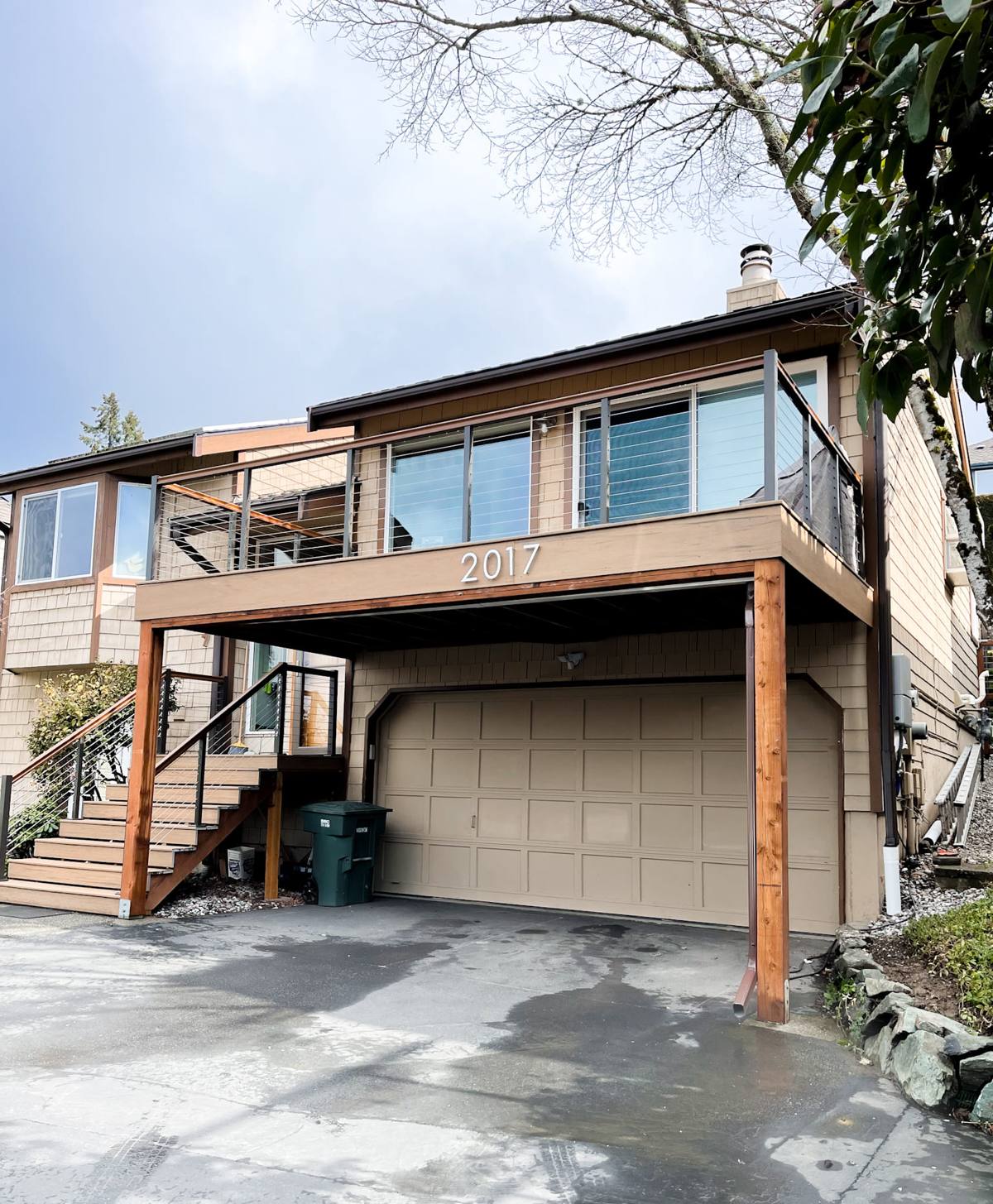
Why Composite Decking Makes Sense for This Climate
Composite decking is made from a blend of wood fiber and recycled or virgin plastic, and most modern boards have a cap — a protective outer shell — bonded over that core. That cap is the part that matters most here: it's what keeps water, salt, and organic growth from working into the board the way they would with solid wood. Composite doesn't need annual staining or sealing, doesn't splinter, and doesn't rot from the inside the way pressure-treated pine can once the factory treatment starts to wear thin at fastener points.
That said, composite isn't maintenance-free, and we don't tell customers it is. It still needs periodic washing to keep moss and mildew from taking hold on the surface, and the framing underneath it — the part nobody sees — still needs to be built to shed water and resist salt-air corrosion. A composite deck is only as good as what's holding it up.
Composite vs. Other Decking Materials in a Marine Climate
Every material has trade-offs. Here's how the common options compare for a Fidalgo Island application specifically:
| Material | Moisture Behavior | Maintenance | Typical Lifespan Here |
|---|---|---|---|
| Capped composite | Sheds water at the surface; core is protected by the cap | Periodic washing to control moss/mildew; no staining | 25–30+ years |
| Pressure-treated pine | Absorbs and releases moisture; prone to checking and warping near the coast | Annual cleaning and re-sealing/staining | 10–15 years before major repair |
| Cedar | Naturally rot-resistant but still absorbs moisture over time | Regular sealing; sanding and refinishing as it grays | 15–20 years with upkeep |
| PVC decking | Fully synthetic, essentially impervious to moisture | Low; occasional washing | 25–30+ years |
PVC performs similarly to composite in wet climates, and it's a reasonable choice for some homeowners. Where composite tends to win out is appearance — most people prefer how composite's wood-grain texture and color depth look next to a natural setting like Fidalgo Island's, where PVC's more uniform, plastic look can feel out of place.
What a Correct Composite Deck Installation Actually Involves
The boards get most of the attention, but the substructure is where a coastal deck earns its lifespan.
Framing and Fasteners
We build the frame with lumber rated for ground contact where it's called for, and we use fasteners and structural hardware rated for coastal or marine exposure rather than standard galvanized hardware — stainless steel or coated fasteners cost more upfront but avoid the corrosion problems that show up in five to eight years with lower-grade hardware.
Ledger Attachment and Flashing
Where the deck ties into the house, the ledger board connection is the single most common source of hidden water damage on any deck, and it's more urgent here given how much wind-driven rain the island gets. Proper flashing — installed so water is directed out and away from the house rather than trapped behind the board — isn't optional.
Drainage and Slope
The frame needs a slight slope away from the house and consistent board spacing so water moves off the deck instead of pooling. Joist tape over the framing adds another layer of protection against the moisture that inevitably gets past the deck boards during a real Pacific Northwest storm.
Fastening System
Hidden fastener clip systems give a cleaner surface with no exposed screw heads to trap water or moss, and they let boards expand and contract with temperature changes without restriction. Face-screwing is sometimes appropriate at borders or stair treads, but we use corrosion-rated screws when we do.
Handling Moss, Algae, and the Long Wet Season
Composite doesn't rot from moss the way wood does, but a neglected composite deck on a shaded Fidalgo Island lot can still get slick and stained. A few things reduce how much upkeep it needs:
- Board spacing and airflow underneath the deck to help surfaces dry out between rain events
- Choosing a board color and texture that hides organic staining better in shaded or tree-covered locations
- Keeping overhanging branches trimmed back where practical, since less canopy means less standing moisture and debris on the deck surface
- A simple seasonal wash — soap, water, and a soft-bristle brush — before moss gets a foothold, rather than a pressure washer after it has
None of this is complicated, but it's the difference between a composite deck that still looks new after ten years and one that looks tired after three.
Our Process for a Fidalgo Island Composite Deck
- On-site assessment: We look at sun exposure, tree cover, wind direction, and how close the deck sits to the water, since all of that affects material choice and detailing.
- Design and material selection: We walk through board options, colors, and railing systems based on your home and budget, and explain the real trade-offs rather than pushing one product.
- Permitting: Deck work typically requires a permit through the City of Anacortes or Skagit County depending on location, and waterfront or bluff-adjacent lots can involve additional review — we handle that process rather than leaving it to you.
- Removal of the old deck: If we're replacing an existing structure, we assess whether any part of the substructure is salvageable or whether full replacement is the safer call.
- Framing: Ledger flashing, joist layout, and hardware selection appropriate for coastal exposure.
- Decking and railing installation: Boards, fascia, and railing system installed to manufacturer spec, which matters for both performance and warranty coverage.
- Final walkthrough: We check fastening, drainage, and finish details with you before calling the job done.
Permits, Setbacks, and Local Considerations
Most deck projects in and around Anacortes require a building permit, and the requirements can shift depending on the deck's height, size, and proximity to property lines or the shoreline. Properties closer to the water on Fidalgo Island sometimes fall under additional shoreline-related review, which can affect setbacks or design details. We don't guess on this — we confirm what applies to your specific lot before work starts, so there are no surprises partway through the project.
Maintenance Checklist for Composite Decking in This Climate
- Rinse or wash the deck surface a few times a year, more often in shaded areas prone to moss
- Keep gutters and downspouts near the deck clear so runoff isn't draining directly onto or under it
- Check railing posts and stair connections annually for any looseness, since coastal wind loads work hardware harder over time
- Clear leaves and debris from between boards and off ledger flashing before the wet season sets in
- Watch for any discoloration at fastener points, which can be an early sign a hardware upgrade is needed
Why Hiring a Crew That Already Works Fidalgo Island Matters
A lot of what protects a deck here isn't visible once the project is finished — it's the hardware grade chosen, how the ledger was flashed, and whether the framing accounted for wind and rain direction specific to this part of Skagit County. Crews without regular experience on the island tend to build to a generic standard that works fine in a drier, more sheltered location and underperforms here within a few years. We work on Fidalgo Island regularly, so decisions about fastener grade, drainage detailing, and board selection aren't guesswork — they're based on what actually holds up in this environment.
If you're planning a new composite deck or replacing one that's showing its age, we're glad to take a look and walk through what your specific property needs. Use the form below to request a free, no-pressure estimate.