 Anacortes Siding
 Deck Building for Fidalgo Island's Marine Climate
Fidalgo Island homes sit close to saltwater on almost every side, ringed by evergreen tree cover that keeps yards shaded and damp for much of the year. That combination — salt-laden air, driving rain off the water, and a long moss season under the trees — is harder on an outdoor deck than most inland builds ever have to deal with. A deck that would hold up fine in a dry Eastern Washington climate can start showing corrosion, soft framing, and slick moss growth within a few seasons here if it wasn't built with this specific environment in mind.
We build and repair decks throughout Anacortes and the rest of Skagit County, and Fidalgo Island jobs get treated differently from the start — different fasteners, different flashing details, different decking recommendations depending on how exposed or shaded the site is. This page walks through what actually matters for a deck built on Fidalgo Island, so you know what to look for whether you're planning a new deck or trying to figure out why an existing one is failing early.
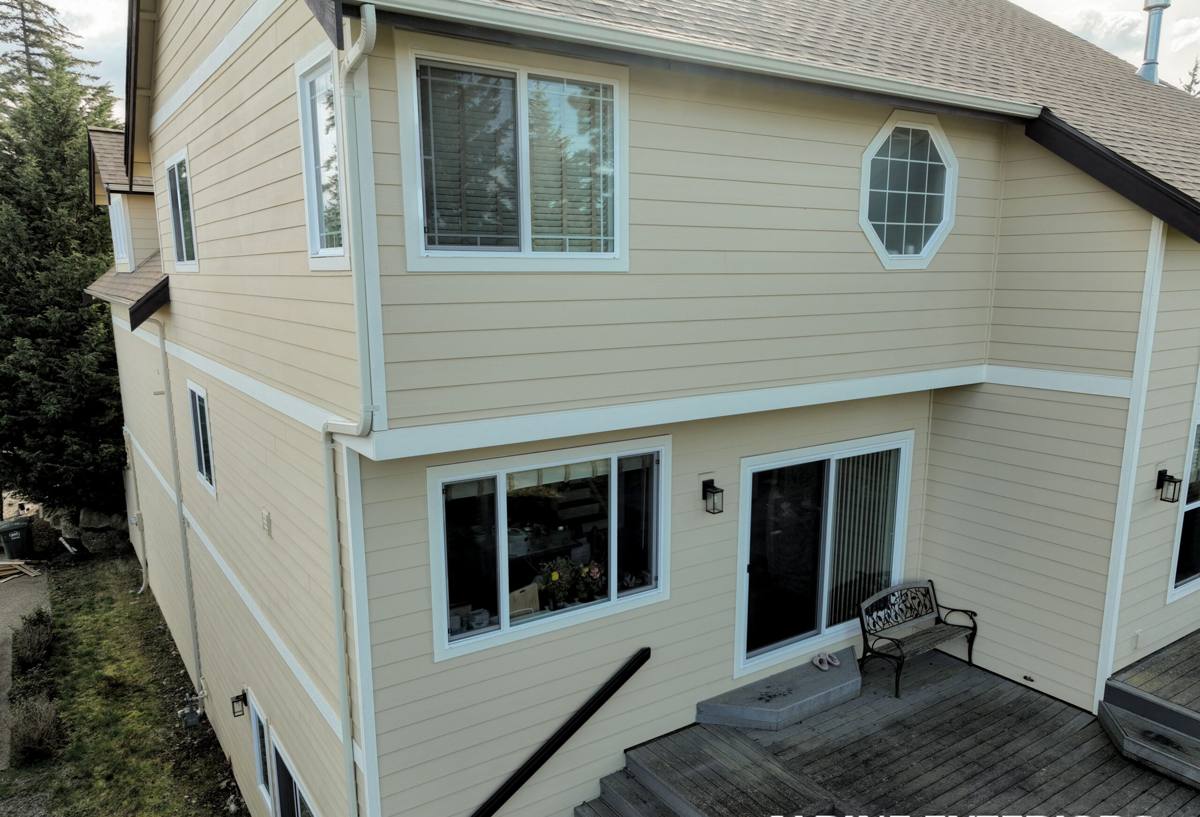
What Salt Air, Rain, and Moss Actually Do to a Deck
Salt Air and Metal Hardware
Airborne salt doesn't need direct ocean spray to cause problems — it travels on wind and settles on exposed metal everywhere on the island, including yards set back from the water. Standard zinc-coated deck screws and joist hangers can start rusting years ahead of schedule in this environment. Once a fastener starts corroding, it loses holding strength long before it looks obviously bad, which is part of why deck hardware deserves more attention here than in a typical inland build.
Driving Rain and Water Intrusion
Wind-driven rain doesn't just fall on a deck, it gets pushed sideways into every gap, seam, and fastener hole. The places that matter most are the ledger board where the deck attaches to the house, the end grain of any cut boards, and any spot where two pieces of framing meet. Water that gets trapped in those joints doesn't dry out quickly under a shaded, humid canopy, and that's where rot starts — usually from the inside, so it's not visible until the damage is well established.
Moss, Algae, and Shade
Tree cover is part of what makes a lot of Fidalgo Island lots so appealing, but it also means many decks sit in partial shade most of the day. Moss and algae need moisture and low light to establish, and a shaded deck surface that stays damp is exactly what they want. Beyond the maintenance headache, a mossy deck surface gets genuinely slick — it's a fall hazard, not just a cosmetic one, especially on stairs and near railings.
Framing and Fasteners That Are Actually Built for This Environment
The framing is the part of a deck nobody sees once it's finished, which is exactly why it's the part most often built to a minimum standard instead of the right standard. For decks on Fidalgo Island, we use fasteners and hardware rated for corrosive or coastal exposure — stainless steel or heavy hot-dip galvanized screws and joist hangers, not the standard-grade coated hardware that's fine for a drier inland lot. We also use self-adhering flashing tape over the tops of joists and beams before decking goes down, which keeps rainwater from sitting directly on cut lumber and wicking into the wood grain.
None of this is exotic or expensive to do right at the framing stage — it's mostly about spec'ing the correct hardware from the start. It's expensive and disruptive to fix later, once decking, railings, and stairs are already built on top of it.
Choosing a Decking Material for a Fidalgo Island Lot
There's no single right decking material for every property here — the right choice depends heavily on how much sun exposure and salt exposure a specific deck actually gets. We walk through these trade-offs honestly with every homeowner rather than defaulting to whatever's easiest to install.
| Decking Material | Moisture Handling | Moss/Algae Resistance | Maintenance | Typical Lifespan |
|---|---|---|---|---|
| Pressure-treated fir/hem-fir | Good if sealed and maintained | Needs regular cleaning | Annual cleaning, periodic re-staining/sealing | 10-15 years with upkeep |
| Cedar | Naturally decay-resistant, still needs sealing | Needs regular cleaning | Re-oiling/sealing every 1-2 years | 15-20 years with upkeep |
| Composite/PVC decking | Doesn't absorb water or rot | Can still grow surface moss/algae in deep shade, but doesn't hold moisture internally | Periodic washing, no sealing/staining | 25+ years, most with long manufacturer warranties |
On heavily shaded Fidalgo Island lots, we lean toward recommending composite or PVC decking simply because it doesn't give moisture anywhere to soak in — surface moss can still be washed off, but it's not eating into the board itself. On sunnier, more open lots, a well-maintained wood deck is a perfectly reasonable choice, as long as the homeowner is realistic about the ongoing cleaning and sealing commitment that comes with it.
Ledger Attachment and Flashing — Where Most Deck Failures Start
The ledger board is the framing member bolted directly to the house that carries a large share of the deck's structural load, and it's also the single most common point of water damage on any deck, anywhere. On an island where rain regularly comes in sideways, a poorly flashed ledger is a slow-motion problem — water works behind the board, into the house's wall framing, and often isn't discovered until siding or interior finishes start showing damage.
We install proper step flashing integrated with the house's existing water barrier, not just a bead of caulk behind the board, and we use structural standoff hardware on older homes where the original wall assembly wasn't built with a ledger connection in mind. This is also the point in a project where it matters that a crew has actually worked on homes in this climate before — the right flashing detail changes depending on the existing siding and house wrap, and getting it wrong is expensive to discover later.
Footings, Framing Spans, and Wind Exposure
Fidalgo Island's terrain runs from sheltered inland lots to bluffs and shoreline properties with real wind exposure off the water. Footing depth and post spacing both need to account for local soil conditions and frost depth, and elevated or view-facing decks need framing sized for wind load, not just the vertical weight of furniture and people standing on it. We size beams, joists, and footings to the actual site conditions rather than building every deck to one generic spec, and we pull the required permits through the local building department so the structural work is inspected and documented, not just eyeballed.
Railings and Making the Most of a Water View
A lot of Fidalgo Island decks exist specifically to take advantage of a water or mountain view, which makes railing choice more than a code checkbox. Guardrails are required by code once a deck reaches a certain height above grade, with a minimum rail height that your local building department will confirm for your specific project. Beyond meeting code, the options differ in how well they hold up out here:
- Wood railings — match a traditional look but need the same sealing/staining upkeep as wood decking
- Cable railing — popular for keeping sightlines open toward the water, but stainless cable and hardware still need occasional inspection and cleaning in salt air
- Glass panel railing — maximizes the view with no visual obstruction, low maintenance, but glass needs periodic washing to stay clear
- Composite or aluminum railing systems — low maintenance and resistant to corrosion, a common choice for shaded or coastal-exposed decks
Our Deck Building Process
- On-site assessment of sun/shade exposure, soil conditions, and how the deck will attach to the existing house
- Design and material recommendations based on that specific site, plus a clear written estimate
- Permit submission and coordination with the local building department
- Footings, framing, and ledger flashing, built with corrosion-rated hardware throughout
- Decking, railing, and stair installation
- Final walkthrough covering how to maintain the specific materials used on your deck
Maintaining a Deck in a Salt-Air, Heavy-Moss Environment
Even the best-built deck needs some seasonal attention out here. A short annual routine keeps small issues from becoming structural ones:
- Sweep debris and standing water off the deck surface regularly, especially under tree cover
- Wash off moss and algae buildup before it has a chance to stain or get slick, particularly on stairs
- Check fasteners and hardware for early rust staining once a year
- Re-seal or re-stain wood decking and railings on the schedule the material actually needs, not just when it looks bad
- Keep gutters and downspouts near the deck clear so runoff isn't dumping extra water onto the structure
- Have the ledger connection and footings checked periodically, especially on older decks
Why Local Experience on Fidalgo Island Matters
Building a deck that lasts here isn't about following a generic national how-to guide — it's about knowing which lots need corrosion-rated hardware from day one, which shaded yards are going to fight moss no matter what decking goes down, and which older homes need extra care at the ledger connection. A crew that already works Fidalgo Island regularly has already seen how decks in this specific climate fail, and builds around those failure points instead of finding out about them later.
If you're planning a new deck or dealing with problems on an existing one, we're happy to take a look and talk through what your specific lot actually needs. Fill out the form below for a free, no-pressure estimate.