 Anacortes Siding
 Siding Installation on Fidalgo Island
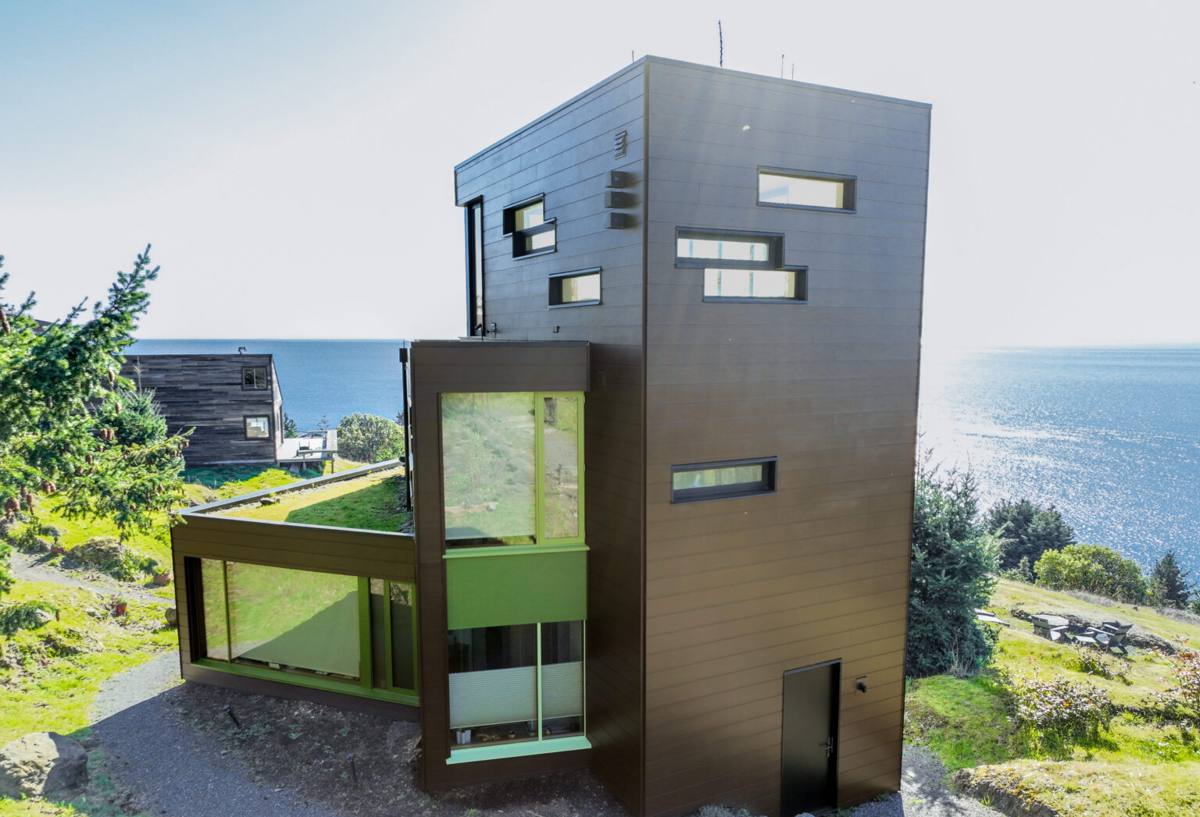
Fidalgo Island sits where the Salish Sea meets the Skagit County mainland, and that geography shapes everything about how siding performs here. Homes on the island — whether they look out over Rosario Strait, sit tucked into a wooded hillside, or line a quiet street in town — all face the same combination of salt-laden air, wind-driven rain, and a wet season that can stretch from October well into May. Siding that isn't built and installed for that combination doesn't fail dramatically. It fails slowly, through swelling, staining, fastener corrosion, and moisture that finds its way behind the cladding before anyone notices a problem.
This page covers what siding installation actually needs to look like on Fidalgo Island — not siding in general, but siding sized to this specific stretch of coastline and the houses built on it.
What the Island Climate Does to Siding
Salt Air
Proximity to saltwater means airborne salt settles on exterior surfaces year-round, not just during storms. Salt is corrosive to exposed metal fasteners and trim, and it accelerates the breakdown of finishes that weren't formulated to resist it. On homes closer to the water, this effect is constant; even a few blocks inland, salt exposure is still part of the equation in a way it wouldn't be for a house in, say, eastern Skagit County.
Driving Rain
Storms coming off the water don't just drop rain straight down — wind pushes it sideways, into seams, laps, and trim joints that would stay dry in a calmer climate. Siding systems on Fidalgo Island need to shed that rain at every horizontal and vertical joint, and the water management behind the siding (not just the siding itself) has to be able to handle water that does get past the surface.
Moss and Algae
Long wet winters and shaded, tree-covered lots give moss and algae plenty of time to establish themselves on north-facing walls, under eaves, and anywhere air doesn't circulate well. Once established, moss holds moisture against the wall surface, which is a problem for any siding material that isn't dimensionally stable or that absorbs water readily.
Why This Matters More Here Than in Drier Parts of the County
A house in a drier inland climate can tolerate more installation shortcuts and still hold up reasonably well for years. On Fidalgo Island, the margin for error is smaller. Gaps in flashing, caulk used in place of proper overlap, fasteners that aren't rated for the exposure, or siding hung too tight to the wall without a drainage gap — all of these show up faster and worse in a marine climate than they would elsewhere. That's why the installation details matter as much as the product choice.
What Correct Siding Installation Involves
Water Management Behind the Siding
Siding is the visible layer, but it's not the only layer doing the work. A correctly installed system includes a weather-resistive barrier, properly lapped and taped seams, and flashing at every window, door, and horizontal transition — installed so water is directed out and away from the wall assembly, not trapped behind the cladding. On a site exposed to driving rain, this layer is doing as much work as the siding itself.
Drainage Gap
A small gap between the back of the siding and the wall surface lets any moisture that does get through drain and dry out instead of sitting against the sheathing. This detail matters more on shaded, damp lots — which describes a fair number of Fidalgo Island properties — than it does on a dry, sun-exposed wall.
Fasteners and Trim
In a marine environment, fastener choice isn't a minor detail. Corrosion-resistant fasteners, correctly set (not overdriven, not underdriven), keep the siding secured and keep rust streaks from forming on the face of the material over time.
Joints, Laps, and Caulking
Every horizontal lap, corner, and butt joint is a potential entry point for wind-driven rain. Correct overlap dimensions, and caulking used as a supplement rather than a substitute for proper flashing, are what keep those joints dry through a Pacific Northwest winter.
Why We Install Only James Hardie Fiber Cement
We install James Hardie fiber cement siding exclusively — we don't install vinyl, LP SmartSide, primed wood, or other fiber cement brands. That's not a marketing position; it's a decision based on what holds up under exactly the conditions Fidalgo Island produces.
- Non-combustible material: fiber cement doesn't feed a fire the way wood-based products can, which matters on wooded island lots.
- Dimensionally stable: Hardie board doesn't swell and shrink with moisture the way engineered wood products do, which matters directly for a climate with a long wet season.
- Climate-engineered product lines: Hardie's HZ5 formulation is built specifically for wetter, harsher climates like the Pacific Northwest, as opposed to a one-size-fits-all product.
- Factory-applied ColorPlus finish: baked on in a controlled environment, it resists fading and holds up to salt air and UV better than field-applied paint, and it comes with its own finish warranty.
- Strong transferable warranty: Hardie backs its siding with a long-term warranty, which carries real weight on a coastal home where premature failure is a genuine risk with the wrong material.
We're not going to tell a homeowner that vinyl or engineered wood siding is worthless — both have legitimate uses. But given the salt air, rain exposure, and moss pressure that Fidalgo Island homes face, we've made the call that fiber cement done right is the product we're willing to put our name on here.
How Product Choice Plays Out in This Climate
| Factor | Vinyl Siding | Engineered Wood | James Hardie Fiber Cement |
|---|---|---|---|
| Moisture response | Doesn't absorb water, but can warp or gap over time | Absorbs moisture; prone to swelling if compromised | Dimensionally stable; engineered for wet climates |
| Salt air exposure | Generally tolerant, can chalk/fade | Finish can degrade faster near salt spray | ColorPlus finish resists fading and salt exposure |
| Fire resistance | Can melt/deform under heat | Combustible | Non-combustible |
| Moss/algae resistance | Moderate; surface can trap growth in seams | Vulnerable if coating is compromised | Durable surface, holds paint/finish well long-term |
| Typical lifespan when correctly installed | 20-30 years | 15-25 years | 30-50+ years |
Our Process for Fidalgo Island Projects
Assessment
We start by looking at the specific exposure of the property — waterfront-facing walls, shaded north sides prone to moss, existing moisture damage, and the condition of the sheathing and framing underneath the current siding. Every lot on the island has a slightly different exposure profile, and the plan should reflect that.
Water Management Plan
Before siding goes up, we address the weather-resistive barrier, flashing details at every penetration, and drainage gap — the parts of the job that don't show once the siding is on but determine how the wall performs for the next several decades.
Installation to Manufacturer Spec
James Hardie siding performs the way it's rated to perform only when installed to the manufacturer's specifications — correct fastener spacing, clearances, and joint treatment. We install to that spec, not around it.
Final Walkthrough
We walk the finished job with the homeowner, covering what was done and what basic maintenance (if any) the specific product and finish will need going forward.
What to Ask Before Hiring a Siding Contractor on the Island
- Have they installed siding on Fidalgo Island or similarly exposed coastal sites before?
- Do they detail flashing and water management, or just focus on the visible siding?
- What fastener type do they use, and is it rated for a marine/coastal environment?
- Are they a certified installer for the specific product they're proposing?
- Will they show you the drainage gap and weather barrier details before siding goes up, not just after?
- What does the warranty actually cover — material, finish, labor — and who backs it?
Local Experience Matters
A crew that already works Fidalgo Island knows which walls take the worst of the driving rain, which lots hold moisture longer because of tree cover, and which details tend to get skipped by installers who aren't used to a marine climate. That familiarity shows up in fewer callbacks and a wall assembly that's built for the conditions it actually faces, not generic conditions from a manufacturer's install guide written for a drier region.
Anacortes and the rest of Skagit County share this same coastal exposure, but Fidalgo Island's waterfront and near-waterfront lots see it most directly. That's the standard we install to on every project here.
If you're planning a siding project on Fidalgo Island, we're happy to take a look at your home and walk you through what it needs. Reach out for a free, no-pressure estimate — there's a form right below.