 Anacortes Siding
 Fiber Cement Siding Built for Fidalgo Island
Fidalgo Island sits at the edge of the Salish Sea, which means homes here take a different kind of weathering than houses even a few miles inland. Salt-laden air moves off Rosario Strait and Guemes Channel, driving rain comes in sideways off the water during winter storms, and the shaded, moisture-heavy months of fall and winter push moss and algae growth onto anything that stays damp too long. Siding on Fidalgo Island isn't just cladding — it's the first line of defense against a climate that never really lets a house dry out completely from October through April.
We install James Hardie fiber cement siding exclusively, and on Fidalgo Island that choice matters more than in a lot of places. This page covers what local homes actually need from their siding, what a correct installation looks like out here, and why working with a crew that already knows this stretch of Skagit County saves homeowners money and headaches down the road.
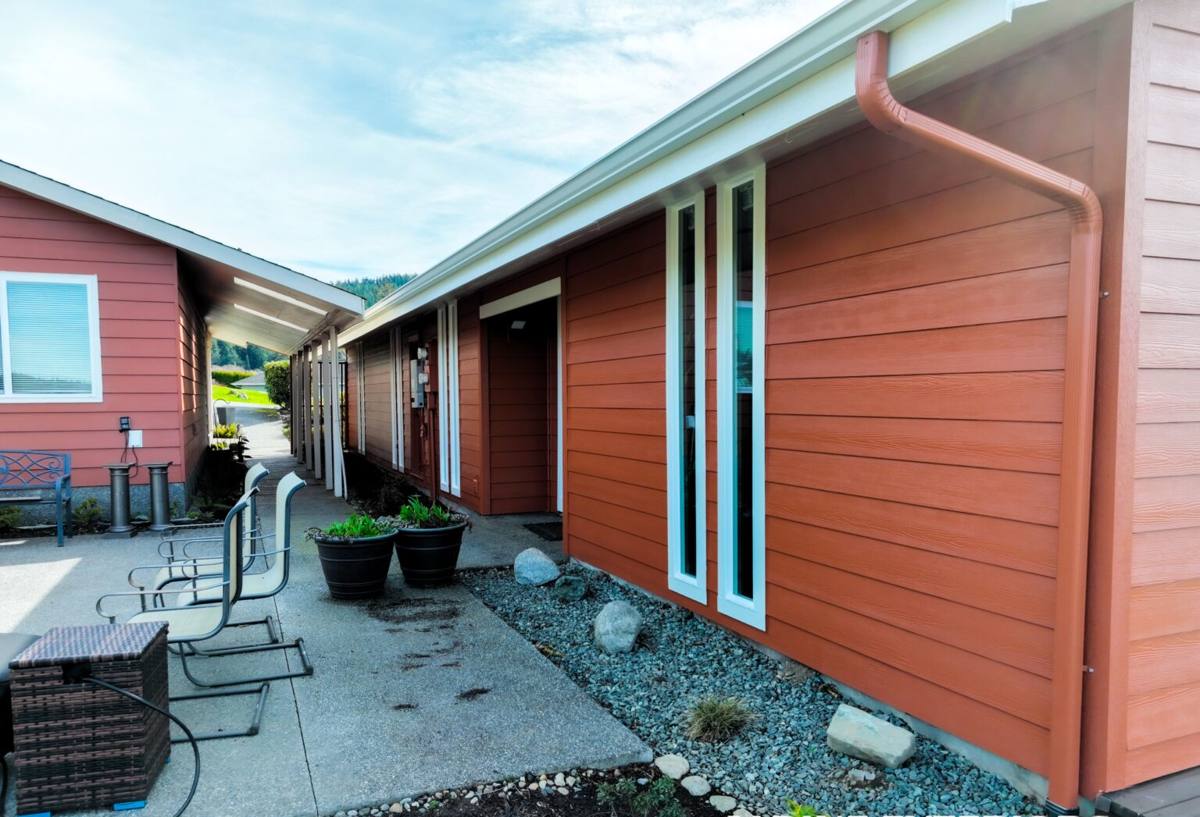
What Fidalgo Island's Climate Does to Siding
Salt Air and Corrosion
Being surrounded by saltwater on three sides, Fidalgo Island homes face slow corrosion of exposed metal fasteners, trim flashing, and any siding material that isn't engineered to handle a marine-adjacent environment. Salt air accelerates the breakdown of paint films and can pit poorly coated metal over years of exposure. Fiber cement itself doesn't corrode — it's cement, sand, and cellulose fiber — but the fasteners, flashing, and trim details around it have to be chosen and installed with that same salt exposure in mind, or they become the weak point.
Driving Rain and Moisture Cycling
Storms coming off the strait don't just fall straight down — wind-driven rain gets pushed sideways into wall assemblies, especially on west- and southwest-facing elevations. A siding system with weak seams, gaps at butt joints, or insufficient overlap gives that water a way in. Once moisture gets behind siding and can't dry out because of our long, cool, damp winters, it sits there — and that's when sheathing rot and mold problems start, often invisible until the siding itself is pulled off.
Moss, Algae, and the Shoulder Seasons
Anacortes gets enough overcast, moist weather that north-facing walls and anything under tree cover can hold moisture long enough for moss and algae to take hold. This is mostly a cosmetic and maintenance issue, but it's a constant one for island homeowners, and it factors into which finish and which siding product actually holds up without needing to be pressure-washed or repainted every couple of years.
Why James Hardie Fits This Environment
James Hardie fiber cement is non-combustible, dimensionally stable, and doesn't absorb and swell with moisture the way wood-based products can. For Fidalgo Island specifically, three things matter most:
- ColorPlus factory finish — a baked-on finish applied under controlled conditions, which holds up better against UV and salt exposure than field-applied paint, and doesn't need repainting on the same schedule as painted wood or hardboard siding.
- HZ5 product engineering — Hardie's HZ climate zone system is built around real regional weather data. Western Washington's marine climate calls for a different formulation than a hot, dry climate would, and installing the wrong HZ rating for the region is a mistake we don't make.
- Rot-proof composition — fiber cement won't absorb water and rot the way cedar or primed spruce siding can, which matters enormously in a climate where wall assemblies rarely get a long stretch of dry weather to fully purge moisture.
None of that replaces correct installation. Even the right product, installed with the wrong clearances or the wrong fasteners, will underperform in this climate.
What a Correct Installation Looks Like Here
Fasteners and Hardware
In a salt-air environment, fastener choice isn't a minor detail. We use corrosion-resistant fasteners rated for the exposure, not general-purpose hardware that looks fine on day one and starts staining or failing within a few years. The same goes for flashing at windows, doors, and any horizontal trim — it has to be a material and installation detail that won't corrode faster than the siding around it.
Clearances and Drainage
James Hardie specifies minimum clearances between siding and grade, roof lines, decks, and other horizontal surfaces. On Fidalgo Island, where standing moisture and splashback are a bigger issue than in a drier climate, we hold to those clearances strictly rather than treating them as flexible. A rainscreen or drainage plane behind the siding gives any moisture that does get past the cladding a way to drain and dry instead of sitting against the wall sheathing.
Joints, Caulking, and Butt Seams
Butt joints and panel seams are where driving rain finds its way in if they're not detailed correctly. That means proper overlap or H-molding where called for, quality sealant at the right joints (and no sealant where it isn't needed, since over-caulking can trap moisture), and attention to how each course sheds water into the one below it rather than behind it.
Painted vs. ColorPlus Finish
For Fidalgo Island homes, we generally steer customers toward factory ColorPlus finishes over field-primed-and-painted Hardie panels, specifically because of the salt air and UV exposure. Factory finish holds color and integrity longer in this environment, which means fewer repaint cycles over the life of the siding.
Our Process for Fidalgo Island Homes
- On-site assessment — we look at wall orientation relative to prevailing wind and rain, existing moisture damage, current siding condition, and any problem areas like north-facing walls or spots under tree cover.
- Tear-off and sheathing check — removing old siding lets us actually see the wall assembly underneath. Any rot, soft sheathing, or moisture damage gets addressed before new siding goes on — covering up a problem is how small repairs turn into big ones.
- Weather barrier and drainage plane — correct house wrap or weather-resistant barrier installation, with attention to overlaps and seams, sets up the drainage plane that keeps incidental moisture moving out instead of in.
- Hardie installation to spec — proper fastener pattern, clearances, joint treatment, and flashing details, following James Hardie's published installation requirements rather than shortcuts.
- Trim and detail work — corners, window and door surrounds, and any transitions get the same attention, since these are common leak points if rushed.
- Final walkthrough — we go over the finished work with the homeowner so there are no surprises.
Why a Local Crew Matters on Fidalgo Island
A crew that already works Anacortes and the surrounding island knows which elevations take the worst weather, how moisture behaves in this specific climate, and what corners never to cut here even if they might be lower-risk elsewhere in Skagit County. That local knowledge shows up in small decisions — fastener selection, clearance details, which side of the house gets extra attention — that add up to siding that actually performs for 30-plus years instead of needing early repairs.
It also means faster response for warranty questions or follow-up service, without a crew having to drive in from out of the area and relearn the site conditions every time.
Cost Factors for Fiber Cement Siding on Fidalgo Island
| Factor | Why It Affects Cost |
|---|---|
| Home size and wall complexity | More linear footage, more corners, dormers, and cutouts increase labor time |
| Tear-off and sheathing repair | Existing moisture or rot damage found during tear-off adds repair scope before new siding goes on |
| Finish choice | Factory ColorPlus finish vs. field-primed panels affects both material cost and long-term repaint costs |
| Trim and accent detail | Board-and-batten accents, shakes, or trim upgrades add material and labor |
| Site access | Waterfront lots, steep grades, or limited access on some island properties can affect staging and labor time |
We provide a firm, itemized quote after an on-site assessment rather than a rough number over the phone — every house and every lot on the island is a little different.
Signs It's Time to Consider New Siding
- Visible warping, cracking, or soft spots in current siding
- Persistent moss or algae staining that keeps coming back after cleaning
- Paint that's peeling or failing faster than it should between repaint cycles
- Soft or discolored sheathing visible at seams, corners, or penetrations
- Rising energy bills that may point to a compromised weather barrier
- Siding that's simply reached the end of its expected service life
Let's Look at Your Home
If you're on Fidalgo Island and dealing with aging or failing siding, we'll come take a look, walk the exterior with you, and give you an honest read on what's going on and what it would take to fix it right. There's no pressure and no obligation — just a straight assessment from a crew that knows this island's weather. Request a free estimate using the form below.