 Anacortes Siding
 Why Fidalgo Island Homes Wear Siding Differently
Fidalgo Island sits where saltwater air off Rosario Strait and the Guemes Channel meets a long, wet Pacific Northwest winter. That combination is harder on exterior siding than most homeowners realize. Salt-laden air accelerates corrosion on fasteners and trim, driving rain off the water pushes moisture sideways into seams and laps that would stay dry in a more sheltered location, and the region's extended damp, shaded season gives moss, algae, and mildew months to take hold on north-facing and tree-shaded walls. A siding system that performs fine in a drier inland climate can fail early here if it isn't matched to these conditions and installed with that reality in mind.
None of this means Fidalgo Island homes need exotic materials or unusual methods. It means the basics — water management, material selection, and fastener detailing — matter more here than they do in most of the country, and cutting corners on any of them shows up faster on this island than it would elsewhere in Skagit County.
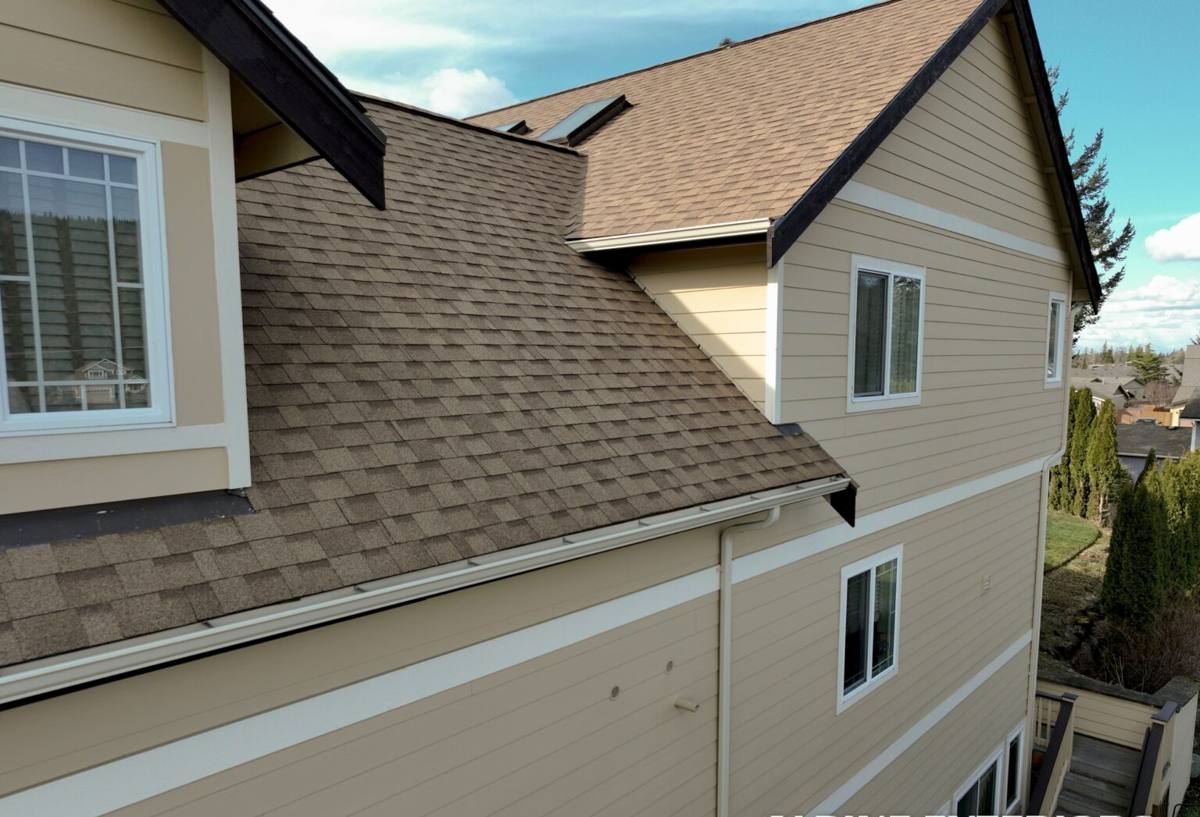
Signs Your Fidalgo Island Home Needs Siding Replacement
Moisture-Related Warning Signs
Siding failure on this island rarely announces itself with an obvious hole or crack. It usually starts quietly: soft spots you can press in with a thumb, paint that keeps failing in the same spots no matter how often it's repainted, staining that tracks down from a window head or corner trim, or a slightly swollen look to boards near the bottom of a wall. These are signs that water is getting behind the siding and the material underneath — sheathing, framing, or trim — is starting to absorb it.
Moss, Algae, and Biological Growth
A moss-season this long means growth on siding isn't just cosmetic. Moss and algae hold moisture against the surface long after rain has stopped, and on absorbent or degraded siding that constant dampness accelerates rot underneath. Green or black streaking on north-facing walls, under eaves, or near tree cover is common on this island — the question is whether it's a surface issue that pressure washing and re-coating can handle, or a sign the siding itself has lost its ability to shed water.
Age and Material Type
Some materials simply don't hold up as long in this climate regardless of maintenance. Older wood, hardboard, and some engineered wood sidings from past decades were not built for sustained coastal moisture exposure, and by 20-30 years many are past the point where patching makes sense. If your siding predates modern moisture-resistant products and shows more than isolated damage, replacement is usually the more cost-effective path over continued spot repair.
What a Correct Siding Replacement Involves
Replacing siding is not just pulling old material off and nailing new material on. On a coastal property like this, the work that happens before and beneath the visible siding determines how long the job actually lasts.
Tear-Off and Substrate Inspection
Once old siding comes off, the sheathing and framing underneath get inspected for rot, soft spots, or prior water damage. Any compromised material gets repaired or replaced before new siding goes up — installing new siding over damaged substrate just hides a problem that will resurface.
Water-Resistive Barrier and Flashing
A correctly lapped weather-resistive barrier, properly integrated window and door flashing, and correct kick-out flashing at roof-wall intersections are what actually keep driving rain out of the wall assembly. Siding itself is the visible layer; the drainage plane behind it does most of the real work, especially on walls that face prevailing wind and rain off the water.
Fastening and Clearances
Corrosion-resistant fasteners matter more here given the salt air, and proper clearance between siding and grade, decks, and roof lines keeps splash-back and standing moisture away from the bottom edge of the material — one of the most common failure points on any coastal home.
Why We Install Only James Hardie Fiber Cement
We standardized on James Hardie fiber cement siding for every home we work on, including here on Fidalgo Island, and we don't install vinyl, LP SmartSide, primed wood, cedar, or other fiber cement brands. That's a deliberate professional standard, not a sales pitch, and it comes down to how these products perform specifically in this kind of coastal, high-moisture environment over decades, not just years.
Built for Moisture and Salt Air
Fiber cement is non-combustible and doesn't rot, warp, or provide a food source for the mold and moss spores that thrive in this climate the way wood-based products can. James Hardie's HZ5 product line is engineered for climates with freeze-thaw cycling and sustained moisture exposure, which fits Fidalgo Island's weather pattern better than a product line engineered primarily for dry-climate performance.
ColorPlus Factory Finish
James Hardie's ColorPlus finish is baked on in a factory-controlled process, which gives it more consistent, longer-lasting color performance against UV and salt exposure than field-applied paint on wood or hardboard siding. That matters on a coastal property where sun, salt, and rain are all working against a painted finish simultaneously.
Warranty and Long-Term Value
James Hardie backs its siding with a strong, transferable limited warranty, which protects both current homeowners and resale value — a meaningful factor on an island where buyers increasingly ask about exterior material and maintenance history before making an offer.
How Fiber Cement Compares for This Climate
| Material | Moisture/Salt Air Performance | Maintenance | Typical Longevity Here |
|---|---|---|---|
| James Hardie Fiber Cement | Engineered for sustained moisture and coastal exposure; non-combustible | Periodic wash and repaint of trim/caulk per finish schedule | Decades with correct install and upkeep |
| Vinyl Siding | Doesn't rot, but can warp/fade and doesn't stop moisture reaching sheathing on its own | Low, but limited repair options if damaged or faded | Variable; UV and impact damage common over time |
| Wood/Cedar | Attractive but absorbs moisture; vulnerable to rot and moss in shaded, damp areas | High — regular refinishing and moisture monitoring | Shorter without aggressive maintenance |
| LP SmartSide / Engineered Wood | Improved over old hardboard but still wood-based and moisture-sensitive at cut edges and seams | Moderate — edge sealing and finish upkeep matter | Depends heavily on installation and edge sealing |
Our Siding Replacement Process
1. On-Site Assessment
We walk the exterior, check current siding condition, look for signs of moisture intrusion, and talk through what's driving the replacement — age, storm damage, moss and staining, or a planned exterior update.
2. Detailed Estimate
You get a clear, written scope covering tear-off, substrate repair if needed, water-resistive barrier and flashing work, the James Hardie product line and color selected, and a realistic timeline.
3. Tear-Off and Substrate Repair
Old siding comes off, sheathing and framing get inspected, and any rot or damage is addressed before anything new goes up.
4. Weather Barrier, Flashing, and Installation
Water-resistive barrier, flashing at windows, doors, and roof intersections, and James Hardie siding installed to manufacturer specification, including fastener type and spacing suited to this climate.
5. Final Walkthrough
We walk the finished job with you, cover care and maintenance basics for the product, and make sure everything meets what was scoped.
What Drives Cost on a Fidalgo Island Siding Job
- Total square footage and the home's overall shape — corners, gables, and dormers add labor
- Condition of the substrate once old siding is removed — hidden rot adds repair scope
- Whether trim, fascia, and flashing are being replaced along with the field siding
- Product line, plank profile, and color selected within the James Hardie system
- Site access — waterfront and hillside lots on the island can add staging complexity
- Height and story count, which affect scaffolding or lift needs
Why Hiring a Crew That Already Works This Island Matters
Anacortes and the rest of Fidalgo Island have their own microclimate patterns — which walls take the worst of the driving rain, where moss builds up fastest, how salt air behaves differently near the water versus further inland on the island. A crew that already works here regularly recognizes these patterns on sight instead of learning them on your house. That translates into better flashing decisions at vulnerable points, smarter product selection for a given exposure, and fewer surprises once tear-off starts. It also means a contractor with a real, ongoing presence in Skagit County who will be reachable if a warranty question comes up years down the road, not someone who did one job on the island and moved on.
If your siding is showing moisture damage, heavy moss buildup, or is simply old enough that the writing's on the wall, we'll come take a look and give you a straight answer about what your home actually needs. We offer free, no-pressure estimates for Fidalgo Island homeowners — use the form below to get started.