 Anacortes Siding
 Building Decks for Edison Homes in a Tough Coastal Climate
Edison sits in that stretch of Skagit County where farmland meets saltwater air, and any deck built out here has to earn its keep. Between the moisture rolling in off the water, the long wet stretches of fall and winter, and the shade that a lot of these properties carry from mature trees and fence lines, a deck in this area ages differently than one built inland or on a dry, sun-exposed lot. We've built and repaired decks throughout the Anacortes area long enough to know which details matter here and which ones are just extra cost.
This page is specifically about deck building for Edison properties — not a generic overview. If you're weighing a new deck, a rebuild, or a repair on an existing structure, the details below reflect what actually holds up in this pocket of Skagit County.
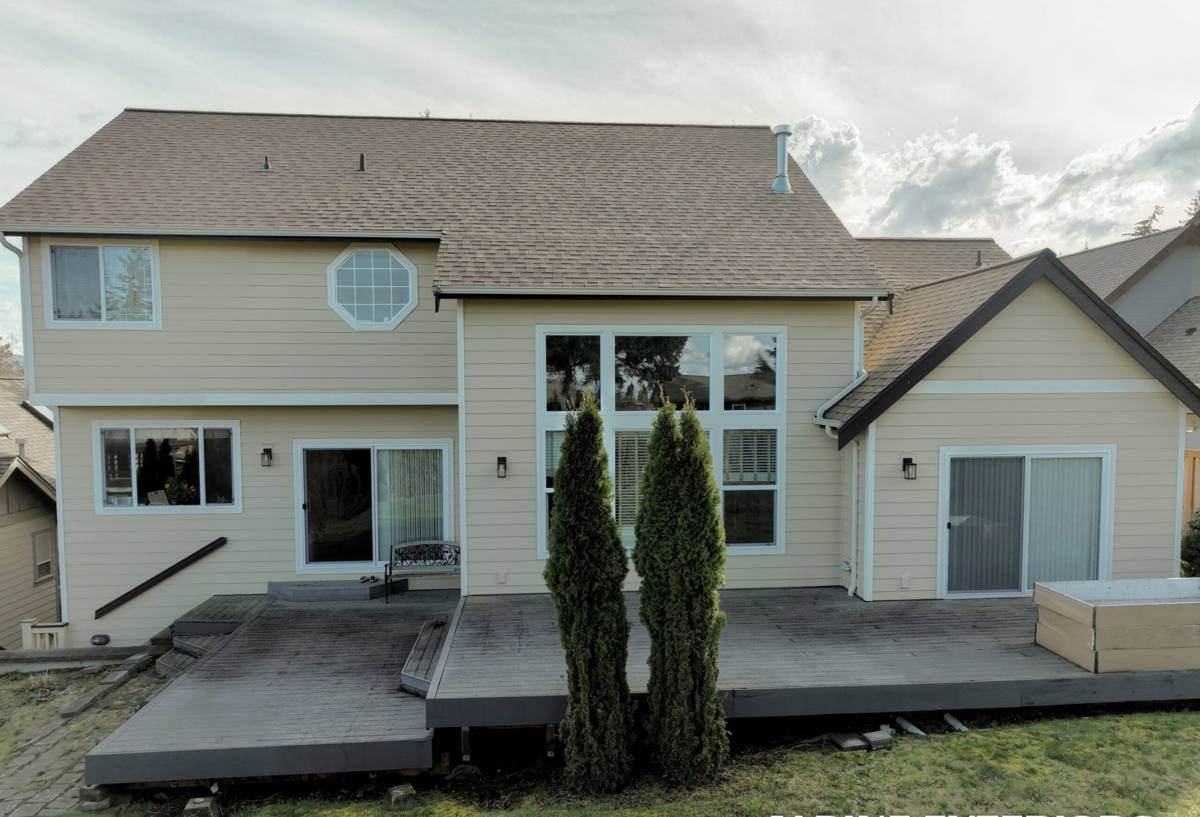
What Edison's Climate Does to a Deck
Salt-tinged air, driving rain off the water, and a moss season that can stretch for months are the three forces we design around out here. Each one attacks a deck differently, and a deck that isn't built with all three in mind will show problems faster than the homeowner expects.
Salt Air and Fasteners
Proximity to saltwater accelerates corrosion on hardware that isn't rated for it. Standard interior-grade screws and nails will streak, weaken, and eventually fail well ahead of the wood around them. We use fasteners and structural connectors rated for exterior and coastal exposure — it costs more up front and it's the single biggest difference between a deck that lasts and one that develops rust stains and loose boards within a few years.
Driving Rain and Water Management
Rain in this area doesn't always fall straight down — wind-driven rain gets up under boards, into ledger connections, and behind rim joists if those areas aren't properly flashed and gapped. Poor water management at the ledger board (where the deck attaches to the house) is one of the most common failure points we find on older decks, and it's also a structural safety issue, not just a cosmetic one.
Moss, Shade, and Standing Moisture
Wherever a deck sits in shade or under tree cover, moss and algae growth follows. Beyond looking bad, moss holds moisture against the wood surface, which slows drying and invites rot in a way that a bare, ventilated board doesn't experience. Board spacing, airflow underneath the deck, and species/finish choice all affect how much of a moss problem a given deck will develop.
What a Properly Built Deck Looks Like Out Here
A deck built for Edison's conditions isn't fundamentally a different structure than one built anywhere else — it's the same fundamentals executed with more attention to the details that this climate punishes.
- Ledger board properly flashed and sealed against the house, with a drainage gap where the deck meets the wall
- Corrosion-resistant, exterior-rated fasteners and structural hardware throughout — not just at visible connections
- Adequate board spacing for drainage and airflow, especially in shaded sections of the deck
- Footings and posts sized and set to handle sustained wet ground conditions common to this area
- Decking material chosen with realistic expectations for moisture exposure and maintenance tolerance
- Clear water paths — no low spots or dead zones where rain and debris can pool
Skip any one of these and the deck will still look fine on installation day. The problems show up in year two or three, usually as soft spots near the ledger, loosening boards, or a slick, moss-covered surface that becomes a slip hazard through the wet months.
Decking Material Options for Edison Properties
There's no single "right" material for every home — it depends on budget, how much maintenance the homeowner wants to take on, and how shaded the deck's location is. Here's how the common options compare for a property like this.
| Material | Moisture Performance | Maintenance | Notes for This Climate |
|---|---|---|---|
| Pressure-treated wood | Good, if sealed and re-sealed on schedule | Annual/biennial cleaning and sealing | Lowest upfront cost; needs consistent upkeep to resist moss and rot in shaded areas |
| Cedar | Naturally moisture- and insect-resistant | Periodic cleaning and finishing to hold color and protection | Classic look; still needs care in shaded, damp spots to prevent graying and moss buildup |
| Composite decking | Excellent — engineered to resist moisture damage | Occasional washing; no sealing or staining | Higher upfront cost, but the lowest long-term maintenance in a wet, mossy environment |
For a shaded lot near tree cover, we often steer homeowners toward composite or a well-sealed cedar deck, simply because the maintenance burden of an unsealed wood deck in a low-sun, high-moisture spot adds up fast. That said, plenty of homeowners are happy to keep up with a wood deck's maintenance schedule in exchange for the lower initial cost — it's a real trade-off, not a wrong choice either way.
New Builds vs. Repairs and Rebuilds
We see both types of projects regularly in this area. A lot of older decks around Edison and the greater Anacortes area were built before coastal-rated hardware and proper ledger flashing were standard practice, so repair and rebuild work is common — not because the original builders did bad work, but because the materials and methods available at the time weren't matched to this climate.
Signs a Deck Needs More Than a Surface Fix
- Soft, spongy, or discolored wood anywhere near the ledger board or support posts
- Fasteners that are rusted, backing out, or leaving stains on the wood
- Persistent moss or algae that returns quickly after cleaning
- Visible gaps or movement where the deck meets the house
- Railings or stairs that feel loose or flex under normal use
Any of these can usually be diagnosed with an in-person look. Sometimes it's a targeted repair — replacing a section of decking or re-flashing a ledger. Other times, especially on older structures, a full rebuild ends up being the more cost-effective and safer option long-term.
Our Process for a New Deck
We keep this straightforward, and every step accounts for the conditions specific to this part of Skagit County.
- On-site assessment — we look at sun exposure, drainage, existing structure (if any), and how the deck will tie into the house
- Design and material discussion — sizing, layout, and an honest conversation about material trade-offs for your specific lot
- Permitting — we handle the paperwork required for the build, sized and documented correctly the first time
- Construction — proper flashing, coastal-rated hardware, correct footing depth, and attention to drainage and airflow throughout
- Final walkthrough — we go over the finished deck with you, including any maintenance recommendations specific to your material choice and site conditions
Why Local Experience in Edison Matters
A crew that's only worked drier, inland projects will sometimes underbuild for what this specific microclimate does to a structure over time — using standard hardware where coastal-rated hardware belongs, or skipping drainage details that don't matter fifty miles inland but matter a lot here. Working regularly throughout the Anacortes area, including Edison and the surrounding Skagit County communities, means we're not guessing at how salt air and driving rain behave on a deck over five or ten years — we've seen it, and we build accordingly from the start.
That local pattern recognition also shows up in smaller ways: knowing which board spacing actually holds up against moss in a shaded yard, or which ledger flashing details tend to get skipped on older builds and cause the water intrusion issues we're called out to fix.
Maintenance That Actually Matters Here
Whatever material you choose, a few habits go a long way in this climate:
- Clear leaves, needles, and debris from board gaps regularly — trapped debris holds moisture and feeds moss growth
- Rinse or wash the surface periodically, especially in shaded areas, to keep algae and moss from getting established
- Check and re-seal wood decking on the schedule appropriate to the product — don't wait until graying or cracking is visible
- Inspect fasteners and connectors annually for rust or loosening, particularly near the ledger board
- Keep gutters and downspouts near the deck clear so runoff isn't dumping extra water onto or under the structure
Get a Straightforward Estimate
If you're planning a new deck or dealing with an aging one on your Edison property, we're happy to take a look and give you an honest read on what it needs. There's no pressure and no obligation — just a straight assessment from a crew that already knows what this climate does to a deck. Fill out the form below to request your free estimate.