 Anacortes Siding
 Fiber Cement Siding for Edison, Washington Homes
Edison sits in one of the more exposed pockets of Skagit County — low, flat farmland pressed up against the saltwater of Samish Bay, with fog that rolls in off the water and settles into the fields most mornings. Homes here take on weather that a house twenty minutes inland never sees: salt-laden air, wind-driven rain off the bay, and shaded, damp lots where moss gets a head start every fall and doesn't let go until late spring. Siding that works fine in a drier part of the county can fail early here. We install James Hardie fiber cement siding on Edison homes because it's built to hold up against exactly this combination of conditions, and we want to walk through why that matters and what a correct installation actually looks like.
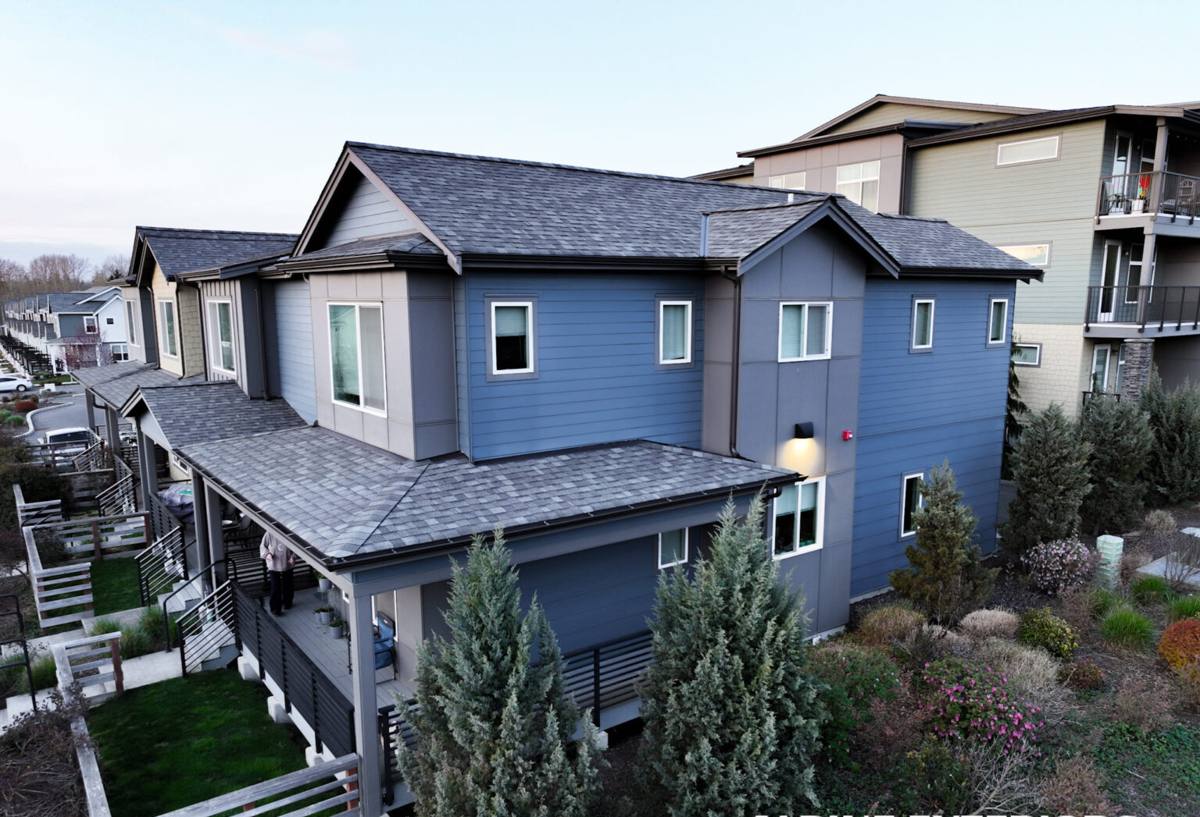
What Salt Air, Rain, and Moss Actually Do to Siding
Salt air and corrosion
Homes close to Samish Bay and the broader Skagit County shoreline are exposed to airborne salt that settles on exterior surfaces year-round, not just during storms. Salt accelerates corrosion in fasteners, flashing, and trim — and it degrades cheap coatings faster than inland weather ever would. Any siding material that relies on paint film for its long-term protection is fighting an uphill battle in this environment, because salt exposure breaks that film down faster than a standard maintenance schedule accounts for.
Driving rain and wind exposure
Edison's open, low-lying terrain means storms coming off the water hit house walls with real force, driving rain sideways into seams, laps, and trim joints that would stay dry on a more sheltered lot. Over years, that repeated wetting finds every weak point in a siding system — a poorly lapped joint, a gap at a window return, a fastener that wasn't set flush. Water intrusion at those points is what leads to rot, mold, and expensive repairs behind the siding, not just cosmetic wear on the surface.
Moss, shade, and standing moisture
A lot of Edison properties sit close to tree lines or have north-facing walls that stay shaded most of the day. Combined with the region's rainfall, that creates long stretches where siding surfaces simply don't dry out. Moss and mildew take hold in those damp, shaded conditions, and once established they hold moisture against the siding surface even longer — a cycle that speeds up deterioration on materials that aren't built to resist it.
Why James Hardie Fiber Cement Fits This Climate
James Hardie fiber cement is engineered from cement, sand, and cellulose fibers — a composition that doesn't rot, doesn't feed mold or moss the way wood-based products can, and doesn't corrode the way metal siding can. Hardie's ColorPlus factory-applied finish is baked on under controlled conditions and backed by its own finish warranty, which matters directly in a salt-air environment where field-applied paint tends to break down faster than the manufacturer's factory process. For coastal and high-moisture regions like Skagit County, Hardie also engineers climate-specific HZ product lines — HZ5 for wetter, harsher climates versus HZ10 for hot-dry regions — so the board itself is formulated for the moisture exposure Edison actually gets, not a generic national spec.
| Factor | James Hardie Fiber Cement | Vinyl Siding | Untreated Wood / Cedar |
|---|---|---|---|
| Moisture resistance | Engineered core resists water damage; won't rot | Water can get trapped behind panels | Absorbs moisture; prone to rot without upkeep |
| Moss / mildew resistance | Factory finish resists growth better than raw wood | Can trap moisture that feeds growth behind panels | Highly susceptible in shaded, damp conditions |
| Salt air durability | Non-combustible, stable composition; factory finish holds up | Can become brittle and discolor over time | Finish breaks down faster; more frequent refinishing |
| Maintenance | Periodic rinse and inspection | Low, but cracking/warping isn't repairable | Regular staining, sealing, and moss treatment |
| Fire resistance | Non-combustible | Melts/deforms under heat | Combustible |
What a Correct Installation Involves in Edison
Drainage plane and rain screen detailing
Fiber cement siding is only as good as what's behind it. In a wind-driven-rain environment like Edison, the weather-resistive barrier and drainage plane behind the siding do as much work as the siding itself — they give any water that does get past the surface a way to drain out instead of sitting against the sheathing. We build that drainage path correctly on every job, not as an afterthought.
Fastening and clearances
James Hardie specifies exact fastener types, spacing, and penetration depth, along with minimum clearances from grade, roof lines, and decks. Those clearances matter even more on shaded Edison lots, where siding installed too close to grade or a deck surface simply doesn't get the airflow it needs to dry between rain events.
Flashing and trim at every penetration
Windows, doors, hose bibs, light fixtures, and vents are all places where water finds its way in if flashing isn't detailed correctly. Every penetration gets proper flashing and sealant, and every horizontal trim piece is installed with a drip edge that sheds water away from the wall instead of channeling it behind the siding.
Field-cut edges get sealed
Any time a Hardie board is cut on site — at a corner, a window return, a gable end — that cut edge needs to be primed or sealed per manufacturer spec before installation. Skipping this step is a common shortcut that leaves an unprotected edge exposed to exactly the moisture Edison gets more of than most of the county.
Our Process for an Edison Fiber Cement Project
Every Edison job follows the same sequence, adjusted for the specific exposure of the lot — waterfront-facing wall, shaded north side, distance from the bay, tree cover, and so on.
- On-site assessment of existing siding, sheathing condition, and moisture history before any tear-off begins
- Check for hidden rot or water damage behind the existing siding, especially around windows, corners, and low walls near grade
- Install or verify the weather-resistive barrier and drainage plane before any new siding goes up
- Install Hardie panels or lap siding to manufacturer fastening and clearance specs, adjusted for the wall's sun and wind exposure
- Flash and seal every window, door, and penetration as part of the installation, not as a separate step
- Prime and seal all field-cut edges before they're closed in
- Final walk-through to confirm caulking, trim, and touch-up paint match and hold up to close inspection
Maintenance in a Moss-Prone, Salty Climate
Correctly installed Hardie siding is genuinely low-maintenance, but "low" doesn't mean "none" — especially in Edison's conditions. A few habits go a long way: keep gutters clear so overflow doesn't run down the wall face, keep tree branches trimmed back from shaded walls so those sections get more light and airflow, and rinse the siding down periodically to clear off salt residue and any early moss growth before it establishes. When pressure washing, keep the nozzle at a safe distance and angle — driving water up under laps or trim defeats the drainage system that's protecting the wall behind it.
Why Hire a Crew That Already Works in Edison
A crew that's worked Skagit County's coastal pockets knows which walls on an Edison property need extra attention before a single board goes up — which sides catch the worst of the wind off the bay, which lots hold moisture longest under tree cover, and how the local building department expects flashing and clearance details to be documented. That local familiarity shows up in decisions made before the first cut: how the job is sequenced around weather windows, where extra flashing gets added even when it's not strictly required, and which details get double-checked because they're the ones that fail first out here.
Cost Factors for Edison Fiber Cement Siding Projects
Every home is different, so we don't quote pricing sight-unseen — but the factors that move the number are consistent from job to job.
| Factor | Why It Affects Cost |
|---|---|
| Home size and wall area | More square footage means more material and labor |
| Tear-off vs. overlay | Removing and disposing of existing siding adds labor; some situations require it for a sound install |
| Sheathing condition | Hidden rot found during tear-off needs repair before new siding goes on |
| Siding profile and texture | Lap siding, panel systems, and shingle-style profiles differ in material and labor cost |
| Trim and detail complexity | Homes with more corners, windows, and architectural detail take more time to flash and finish correctly |
| Site access | Tight lots, tree cover, or difficult staging areas can affect labor time |
Ready to Talk About Your Edison Home
If you're weighing a siding replacement in Edison and want a straight answer about what your home actually needs — not a generic estimate — we're happy to take a look. We'll walk the property, check what's going on behind your current siding, and give you an honest read on the work involved. Reach out below for a free, no-pressure estimate.