 Anacortes Siding
 Roofing in Edison: What the Climate Actually Demands
Edison sits close enough to Samish Bay and the open tidal flats that salt-laden air is a daily fact of life, not an occasional nuisance. Add in Skagit County's long wet season, low winter sun angles, and heavy tree cover in a lot of yards, and you get a roofing environment that is genuinely harder on materials than what you'd find twenty miles inland. Roofs here don't usually fail because of one big storm. They fail slowly, from moisture that never fully dries out, moss that holds water against the surface for months at a time, and fasteners that corrode faster than they would in a drier climate.
A roof replacement done right for this area isn't just "same roof, new shingles." It's an opportunity to fix the ventilation, flashing, and underlayment choices that were probably undersized or generic the first time around, and to use materials and fastener hardware that are actually rated for coastal exposure.
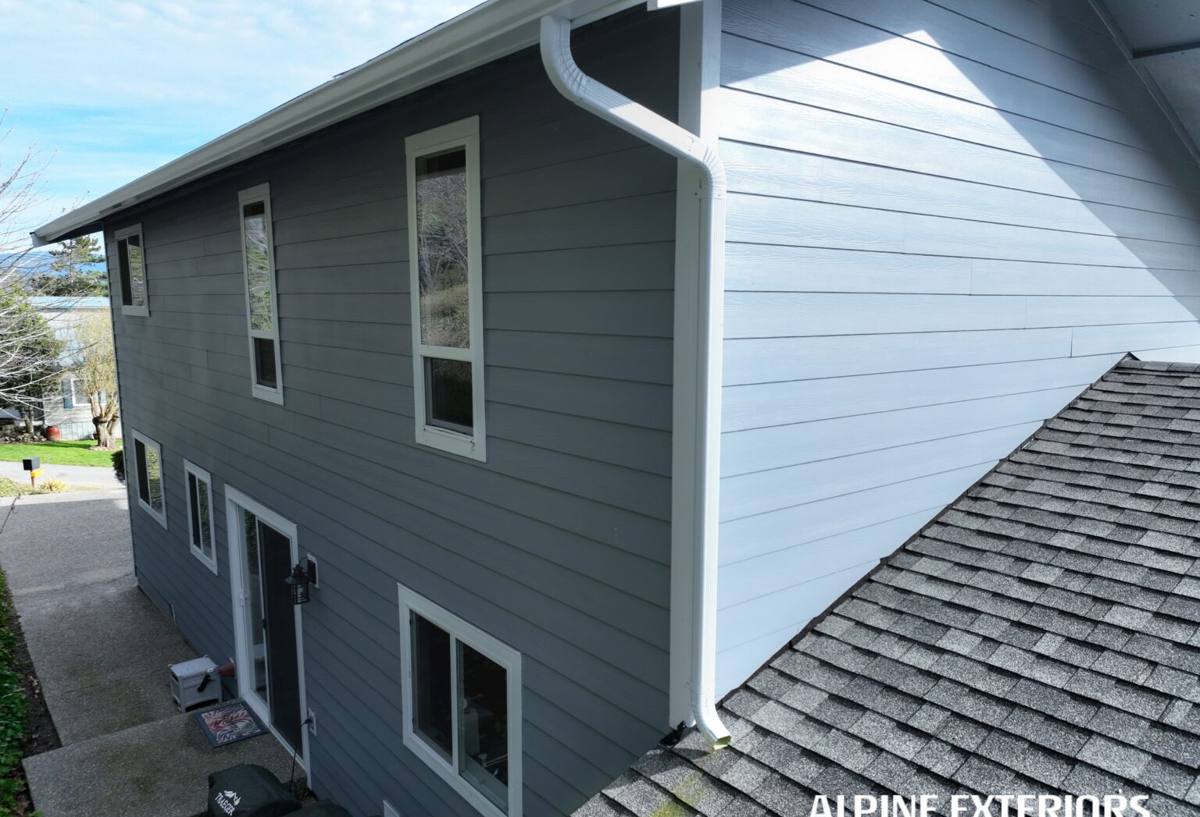
Signs a Repair Won't Cut It Anymore
Homeowners often ask us to patch a leak, and sometimes that's the right call. But there's a point where patching individual problems costs more over a few years than one clean replacement, and it never actually solves the underlying issue. Watch for these:
- Granule loss heavy enough that you're finding shingle grit in gutters every time you clean them
- Moss or algae streaking that comes back within months of a cleaning, even after treatment
- Soft spots or noticeable sag when you walk the roof (or see it from a ladder) — usually decking rot underneath
- Daylight visible through the attic at roof boards, or damp insulation after a storm
- Shingles curling, cracking, or losing their tab edges, especially on north- and west-facing slopes that stay shaded and wet longest
- A roof past 20-25 years old on standard asphalt, even if it "looks fine" from the ground
If you're seeing two or more of these at once, you're usually looking at systemic wear, not an isolated bad spot. That's the point where replacement starts saving you money instead of costing you more.
Why Moss Is More Than a Cosmetic Problem
Moss doesn't just look bad. It holds moisture against the shingle surface for weeks after the rest of the roof has dried, which accelerates granule loss and, on older roofs, can work its way under tab edges and lift them. In Skagit County's shaded, damp microclimates — which Edison has plenty of — moss can reappear on an untreated roof within a year or two of a cleaning. A replacement is the right time to address the root causes: canopy trim recommendations, proper flashing that doesn't trap debris, and in some cases zinc or copper strip installation near the ridge to slow regrowth.
Material Options That Make Sense for This Area
There's no single "best" roofing material — it depends on your home's slope, your budget, and how much maintenance you want to do. Here's how the common options stack up for a coastal, moss-prone climate like Edison's:
| Material | Typical Lifespan Here | Moss/Moisture Behavior | Trade-offs |
|---|---|---|---|
| Architectural asphalt shingle | 20-30 years | Needs periodic moss treatment; good algae-resistant (AR) granule options exist | Best cost-to-performance balance; widest color selection |
| Standing seam metal | 40-50+ years | Sheds moisture fast, very moss-resistant on steep slopes | Higher upfront cost; needs correct fastener spec for coastal corrosion resistance |
| Composite/synthetic shake | 30-40 years | Moderate moss resistance, better than cedar | Higher material cost than asphalt; good option where a wood look is wanted without wood's upkeep |
| Cedar shake | 20-30 years with upkeep | High maintenance burden in this climate — retains moisture, prone to moss and rot without regular treatment | We'll install it if a homeowner wants the look, but we're upfront that it's the highest-maintenance option here |
For most Edison homes we're recommending architectural asphalt with algae-resistant granules as the default, and standing seam metal for steeper roofs, homes with heavy tree cover, or owners who want to stop thinking about the roof for decades. We don't push cedar shake as a low-maintenance choice — it isn't, in this climate — but we'll always install what the homeowner decides fits their home and budget.
What a Correct Tear-Off and Replacement Involves
A shortcut roof job is easy to spot five years later. A correct one follows the same sequence every time:
- Full tear-off to bare decking — no layering new shingles over old, which traps moisture and voids most manufacturer warranties
- Decking inspection and repair — any soft, delaminated, or rotted plywood/OSB gets replaced before anything new goes down
- Ice-and-water shield at eaves, valleys, and roof penetrations — this matters more here than in drier parts of the state, since wind-driven rain regularly pushes water uphill under standard felt
- Synthetic underlayment across the field for a moisture barrier that outperforms old-style felt paper in wet installs
- New flashing at all chimneys, walls, skylights, and vents — reused flashing is the single most common cause of "new roof, same old leak"
- Balanced ventilation — intake at the eaves, exhaust at the ridge, sized to the attic's actual square footage
- Field installation per manufacturer spec, including correct nailing pattern and exposure
- Cleanup and magnetic sweep for nails and debris
Skipping steps 2, 3, or 6 is how a roof that looks great on installation day starts leaking or growing moss within two winters.
Ventilation Is the Step Most Often Shortchanged
An underventilated attic traps warm, moist air against the underside of the roof deck all winter. In Skagit County's long wet season, that trapped moisture condenses, soaks into the sheathing, and shortens the life of the roof from underneath — regardless of how good the shingles on top are. Balanced intake-and-exhaust ventilation isn't an upsell; it's part of doing the replacement correctly, and we size it to your attic rather than installing a generic vent count.
Our Process, Start to Finish
We keep the process straightforward because most homeowners are doing this once or twice in their lifetime and don't need surprises:
- On-site assessment — we walk the roof (weather permitting) and check the attic from inside, not just a ground-level look
- Written estimate that spells out material, underlayment, flashing, and ventilation scope — no vague line items
- Scheduling around weather windows — we plan tear-off days against the forecast so your home isn't exposed longer than necessary
- Daily site protection — landscaping and siding get covered, and the roof is never left open overnight without dry-in protection
- Final walkthrough with the homeowner before we consider the job done
What Drives the Cost
Every roof is different, but the same handful of factors move the price up or down on most Edison estimates:
| Factor | Why It Matters |
|---|---|
| Roof pitch and access | Steep or hard-to-access roofs take longer and need more safety setup |
| Layers to remove | Tearing off two layers of old shingles costs more than one |
| Decking condition | Rot or soft spots found during tear-off add repair cost — we flag this upfront when visible from the attic |
| Material choice | Asphalt, metal, and composite carry different material and labor costs |
| Ventilation upgrades | Adding proper intake/exhaust venting where none existed is a worthwhile add, not just a cost |
| Number of penetrations | Chimneys, skylights, and multiple vent stacks each need custom flashing work |
We'd rather walk you through these factors on your actual roof than quote a number that doesn't hold up once we're up there.
What to Ask Before You Hire Anyone
Roofing draws its share of storm-chasing outfits that aren't based here and won't be around for a warranty call in five years. Before signing anything, it's worth confirming:
- Washington state contractor license number, and that it's active
- Proof of liability insurance and workers' comp coverage
- A physical local or regional business address, not just a phone number
- Whether the tear-off, underlayment, and flashing scope are written into the estimate — not just "new roof installed"
- What the manufacturer warranty requires (many require full tear-off and certified installation to stay valid)
- Who handles cleanup and disposal, and whether that's included in the price
Why a Crew That Already Works Edison Matters
Edison and the surrounding Skagit County communities have specific patterns we see over and over: moss on the north-facing slopes of homes tucked under trees, wind-driven rain finding its way under poorly flashed valleys, and salt air corroding cheap fasteners faster than a manufacturer's spec sheet assumes. A crew that works this area regularly isn't guessing at those conditions — we're already building for them by default, from the underlayment we spec to the fastener hardware we choose.
We're also close enough to respond quickly if something needs a look after a bad storm, and we're not going anywhere if a warranty question comes up years down the road. That local presence is worth something a traveling crew can't offer, regardless of how good their initial bid looks.
If your roof is showing its age or you just want an honest read on how many years you've got left, we're happy to take a look. Fill out the form below for a free, no-pressure estimate — we'll tell you what we actually see, not just what sells a job.