 Anacortes Siding
 Roofing in Edison: A Different Climate Than Town
Edison sits out in the flats near Samish Bay, surrounded by farmland, sloughs, and open water on multiple sides. That geography matters more than most homeowners realize when it comes to roofing. Being close to Samish Bay and the tidal flats means the air carries more salt and moisture than a home a few miles inland in Anacortes proper. Add in the fog that settles over the farmland on cool mornings, the near-constant Pacific moisture rolling off the Sound, and the shade from mature trees along the edges of many Edison properties, and you get a roofing environment that's tougher on materials than the marketing brochures assume.
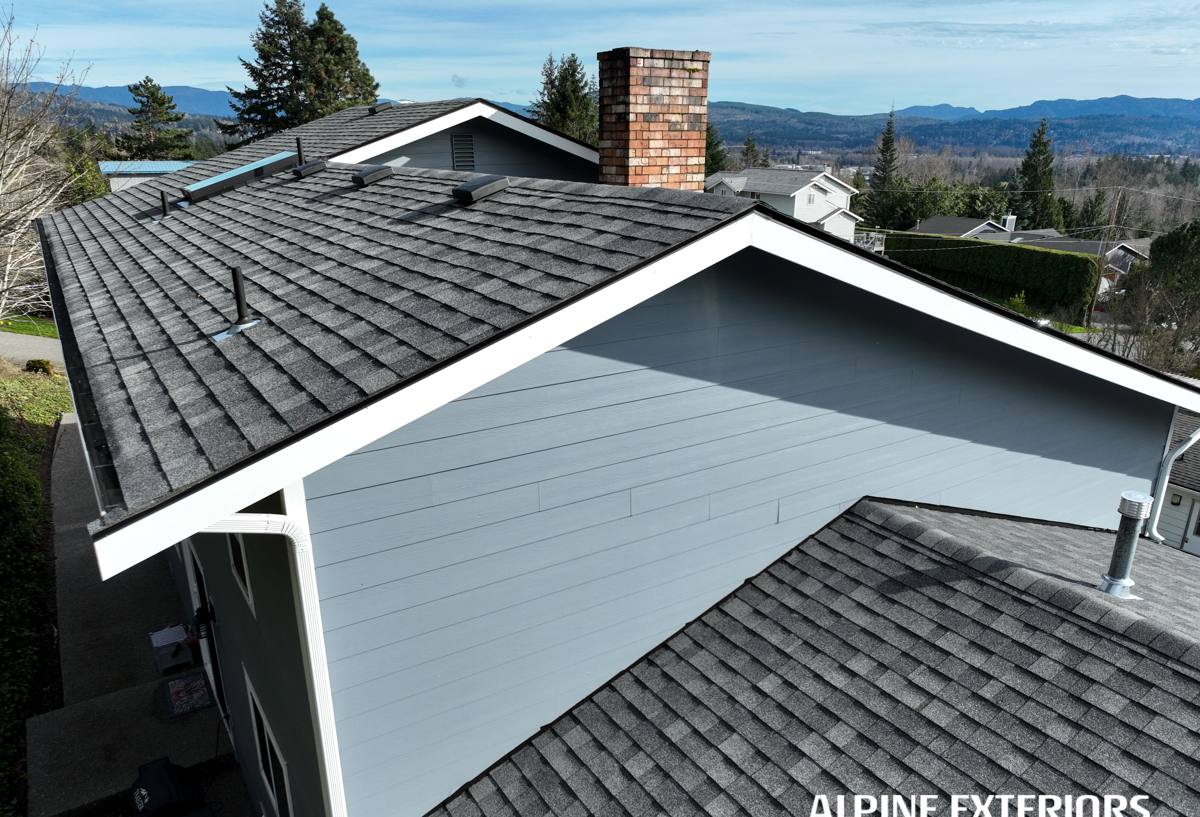
A new roof installation in Edison needs to be built for that reality, not for a generic Western Washington spec sheet. That means paying close attention to ventilation, moisture management, moss resistance, and metal fastener corrosion resistance from the very first materials order — not as an afterthought once problems show up.
What Edison's Climate Actually Does to a Roof
Salt Air and Corrosion
Homes near Samish Bay and the surrounding waterways get low-level salt exposure carried in on the wind. Over years, that salt air accelerates corrosion on unprotected metal — flashing, fasteners, vent caps, and gutter hardware are the first things to show it. It doesn't destroy a roof overnight, but it shortens the working life of any component that isn't rated for coastal exposure, which is why material selection matters more here than in a drier, inland part of the county.
Driving Rain
Skagit County gets its share of wind-driven rain events, and Edison's open, exposed setting means wind has fewer obstructions to slow it down before it hits a roofline. Driving rain doesn't just fall straight down — it gets pushed sideways and upward under shingle edges, around chimney flashing, and into any gap in the underlayment. A roof that's adequate for calm, straight-down rain can still leak under these conditions if the underlayment and flashing details weren't built for wind-driven moisture specifically.
Moss and Organic Growth
The combination of shade, moisture, and mild temperatures in this part of Skagit County creates a long moss season — often close to year-round on north-facing slopes or roof sections shaded by trees. Moss isn't just cosmetic. As it grows, it lifts shingle edges, holds moisture against the roof deck, and creates channels for water to travel where it shouldn't. Left unchecked over several seasons, moss growth can meaningfully shorten a roof's service life, regardless of how good the original installation was.
What a Correct New Roof Installation Involves
A proper new roof isn't just shingles nailed to plywood. In an environment like Edison's, every layer of the system needs to do its job:
Tear-Off and Deck Inspection
We remove the old roofing down to the deck rather than layering over it. This lets us actually see the plywood or OSB underneath and catch soft spots, delamination, or old water damage before it's sealed under a new roof for another 20-plus years. In a moist climate like this one, skipping this step is one of the most common ways a new roof ends up with hidden problems.
Ventilation
Proper intake and exhaust ventilation keeps moist air from getting trapped in the attic space, which reduces condensation on the underside of the deck and helps the roof shed heat and moisture the way it's designed to. In a damp climate, under-ventilated attics are a major contributor to premature deck rot and shortened shingle life — this is a step that's easy to shortcut and hard to notice until years later.
Underlayment
Given how much wind-driven rain this area sees, we don't treat underlayment as a formality. A synthetic underlayment with strong water resistance, combined with self-adhering ice-and-water barrier at the eaves, valleys, and any roof penetrations, gives the system a real second line of defense if wind ever pushes moisture past the primary roofing material.
Flashing
Flashing around chimneys, skylights, vent stacks, and roof-to-wall transitions is where the vast majority of roof leaks actually originate — not in the open field of shingles. We use corrosion-resistant flashing material appropriate for coastal-influenced air, and we take the time to get the step-flashing and counter-flashing details right rather than relying on caulk to make up for a shortcut.
Field Material
Whether it's asphalt composition shingle, metal, or another material, the field roofing needs to be matched to the home's slope, exposure, and the owner's maintenance expectations. We'll walk through the honest trade-offs of each option for your specific roof rather than pushing one product across every job.
Our Process for Edison Homeowners
- On-site assessment. We walk the roof (or use appropriate access equipment on steep or fragile roofs) and inspect the deck, flashing points, ventilation, and any moss or moisture damage already present.
- Written scope and options. You get a clear explanation of what your roof actually needs, what material options make sense for your home's exposure, and honest pricing — no pressure, no upsell for its own sake.
- Tear-off and deck repair. Old roofing comes off, the deck is inspected, and any damaged sheathing is replaced before anything new goes down.
- Ventilation and underlayment install. Intake/exhaust balance is corrected if needed, and underlayment plus ice-and-water barrier go down at all vulnerable points.
- Flashing and field material installation. Flashing is installed or replaced first, then the field roofing goes on to manufacturer specification.
- Final walkthrough. We review the finished roof with you, including basic maintenance guidance specific to a moss-prone, salt-air property.
Comparing Roofing Options for an Edison Property
| Material | How It Handles Salt Air | Moss Resistance | Maintenance Burden |
|---|---|---|---|
| Asphalt composition shingle | Good with corrosion-resistant flashing/fasteners | Moderate — benefits from periodic cleaning on shaded slopes | Low to moderate |
| Metal roofing | Very good when properly coated and detailed | High — sheds moss more readily than shingle | Low |
| Wood shake/shingle | Requires diligent maintenance in humid, mossy conditions | Low without regular treatment | High |
There's no single "best" material for every Edison home — it depends on your roof's slope, how much shade it gets, your budget, and how much ongoing maintenance you want to take on. We'll go over the real trade-offs for your specific property rather than steering you toward whatever's easiest for us to install.
Signs an Edison Roof May Be Due for Replacement
- Granule loss showing up in gutters or at downspout outlets
- Shingles that are curling, cupping, or losing their seal at the edges
- Persistent moss or dark streaking that returns quickly after cleaning
- Soft spots or sagging when walking the roof or viewing the deck from the attic
- Daylight visible through the roof deck from inside the attic
- Flashing that's visibly rusted, lifted, or separating from the roof surface
- A roof approaching or past the manufacturer's expected service life for its material and exposure
Why a Locally Familiar Crew Matters Here
Edison isn't a typical suburban roofing job. Rural and semi-rural properties in this part of Skagit County often come with longer driveways, farm outbuildings, well-worn access routes, and sometimes older construction that wasn't built to current code. A crew that's already worked in and around this area understands the practical realities — how to stage equipment on a rural lot, what the local permitting and inspection process looks like through Skagit County, and how this specific stretch of coastline behaves differently than roofs a few miles inland in downtown Anacortes.
That familiarity also means we're not guessing at material specs. We already know which flashing and fastener grades hold up near Samish Bay, which ventilation setups perform well under this area's shade and moisture pattern, and which shortcuts tend to fail early in this specific environment. That's not something you get from a crew that's only ever roofed in a dry inland climate.
Maintaining a New Roof in Edison's Climate
A correctly installed roof still benefits from basic upkeep in an environment this damp. Keeping gutters clear so water doesn't back up under the roof edge, having moss treated or removed before it spreads across a full slope, and getting an occasional visual check of flashing points after major windstorms will meaningfully extend the life of the investment. None of this requires a large ongoing budget — it's mostly about not letting small issues sit unaddressed through multiple wet seasons.
Get a Straightforward Estimate
If your Edison-area roof is showing its age, dealing with recurring moss, or you're simply planning ahead, we're happy to take a look and give you an honest, no-pressure assessment of what it actually needs. Use the form below to request a free estimate, and we'll walk you through your options in plain terms.