 Anacortes Siding
 Siding Built for Edison's Salt Air and Skagit County Weather
Edison sits low in the saltwater-adjacent farmland of Skagit County, close enough to the water that homes here take a different kind of weather beating than houses further inland. Salt-laden air, rain that comes in sideways during winter storms, and a moss season that runs most of the year all put real stress on exterior siding. If you're planning a siding replacement in Edison, this page covers what the local climate actually demands, what a correct James Hardie installation involves, and why it pays to hire a crew that already works this part of Skagit County rather than one learning the area on your dime.
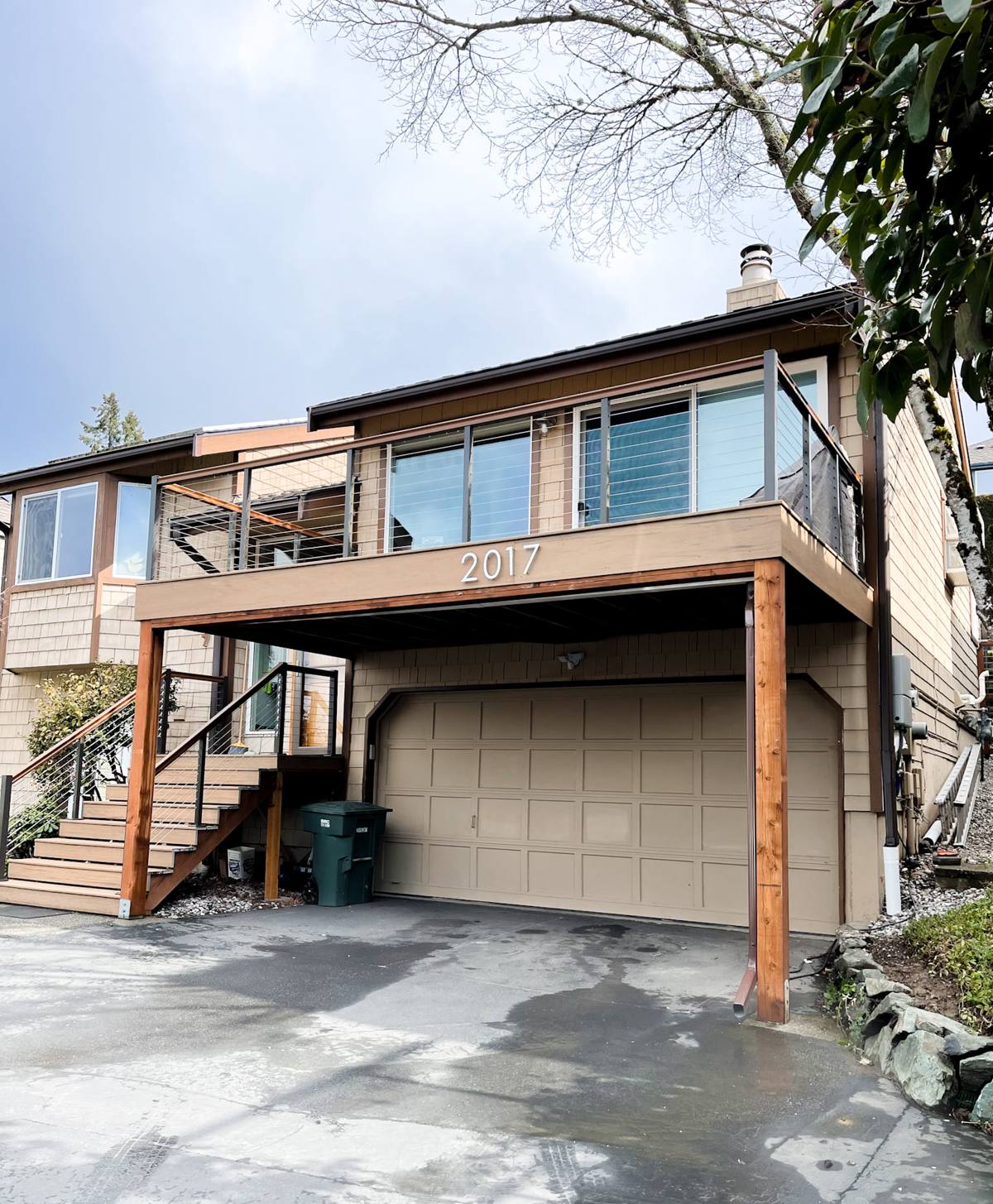
What Edison's Climate Does to Siding Over Time
Salt Air and Coastal Exposure
Homes near the water pick up airborne salt that settles on exterior surfaces and accelerates corrosion of anything metal — fasteners, flashing, trim edges. Siding materials that rely on paint film or factory coatings to keep moisture out are especially vulnerable here, because salt air breaks down finishes faster than it does further inland, and any crack in that protective layer becomes an entry point for water.
Driving Rain and Wind-Driven Moisture
Open farmland and proximity to the water mean Edison gets more wind-driven rain than a sheltered, tree-lined lot would. That matters because wind-driven rain doesn't just fall on a wall — it's pushed sideways and upward into laps, seams, and trim joints. A siding system that isn't detailed correctly at those transition points will eventually let water behind the cladding, and once that happens the sheathing and framing underneath pay the price long before the siding itself shows visible damage.
A Long Moss and Algae Season
Skagit County's mild, wet climate keeps humidity high for most of the year, and shaded or north-facing walls near trees and farmland windbreaks stay damp long after a storm passes. That's exactly the environment moss and algae need to take hold. Once organic growth gets established on a porous or absorbent siding surface, it holds moisture against the wall and accelerates whatever deterioration is already happening underneath.
Why We Install Only James Hardie Fiber Cement Siding
We standardized on James Hardie for every home we side, including in Edison, because fiber cement handles this specific combination of salt air, driving rain, and moss pressure better than the alternatives we used to install. Hardie's fiber cement doesn't rot, it's non-combustible, and it doesn't feed moss and algae the way wood-based products can. The factory-applied ColorPlus finish is baked on under controlled conditions rather than field-applied, which means better adhesion and more consistent resistance to fading and moisture intrusion than a job-site paint job. Hardie also engineers regional product lines — including HZ5 versions built for climates like ours, with moisture and freeze-thaw performance suited to the Pacific Northwest. That engineering, backed by a strong transferable warranty, is why it's the only product we put on homes in this area.
How James Hardie Compares to Other Siding Materials Here
We get asked why we don't install vinyl, LP SmartSide, cedar, or primed spruce. Each of those products has legitimate uses elsewhere, but none of them hold up as well against Edison's specific mix of salt air, wind-driven rain, and moss as fiber cement does.
| Material | Salt Air / Moisture Behavior | Moss & Algae Resistance | Ongoing Maintenance |
|---|---|---|---|
| Vinyl | Can warp or become brittle with temperature swings; seams are a moisture entry point | Moderate — smooth surface but seams and J-channels trap debris | Low, but limited repair options if damaged |
| LP SmartSide (engineered wood) | Wood-based core is vulnerable if the factory coating is breached | Moderate — needs intact finish to resist growth | Field-caulked joints need regular inspection |
| Cedar / Primed Spruce | Natural wood absorbs moisture; performance depends heavily on upkeep | Low — organic material is prone to moss and mildew | High — refinishing on a recurring cycle |
| James Hardie Fiber Cement (HZ5) | Non-combustible, dimensionally stable, engineered for PNW moisture cycles | High — doesn't feed organic growth like wood | Low — factory ColorPlus finish, occasional washing |
What a Correct Installation Involves
Weather-Resistive Barrier and Flashing
Everything starts underneath the siding. A continuous weather-resistive barrier, properly lapped and taped, along with correctly integrated flashing at windows, doors, and roof-to-wall intersections, is what actually keeps wind-driven rain out of the wall assembly. Siding is the visible layer, but it's the barrier and flashing details that do the real work in a storm.
Fastening, Clearances, and Joints
James Hardie publishes specific fastening patterns, nail spacing, and minimum clearances from grade, roofing, and decking for a reason — get those wrong and you create paths for moisture to reach the wall assembly even with the right product installed. Butt joints and trim seams need to be caulked with a product rated for the exposure, not just whatever's on the truck.
Common Installation Mistakes We See in This Area
Most siding failures we're called out to inspect in Edison and the surrounding Skagit County farmland aren't a product problem — they're an installation problem. The pattern shows up often enough that it's worth listing:
- Flashing skipped or under-lapped at window and door openings, letting wind-driven rain track behind the trim
- Siding installed too close to grade, decking, or roof lines, holding moisture against the bottom courses
- Butt joints and trim seams left uncaulked or caulked with a product that fails under UV and salt exposure
- Nail patterns that don't match manufacturer specs, leaving panels loose enough to work moisture in over time
- House wrap gaps or tears left unrepaired before siding goes over the top
Our Process From Estimate to Finished Install
- On-site inspection — we look at your current siding, trim, flashing, and any moisture or moss issues already present, and walk the property's exposure to wind and rain.
- Written estimate — a clear scope covering tear-off (if needed), materials, trim work, and timeline, with no vague allowances.
- Prep and tear-off — removing old siding, inspecting sheathing underneath, and repairing any rot or damage before anything new goes up.
- Weather barrier and flashing — installing or correcting the water-resistive barrier and flashing details at every penetration and transition.
- Hardie installation — panels, lap siding, or trim installed to manufacturer fastening and clearance specs.
- Caulking, touch-up, and final walkthrough — sealing joints, touching up cut edges, and reviewing the finished job with you.
Cost Factors for Siding Installation in Edison
Every home is different, but the factors that move a siding installation estimate up or down are consistent. We'll walk through all of these during your on-site estimate rather than quoting off a phone call.
| Factor | How It Affects Cost |
|---|---|
| Tear-off vs. new construction | Removing and disposing of old siding adds labor and dump costs versus siding a bare wall |
| Home size and wall complexity | More square footage and more corners, gables, and dormers mean more cutting and trim work |
| Sheathing or framing repair | Rot found once old siding comes off needs to be repaired before new siding goes on |
| Trim and accessory scope | Full trim replacement, fascia, and soffit work adds to the job beyond field siding alone |
| Access and site conditions | Steep grades, tight setbacks, or landscaping near the house can affect staging and labor time |
Why a Crew That Already Works in Edison and Skagit County Matters
Siding contractors who mostly work drier, more sheltered areas don't always account for how much wind-driven rain and salt exposure change flashing and clearance decisions. A crew that regularly works Edison and the surrounding Skagit County farmland already knows which walls take the worst weather, how moss pressure builds on shaded elevations, and where past installations in this area tend to fail first. That local pattern recognition shows up in the details — flashing choices, joint sealing, clearance calls — that separate a siding job that looks fine at handoff from one that actually holds up through a decade of Skagit County winters.
Signs Your Siding Installation Was Done Right
- Weather-resistive barrier is continuous, lapped correctly, and free of visible gaps or tears before siding covers it
- Flashing is integrated at every window, door, and roof-to-wall intersection — not just caulked over
- Siding maintains proper clearance from grade, roofing, and decking
- Fastener pattern and spacing match the manufacturer's published specs for your siding profile
- Butt joints and trim seams are caulked with a sealant rated for exterior, coastal-adjacent exposure
- You receive documentation of the products and warranty coverage installed on your home
If your Edison home is due for new siding, we're happy to take a look and walk you through what we're seeing — no pressure, no obligation. Fill out the form below for a free estimate and we'll get back to you with a straightforward assessment of your home's siding needs.