 Anacortes Siding
 Siding Repair Built for Edison's Climate
Edison sits in the part of Skagit County where saltwater, farmland, and weather off the water all meet. Homes here take a different kind of beating than houses twenty miles inland. Salt-laden air moves off the bay and settles into anything porous. Rain doesn't just fall straight down — it drives in sideways during winter storms, working its way into laps, seams, and trim joints that face the weather. And for a good stretch of the year, shaded north walls and tree-lined lots stay damp long enough for moss and algae to take hold. None of that is unique to any one house — it's just what siding in this part of Skagit County has to stand up to, year after year.
Siding repair here isn't a cosmetic job. It's about finding where water and salt have actually gotten past the surface, fixing the cause, and putting back a wall assembly that can take another decade of the same conditions. That's the job we specialize in for homeowners in and around Edison.
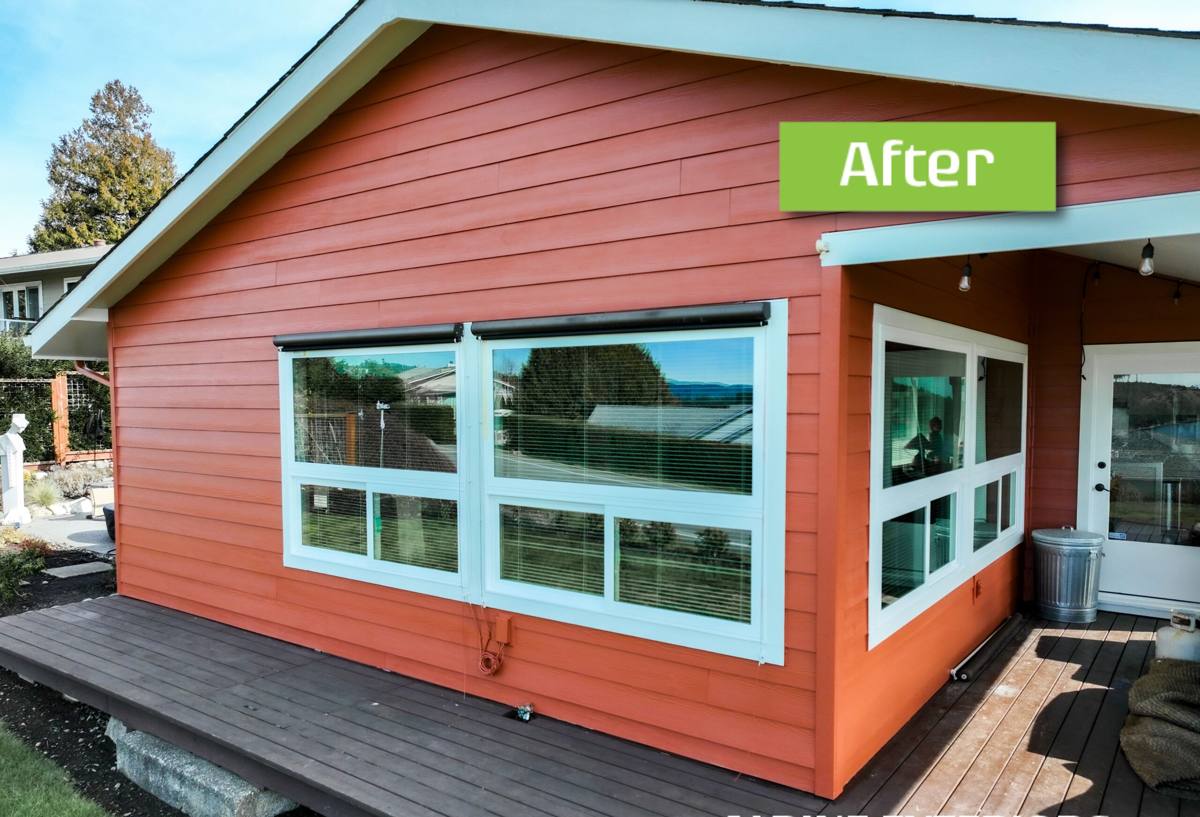
Why Edison Siding Takes More Wear Than the Average House
Salt Air
Airborne salt is corrosive to metal fasteners, flashing, and trim, and it accelerates the breakdown of paint films and caulk. On homes near the water, you'll often see finish failure — chalking, fading, bubbling — years before it would show up on an identical house further inland. Once the protective coating goes, whatever's underneath is exposed directly to moisture.
Driving Rain
Storms coming off the water tend to push rain horizontally, not just down. That matters because siding systems are designed to shed water moving downward — laps overlap top to bottom for that reason. Wind-driven rain finds its way behind trim, into butt joints, and up under laps from below, which is exactly where standard siding assemblies are weakest if the flashing and sealant details weren't done right the first time.
Moss and Algae Season
Shaded, damp conditions for much of the year mean moss and algae growth on siding, especially on north- and west-facing walls near trees or under eaves with poor airflow. Beyond the appearance issue, moss holds moisture against the siding surface for extended periods, which is a slow but steady contributor to rot in wood-based products and finish breakdown on painted surfaces.
Signs Your Edison Home's Siding Needs Repair
Most siding failures don't announce themselves — they show up as small clues first. Homeowners who catch these early usually end up with a straightforward repair instead of a much larger one.
- Soft or spongy spots when you press on the siding, especially near the bottom of walls or below windows
- Visible gaps, cracking, or separation at butt joints and corners
- Paint or finish that's peeling, bubbling, or chalking off in patches rather than evenly
- Dark staining or streaking running down from seams, trim, or fastener heads
- Persistent moss or algae growth that comes back within weeks of cleaning
- Warping, bowing, or visible waviness in a wall section
- Interior clues — a musty smell, a soft spot on interior drywall, or peeling interior paint on an exterior wall
- Caulk that's cracked, shrunk, or pulled away from trim and window edges
Any one of these can be minor. Several together, or any sign near a window, door, or roofline transition, usually means water has already found its way behind the siding and the repair needs to address more than the visible surface.
What a Correct Siding Repair Actually Involves
A repair that just patches the visible damage tends to fail again within a season or two, because it doesn't address why the damage happened in the first place. A repair done right starts by opening up the area, not just covering it.
Find the Water Path, Not Just the Symptom
Stained or soft siding is a symptom. The actual problem is almost always a water entry point — a failed seal, a flashing gap, a fastener that backed out, or a joint that was never properly lapped. We trace that path before deciding what to cut out and replace.
Check What's Behind the Siding
Siding is the outer layer of a system that includes weather-resistant barrier (house wrap), flashing, and sheathing. If water has been getting behind the siding, that barrier and the sheathing underneath need to be inspected — and repaired if compromised — before new siding goes back on. Reskinning over damaged sheathing just hides the problem for a while.
Match the Material and the Detailing
Patched siding should tie into the existing wall cleanly — same reveal, same fastening pattern, same coating where applicable — and the flashing details at that spot need to be correct for the direction the weather actually comes from on that wall. A patch that looks fine but wasn't flashed properly for wind-driven rain will fail again in the same spot.
Why We Repair — and Replace — Only with James Hardie Fiber Cement
We install and repair with James Hardie fiber cement siding exclusively. We don't install vinyl, LP SmartSide, Cemplank, Allura, primed spruce, or cedar, and we want to be upfront about why, especially for repair work in a place like Edison where the climate is unforgiving of weak points.
Vinyl siding is inexpensive and low-maintenance in mild conditions, but it's a thin material that becomes brittle with age and UV exposure, and it can warp or crack under the same wind-driven rain and temperature swings this area sees. Patching vinyl seamlessly is difficult because color and material both shift over time, so repairs often look mismatched even when done well.
LP SmartSide is an engineered wood product with a resin-treated strand substrate. It performs reasonably well when the finish and seams stay intact, but wood-based products are inherently more vulnerable to moisture intrusion than fiber cement — and once water gets behind a compromised seam or a repair goes wrong, wood-based siding can swell, delaminate, or rot in a way that fiber cement simply doesn't.
Primed spruce and cedar are natural wood products, and wood is wood — it absorbs moisture, it's a food source for rot and moss, and it demands an ongoing maintenance schedule of painting, sealing, and inspection to keep ahead of the climate here. In a salt-air, high-moss environment, that maintenance burden is real and it's constant.
James Hardie fiber cement is non-combustible and dimensionally stable — it doesn't swell, rot, or feed moss the way wood-based products can, and its ColorPlus factory finish is baked on and warranted against fading in a way field-applied paint isn't. For repair work specifically, that stability means a properly matched patch stays matched, and the underlying material isn't racing against the same clock as the wood or vinyl it replaced.
Repair or Replace? How We Decide
Not every problem area needs full replacement, and not every repair is worth doing instead of replacing. We look at scope, cause, and how much of the wall system is affected.
| Factor | Favors Repair | Favors Replacement |
|---|---|---|
| Extent of damage | Isolated to one section or a few boards | Spread across multiple walls or elevations |
| Underlying sheathing | Solid, dry, undamaged | Soft, delaminated, or water-stained |
| Original material | Fiber cement in otherwise good condition | Wood or vinyl showing widespread age-related failure |
| Cause of damage | One-off event (impact, isolated flashing failure) | Systemic issue (poor original install, chronic moisture) |
| Age of existing siding | Relatively recent, well short of expected service life | Near or past the material's realistic lifespan |
When damage is isolated and the wall assembly behind it is sound, a targeted repair is the honest recommendation — we're not going to push a full replacement a homeowner doesn't need. When the damage points to a systemic problem, patching it just delays the same failure showing up again a wall over.
Our Process for Edison Siding Repairs
- On-site assessment. We inspect the visible damage and the surrounding areas — corners, window and door trim, and any transitions where roofs meet walls — since those are the highest-risk spots for water intrusion.
- Diagnose the cause. We identify why the damage happened, not just where it shows, including checking the condition of flashing and the weather-resistant barrier where accessible.
- Honest scope and estimate. We tell you plainly whether the situation calls for a repair or points toward a larger issue, and what each option involves.
- Remove and inspect. Damaged material comes out, and we check the sheathing and barrier underneath before anything goes back.
- Repair the wall system, not just the surface. Any compromised barrier or flashing gets corrected first.
- Install matched James Hardie material. New siding is fit, fastened, and flashed to match the existing wall and to shed water correctly for the direction it faces.
- Final walkthrough. We review the completed work with you before considering the job done.
What Siding Repair Typically Costs in Edison
Repair costs vary based on how much material needs replacing, whether the sheathing underneath was compromised, and how accessible the damaged area is. A small, isolated patch is a modest job. A repair that uncovers rotted sheathing or a failed barrier behind multiple boards costs more because the fix goes deeper than the visible siding.
| Cost Factor | Why It Matters |
|---|---|
| Size of affected area | More linear footage of siding and trim means more material and labor |
| Sheathing condition | Rotted or water-damaged sheathing must be replaced before new siding goes on |
| Accessibility | Second-story sections, tight setbacks, or steep grade can require additional staging |
| Matching existing siding | Matching profile, reveal, and color to older siding can take more care than a full re-side |
| Flashing and trim repair | Correcting flashing details adds labor but is what prevents a repeat failure |
We won't quote a number without seeing the site, but we're always upfront about what's driving the cost and won't pad a scope beyond what the wall actually needs.
Why a Crew That Already Works in Edison Matters
A contractor who regularly works homes in this part of Skagit County already knows what to look for on a wall that's spent years facing salt air off the water, or on a north wall that never fully dries out between storms. That's not something you can fully substitute with general siding experience from a drier climate or a different building code jurisdiction. We know which wall orientations in this area tend to fail first, what moss and algae buildup usually signals underneath, and how to detail a repair so it actually holds up to another wet season instead of needing attention again in a year or two.
It also means faster, more accurate estimates. We're not learning the local weather patterns on your dime — we already understand what driving rain and long damp stretches do to a wall assembly here, so the diagnosis is faster and the fix is targeted the first time.
Get an Honest Look at Your Siding
If you're seeing soft spots, staining, persistent moss, or any of the warning signs above on your Edison-area home, it's worth getting a professional look before the damage spreads. We offer free, no-pressure estimates — we'll tell you honestly whether you're looking at a straightforward repair or something more, and walk you through exactly what we'd do and why.