 Anacortes Siding
 Building Decks for March Point's Coastal Conditions
March Point sits right up against the water on the edge of Anacortes, which means homes here take a different kind of weather beating than a deck built further inland in Skagit County. Salt-laden air moves through constantly, wind-driven rain comes in sideways more often than straight down, and the shoulder seasons bring long stretches of damp, low-light days where anything horizontal stays wet far longer than it should. A deck built without that in mind will look fine for a year or two and then start showing problems that are expensive to walk back.
We build decks in this neighborhood the way the site actually demands, not the way a generic spec sheet says to. That means paying close attention to fastener selection, drainage under and around the structure, and material choices that can shrug off salt exposure without turning into a maintenance chore every spring.
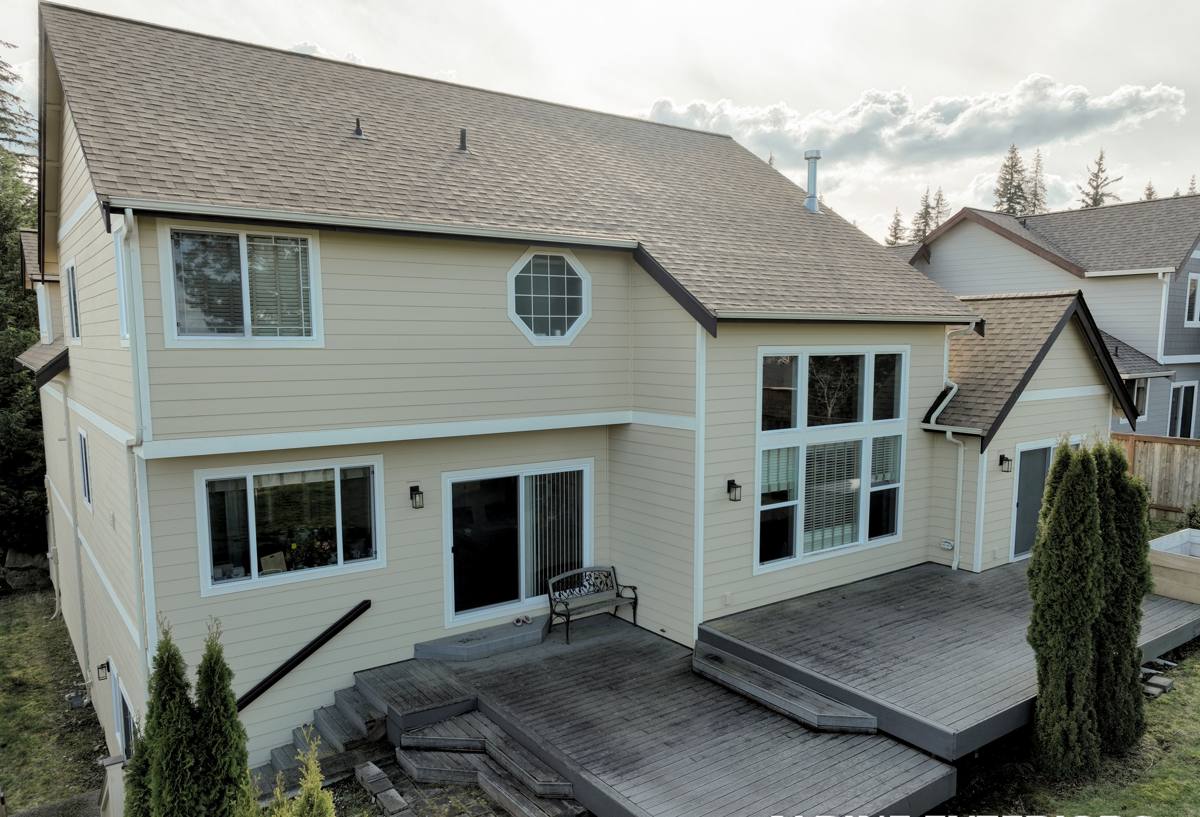
What March Point Homes Actually Need From a Deck
Every deck we build here has to solve for three things at once: moisture, salt, and moss. None of these are exotic problems, but ignoring any one of them shortens the life of the structure.
Moisture Management
Driving rain off the water doesn't just fall on a deck — it gets pushed under railings, into ledger connections, and behind any trim that isn't properly flashed. If water has a path to sit against wood or fastener hardware, it will find it. Good deck building here is really an exercise in giving water nowhere to collect and every reason to keep moving off the structure.
Salt Exposure
Salt air accelerates corrosion on anything metal — nails, screws, joist hangers, bolts. Standard hardware that would be fine in a drier inland town can start showing rust streaks within a couple of seasons this close to the water. That rust doesn't stay cosmetic; it weakens the connection it's protecting.
Moss and Algae Growth
Anacortes gets a long stretch of the year where surfaces stay damp and shaded, which is exactly what moss and algae need to take hold. On a deck, that's not just an eyesore — moss holds moisture against decking boards and turns walking surfaces slick and dangerous, especially on stairs.
Getting the Foundation Right
Everything above the frame depends on what's below it. Footings, posts, and ledger attachment are where a deck's real lifespan gets decided, and they're also the parts nobody sees once the project is finished — which is exactly why they're worth doing properly the first time.
- Footings sized and set below frost depth, not just poured to "looks deep enough"
- Post bases that keep wood off concrete so water doesn't wick straight up the post
- Ledger board flashed and sealed against the house so water can't track behind the siding
- Joist hangers and structural fasteners rated for exterior, corrosion-resistant use
- Proper slope built into the frame so the deck sheds water instead of pooling it
A deck ledger that isn't flashed correctly is one of the most common ways water gets into a house's wall system, not just the deck itself. On a home this close to the water, we treat that connection as critical, not routine.
Decking Material: What Holds Up Here vs. What Doesn't
Material choice matters more in March Point than it does in a lot of the county simply because of how much moisture and salt the surface has to tolerate year-round. There's no single "best" decking material for every budget, but there is a clear pattern in how different materials behave once they've been through a few wet Skagit winters near the water.
| Material | How it handles this climate | Maintenance reality |
|---|---|---|
| Pressure-treated wood | Affordable and structurally solid, but absorbs moisture readily and needs consistent sealing to resist rot and moss staining | Annual cleaning and re-sealing recommended |
| Cedar | Naturally more rot-resistant than standard framing lumber, but still an organic material that will gray and can host moss without upkeep | Periodic cleaning and oiling to maintain appearance and shed water |
| Composite decking | Doesn't absorb water the way wood does, resists rot, and holds up well against salt air over time | Occasional washing; no sealing or staining required |
| PVC/vinyl decking | Fully synthetic, essentially immune to rot and moisture absorption, strong option for maximum-exposure sites | Lowest ongoing maintenance of the group |
We'll walk through these trade-offs honestly during an estimate — what fits the budget, what fits the amount of upkeep you actually want to do, and what fits how exposed the specific spot on your property is to wind and rain off the water.
Hardware and Fasteners Matter More Than People Expect
It's common for homeowners to assume a deck's longevity comes down to the decking boards. In our experience on this stretch of coastline, hardware failure shows up before board failure does. Standard galvanized fasteners can start corroding within a few years in a salt-air environment; stainless steel or heavy hot-dip galvanized hardware costs more up front but avoids the slow, hidden failure of connections that are holding the whole structure together.
This is one of the areas where cutting corners doesn't show up right away — it shows up three or four years later as rust streaks, loose railings, or a joist hanger that's lost its grip. We spec hardware for the site conditions, not for the lowest bid.
Railings, Stairs, and Everyday Safety
Railings and stairs take the most direct wear-and-tear of any part of a deck, and in a damp, moss-prone environment they're also where slip hazards build up fastest. A few things we build in as standard practice, not upgrades:
- Stair treads with enough texture or spacing to shed water and resist a slick moss film
- Railing posts anchored into the frame itself, not just surface-mounted
- Baluster spacing and railing height that meet current code, checked against your local jurisdiction's requirements
- Fastener caps or countersinking where corrosion-prone hardware could otherwise streak the decking
Our Process, Start to Finish
- On-site walkthrough: We look at sun exposure, wind direction relative to the water, drainage patterns around the foundation, and how the deck will connect to the house.
- Design and material discussion: We talk through decking material, railing style, and layout based on how you'll actually use the space and what you want to maintain long-term.
- Permitting: We handle the permit process with the relevant local jurisdiction so the structure is inspected and documented correctly.
- Foundation and framing: Footings, posts, ledger flashing, and joist framing built to the standards this site actually requires.
- Decking, railings, and finish work: Surface material installed with attention to fastener choice and water shedding, followed by railings and stairs.
- Final walkthrough: We go over the finished deck with you, including what maintenance (if any) the material choice will call for.
Maintenance That Actually Extends the Life of the Deck
Whatever material you choose, a small amount of seasonal attention goes a long way in this climate. Here's what we recommend regardless of who builds the deck:
- Clear leaves and debris from between boards before fall rains set in — trapped debris holds moisture against the surface
- Rinse or scrub visible moss growth before it spreads, especially on stairs and shaded corners
- Check railing posts and stair stringers annually for any looseness at the connection points
- Re-seal wood decking on the schedule the manufacturer recommends — don't stretch it because the wood "still looks fine"
- Keep gutters and downspouts near the deck clear so runoff isn't dumping extra water onto or under the structure
Why Local Experience on This Site Type Matters
A deck built to a generic inland spec will hold up fine in a lot of places. March Point isn't one of them. The combination of salt air, sustained wind-driven rain, and a long moss season means the small decisions — hardware grade, flashing detail, decking material — carry more weight here than they do elsewhere in Skagit County. A crew that's already built and maintained decks along this shoreline knows where water actually collects on this kind of site, not just where a plan says it should drain.
That local pattern recognition is the difference between a deck that needs real attention every year and one that just quietly does its job through Anacortes winters.
Get a Straightforward Estimate
If you're planning a new deck or replacing an aging one in March Point, we're happy to come take a look, talk through what your site actually needs, and put together a clear, honest estimate — no pressure, no upsell. Use the form below to get started.