 Anacortes Siding
 Siding Built for a Peninsula, Not Just a Zip Code
March Point sits out on the water in a way most Anacortes-area neighborhoods don't. Homes here catch wind and moisture off both Fidalgo Bay and Padilla Bay, which means siding gets tested from more directions than it does a few miles inland. Salt-laden air, near-constant winter rain, and a moss season that can run from October through May all put real, cumulative stress on exterior walls. We install James Hardie fiber cement siding on March Point homes specifically because it's engineered to take that kind of punishment without the maintenance spiral that comes with softer materials.
This page is about one job in one place: replacing or installing James Hardie siding on a March Point home, done correctly for this exact climate. Not a general siding overview — the specifics that matter here.
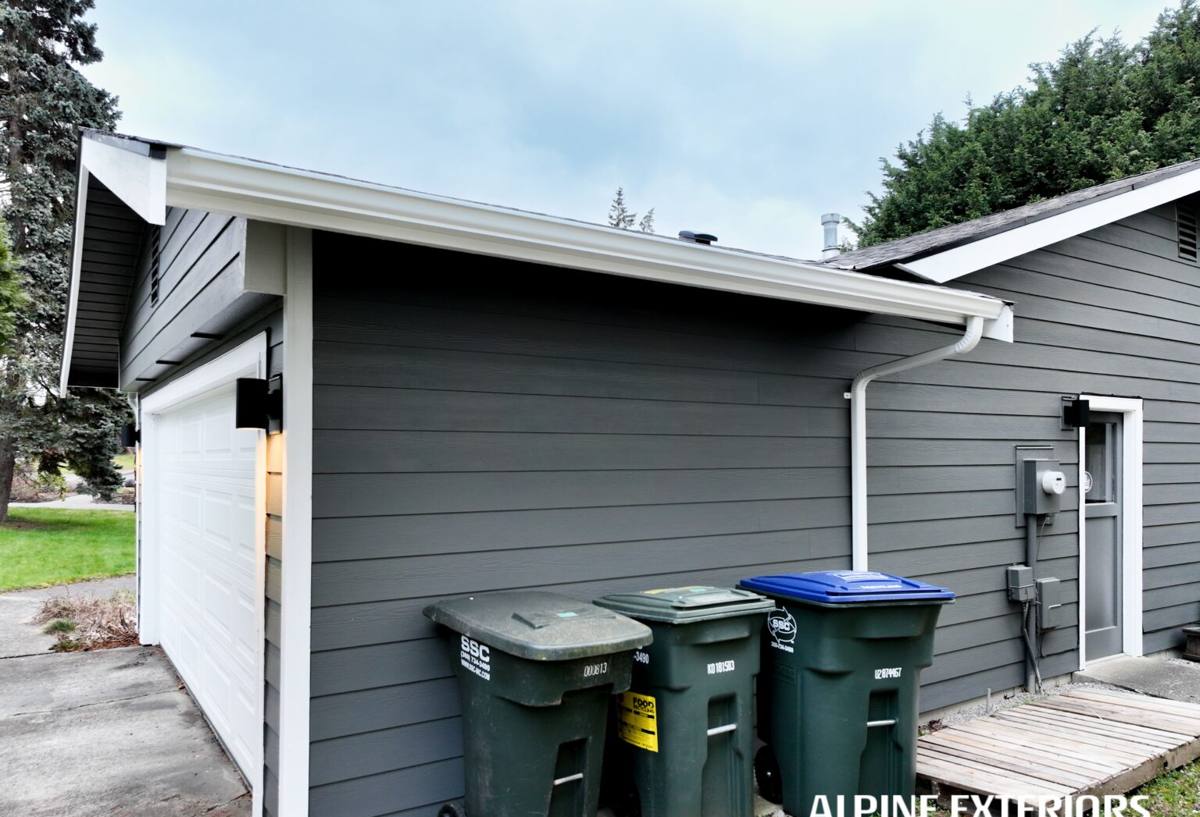
What This Climate Actually Does to Siding
Skagit County's marine climate is mild compared to inland Washington, but "mild" doesn't mean easy on a building envelope. Three things drive most of the siding failures we see on peninsula and waterfront homes in this area:
- Salt air exposure. Airborne salt accelerates corrosion on fasteners, flashing, and any metal trim that isn't properly rated or protected. It also breaks down cheaper paint finishes faster than inland weathering would.
- Driving rain. Wind-driven rain off the water doesn't just wet a wall surface — it pushes moisture sideways and upward into laps, seams, and butt joints that a calm-weather installation might get away with sloppy.
- Extended moss and mildew season. Cool, damp, shaded conditions for much of the year let moss, algae, and mildew colonize any siding surface that stays wet too long or lacks a factory-cured finish.
None of this is unique to March Point, but the peninsula's water exposure on multiple sides tends to intensify all three compared to more sheltered Anacortes streets a mile or two inland.
Why James Hardie Fits This Specific Job
Fiber Cement Doesn't Feed Moss and Mildew
James Hardie siding is cement, sand, and cellulose fiber — an inorganic substrate that doesn't provide the organic food source that wood-based products do. Moss and algae can still land on any exterior surface in this climate, but they don't get the same foothold, and routine washing keeps a Hardie wall looking clean far longer than it does on wood or wood-composite siding.
Non-Combustible, Which Matters Near Industrial Neighbors
March Point's setting includes industrial facilities nearby, and while that's not a daily fire concern for most homeowners, non-combustible siding is simply a smarter long-term choice for any home in this area. Hardie's fiber cement composition doesn't ignite or contribute fuel the way wood siding can.
ColorPlus Finish Holds Up to Salt and UV
Hardie's ColorPlus finish is baked on in a factory-controlled process, which gives it better fade and chip resistance than field-applied paint — a real advantage on a home that's getting hit with salt air and sun reflection off open water. It also means touch-up is simpler and color-matched, rather than a full repaint down the road.
Climate-Engineered Product Lines
Hardie makes HZ5 and HZ10 product formulations specifically for regions with freeze-thaw cycling and high moisture exposure. Western Washington, including Skagit County, falls into the range where these formulations are the right call rather than a generic national product.
What a Correct Installation Involves Here
The siding material is only half the job. On a peninsula home, installation details determine whether that material performs for 30+ years or fails early despite being the right product.
| Detail | Why It Matters on March Point |
|---|---|
| Weather-resistive barrier, correctly lapped | Wind-driven rain will find any barrier seam that's lapped wrong or taped incompletely |
| Rain screen / drainage gap where the wall assembly calls for it | Lets bulk water that gets behind the siding drain and dry instead of sitting against sheathing |
| Stainless or hot-dip galvanized fasteners | Standard fasteners corrode faster in salt air, leading to streaking and eventual fastener failure |
| Correct flashing at windows, doors, and penetrations | The majority of siding moisture failures start at a poorly flashed opening, not the field of the wall |
| Manufacturer-spec gaps and caulking at butt joints | Prevents water intrusion at the seams most exposed to horizontal, wind-driven rain |
| Proper clearance from grade, decks, and roof lines | Keeps splashback and ponding water off the bottom courses, a common local failure point |
Every one of these is a Hardie installation requirement, not an upgrade — but they're also the details that get skipped when a crew is unfamiliar with coastal conditions or rushing a job. Skipping any one of them can void warranty coverage and shorten the life of an otherwise correct product choice.
Our Process for a March Point Job
- On-site assessment. We walk the home, check current siding and sheathing condition, and note wind exposure, water drainage patterns, and any moisture already trapped behind existing siding.
- Tear-off and sheathing check. We remove old siding and inspect the sheathing and framing underneath before covering anything up — this is the only point in the job where hidden rot or moisture damage can be caught and addressed.
- Weather barrier and flashing installation. This is the step that determines long-term performance more than any other, and it's where we spend the most careful attention on a water-exposed site like March Point.
- Hardie installation to manufacturer spec. Correct fastener pattern, gaps, and butt joint treatment, using corrosion-resistant fasteners appropriate for a salt-air environment.
- Trim, caulking, and final detailing. Clean lines at corners, openings, and transitions, sealed against the driving rain this area sees most of the year.
- Walkthrough and cleanup. We review the finished work with the homeowner and leave the site clean.
Comparing Options for a March Point Home
| Factor | James Hardie Fiber Cement | Wood / Cedar | Vinyl |
|---|---|---|---|
| Moss/mildew resistance | High — inorganic substrate | Low — organic material, needs regular treatment | Moderate — can trap moisture behind panels |
| Salt air durability | High with correct fasteners/flashing | Moderate — finish degrades faster near salt | Moderate — can chalk and become brittle over time |
| Fire resistance | Non-combustible | Combustible | Melts/deforms under heat |
| Finish longevity | Factory-baked ColorPlus finish | Field-applied, shorter repaint cycle | Color molded in, but can fade and chalk |
| Typical lifespan when installed to spec | 30+ years | 15-25 years with upkeep | 20-30 years |
We install only James Hardie products. We don't offer vinyl, LP SmartSide, primed spruce, or cedar siding, and we won't install them on request — our standard is fiber cement done correctly, because that's what we've found actually holds up in this specific climate over the long run.
Cost Factors Homeowners Should Understand
Every March Point home is different, so we don't quote a number until we've walked the site, but the main variables that move a project's cost are consistent:
- Square footage and number of stories
- Condition of existing sheathing once old siding comes off
- Amount of trim, window/door detail work, and corner treatments
- Siding profile chosen — lap, shingle-style panels, or a mix
- Access — tight lots, decks, or landscaping that slow tear-off and staging
- Whether hidden moisture or rot repair is needed before new siding goes on
Beware of bids that are dramatically lower than others in the area — on a site with this much water exposure, a low bid usually means shortcuts on flashing, fasteners, or drainage detailing that won't show up as a problem for a few years.
A Pre-Estimate Checklist
Before we come out, it helps to have a general sense of these:
- Approximate age of your current siding and any known leak or moisture history
- Whether you've noticed moss, staining, or soft spots on exterior walls
- Any planned window, door, or deck work that should be coordinated with siding
- Your general timeline and whether you have color preferences in mind
- Access considerations — fencing, pets, parking for a crew and material staging
Why a Local Crew Matters on This Job
A siding crew that already works Anacortes and the March Point area understands the wind exposure, the rain patterns off the bay, and the moss cycle without needing it explained. That familiarity shows up in small decisions — where to add extra flashing attention, which corners of a home take the worst weather, how much drying time to plan around in a Skagit County winter. It's the difference between a crew installing a product correctly on paper and a crew installing it correctly for this specific site.
If you're planning a siding project on March Point, we're happy to come take a look and walk you through what your home specifically needs. Reach out for a free, no-pressure estimate — there's a form right below this page.