 Anacortes Siding
 Why March Point Decks Wear Differently Than Decks Inland
A deck built ten miles inland and a deck built on March Point are not aging the same way, even if they were built from the same plans. March Point sits close to open water, which means more airborne salt settling into wood grain, more wind-driven rain getting up under railings and ledger boards, and a longer stretch of the year where moss and algae have the damp, shaded conditions they need to take hold. Add in the general Skagit County weather pattern — mild but wet for much of the year — and you get decks that look fine on the surface while quietly losing ground underneath.
Salt air is the part homeowners underestimate most. It doesn't just dull hardware finishes; it accelerates corrosion on fasteners, hinges, and any exposed metal connectors, and corroded fasteners are one of the most common hidden causes of a deck that suddenly feels "soft" or springy. Combine that with near-constant low-level moisture from driving rain and a long moss season, and you have the three things that do the most damage to a deck: standing water, trapped moisture, and slow metal fatigue. None of that shows up as an obvious problem until it's further along than most homeowners expect.
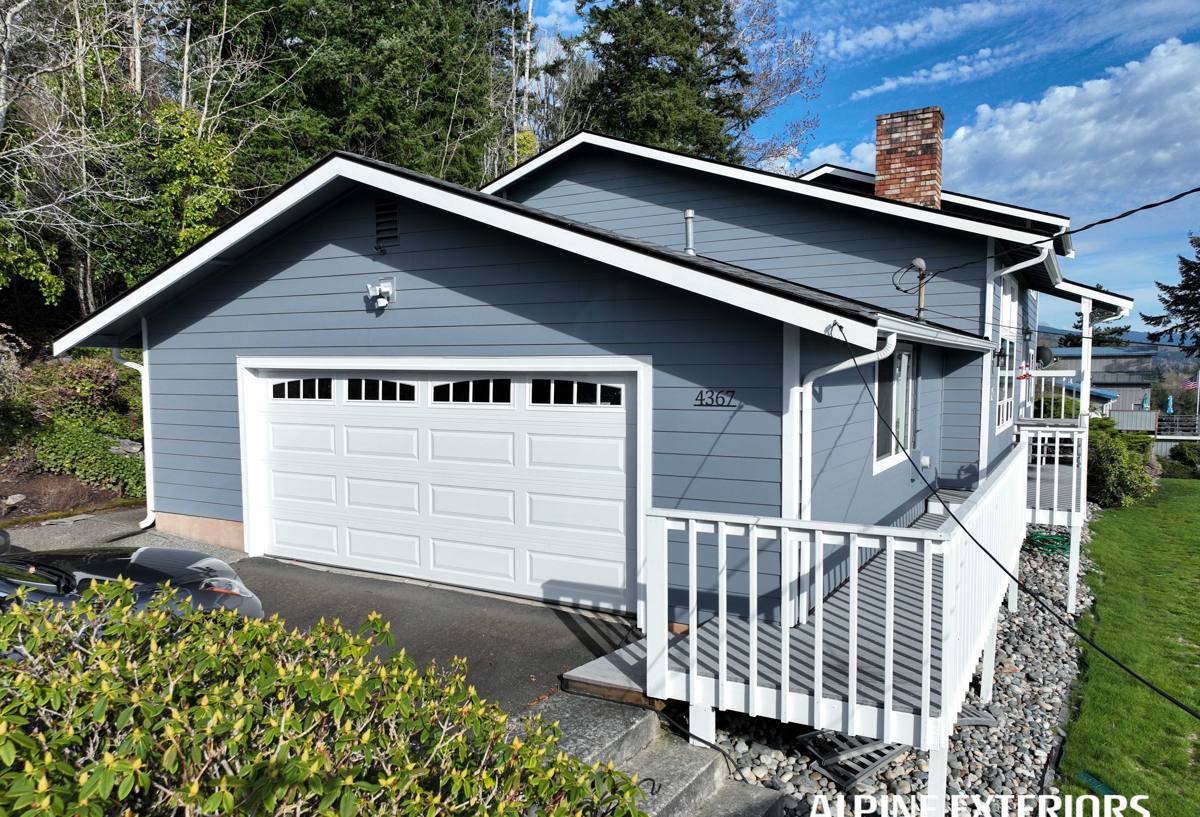
Signs Your Deck Needs Repair, Not Replacement
Most decks don't fail all at once. They send signals first, and catching those signals early is usually the difference between a repair bill and a full rebuild. Walk your deck and check for the following:
- Boards that feel spongy, bounce, or flex more than they used to, especially near the house
- Green or black staining that keeps coming back within weeks of cleaning it off
- Gaps opening up between deck boards, or boards cupping so water pools instead of shedding
- Rust streaks running down from screws, nails, or metal brackets
- A railing post that wiggles when you push on it — this is a safety issue, not a cosmetic one
- Soft or discolored wood where the deck ledger board meets the house siding
- Stair stringers that feel uneven or have visible splitting at the notches
None of these automatically mean a full teardown. In fact, most of what we find on service calls in this area turns out to be repairable, provided the framing underneath hasn't been compromised for too long.
What a Correct Deck Repair Actually Involves
A repair that only replaces what's visibly rotten often fails again within a year or two, because the conditions that caused the damage are still there. A correct repair addresses both the damage and the reason it happened.
Substructure and Framing
Joists, beams, and posts are the part of the deck nobody sees, which is exactly why they're the part most often neglected. We check for soft spots with a probe, not just a visual look, since surface wood can appear intact while the core has already broken down from trapped moisture. Any compromised framing gets sistered or replaced — patching over weak framing with new decking on top just hides the problem.
Decking Boards and Fasteners
Individual board replacement only works well if the new boards are properly gapped for drainage and fastened with corrosion-resistant hardware suited to this climate. Standard interior-grade screws corrode faster near open water, and once a fastener starts rusting, it weakens the hold long before it visibly fails.
Flashing and Ledger Connection
Where the deck attaches to the house is the single most common failure point we see. If flashing is missing, undersized, or was never properly integrated with the house's water管理 — sorry, water management — moisture works its way behind the siding and into the rim joist. Fixing the ledger connection properly is not optional; it's the difference between a deck that lasts and one that rots from the inside out again.
Railings and Guards
Loose or wobbly railings are a safety issue first and a cosmetic one second. We check post attachment, baluster spacing, and connection hardware, and we won't reattach a railing to a post base that's already compromised — that's a repair that looks done but isn't.
Repair or Replace? How We Actually Decide
Homeowners often assume any visible rot means the whole deck has to come out. That's rarely true. The real question is how much of the load-bearing structure is still sound. Here's the general framework we use when evaluating a deck:
| Condition Found | Repair Usually Makes Sense | Replacement Is the Better Call |
|---|---|---|
| Framing and posts | Solid with isolated soft spots | Widespread rot, or damage at multiple posts and beams |
| Decking boards | Scattered problem boards | Most boards cupped, splintered, or gapped beyond repair |
| Ledger board area | Flashing issue with sound framing behind it | Rim joist rot extending into the house framing |
| Age of the deck | Under 15-20 years, built to a reasonable standard | Older deck already past a typical service life |
| Code compliance | Meets current railing and footing basics | Undersized footings or railing spacing that doesn't meet current code |
We'll tell you honestly which column your deck falls into. There's no benefit to us talking a homeowner into a full rebuild when a targeted repair will hold up fine, and there's no benefit to patching a deck that's structurally past the point of a reasonable fix.
Material Considerations for This Climate
When we're replacing sections of decking or framing, the material choice matters more here than it would somewhere drier. Pressure-treated lumber remains a solid, cost-effective choice for framing because it's designed to resist rot and insects, but it still needs proper flashing and fastener choices to perform well near salt air. Cedar has a natural look many homeowners want for visible decking, but it requires more consistent maintenance — sealing and cleaning on a schedule — to keep moss and moisture from taking hold, especially through a long wet season.
Composite and capped composite decking have become popular for good reason: they don't absorb moisture the way wood does, and they resist the moss and algae staining that's such a persistent problem in this area. The trade-off is upfront cost and the fact that composite still needs a properly built, well-ventilated substructure underneath — composite decking on top of neglected framing is still a deck sitting on a bad foundation. We'll walk you through the honest maintenance and cost trade-offs for your specific deck rather than push one material as a default.
Our Repair Process
- Free on-site inspection, including a physical probe of framing and connection points, not just a visual walk-through
- Clear written assessment of what's damaged, what's still sound, and why the damage happened in the first place
- A straightforward repair plan with material options and a real cost range, no vague estimates
- Repair work performed with corrosion-resistant fasteners and proper flashing at every connection point we touch
- Final walk-through so you know exactly what was done and what to watch for going forward
We don't upsell repairs a deck doesn't need, and we don't quote a "quick fix" on a deck where the underlying structure needs real attention. Both approaches cost homeowners more in the long run.
Keeping a Repaired Deck in Good Shape
A good repair buys you years, but the climate here doesn't let up, so a little maintenance goes a long way between service visits.
- Sweep debris off the deck regularly — trapped leaves and needles hold moisture against boards
- Clean moss and algae off before it spreads, using a wash appropriate for your decking material
- Check that drainage gaps between boards haven't closed up from swelling or debris buildup
- Inspect visible fasteners and hardware once or twice a year for early rust
- Reseal or restain wood decking on the schedule appropriate to the product — don't wait until it's visibly gray
- Keep an eye on the ledger board area where the deck meets the house, since that's the highest-risk spot for hidden moisture
Why Local Experience on March Point Matters
A crew that only occasionally works this area treats every deck like a generic repair job. A crew that regularly works March Point knows to expect accelerated fastener corrosion, knows which flashing details actually hold up against driving rain coming off the water, and knows not to underestimate how fast moss returns without proper drainage and airflow under the decking. That local pattern recognition changes what gets checked, what gets upgraded during a repair, and what corners never get cut — because we've already seen what happens when they are.
We're an Anacortes-based crew serving Skagit County, and March Point's combination of salt exposure, wind-driven rain, and a long damp season is part of what we plan for on every deck repair here, not an afterthought.
If your deck has any of the warning signs above, or you just want an honest read on where it stands, we're happy to take a look. Request a free, no-pressure estimate using the form below and we'll give you a straight answer on what your deck actually needs.