 Anacortes Siding
 Roof Repair Built for March Point's Waterfront Weather
March Point sits out on the water, and that location shapes everything about how a roof ages there. Homes on this peninsula catch salt-laden air off Fidalgo Bay and Padilla Bay, take wind-driven rain straight off the water with little to break it up, and sit under enough shade and dampness for moss to get a serious head start each year. A roof repair here isn't the same job as a repair on a dry, inland lot in Skagit County — the exposure is different, and the repair has to account for it or it won't hold.
We work on roofs in this area regularly, which means we're not guessing at how March Point weather behaves. We know what a winter of sideways rain does to open flashing, what a summer of salt air does to exposed fasteners, and what happens when moss is left to spread instead of managed. That local pattern recognition is most of what separates a repair that lasts from one that fails again in a year or two.
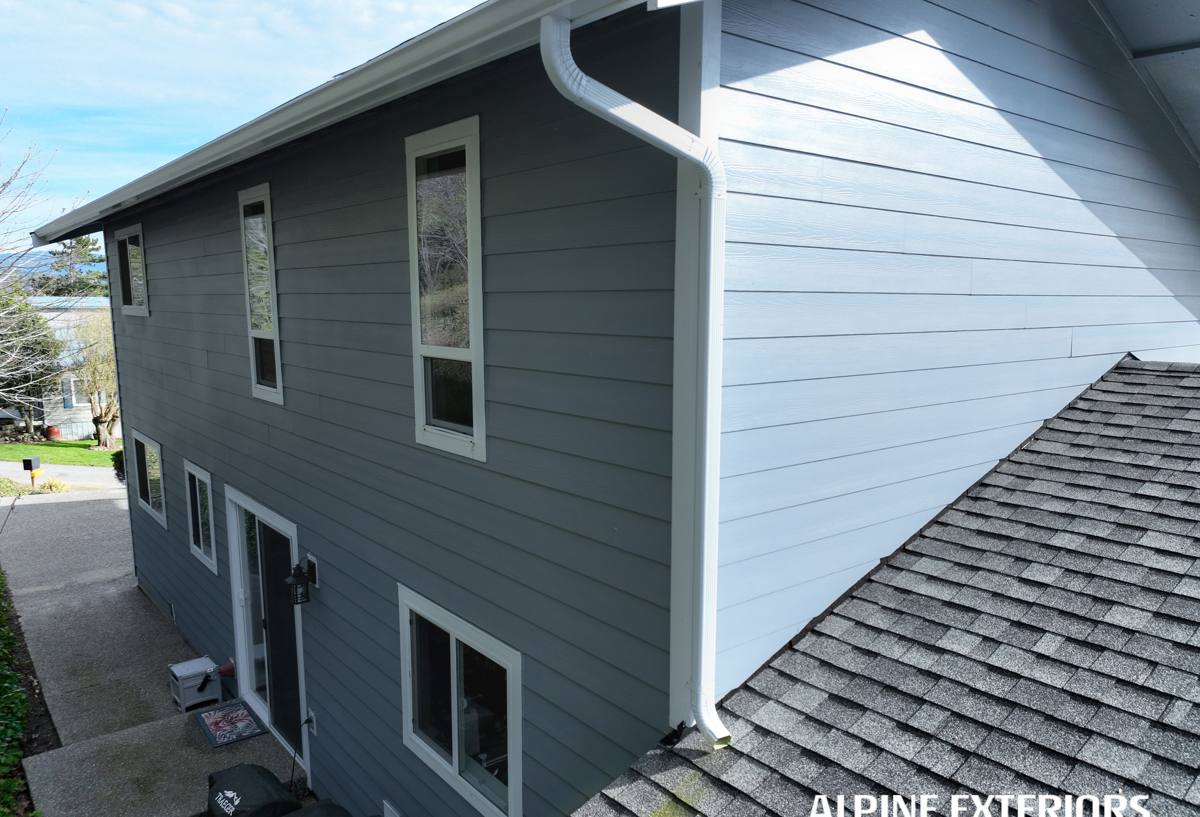
What March Point Homes Are Actually Up Against
Salt Air and Corrosion
Coastal salt air speeds up corrosion on anything metal — nail heads, flashing, gutter hangers, and screws. On a lot of roofs, the first sign of a problem isn't a leak at all, it's rust bleed staining down from a fastener or a flashing seam. Once metal starts corroding, the seal around it weakens, and that's exactly where water finds its way in.
Wind-Driven, Horizontal Rain
Anacortes gets plenty of rain that falls straight down, and that kind of rain is forgiving — gravity does most of the work of shedding it. Wind-driven rain off the water is a different problem. It hits roofs sideways and can work its way up and under shingles, behind flashing, and into vents and joints that were never designed to handle water moving in that direction. Repairs on exposed, waterfront-facing roofs need extra attention at every transition point for this reason.
A Long Moss Season
Shade, moisture, and mild temperatures are a perfect combination for moss, and March Point gets all three for a good part of the year. Moss doesn't just look bad — it holds moisture against the roofing material, lifts shingle edges as it grows, and can work its way into and under roofing layers over time. A repair that patches a leak but leaves the moss in place is treating the symptom, not the cause.
Signs Your Roof Needs Repair — Not a Full Replacement
Most roofs don't fail all at once. They show warning signs first, and catching those signs early is what keeps a repair a repair instead of turning it into a replacement. Watch for:
- Water stains on interior ceilings or upper walls, especially after a windy storm
- Granules collecting in gutters or at downspout outlets
- Shingles that are curling, cracking, or lifting at the edges
- Visible rust streaks below flashing, vents, or fasteners
- Moss or thick algae buildup, particularly on the shaded or north-facing slopes
- Soft or spongy spots when walked on, which usually means the decking underneath is wet
- Daylight visible through the roof deck from inside an attic
- Flashing that's separated, bent, or pulling away around chimneys, skylights, or wall intersections
If you're seeing one or two of these and the roof is otherwise in reasonable shape, a targeted repair is usually the right call. If several of these are showing up at once, or the roofing material itself is near the end of its expected life, that's a different conversation — and an honest contractor should tell you that plainly rather than sell a repair that's really just delaying the inevitable.
What a Correct Roof Repair Actually Involves
Finding the Real Source, Not Just the Symptom
Water almost never shows up inside a house directly below where it entered the roof — it travels along decking and framing before it drips or stains. A correct repair starts with tracing the path backward from the interior sign of damage to the actual entry point, which is often flashing, a vent boot, or a seam rather than the shingles themselves.
Flashing and Transitions
Most roof leaks happen at transitions — where the roof meets a chimney, wall, skylight, or another roof plane — not out in the open field of shingles. On a March Point roof, we pay close attention to these areas because wind-driven rain finds them first. Flashing gets replaced with corrosion-resistant metal, not just re-sealed with caulk, since caulk is a short-term fix and metal properly lapped and fastened is a long-term one.
Decking and Underlayment
If water has been getting in for a while, the plywood or OSB decking underneath may be soft, delaminated, or rotted. Repairing over damaged decking just hides the problem — it needs to be cut out and replaced, and the underlayment beneath the shingles reinstalled correctly, with extra protection at the eaves and valleys where water concentrates.
Fasteners and Sealants
Given the salt air, we use fasteners rated for corrosion resistance rather than standard hardware that will rust and fail early in a marine environment. Sealants are used at penetrations and edges, but as a supplement to good flashing work, not a substitute for it.
Repair vs. Replacement: How to Weigh the Decision
| Factor | Leans Toward Repair | Leans Toward Replacement |
|---|---|---|
| Age of roofing material | Well within expected lifespan | At or past expected lifespan |
| Extent of damage | Isolated to one area or detail | Spread across multiple slopes |
| Decking condition | Solid, no rot found | Soft or rotted in multiple spots |
| Moss/algae coverage | Light, manageable with treatment | Heavy, long-term, embedded in material |
| Number of past repairs | First or second repair | Repeated patch jobs over the years |
| Upfront cost | Lower | Higher, but resets the clock |
There's no universal rule here — it depends on the specific roof. Part of our job during an inspection is being straightforward about which side of this table your roof actually falls on, instead of defaulting to whichever answer costs more.
How Our Repair Process Works
1. Inspection
We walk the roof (or use safe access methods where walking isn't advisable) and check the attic from the inside where possible, looking for the actual source of the problem rather than just the visible symptom.
2. Clear Explanation and Estimate
Before any work starts, we explain what we found, what caused it, and what fixing it correctly involves — including if we think repair isn't the right long-term answer. You get a written estimate with no pressure to decide on the spot.
3. The Repair Itself
We remove and replace only the affected materials — shingles, flashing, decking, underlayment — matching the existing roof as closely as possible so the repair doesn't stand out or create a new weak point.
4. Cleanup and a Final Check
Job site debris and old material are hauled off, and we do a final check of the repaired area and surrounding roof before calling it done.
Why a Crew That Already Works March Point Matters
Roofing crews that mostly work drier, inland areas can do fine work, but they're not always thinking about salt exposure or wind direction the way a crew that works this specific stretch of Skagit County waterfront does every week. Knowing which roof slopes on a March Point property typically take the worst of the weather, how moss tends to establish itself on shaded sides here, and which fastener and flashing choices actually hold up in salt air isn't something you pick up from a single job — it comes from repeated experience in this exact environment.
There's also a practical side to it: familiarity with the area means less time spent figuring out access, working around water and wind conditions, and coordinating a repair around the kind of weather windows this part of Anacortes actually gets.
Maintenance That Extends the Life of a Repair
A good repair holds up longer with a little upkeep in between. For March Point roofs specifically, that means:
- Periodic moss treatment on shaded slopes before it spreads and lifts material
- Keeping gutters and downspouts clear so water doesn't back up under the roof edge
- A visual check after major windstorms, since wind-driven rain events are when weak points show themselves
- Trimming back overhanging branches that keep sections of the roof shaded and damp
None of this is expensive or time-consuming, but skipping it is one of the most common reasons a repair that should have lasted years starts leaking again in a single season.
Get a Straight Answer About Your March Point Roof
If you're seeing stains, granule loss, moss buildup, or you're just not sure whether what you're looking at is a minor fix or something bigger, it's worth getting an honest, no-pressure look before it turns into a bigger repair. Use the form below to request a free estimate, and we'll walk you through exactly what we find and what it would take to fix it right.