 Anacortes Siding
 Guemes Island's Climate Is Tougher on Siding Than Most Homeowners Realize
Guemes Island sits in the marine waters off Anacortes, and that location cuts both ways. The same water views that make the island desirable also mean every exterior surface on the house is exposed to salt-laden air, wind-driven rain coming off the water, and a wet season that runs longer than it does even a few miles inland. Add in the tree cover on many island lots, and you get shade, moisture, and airflow patterns that keep siding damp for extended stretches through fall, winter, and spring.
Wood-based and wood-adjacent siding products struggle in this combination. Salt air accelerates corrosion on fasteners and trim hardware. Persistent dampness feeds moss, algae, and mildew growth on anything with texture or grain. And repeated wet-dry cycling — soaked in a storm, then slow to dry in low winter light — is exactly the stress that causes swelling, cupping, and paint failure over time. None of this is unique to any one house on the island; it's a function of geography, and it should factor into the siding decision as much as color or style.
Why We Only Install James Hardie Fiber Cement
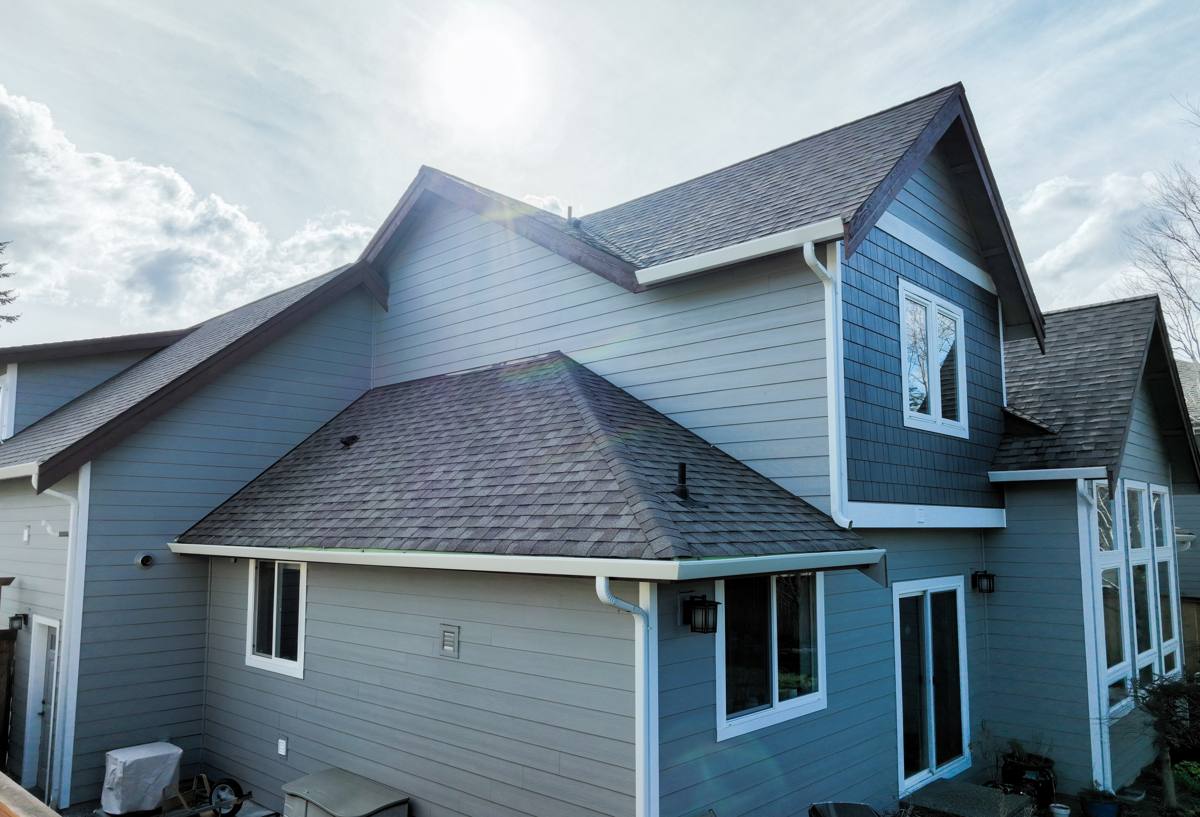
We stopped installing vinyl, LP SmartSide, primed spruce, cedar, and other fiber cement brands because we got tired of watching island and waterfront homes fight the same battles every few years: repainting, patching moisture damage, replacing warped boards, or dealing with pest and rot issues at the bottom courses. James Hardie fiber cement siding is our standard because it's engineered around the exact stresses Guemes Island homes face.
Hardie siding is a cement, sand, and cellulose fiber composite — it doesn't absorb water the way wood-based products do, it won't rot, and it's non-combustible, which matters given the dry-season wildfire risk that has become a real consideration across Skagit County even in a generally wet region. The ColorPlus factory finish is baked on under controlled conditions and backed by its own finish warranty, which means the color coat isn't relying on field paint application to hold up against salt air and UV exposure the way site-painted wood trim does.
Built for This Specific Climate
James Hardie engineers its siding in regional formulations under the HardieZone system, and homes in our marine climate zone use the HZ5 product line, formulated for wetter, more humid conditions than the products sold in the dry Southwest or the freeze-heavy Midwest. That's not a marketing detail — it affects how the board is formulated to manage moisture exposure over decades, not just years.
What "Correct Installation" Actually Means Here
Fiber cement siding is only as good as the installation behind it, and on a marine-exposed island lot, the margin for error is smaller than it is on a sheltered inland property. A correct install on Guemes Island includes:
- A drainable rainscreen gap behind the siding so any moisture that gets past the cladding has a path to drain and dry instead of sitting against the wall sheathing
- Corrosion-resistant, manufacturer-approved fasteners — stainless or hot-dip galvanized, not standard coated fasteners that degrade faster in salt air
- Proper flashing and kick-out details at every roof-wall intersection, window, and door, since wind-driven rain finds gaps that vertical rain never would
- Correct board clearance from grade, decks, and roof lines so splash-back and standing moisture don't sit against the bottom courses
- Factory-cut and factory-primed edges kept intact wherever possible, with any field cuts properly sealed per Hardie's installation specs
- Caulking and joint treatment matched to Hardie's published details — not generic caulk applied wherever a gap looks off
Skip any one of these and you can still end up with moisture problems behind a product that's rated to resist them. The siding is only one half of the system; the installation detailing is the other half, and it's where most of the real protection against Guemes Island's climate actually comes from.
Working Around Island Logistics
Guemes Island is ferry-access only, and that changes how a siding project has to be planned compared to a job in town. Materials, scaffolding, and crew all move on the same ferry schedule as everyone else, so a contractor who hasn't planned around that can end up with wasted trips, delayed material deliveries, or a crew stuck waiting on a sailing. We build ferry timing into the schedule from the start — material staging, crew arrival, and daily departure all planned around actual sailing times so the job runs at a normal pace instead of losing hours every day to logistics.
Working the island regularly also means we already know the practical realities of island lots: private wells and septic systems that need to be protected during staging and cleanup, narrower or gravel driveways that affect how we stage dumpsters and material drops, and the general expectation among island residents that a work crew respects a quieter, less trafficked place. A crew that's done this before doesn't have to figure it out on your project.
Our Installation Process
1. On-Site Evaluation
We walk the exterior, check the current siding and any signs of moisture intrusion, and look at exposure — which walls take the most wind-driven rain, where tree cover keeps things damp, and where trim and flashing details need extra attention.
2. Product and Color Selection
We go over the HZ5 board profiles and ColorPlus finish options that fit the home's style and the amount of direct weather exposure it gets, so the choice is based on performance in this location, not just a color swatch.
3. Material Staging and Scheduling
Because everything crosses on the ferry, we order and stage materials with a buffer built in, and we confirm the crew and delivery schedule around sailing times before work starts, so the project isn't stop-and-go.
4. Tear-Off and Prep
Old siding comes off, sheathing gets inspected for any hidden moisture damage, and we address anything we find before a single new board goes up — covering over an existing problem is how moisture damage becomes a bigger repair later.
5. Rainscreen, Flashing, and Installation
We install the drainage gap, flashing, and trim details first, then install the Hardie boards to manufacturer spec with corrosion-resistant fasteners and correct clearances throughout.
6. Final Walkthrough and Cleanup
We walk the finished exterior with the homeowner, check every joint and trim detail, and handle full site cleanup, including the extra care island properties need around wells, septic fields, and landscaping.
What Drives the Cost on an Island Job
Every home is different, but a few factors consistently move the price on Guemes Island projects more than they would on a typical in-town job:
| Factor | Why It Matters Here |
|---|---|
| Ferry logistics | Material delivery and crew scheduling have to work around sailing times, which affects project timeline more than cost directly, but delays add up if not planned for |
| Existing siding removal | Tear-off and any hidden moisture or rot repair behind old wood or vinyl siding is common on older island homes |
| Home exposure | Walls facing prevailing wind and water get extra flashing and detailing attention, which affects labor time on those elevations |
| Access and staging | Driveway width, well/septic locations, and tree cover affect how efficiently materials and scaffolding can be staged |
| Trim and detail work | Homes with more corners, windows, and rooflines require more precise flashing and cutting than a simple rectangular footprint |
| Board profile and finish | Lap width, shingle-style siding, and specific ColorPlus finishes vary in material cost and install time |
We provide a written estimate that walks through these factors specifically for your home, rather than a flat per-square-foot number that doesn't account for the site.
Living With Hardie Siding in a Salt Air, High-Moss Climate
One of the real advantages of switching to James Hardie on an island property is how little ongoing maintenance it asks for compared to wood-based siding. It won't rot, it won't attract wood-boring pests, and the factory finish is far more resistant to the fading and chalking that site-painted siding shows after a few Skagit County winters. That said, "low maintenance" isn't "no maintenance," especially in a moss-prone environment. A simple annual routine keeps it looking right and catches small issues before they become repairs:
- Rinse the siding annually with a garden hose and soft brush to clear salt residue, pollen, and early moss or algae growth — avoid high-pressure washing, which can force water behind joints
- Trim back tree branches and shrubs that keep sections of the wall shaded and damp longer than the rest of the house
- Check caulking at trim, windows, and joints once a year and have any cracked or separated caulk redone before winter rains
- Look at gutters and downspouts each fall to make sure water is being carried away from the siding, not running down the face of it
- Watch for any moss or dark staining concentrated in one area, which usually points to a shaded, poorly ventilated spot rather than a siding defect
Why Hire a Crew That Already Works Guemes Island
Siding installation quality comes down to detail work — flashing, fastening, gapping, sealing — and that detail work has to be adapted to the specific exposure a home faces. A crew that's done multiple projects on Guemes Island already understands how wind-driven rain moves across island lots, which elevations need the most flashing attention, and how to keep a project moving efficiently despite ferry-only access. That experience shows up in fewer surprises during the job and a finished exterior that's actually built for the conditions it has to survive, not just installed to a generic checklist.
If you're weighing a siding replacement on Guemes Island, we're happy to walk the property, look at what your home's exposure actually demands, and put together a straightforward, no-pressure estimate for James Hardie siding done right. Use the form below to get started.