 Anacortes Siding
 Windows Built for Guemes Island's Exposure
Guemes Island sits right in the path of Rosario Strait weather — open water on multiple sides, steady wind, and salt spray that travels farther inland than most homeowners expect. Add Skagit County's long wet season and the moss and mildew growth that comes with it, and windows on the island take a harder beating than the same product would take twenty minutes south in town. We install and replace custom windows on Guemes Island regularly, and the failures we see out there are almost always tied to the same three things: salt-laden air corroding hardware and fasteners, wind-driven rain finding a gap in the flashing, and moisture sitting against wood or composite surfaces long enough to feed rot or moss growth.
A "custom window" job on the island isn't just picking a size off a shelf. It means matching the frame material, glass package, and installation detail to a specific exposure — a west-facing wall catching direct spray off the water is a different problem than a sheltered wall on the lee side of the house. Getting that match right the first time matters more here than almost anywhere else in our service area, because a callback trip means a ferry crossing, not a quick drive across town.
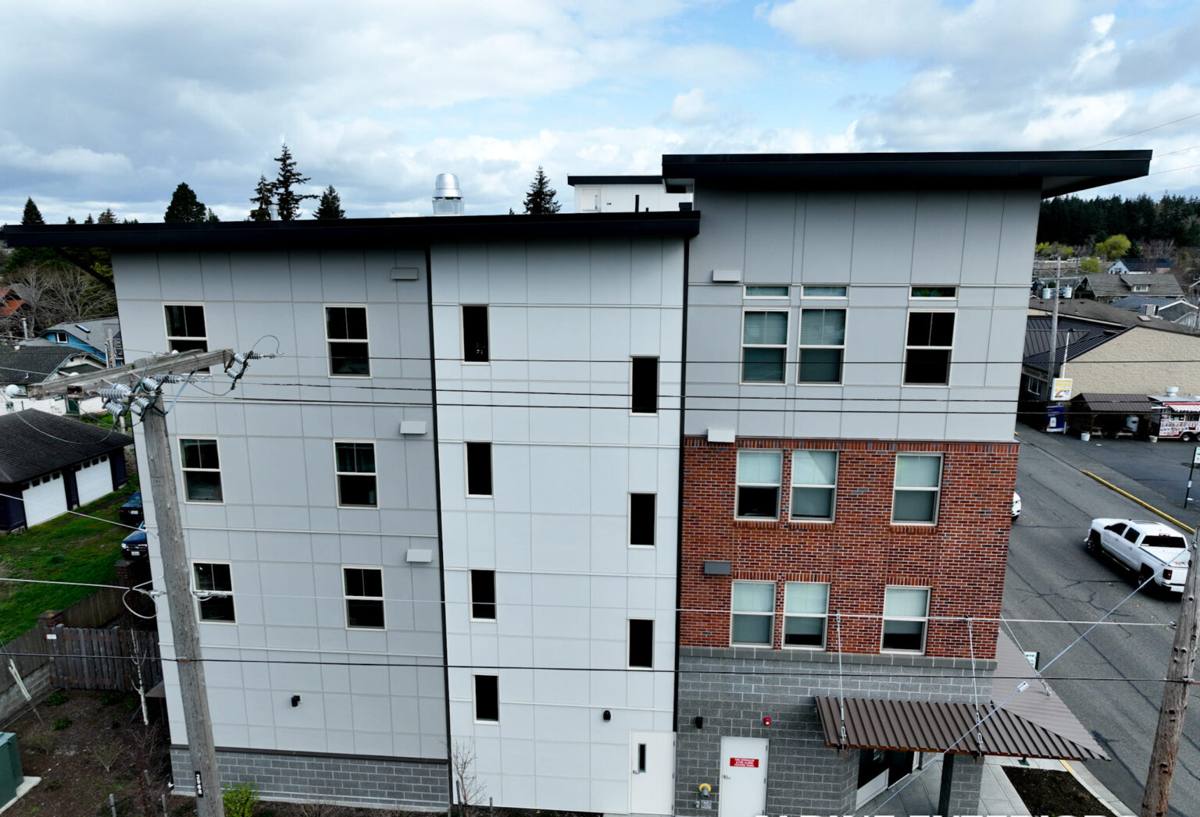
How the Climate Actually Attacks a Window
It helps to know what's actually working against your windows so you can judge whether a repair or a full replacement is the right call.
Salt Air and Hardware Corrosion
Airborne salt settles on metal window hardware — locks, hinges, balance systems, and screws — and accelerates corrosion well beyond what you'd see inland. Once hardware starts to pit or seize, seals around it stop compressing evenly, and that's where water starts getting in even though the glass and frame look fine.
Wind-Driven Rain
Anacortes and the surrounding islands get rain that doesn't just fall straight down — it's pushed sideways into walls and window openings during winter storms. A window that would stay dry in a calm rain can leak under wind pressure if the flashing and sill pan weren't detailed for driving rain in the first place.
Moss and Prolonged Moisture
Shaded exteriors, tree cover, and the long stretch of gray, damp months common to this part of Washington all favor moss and algae growth on sills, trim, and anywhere water sits instead of draining. Left alone, that moisture holds against wood trim and painted surfaces and shortens their life considerably.
Signs a Guemes Island Home Needs Window Attention
- Fogging or a hazy film between panes of double-glazed glass — the seal has failed and the insulating gas is gone
- Sticking sashes, hardware that's stiff or won't latch cleanly, or visible rust on locks and hinges
- Soft or discolored wood at the sill or bottom corners of the frame
- Moss or dark green-black staining building up on sills, trim, or the wall just below a window
- A draft you can feel at the frame edge during a windstorm, even with the window fully latched
- Paint or finish that's peeling specifically around the window opening while the rest of the wall looks fine
Any one of these is worth a look. Several at once, especially on a wall facing open water, usually means it's time to talk about replacement rather than another round of caulk and touch-up paint.
What a Correct Installation Involves
Custom windows are only as good as the opening they go into. On Guemes Island in particular, we treat the flashing and sealing detail as the most important part of the job — more important, honestly, than which brand of window you choose.
Frame Material Comparison
| Material | Salt Air Performance | Maintenance | Best Use on the Island |
|---|---|---|---|
| Vinyl | Good — won't corrode or rot, though prolonged UV and salt exposure can dull the finish over many years | Low — occasional rinse and hardware check | Most exposed elevations facing water or wind |
| Fiberglass | Very good — dimensionally stable, resists warping in temperature swings and holds up well to salt exposure | Low | Homes wanting a slimmer sightline with strong weather resistance |
| Aluminum-clad wood | Good exterior protection, but any breach in the cladding exposes wood to moisture and salt | Moderate — exterior clad face is easy to maintain, but seams and joints need periodic inspection | Sheltered elevations where the traditional wood interior look is a priority |
| Bare wood | Poor in direct salt exposure without diligent upkeep | High — regular repainting and sealing required | We generally steer homeowners away from this on exposed island walls unless upkeep is part of the plan |
Flashing and Sill Detail
Every custom window we set gets a sloped sill pan and integrated flashing that directs water out and away from the framing, lapped correctly with the house wrap or building paper so water can't work its way behind the siding. This is standard practice, but it's the step that gets rushed on a lot of budget installs — and it's exactly where wind-driven rain finds its way in on an exposed island wall.
Glass and Weatherstripping
For most Guemes Island homes we recommend dual-pane glass with a low-E coating and an argon fill, which handles both the region's cool, damp winters and cuts glare off the water on sunny days. Weatherstripping and compression seals matter as much as the glass package — a well-rated window with worn or poorly fitted seals will still let wind and moisture through.
Our Process for Island Projects
Working on Guemes Island means building the ferry schedule into the plan, not treating it as an afterthought.
- On-site assessment. We walk the exterior, check existing window condition, and note which elevations take the most direct wind and spray exposure.
- Measurement and material selection. We measure each opening precisely and go over frame material, glass package, and finish options suited to that wall's exposure.
- Scheduling around the ferry. We batch materials and crew time to minimize trips, so we're not making multiple partial crossings for a job that should be one efficient visit.
- Installation with full flashing detail. Old windows come out, the opening is inspected for hidden rot or moisture damage, and the new unit goes in with proper sill pan, flashing, and sealant — not just caulk around the trim.
- Final check and cleanup. We test operation, confirm a tight seal, and clean up job debris before we leave.
Why an Island-Experienced Crew Matters
A crew that hasn't worked Guemes Island before is learning the site conditions on your dime — figuring out ferry timing, underestimating how exposed a given wall really is, or using a standard flashing detail that's fine in a sheltered neighborhood but undersized for direct wind-driven rain off the strait. We've done enough jobs out there to know which elevations need extra attention before we ever pull a tape measure, and we plan logistics so a job that should take a day or two doesn't stretch into three separate ferry trips.
There's also a practical warranty angle: if a seal or a piece of flashing needs a look six months after installation, you want a crew that already knows the route and isn't treating a follow-up visit as a special trip.
Cost Factors to Expect
| Factor | How It Affects Cost |
|---|---|
| Frame material | Vinyl is typically the most economical; fiberglass and clad-wood options cost more upfront but can offer better long-term performance in salt exposure |
| Number of windows and openings | Whole-house projects generally have a lower per-window cost than replacing one or two units |
| Extent of hidden damage | Rot or moisture damage found once the old window is out adds repair work before the new unit can go in |
| Glass package | Low-E coatings, argon fill, and impact-resistant options each add cost over standard dual-pane glass |
| Access and logistics | Ferry scheduling and site access can affect crew time compared to a comparable mainland job |
We give straightforward, itemized estimates so you know exactly what's driving the number — no vague lump-sum pricing.
Keeping New Windows Performing on the Island
- Rinse sills and frames periodically to clear salt residue, especially after storms
- Keep gutters and downspouts clear so roof runoff isn't pouring past the window head
- Check and lightly lubricate hardware annually — locks, hinges, and balance systems hold up longer with basic upkeep
- Remove moss or algae buildup on sills and trim promptly rather than letting it sit
- Inspect exterior caulk lines each fall before the wet season sets in and re-seal any cracked or separated joints
- Trim back vegetation that keeps a window shaded and damp longer than the rest of the wall
None of this is difficult, but skipping it is the single biggest reason a good window install underperforms its expected lifespan in a marine climate.
Mistakes We See on Island Homes
The most common issue we're called to fix isn't a bad window — it's a poor installation. Caulk used in place of proper flashing, sill pans left out to save time, or a window sized slightly wrong and packed with expanding foam instead of correctly shimmed and sealed. These shortcuts often hold up fine for a year or two before a wet, windy winter exposes them. On an exposed island wall, that gap shows up faster than it would in a more sheltered spot, which is exactly why the installation detail matters as much as the product itself.
If you're weighing a window repair or replacement for a Guemes Island home, we're happy to take a look and give you a straightforward, no-pressure estimate — just fill out the form below and we'll get in touch to schedule a visit.