 Anacortes Siding
 Guemes Island Siding: A Harder Job Than Most People Realize
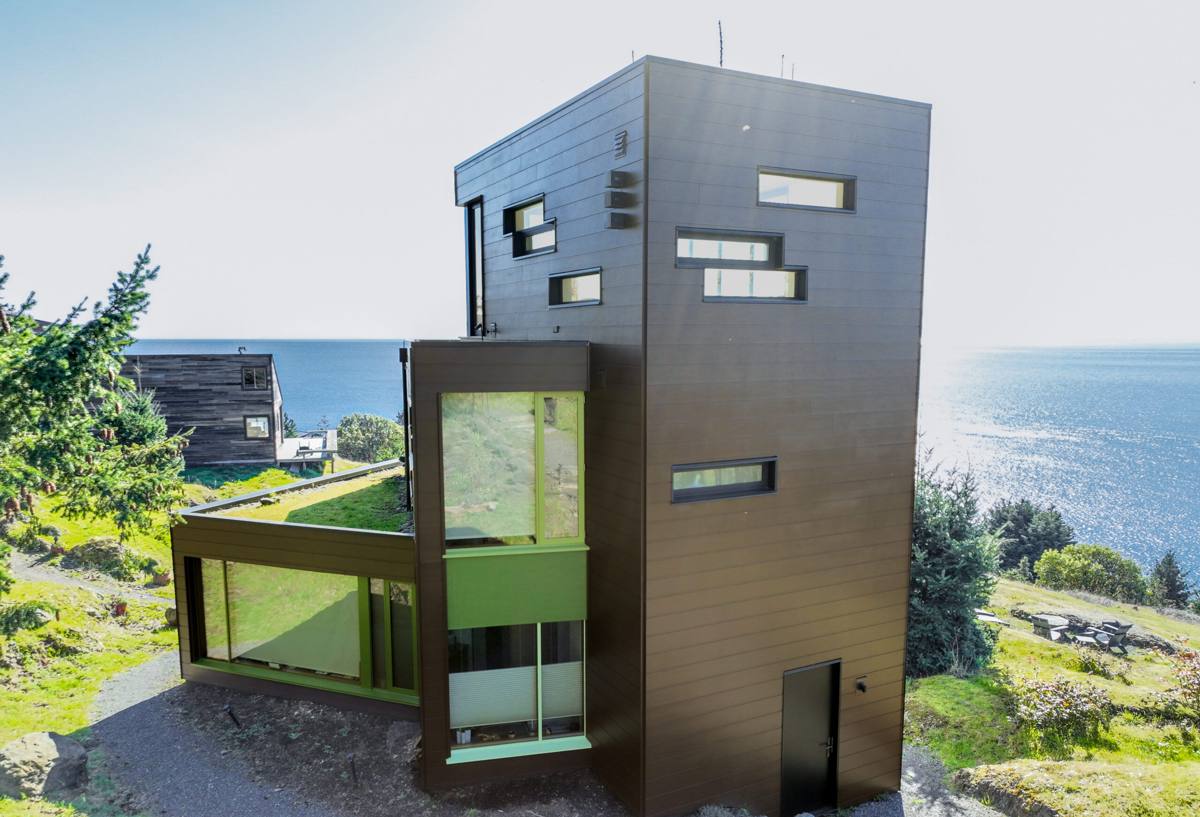
Guemes Island sits just across the channel from Anacortes, reachable only by a short ferry ride, and that separation shapes how siding ages out there. The same weather that hits the rest of Skagit County — salt-laden air off the Salish Sea, driving rain that comes in sideways during winter storms, and a moss and algae season that runs most of the year in shaded, damp spots — reaches Guemes Island homes with less of a buffer. More open water exposure on the shoreline lots, and heavier tree cover on the inland ones, both push siding toward failure faster than a comparable house a few miles inland in Anacortes proper.
We repair siding on Guemes Island on a regular basis, and the damage patterns are consistent. Homes facing the water take the brunt of wind-driven rain and salt spray on their windward walls. Homes tucked into trees fight moss, algae, and slow-drying, chronically damp siding more than storm damage. Either way, a repair done without accounting for which of these problems is actually at work tends to fail again within a season or two.
Signs Your Guemes Island Siding Needs Repair, Not Just a Cleaning
A pressure wash or a coat of paint can make tired siding look better for a little while without fixing anything underneath. Here is what actually signals a repair is due:
- Soft or spongy spots when you press on the siding, especially near the bottom courses, window sills, or anywhere two roof lines meet
- Paint that is peeling, bubbling, or flaking in a localized area rather than evenly across the whole wall
- Visible gaps, cracks, or separation at butt joints, corners, or trim boards
- Persistent moss or dark staining that keeps coming back within weeks of cleaning
- Warping, cupping, or boards that no longer sit flat against the wall
- Staining or bubbling on interior walls or ceilings near an exterior wall, which usually means water has already gotten past the siding
- Rust streaks below nail heads or fasteners, a common early sign on older wood or fiber cement installations
Any one of these on its own might be minor. Several together, or any sign that water has reached the wall sheathing, means the repair needs to address the cause, not just the symptom.
What's Actually Causing the Damage
Salt Air and Moisture Intrusion
Airborne salt from the surrounding water accelerates corrosion on fasteners, flashing, and any exposed metal trim, and it holds moisture against surfaces longer than dry inland air would. Once a fastener starts to corrode, the hole around it enlarges, water finds a path behind the siding, and the damage spreads from the inside out — often invisible until the siding itself starts to fail.
Wind-Driven Rain
Storms coming off the water don't just fall straight down; they drive rain horizontally into walls, laps, and any gap in the siding's overlap or caulking. Siding that would shed a normal rain fine can still take on water when it's hit at an angle, which is why windward-facing walls on Guemes Island tend to need repair years before the sheltered sides of the same house.
Moss, Algae, and Slow Drying
Shade from mature trees, combined with the region's damp climate, keeps some walls wet for days after a storm passes. That constant moisture is exactly what moss and algae need to take hold, and once they're established they trap even more water against the siding surface, which accelerates rot in wood products and speeds up finish breakdown on almost anything else.
Sun and UV on South and West Walls
It's easy to assume the water side of a house takes the worst of it, but south- and west-facing walls get the most direct sun, and that UV exposure dries out caulking, fades paint, and stresses factory finishes faster than the shaded sides. A full assessment looks at all four exposures, not just the obvious one.
Comparing How Siding Materials Hold Up Under Guemes Island Conditions
| Factor | Wood / Primed Spruce | Vinyl | James Hardie Fiber Cement |
|---|---|---|---|
| Salt air and moisture | Absorbs moisture, prone to rot at joints and fasteners | Doesn't rot, but seams and fasteners can still let water behind it | Non-combustible, engineered to resist moisture-related damage when properly installed |
| Wind-driven rain | Depends heavily on paint film integrity, which fails over time | Can flex and loosen at fastener points in sustained wind | Rigid panel system with a durable factory finish designed for wet climates |
| Moss and algae resistance | Moss holds moisture against wood, accelerating rot | Resists rot but moss still grows on the surface and traps grime | Dense material resists moisture uptake; factory finish sheds growth more easily |
| Repair approach | Often needs full board or section replacement once rot sets in | Panels can crack or fade unevenly, making patch repairs visibly mismatched | Individual boards can often be cut out and replaced cleanly |
Repair or Replace? How We Make the Call
Not every damaged section needs full replacement, and not every home needs a full re-side just because one wall has a problem. The decision comes down to a few honest questions we walk through on site.
| Factor | Repair Usually Makes Sense | Replacement Usually Makes Sense |
|---|---|---|
| Extent of damage | Isolated to one wall, corner, or a handful of boards | Spread across multiple walls or the whole exterior |
| What's behind the siding | Sheathing and moisture barrier test dry and sound | Rot or moisture has reached the sheathing or framing |
| Age and material condition | Siding is otherwise sound with years of service life left | Material is at or past its practical lifespan |
| Matching the existing material | Discontinued or weathered product can still be reasonably matched | No reasonable match exists, or patches would be visibly inconsistent |
| Cost over time | Repair cost is a fraction of full replacement and buys real years | Repeated repairs are starting to add up to replacement cost anyway |
We'd rather tell a Guemes Island homeowner honestly that a repair will hold for years than sell a full replacement that isn't needed yet — and we'll say the reverse just as directly when a patch would only be a temporary fix on a wall that's already failing underneath.
What a Correct Siding Repair Actually Involves
A repair that's done right addresses the water path, not just the visible damage. That means:
- Removing enough surrounding material to see the actual extent of the damage, not just the section that looks bad from the outside
- Checking the moisture barrier, flashing, and sheathing underneath before anything new goes back up
- Replacing damaged flashing at windows, doors, and wall penetrations rather than caulking over a flashing problem
- Using fasteners rated for coastal, high-moisture conditions to avoid the corrosion cycle that caused the original failure
- Matching material, profile, and reveal as closely as possible so the repair doesn't stand out or create a new water trap
- Sealing and finishing joints correctly, including back-priming or sealing cut edges where the material calls for it
Skipping any of those steps is how a "repair" turns into a callback a year later. It's also why we treat every repair estimate as an inspection first — we're not going to quote fixing a symptom without at least checking whether there's a cause underneath it that needs to be dealt with too.
Material Matters: Why We Repair and Replace with James Hardie Fiber Cement
We install exclusively James Hardie fiber cement siding, and that shows up in how we approach repairs, too. When a section of existing siding on a Guemes Island home is too far gone to patch — whether it's wood, vinyl, or another fiber cement brand — we replace that section with Hardie product engineered for this climate, and we'll explain honestly why.
Primed wood and spruce siding can look good going up, but they depend entirely on an unbroken paint film to keep moisture out, and that film breaks down faster in salt air and constant damp than most homeowners expect, especially on shaded walls. Vinyl resists rot, but it's a thin material that can crack on impact, fade unevenly in strong coastal sun, and rarely blends cleanly with older, sun-faded panels when you're patching rather than replacing a whole wall. Other fiber cement brands vary in their moisture engineering and finish warranty, and we've found the consistency isn't there across the board.
James Hardie's HZ5 product line is engineered specifically for climates like ours, with a factory-applied ColorPlus finish that holds color and resists the freeze-thaw and moisture cycling a marine climate puts siding through. It's non-combustible, it holds up to moss and algae better than wood, and its warranty is structured around real-world performance rather than best-case conditions. That's why it's what we put back on a wall once a repair calls for real replacement, not a patch.
Working With a Crew That Already Serves Guemes Island
Guemes Island isn't hard to reach, but it does add a layer most mainland Anacortes jobs don't have: every crew, every load of material, and every piece of equipment has to make the ferry crossing on a schedule, not on demand. A crew that already works the island plans around that instead of discovering it mid-job. We batch material deliveries, plan crew time around ferry departures rather than fighting them, and avoid the wasted half-days that come from underestimating how the island changes a normal workday.
That familiarity also means we already understand which exposures on the island tend to fail first — waterfront walls versus tree-shaded walls — and we walk a Guemes Island property with that knowledge instead of treating it like any other repair call. It's a small thing that adds up to fewer surprises and a more accurate estimate the first time.
Keeping Repaired Siding Ahead of Moss Season
A correct repair buys years, but a little maintenance keeps it from becoming a repeat call:
- Rinse shaded, moss-prone walls once or twice a year before growth gets established, rather than after it's visible
- Trim back branches and brush that keep a wall from drying out after storms
- Walk the exterior after major windstorms and check for loose trim, gaps, or fresh cracks near corners and joints
- Re-caulk high-exposure joints on schedule rather than waiting until a gap is visible from the ground
- Address small issues — a lifted corner, a hairline crack, a soft spot — while they're still small
None of this replaces a proper repair, but it stretches the life of the work and makes it easier to catch the next problem before it spreads.
If you're dealing with damaged, aging, or moss-covered siding on a Guemes Island home, we're glad to take a look. We'll give you a straight assessment of what's actually going on, what a real repair involves, and whether replacement makes more sense — with a free, no-pressure estimate and no upsell if a repair is genuinely the right call.