 Anacortes Siding
 Siding Installation Built for a Guemes Island Address
Guemes Island sits close enough to Anacortes to feel like a neighborhood, but it lives by its own rules. Every board, fastener, and load of trim has to cross on the ferry, every job has to work around the schedule, and every house on the island takes a harder hit from the weather than a comparable house a few miles inland. Homes here face wind straight off Rosario Strait and Guemes Channel, salt-laden air, and long stretches of damp, shaded weather that keep moisture sitting on exterior walls far longer than it does in town. Siding that is a fine choice in a sheltered Skagit County subdivision is not automatically the right choice for a place that gets this much direct exposure.
This page is about one thing: installing siding correctly on a Guemes Island home, with a crew that already knows how to plan around the ferry, the wind, and the moisture load the island puts on a building envelope.
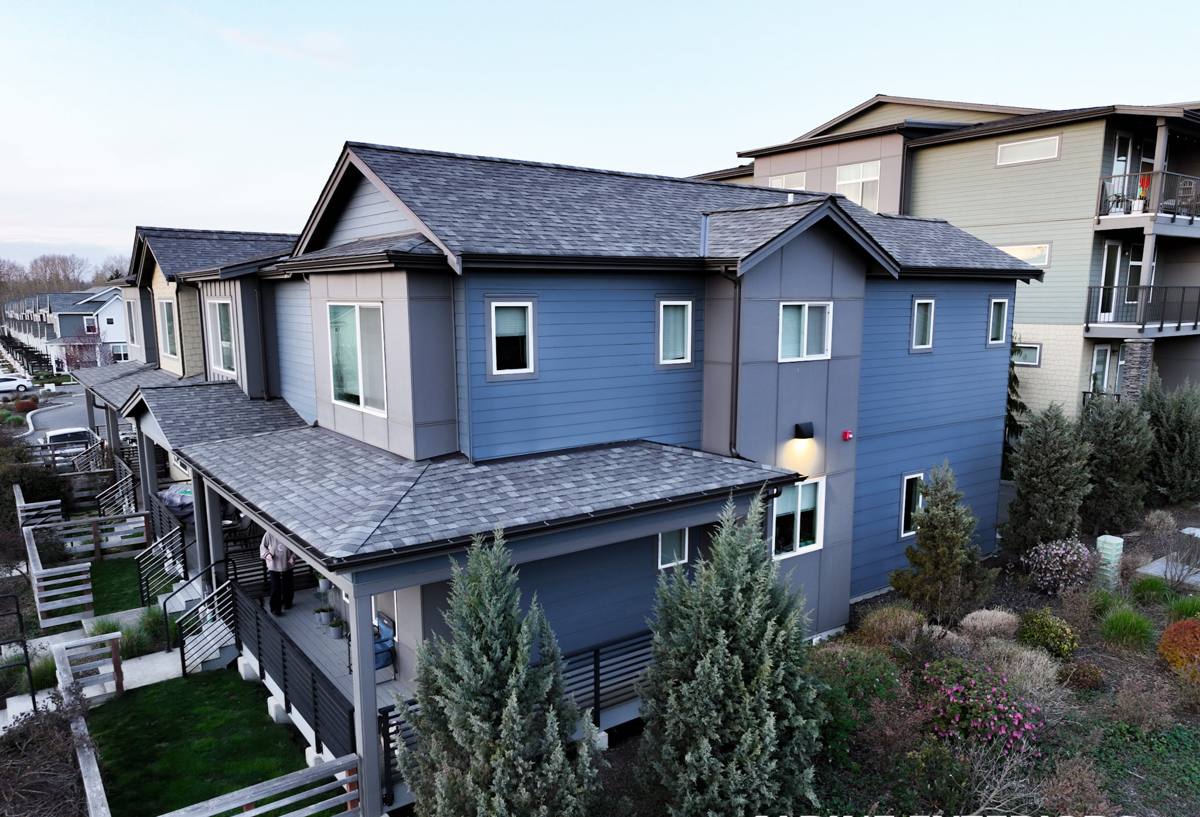
What the Local Climate Actually Does to Siding
Skagit County's marine climate is mild compared to the rest of the country, which is exactly why exterior materials tend to fail quietly here instead of dramatically. There's rarely a single storm that wrecks a wall. Instead there's a slow, steady combination of factors that wears siding down over years:
- Salt air off the water accelerates corrosion on fasteners, flashing, and any metal trim that isn't rated for a marine-influenced environment.
- Driving rain — wind-blown rather than straight-down — pushes water sideways into laps, seams, and butt joints that a calm-weather installation might never test.
- A long moss and algae season, driven by shade, humidity, and mild temperatures that never dry things out for long, means anything porous or slow to shed water stays damp and grows a film on the north and west-facing walls.
- Wind exposure on open or waterfront lots, which stresses fastening patterns and can work loose panels that weren't nailed to spec.
None of these are dramatic on their own. Together, over ten or fifteen years, they're what separates a siding job that still looks tight from one that's cupping, staining, and needing paint every few summers.
Why This Matters More on Guemes Than in Town
A house in downtown Anacortes still deals with Pacific Northwest weather, but it usually has some combination of neighboring buildings, mature trees, or distance from open water that softens the exposure. A lot of Guemes Island homes don't have that buffer. Waterfront and near-waterfront lots take wind and salt spray directly, and wooded interior lots often trade wind for deep shade — which means less drying time and more moss. Either way, the siding has less margin for error.
Why We Install Only James Hardie Fiber Cement
We don't install vinyl, LP SmartSide, primed spruce, cedar, or other fiber cement brands like Allura or Cemplank. That's a deliberate standard, not an oversight, and it's worth explaining honestly rather than just asserting.
Vinyl is inexpensive and low-maintenance in the sense that it doesn't need paint, but it's a thin plastic product that can warp, fade, and crack under UV and temperature swings, and it doesn't hold up to the same wind loads or impact as a rigid material — a real consideration on exposed island lots. Wood-based products, including engineered wood like LP SmartSide and traditional cedar or primed spruce, look good on day one but are organic materials at their core: even with treated edges and factory coatings, they're more vulnerable to moisture intrusion, and moisture intrusion is exactly what this climate specializes in. Other fiber cement brands aren't bad products, but we've standardized on one manufacturer, one installation system, and one warranty structure so every crew member installs it the same correct way every time, and every homeowner gets the same accountability if something goes wrong.
James Hardie fiber cement is non-combustible, dimensionally stable, and manufactured in climate-specific formulations — the HZ5 product line is engineered for the freeze-thaw and moisture conditions of the Pacific Northwest. The factory-applied ColorPlus finish is baked on under controlled conditions, which gives it better fade and moisture resistance than field-applied paint, and it comes with a real transferable warranty backing both the material and the finish. It isn't the cheapest option on the market, and we tell people that upfront. It's the option that holds up to salt air, driving rain, and a moss season that doesn't really end, without asking the homeowner to repaint or patch it every few years.
What a Correct Siding Installation Actually Involves
Fiber cement siding is only as good as the assembly behind it. The board itself resists moisture well, but a siding system fails at the details — flashing, gaps, fastening, and clearances — long before the board itself gives out. On a Guemes Island home, we pay particular attention to:
Weather-Resistive Barrier and Flashing
A correctly lapped weather-resistive barrier behind the siding, with properly integrated flashing at every window, door, and roof-wall intersection, is what actually keeps wind-driven rain out of the wall assembly. The siding sheds most of the water; the barrier and flashing handle what gets past it.
Fastening Pattern
James Hardie specifies exact fastener types, spacing, and placement, and those specs get more important, not less, on a wind-exposed lot. We follow manufacturer fastening schedules rather than "close enough" spacing, because under-fastened siding is one of the more common causes of early failure we see on older installs.
Clearances and Ground Contact
Siding needs a minimum clearance from grade, roofing, decks, and patios to avoid wicking moisture from splashback or standing water. This is a common corner that gets cut on remodels and additions, and it's one of the first things we check and correct on any Guemes Island project.
Caulking and Joint Treatment
Butt joints, trim intersections, and penetrations get treated according to Hardie's specifications — sealed where sealing is called for, left to drain where a drainage gap is the correct detail. Getting this backwards traps moisture instead of shedding it.
Corrosion-Resistant Hardware
In a salt-air environment, the trim screws, flashing, and fasteners matter as much as the siding. We use hardware rated for coastal exposure rather than standard-grade fasteners that can start showing rust streaks within a few seasons.
Our Process for a Guemes Island Job
- On-site walk and measurement. We look at wall orientation, existing moss or moisture staining, drainage paths, and any areas with heavier wind or salt exposure before we ever price the job.
- Material and logistics plan. Because everything crosses on the ferry, we plan deliveries and crew scheduling around sailing times so the job runs on a predictable timeline instead of stalling out waiting on materials.
- Tear-off and inspection of the wall assembly. Removing the old siding lets us check sheathing and framing for hidden moisture damage before anything new goes on — a step that matters more here than in drier parts of the state.
- Weather barrier and flashing installation. This is the layer that does the real waterproofing work, and we don't rush it to hit a schedule.
- Hardie panel installation to manufacturer spec. Correct fastening, clearances, and joint treatment throughout.
- Trim, caulking, and final inspection. A final walk-through checking every seam, corner, and penetration before we call the job done.
Comparing Common Siding Options for an Island Home
| Material | Salt Air / Moisture Behavior | Wind Exposure Durability | Maintenance |
|---|---|---|---|
| Vinyl | Doesn't absorb moisture but can crack, fade, and loosen over time | Lower impact resistance; can warp or blow off in gusts | Low, but not repairable — panels are replaced, not patched |
| Cedar / Primed Spruce | Organic material; vulnerable to rot and moisture intrusion without diligent upkeep | Moderate; performs well when maintained | High — regular painting, sealing, and moss treatment |
| LP SmartSide / Engineered Wood | Treated for moisture but still wood-based at the core | Good when installed to spec | Moderate — periodic recaulking and paint touch-up |
| James Hardie Fiber Cement | Non-combustible, dimensionally stable, engineered for PNW moisture (HZ5) | High; rigid board holds up well to wind and impact | Low — factory ColorPlus finish resists fading, no regular repainting |
What Drives the Cost of a Guemes Island Siding Job
Every home is different, so we won't quote a number without seeing the house, but a few factors consistently move the price on island jobs specifically:
| Factor | Why It Matters |
|---|---|
| Ferry logistics | Material deliveries and crew transport are scheduled around sailings, which affects project timeline more than cost, but both need planning |
| Existing wall condition | Rot or moisture damage found during tear-off adds sheathing or framing repair before new siding can go on |
| Wall complexity | Dormers, multiple gables, and lots of trim take more labor and cutting than a simple rectangular wall |
| Access and staging | Waterfront, sloped, or heavily wooded lots can limit equipment access and require more hand-carrying of material |
| Siding profile and finish | Lap width, shingle-style panels, and specialty ColorPlus finishes vary in material cost |
Keeping Guemes Island Siding Looking Right After Install
A correct Hardie installation is genuinely low-maintenance, but "low-maintenance" isn't "no-maintenance" in this climate. A short annual routine keeps it performing the way it's designed to:
- Rinse salt residue and grime off the siding once or twice a year, especially on walls facing open water.
- Watch shaded, north- and west-facing walls for early moss or algae growth and treat it before it establishes.
- Keep gutters clear so overflow doesn't run down the wall face and concentrate moisture in one area.
- Trim back vegetation that's shading walls or trapping moisture against the siding.
- Do a quick visual check of caulking at trim and penetrations every year or two, and have anything that's cracked or pulling away addressed early.
Why Hiring a Crew That Already Works Guemes Island Matters
Siding contractors who mostly work in-town jobs sometimes treat an island project as an afterthought — one ferry trip, rushed scheduling, and a crew that isn't thinking about the extra wind and salt exposure the house actually faces. A crew that regularly works Guemes Island builds the ferry schedule into the plan from the start, knows to check for the moisture and moss patterns specific to shaded interior lots versus open waterfront lots, and treats the extra corrosion resistance and flashing detail as standard practice, not an upgrade. That familiarity shows up less in the sales pitch and more in the parts of the job nobody sees once the siding is up — the flashing behind the corners, the fastening schedule, the clearances at grade.
If you're planning a siding project on Guemes Island, we're glad to come take a look, walk the exterior with you, and put together a straightforward, no-pressure estimate for what correct James Hardie installation would look like on your specific home.