 Anacortes Siding
 Deck Repair Built Around Guemes Island's Conditions
A deck on Guemes Island lives a harder life than one twenty miles inland. It sits closer to open water, catches more wind-driven rain off Rosario Strait and the Sound, and spends a good chunk of the year under shade and moisture that never fully dries between storms. Add the ferry-dependent logistics of getting materials and crews to the island, and deck repair here calls for a contractor who already understands the rhythm of working on Guemes — not one figuring it out on your dime.
We're based in Anacortes and work Guemes Island regularly. That matters more than it sounds like it should: knowing the ferry schedule, planning material drops so a crew isn't standing around waiting for the next sailing, and having already seen how a particular deck orientation on the island weathers over a few winters. This page covers what deck repair actually looks like out there — what fails first, what a proper repair involves, and how to tell a real fix from a patch job.
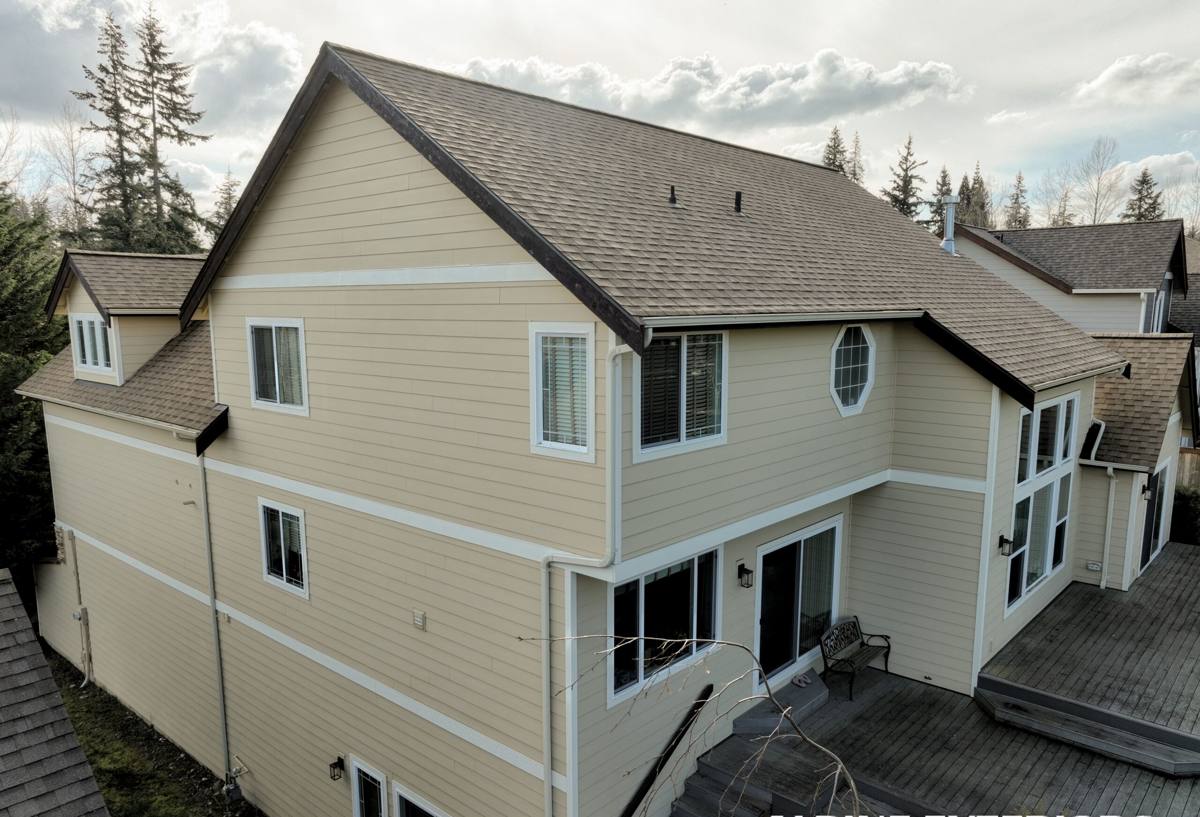
What Skagit County's Marine Climate Does to a Deck
Every deck in Skagit County deals with rain. A deck on Guemes Island deals with rain plus salt air plus, depending on the lot, more shade and less afternoon sun to dry things out. That combination shows up in predictable ways:
Salt Air and Fastener Corrosion
Airborne salt accelerates corrosion on anything metal — nails, screws, joist hangers, post bases. Standard galvanized fasteners that would last for years inland can start showing rust streaks and weakening well ahead of schedule on a waterfront or near-waterfront deck. Once a fastener starts to go, the connection it's holding loses strength quietly, often with no visible sign until a board is loose or a railing has some give in it.
Moss, Algae, and Trapped Moisture
Anacortes and the surrounding islands get a long moss season — shaded decks, north-facing decks, and anything under tree cover can stay damp for weeks at a stretch through fall, winter, and spring. Moss and algae aren't just cosmetic. They hold moisture directly against the wood or composite surface, which speeds up rot in real wood decking and can cause slip hazards on any material. Moss between boards also traps debris that keeps the gaps from draining the way they're supposed to.
Driving Rain and Ledger/Flashing Failures
Wind-driven rain off the water pushes moisture into places a calm rain never would — behind ledger boards, under poorly lapped flashing, into end grain that isn't sealed. The ledger board connection (where the deck attaches to the house) is one of the most safety-critical parts of any deck, and it's also one of the most common places we find hidden water damage on island homes, because it's rarely visible without pulling boards or checking from underneath.
Common Guemes Island Deck Problems We See
- Soft or spongy decking boards — usually rot starting from the underside or from moisture trapped by moss, not visible from the top until it's advanced
- Rusted or failing fasteners — nail heads popping up, screws with corrosion halos, joist hangers with visible rust
- Loose or wobbly railings — often a post base or ledger connection issue, not just a tightening job
- Ledger board separation or water staining — the connection point at the house showing gaps, dark staining, or soft wood
- Undersized or rotting support posts — especially on older decks built before current code required proper post bases keeping wood off concrete or soil
- Stair stringer rot — stairs take more direct weather exposure and foot traffic than the deck surface itself
- Moss buildup between boards — a maintenance issue that, left long enough, becomes a structural one
How We Approach a Repair vs. a Patch
A lot of "deck repair" in this region amounts to swapping a few obviously bad boards and calling it done. That can be the right call on a deck that's otherwise sound — but it's the wrong call if the underlying framing, ledger connection, or post bases have moisture damage that the surface boards were hiding. Our process is built to catch the difference before we start cutting.
1. Full Inspection, Not Just a Surface Look
We check the decking surface, but we also get underneath where access allows, probe the ledger connection, check post bases and footings for movement or rot, and test railings for actual structural give versus cosmetic looseness. On Guemes Island specifically, we pay close attention to the shaded and water-facing sides of the structure, since that's where problems tend to concentrate first.
2. An Honest Scope
You get a plain-language explanation of what's failing, what's still sound, and what your real options are — repair the affected sections, or consider a broader rebuild if the framing is compromised in multiple places. We're not going to recommend tearing out a deck that has a fixable problem, and we're not going to patch around rot that's going to keep spreading.
3. Repair Work That Matches the Site
Fasteners, hardware, and flashing details get chosen for a marine environment, not generic inland specs. Where board replacement is needed, we address the cause (drainage, ventilation, moss control) alongside the symptom, so the new boards aren't set up to fail the same way in a few years.
4. Island Logistics Handled Up Front
Because we already work Guemes Island, materials and crew scheduling are planned around the ferry rather than discovered as a surprise mid-project. That keeps the job moving instead of stretching out over extra weeks waiting on logistics nobody accounted for.
Repair vs. Rebuild: How to Tell Which You Need
| Condition | Likely Repair | Likely Rebuild |
|---|---|---|
| A few soft or discolored boards, framing solid | Yes | No |
| Rot found at ledger board or multiple support posts | Sometimes, if isolated | Often, if widespread |
| Railings loose but posts and framing sound | Yes | No |
| Deck is 20+ years old with no past maintenance | Case by case | Frequently |
| Moss/algae staining but wood underneath is firm | Yes — clean, treat, address drainage | No |
| Multiple stringers or joists show soft spots | No | Yes |
This table is a general guide, not a diagnosis — the only way to know for sure is a hands-on inspection, because rot severity and framing condition vary a lot even between decks that look similar from the top.
Materials: What Holds Up on Guemes Island
We'll talk through decking material options honestly, based on how each performs in a salt-air, shaded, moss-prone environment — not just upfront cost.
- Pressure-treated lumber — affordable and repairable board-by-board, but needs periodic sealing and is more vulnerable to moss and moisture retention if the deck doesn't get much sun
- Cedar — naturally rot-resistant and a good look for the area, but still needs maintenance attention in a marine climate and isn't immune to moss
- Composite decking — resists rot completely, but requires attention to proper board spacing and airflow underneath, since trapped moisture can still promote algae growth on the surface even though the board itself won't rot
Whichever material a deck currently has, repairs generally use matching or compatible material unless you're ready to talk about a broader material upgrade — we'll lay out the honest trade-offs for your specific deck rather than push a default.
What a Correct Repair Includes (Checklist)
- Inspection of decking, framing, ledger connection, posts, and railings — not just the visible surface
- Identification of the actual moisture source, not just the damaged board
- Corrosion-resistant fasteners and hardware appropriate for a marine-air environment
- Proper flashing at the ledger board where the deck meets the house
- Adequate board spacing and airflow underneath to reduce future moss and moisture retention
- Secure, code-appropriate post bases keeping structural wood off direct soil or concrete contact
- Railing and stair connections checked for real structural integrity, not just tightened
- A clear explanation of any maintenance the homeowner should keep up with afterward (moss treatment, sealing schedule, drainage checks)
Maintenance That Extends the Life of an Island Deck
Repair work lasts longer when it's paired with realistic upkeep for the Skagit County climate. A few habits make a real difference on Guemes Island specifically: keep gutters and downspouts near the deck clear so runoff isn't dumping extra water onto or under the structure, sweep leaves and debris out of board gaps before they trap moisture through the wet season, and treat moss buildup before it's thick enough to hold water against the wood. None of this replaces a proper repair when framing is already compromised, but it buys real time on a deck that's currently sound.
Why a Local Crew Matters for This Job
Deck repair isn't unique to Guemes Island as a trade — the framing principles are the same anywhere. What's different is the site conditions and the logistics. A crew that hasn't worked the island before is learning the ferry schedule, the material access, and the specific way salt air and shade affect a given deck's failure pattern on your job. A crew that already works Anacortes and the surrounding islands has that context going in, which shows up as fewer surprises, more accurate scoping, and a repair built for how your deck actually gets weathered — not a generic template.
If you've got soft boards, a wobbly railing, visible moss buildup, or just a deck that's due for an honest look after a few Skagit County winters, we're happy to come take a look. The estimate is free, there's no pressure attached to it, and you'll get a straight answer about whether you're looking at a repair or something bigger — just fill out the form below to get started.