 Anacortes Siding
 Building Decks That Hold Up on Guemes Island
Guemes Island sits right in the path of everything Puget Sound weather can throw at a wood or composite structure: salt-laden marine air off the water, wind-driven rain that doesn't just fall but blows sideways under eaves and railings, and a long, wet moss season that can run from October well into spring. A deck built to a generic spec sheet might look fine the first summer and start showing problems — soft spots, rust streaks, slick green film, loosening hardware — within a couple of winters. A deck built for this specific island holds up for decades instead.
We work on Guemes Island regularly, alongside our work throughout Anacortes and the rest of Skagit County, so we're not guessing at how this climate treats outdoor structures — we're building to it every season.
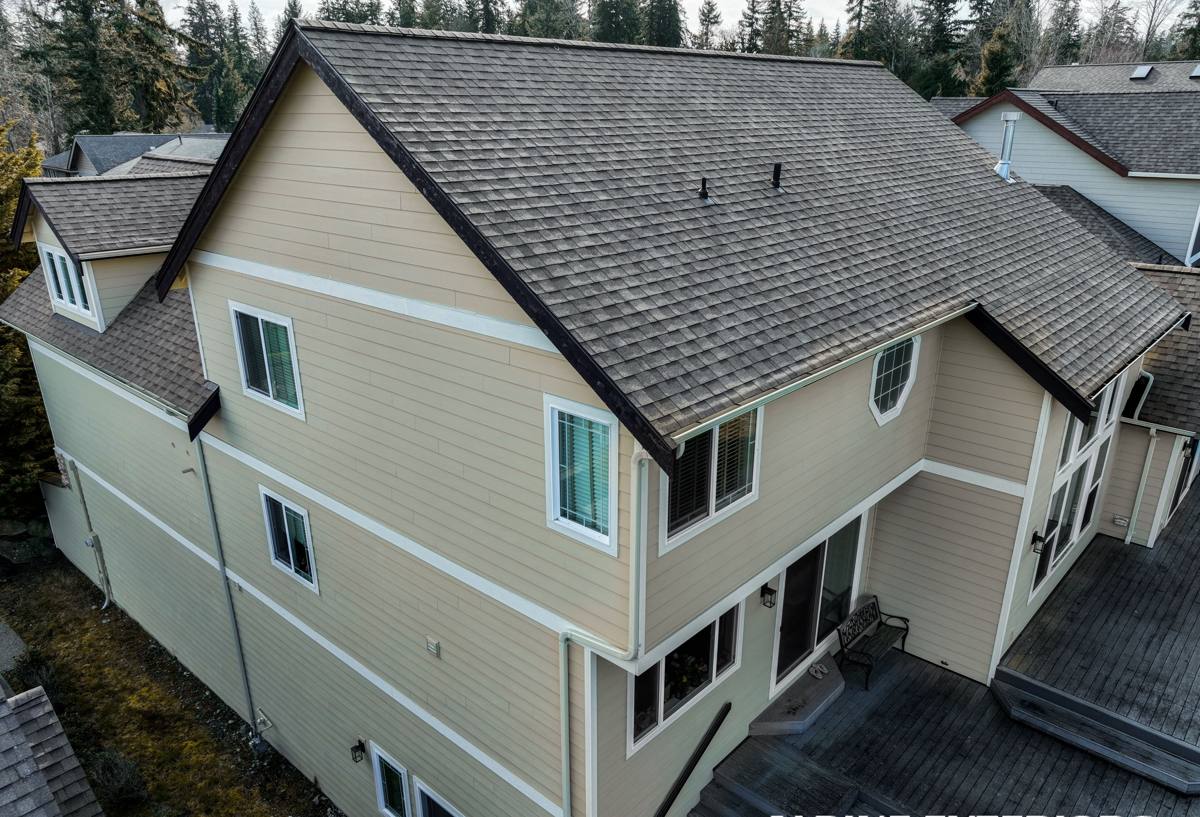
What Makes Guemes Island Tough on Decks
A few conditions on the island compound each other in ways that matter for deck design and material choice:
- Salt air corrosion. Waterfront and near-waterfront properties get airborne salt that accelerates rust on any fastener, bracket, or fixture that isn't rated for it.
- Driving rain and wind exposure. Open, elevated, and waterfront lots take rain at an angle, which pushes moisture into joints, ledger connections, and end grain that a sheltered inland deck rarely sees.
- Shade and moss. Wooded lots and tree cover — common on the island — keep decking surfaces damp longer after storms, which feeds moss and algae growth and turns boards slick.
- Well and septic systems. Many island properties run on private wells and septic, which affects where footings and drainage can go and means we coordinate placement carefully rather than assuming municipal utility layouts.
- Mixed-use properties. The island has a blend of full-time homes and part-time or seasonal residences, so a deck often needs to hold up through stretches with nobody around to notice a small problem before it becomes a big one.
None of this means a deck on Guemes Island has to be high-maintenance or short-lived. It means the material choices, fastener grade, and drainage details have to match the actual exposure, not a one-size-fits-all build.
Choosing Decking Material for This Climate
There's no single "best" decking material for every Guemes Island lot — a sheltered, tree-covered yard and an open waterfront bluff call for different trade-offs. Here's how the common options compare under salt air, driving rain, and moss pressure:
| Material | Salt Air / Corrosion | Moss & Moisture | Maintenance |
|---|---|---|---|
| Pressure-treated wood | Fine with correctly rated fasteners | Needs regular cleaning and sealing to resist moss and rot | Highest — annual cleaning, periodic staining/sealing |
| Cedar | Naturally rot-resistant but softer, needs sealing | Prone to graying and moss without upkeep | Moderate to high — sealing every 1-2 years |
| Composite decking | Not affected — no fastener exposed on the surface | Resists rot but can still grow surface moss in deep shade; needs periodic washing | Low — occasional cleaning, no sealing or staining |
| PVC/capped polymer | Fully resistant, no exposed corrodible material | Best moisture and moss resistance of the group | Lowest — rinse as needed |
Composite and capped polymer boards tend to be the better long-term fit for shaded, damp, or heavily wind-exposed island lots because they don't feed moss the way bare wood grain does and they don't need a sealing schedule. Wood remains a good, honest option for owners who want the traditional look and are willing to keep up a cleaning and sealing routine — we'll walk through the real maintenance commitment either way rather than just selling whatever's easiest to install.
What We Won't Do
We don't install decking systems that trap moisture against the framing in a shaded, high-moisture setting, and we're upfront when a product looks good on a showroom sample but isn't a good match for a wet, shaded Guemes Island lot. That's a maintenance and moisture-behavior call, not a knock on any manufacturer — different products are built for different exposure levels, and part of our job is matching the product to the site.
Fasteners and Hardware: Where Salt Air Actually Wins
Most deck failures we see near the water don't start with the decking boards — they start with the hardware. Standard galvanized fasteners and brackets can start showing surface rust within a few seasons of salt air exposure, and once a joist hanger or ledger bolt starts corroding, it's losing holding strength long before it looks obviously bad.
For Guemes Island builds we use fasteners and structural hardware rated for coastal/marine exposure — typically stainless steel or heavy-duty coated fasteners rather than standard galvanized — on ledger connections, joist hangers, and any hardware that's structural to the deck. It costs more upfront than standard hardware. It also means the connections that hold the deck to your house and keep it from racking aren't the weak point twenty years from now.
Footings, Ledger Flashing, and Drainage
Two details separate a deck that lasts on this island from one that starts failing quietly:
Ledger Attachment and Flashing
Where the deck attaches to the house is the single most common source of hidden water damage on any deck, and driving rain makes it worse. Proper flashing — installed so water sheds out and away from the house wall rather than behind the ledger board — is not optional here. We flash every ledger connection correctly, every time, because we've seen what happens to the wall framing behind decks that weren't.
Footings and Site Conditions
Footing depth and placement have to account for the island's soil and drainage conditions, and on properties with a well or septic system, we confirm footing locations don't conflict with those systems before we dig. We also grade and finish under-deck areas so water moves away from the house foundation instead of pooling against it, which matters more on a lot that already gets heavy wind-driven rain than it would somewhere drier and more sheltered.
Our Deck Building Process
- On-site assessment. We look at sun/shade exposure, wind direction, tree cover, drainage patterns, and how close the site is to salt water, since all of that shapes material and hardware recommendations.
- Design and material selection. We go through the real trade-offs between wood and composite/PVC options for your specific lot, not a generic pitch, and settle on a layout that works with your house and site.
- Permitting. We handle the permit process for Skagit County as it applies to your project so you're not chasing paperwork.
- Framing with marine-grade hardware. Ledger flashing, footings, and structural connections are built to the coastal-exposure standard described above, not scaled down.
- Decking, railing, and finish work. Installed to the manufacturer's spec for whichever material you chose, with attention to drainage gaps and airflow underneath.
- Final walkthrough. We go over the finished deck with you and cover what maintenance — if any — the material you chose actually needs.
Why a Crew That Already Works Guemes Island Matters
Guemes Island is ferry-access only, which changes how a project has to be planned. Materials, crew, and equipment all have to cross on the ferry, and a contractor unfamiliar with that reality can turn a straightforward build into a scheduling headache — missed sailings, half-loaded trips, or underestimating how long material delivery actually takes. We build our schedules around ferry logistics from the start, so trips are planned efficiently and your project isn't losing days to avoidable back-and-forth.
Working the island regularly also means we're not learning the local conditions on your project. We already know what salt air does to standard hardware here, how shaded lots hold moisture longer, and how wind-driven rain finds the gaps a sheltered-climate build would miss. That's the difference between a deck that's designed for Anacortes and Skagit County conditions generally, and one that's actually built for the exposure your specific property gets.
Keeping a Guemes Island Deck Healthy Year-Round
Whatever material you choose, a little seasonal attention goes a long way on this island. A basic maintenance routine:
- Sweep debris and standing leaves off the deck surface regularly through fall, since wet leaf litter is what starts most moss growth
- Rinse or lightly scrub decking in early spring to remove winter moss and algae film before it gets slick
- Check railing posts and stair connections once a year for looseness — a sign hardware may be corroding
- Keep gutters and downspouts near the deck clear so runoff isn't dumping extra water onto or under the structure
- For wood decking, plan on resealing or staining on the schedule the product calls for — usually every 1-2 years in this climate
- Trim back overhanging branches where practical to cut down on shade-driven moisture and moss buildup
Permits and Planning Ahead
Deck projects on Guemes Island fall under Skagit County's permitting requirements, and depending on the size, height, and location of the deck — especially on waterfront or bluff-adjacent lots — there may be additional review involved. We handle that process as part of the job rather than leaving it for the homeowner to sort out, and we'll tell you upfront what your specific project requires before work starts.
If you're planning a new deck or replacing one that didn't hold up to island weather, we'd be glad to take a look and give you a straightforward, no-pressure estimate. Use the form below to get started.