 Anacortes Siding
 Building New on Guemes Island Means Building for the Water
Guemes Island sits just across the ferry from Anacortes, and almost every lot on it has some relationship with the water — whether that's a direct view, a bluff, or just being close enough that salt-laden air reaches the framing before the drywall goes up. New construction is the one chance to get windows installed correctly for that environment. Once siding, trim, and interior finishes are closed in, fixing a bad flashing detail means tearing back through finished work. Getting it right at the rough-opening stage is far cheaper than fixing it later.
We install new-construction windows on Guemes Island and throughout the rest of Skagit County, and the island's combination of salt air, driving rain off the water, and a long shaded moss season changes some of the decisions we make compared to a build in town.
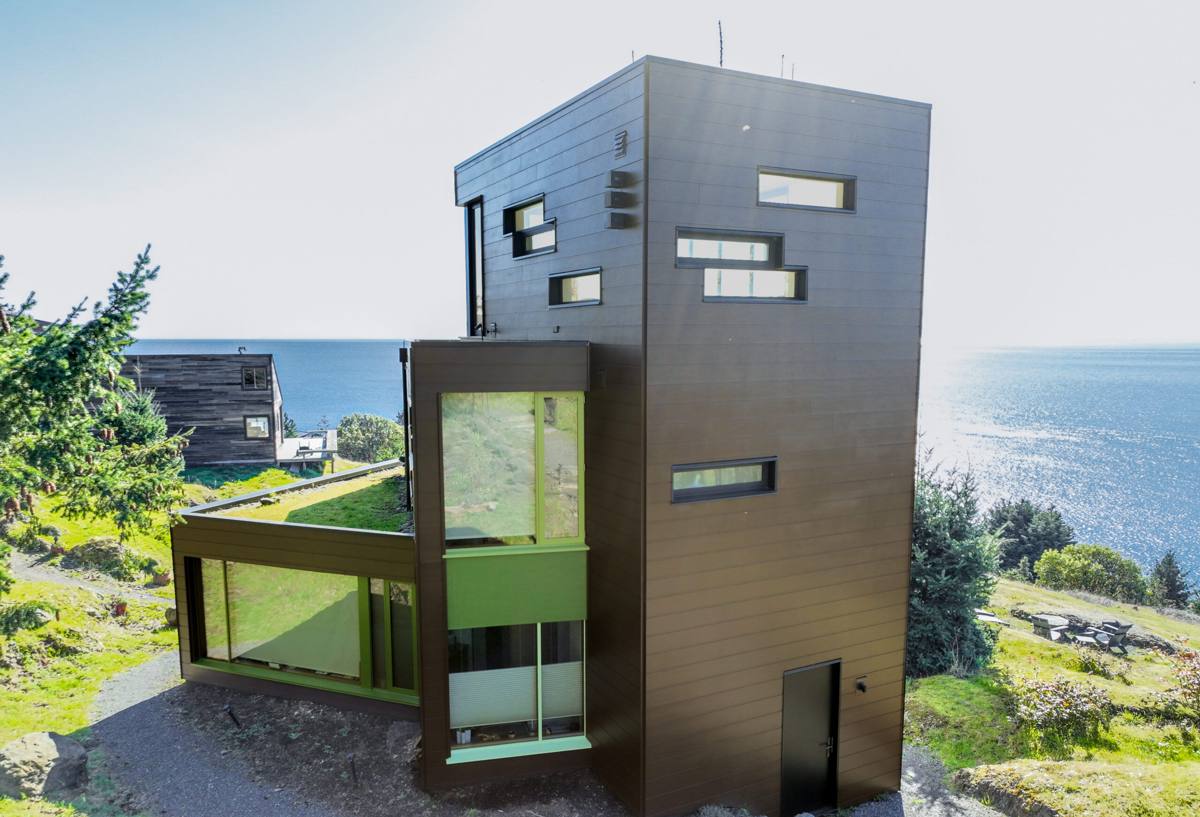
New Construction vs. Retrofit: Why the Installation Method Is Different
A "new-construction" window has a nailing flange around the perimeter of the frame, meant to be fastened directly to the wall sheathing before the exterior finish goes on. That's different from a retrofit or "pocket" window, which fits into an existing frame after the siding is already in place. On a new build, we get to control the whole water-management system around the window, not just the unit itself — which is exactly what an island climate rewards.
The Weather-Resistive Barrier Comes First
Before a window ever goes in the opening, the weather-resistive barrier (housewrap or a fluid-applied membrane) has to be lapped correctly around the rough opening — sill pan first, then the sides, then the head, always shingle-lapped so water sheds downward and outward. On a site that catches wind-driven rain off the water, we don't skip or shortcut this step even when it slows the schedule down, because it's the layer doing the real work once the trim is on.
Flashing: The Part Nobody Sees Again
Every new-construction window gets a sloped sill pan, side flashing, and head flashing with a drip cap, integrated with the WRB in the correct order. This is the single most common place we find call-back problems on other builders' work — not because the window itself failed, but because water got behind it through a flashing lap installed backwards or a sill pan that was skipped to save time. On Guemes Island, where driving rain and long wet stretches are normal, a flashing mistake doesn't show up as a leak in week one. It shows up as rot in the sill framing two or three winters later.
What Guemes Island's Climate Actually Demands
Three things drive our decisions on island builds:
- Salt air: corrodes unprotected fasteners, cheap hardware finishes, and exposed aluminum components faster than it would a few miles inland. We spec corrosion-resistant fasteners and hardware for anything near the water.
- Driving rain: wind off the water pushes rain sideways, not just down. That means head flashing with a real drip edge, and sealant details that account for wind-driven water, not just gravity.
- A long moss season: shaded, tree-covered lots (common on the island) stay damp longer into the year. Anywhere water can pool — sills, trim ledges, low-slope transitions above a window — becomes a spot where moss and algae take hold if it isn't detailed to drain.
None of this means Guemes Island needs exotic materials. It means ordinary good practice — proper slope, proper laps, correct fastener choice — can't be skipped, because the margin for error is smaller here than it is on a sheltered inland lot.
Choosing a Frame Material for a Marine Environment
Every major frame material can work on Guemes Island. The differences show up in long-term maintenance, not in whether the window will initially perform.
| Frame Material | Behavior in Salt Air / Moisture | Maintenance | Notes for Guemes Island |
|---|---|---|---|
| Vinyl | Doesn't corrode; UV and salt exposure can dull the finish over years | Low — occasional wash-down | Budget-friendly, reliable choice for most island builds |
| Fiberglass | Very stable dimensionally, resists corrosion and moisture well | Low | Good fit where the frame will take direct weather |
| Wood / wood-clad | Interior wood needs to stay dry; exterior clad face resists weather if the cladding is intact | Higher — any breach in cladding exposes wood to rot | Works well when detailing and upkeep are both solid; more sensitive to a flashing mistake |
| Aluminum | Conducts cold and can corrode faster in salt air unless properly finished | Moderate | Usually reserved for specific architectural applications, not general use here |
We'll talk through your specific lot — how exposed it is to wind and salt spray, how much shade it gets, and your maintenance appetite — before recommending a material rather than defaulting to one option for every job.
Our New-Construction Window Process for Guemes Island Builds
- Plan review: we review the window schedule and rough-opening sizes against the plans before the walls are framed, so there are no surprises when units arrive.
- WRB and sill pan install: the weather-resistive barrier and sloped sill pans go in before any window touches the opening.
- Window set and shim: units are set plumb, level, and square, shimmed at the manufacturer's specified points so the frame isn't stressed and the sash operates correctly for the life of the window.
- Flashing integration: side and head flashing are lapped into the WRB in the correct order, with a drip cap at the head.
- Fastening: nailing flanges are fastened per the manufacturer's schedule with corrosion-resistant fasteners suited to a marine environment.
- Interior and exterior sealant: sealed where the manufacturer specifies — and only there, since over-sealing can trap moisture instead of keeping it out.
- Final check: every unit is checked for operation, square, and a clean weather seal before we sign off.
Coordinating With Your Builder's Schedule
On a new build, windows are one piece of a larger sequence — framing, then windows, then siding and trim. We coordinate directly with your general contractor so windows go in at the right point in that sequence, not before the opening is properly prepped and not so late that it holds up siding crews behind us.
Getting to the Island
Guemes Island is reached by ferry from Anacortes, which means a contractor who doesn't already work the island regularly has to build ferry timing into every trip. We schedule island jobs in blocks so crews and materials cross efficiently, which keeps the project moving instead of losing days to logistics that a Skagit County mainland job wouldn't have.
What a Correct Installation Should Include
- Sloped sill pan under every unit, not just a bead of caulk
- Weather-resistive barrier lapped shingle-style around the full opening
- Head flashing with a functioning drip cap
- Corrosion-resistant fasteners appropriate for a marine environment
- Unit shimmed and fastened per the manufacturer's instructions — not "however it fits"
- Sealant applied only where specified, never as a substitute for proper flashing
- Final operation check on every window before the crew leaves the site
If a contractor's process skips several of these to save a day, the window may look fine at final walkthrough and still cause a rot problem well after the warranty period on the labor has ended.
Protecting the Investment After Move-In
Once your home is finished, a few habits go a long way on Guemes Island specifically. Keep gutters and downspouts clear so water isn't sheeting down past window heads. On shaded or tree-covered sides of the house, check sills and trim periodically for moss or algae buildup — catching it early is a wipe-down, letting it sit for a season or two lets it hold moisture against the frame and finish. And if you ever notice a window sticking, a draft that wasn't there before, or discoloration on interior trim below a window, that's worth a look sooner rather than later — it's usually cheaper to address a flashing issue early than after it's reached the framing.
Why Hire a Crew That Already Works Guemes Island
New-construction window installation isn't exotic work, but doing it well on Guemes Island means understanding the specific combination of salt exposure, wind-driven rain, and shaded, damp conditions that the island's climate creates — and it means being able to schedule around ferry access without that turning into lost days on your build. We work throughout Anacortes and Skagit County, including Guemes Island, and we bring the same flashing and fastening standards to every job regardless of how the crew gets there.
If you're planning a new build on Guemes Island and want to talk through window options, materials, or scheduling around your builder's timeline, we're happy to walk the plans with you. Reach out for a free, no-pressure estimate using the form below.