 Anacortes Siding
 Guemes Island's Climate Puts Decks Through a Lot
Guemes Island sits right in the path of the Rosario Strait weather that defines this part of Skagit County — salt-laden air off the water, driving rain that comes in sideways during winter storms, and enough shade and moisture in the tree-covered lots to grow moss on almost any horizontal surface that isn't kept clean. A deck out here works harder than a deck built ten miles inland in Anacortes proper. Wood fibers swell and split under that cycle of wet and dry. Fasteners corrode faster. Algae and moss get a foothold in shaded corners and never really leave.
None of that means a deck is a bad idea on Guemes Island — most homes out here have one, and for good reason. It means the materials and the build details matter more than they would somewhere drier. Composite decking, installed correctly, is one of the more sensible answers to that climate. Installed carelessly, it just fails in different ways than wood does.
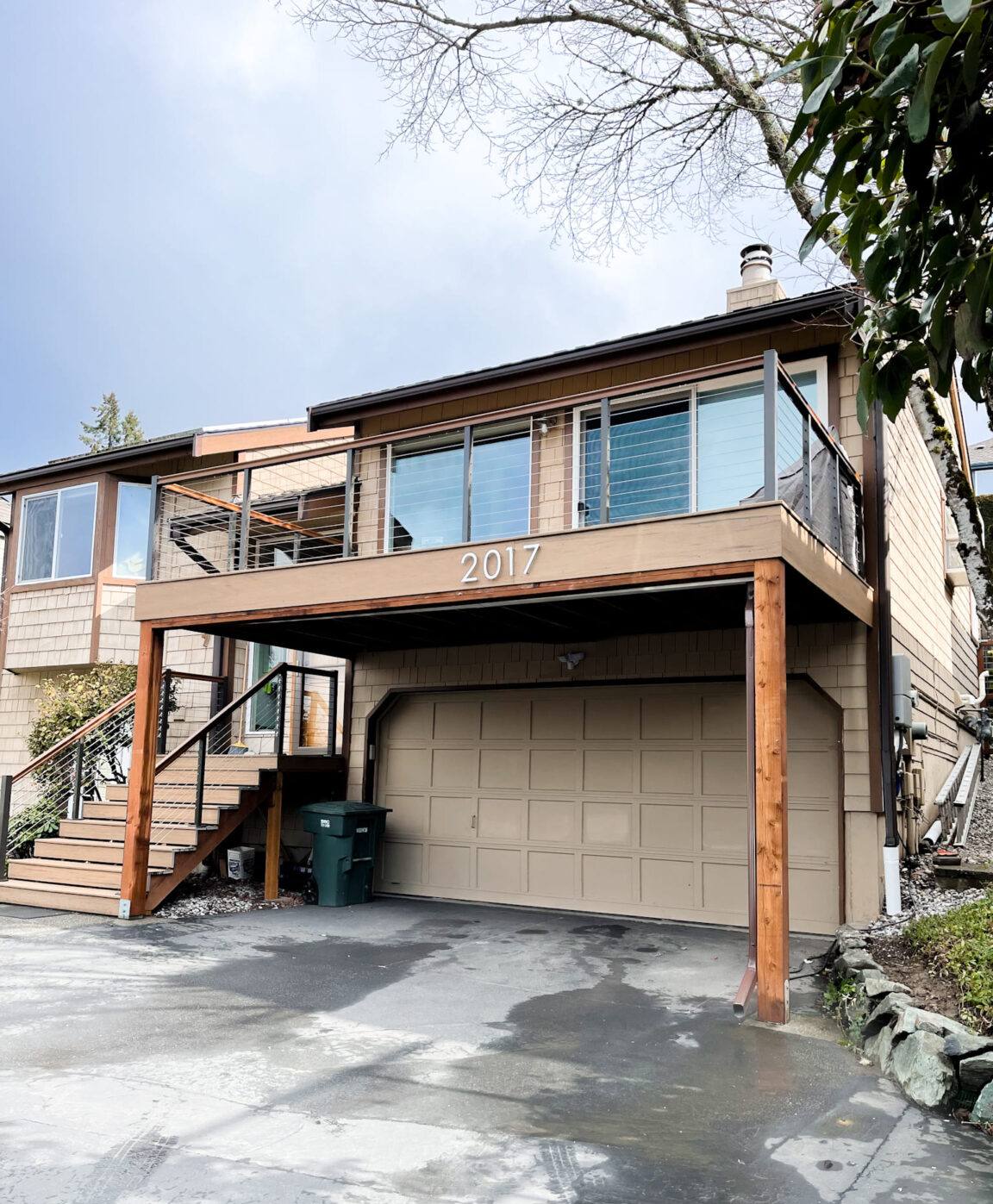
Why Composite Decking Fits Guemes Island Homes
Composite boards are made from a blend of wood fiber and plastic, usually with a protective cap layer on the better products. That combination changes how the board handles moisture compared to solid wood.
What Composite Solves
- No splitting, cupping, or splintering from repeated wet-dry cycles
- No annual staining or sealing to keep water out
- Capped boards resist the kind of surface staining that salt spray and organic debris cause on wood
- Consistent color and texture over the life of the deck, without graying or streaking unevenly
What It Doesn't Solve On Its Own
Composite decking is not maintenance-free, and it's not immune to the island's climate — it just shifts where the risk sits. Moss and algae will still grow on composite surfaces that stay damp and shaded, especially under tree canopy common on Guemes lots. The board itself won't rot, but a poorly ventilated substructure underneath it can still trap moisture against framing, fasteners, and any wood blocking used in the build. Composite decking is only as good as what's underneath it and how it's fastened down — that's where most of the real engineering decisions happen.
Getting the Substructure Right
This is the part of a composite deck that homeowners rarely see and installers sometimes rush. On a site like Guemes Island, with sustained moisture and salt exposure, it's the part that determines whether the deck is trouble-free for twenty years or starts having problems in five.
A correct build accounts for a few things every time:
- Ventilation under the deck. Composite boards need airflow beneath them to dry out after rain. Low clearance, blocked skirting, or framing tight to grade traps humid air against the joists.
- Joist spacing matched to the board. Composite manufacturers specify joist spacing for their products, and it's often tighter than standard wood-deck framing — running standard 16" spacing under a composite board rated for 12" leads to sagging and bounce over time.
- Joist tape or flashing on the framing. A strip of butyl flashing tape over each joist keeps rain from soaking directly into the top of the framing lumber, which is where rot starts on most decks, composite surface or not.
- Corrosion-resistant fasteners throughout. Standard galvanized hardware corrodes faster in salt air than most people expect. Stainless steel fasteners and hidden fastener systems rated for coastal use cost more up front and are worth it here.
Comparing Composite Decking Options
Not all composite decking is built the same way, and the differences matter more in a marine environment than they would somewhere drier. Here's how the common tiers stack up for a Guemes Island application:
| Type | How It Handles Moisture & Salt Air | Typical Cost Position |
|---|---|---|
| Uncapped composite | More prone to surface staining and moisture absorption at cut ends; needs careful end-sealing during install | Lower |
| Capped composite (cap on face only) | Good surface protection; cut ends and grooved edges still need attention | Mid |
| Fully capped composite (cap on all sides) | Best resistance to moisture intrusion and staining; handles salt spray and shaded, damp areas well | Higher |
| Mineral-based composite / PVC decking | Very low moisture absorption, good for heavy-shade or near-water applications, but more sensitive to correct installation and thermal expansion | Higher |
For most Guemes Island homes, we lean toward fully capped composite as the baseline recommendation — it's the point where the added protection clearly earns its cost given the salt air and rain exposure. Mineral-based or PVC boards make sense for decks with heavy shade, close water proximity, or homeowners who want the lowest possible maintenance and are comfortable with the tighter installation tolerances those products require.
Railings and Hardware for a Marine Environment
Railings take direct salt spray and wind on a lot of Guemes Island properties, especially anywhere with a water view or exposure to the Strait. Composite or aluminum railing systems generally outperform painted or unfinished wood here — wood railings need repainting or resealing far more often once salt air gets into the equation.
Whatever railing material is chosen, the hardware holding it together should be stainless steel or another corrosion-rated fastener, not standard zinc-plated hardware. This is a small cost difference at install time and a real difference in how the railing looks and functions five or ten years out. We also pay attention to post attachment — through-bolted post connections hold up better under wind load than surface-mounted brackets on an exposed site.
Our Process — From Estimate to Finished Deck
Building on Guemes Island isn't fundamentally different from building in Anacortes, but it does require planning around the ferry.
Logistics of Building on an Island
Material deliveries, dumpster drop-offs, and crew scheduling all have to work around ferry sailing times rather than just driving to the site. We plan material orders to arrive complete rather than in multiple partial loads, and we schedule crew days to make efficient use of the time once we're on the island rather than making repeat trips for small items. This is mostly a logistics problem, not a technical one, but it does mean a Guemes Island deck project runs more smoothly with a crew that's already worked out that rhythm than with a crew tackling ferry scheduling for the first time.
Our general process:
- On-site assessment of the existing structure, grade, drainage, and any tree cover affecting sun and shade
- Design and material selection based on the site's specific exposure — waterfront wind, shade and moisture, or a more moderate setting
- Permit review where required (see below)
- Substructure build-out with correct joist spacing, ventilation, and flashing
- Composite board installation with hidden fasteners and properly sealed cut ends
- Railing and hardware installation using corrosion-rated materials
- Final walkthrough covering care and maintenance specific to the site
Maintenance Checklist for Guemes Island Composite Decks
Composite decking cuts maintenance significantly compared to wood, but "low maintenance" isn't "no maintenance" in this climate. A simple seasonal routine keeps a composite deck looking and performing the way it should:
- Sweep debris and organic matter off the deck regularly, especially in shaded areas under trees
- Wash the deck surface at least once or twice a year with a composite-safe cleaner to prevent moss and algae buildup before it takes hold
- Check and clear any debris from under-deck ventilation gaps or skirting
- Inspect railing hardware annually for corrosion, especially on waterfront-facing sides
- Keep gutters and downspouts near the deck clear so runoff isn't draining directly onto or under the deck surface
- Address moss with a soft brush and appropriate cleaner rather than a pressure washer set too aggressively, which can damage the board's cap layer
Permits and Shoreline Considerations
Skagit County has specific permitting and setback requirements for structures on Guemes Island, particularly for anything near the shoreline or within critical areas overlays. Requirements vary by parcel and proximity to water, so we review what applies to a specific property as part of the estimate rather than assuming a standard set of rules applies to every lot. Getting this right before construction starts avoids delays and rework later.
Why Hire a Crew That Already Works Guemes Island
A deck built on Guemes Island has to account for things a generic install doesn't: ferry-based logistics, higher salt exposure, and often more tree cover and shade than a typical Anacortes mainland lot. A crew that's already worked the island knows to order complete material loads, plan crew time around sailings, spec corrosion-resistant hardware as standard rather than an upsell, and design ventilation and drainage for a wetter, shadier site. Those aren't dramatic differences, but they're the kind of details that separate a deck that holds up for decades from one that needs attention again in a few years.
If you're considering composite decking for a Guemes Island property, we're happy to walk the site, talk through what your specific lot's exposure calls for, and put together a straightforward estimate — no pressure, no obligation.