 Anacortes Siding
 Building Decks for Guemes Island's Marine Climate
Guemes Island sits right in the weather that makes the San Juan basin beautiful and hard on wood at the same time. Homes here get a steady dose of salt-laden air off the water, long stretches of driving rain through fall and winter, and a moss season that can run most of the year under the tree cover common on the island. A deck built to a generic spec sheet does not last long out here. A deck built for this specific combination of exposure — salt, moisture, and shade — does.
We work throughout Skagit County, and Guemes Island decks get treated as their own category, not a smaller version of an Anacortes mainland job. The ferry crossing changes how we plan material delivery and crew scheduling, and the island's mix of waterfront lots and heavily wooded interior lots means no two properties call for the same approach.
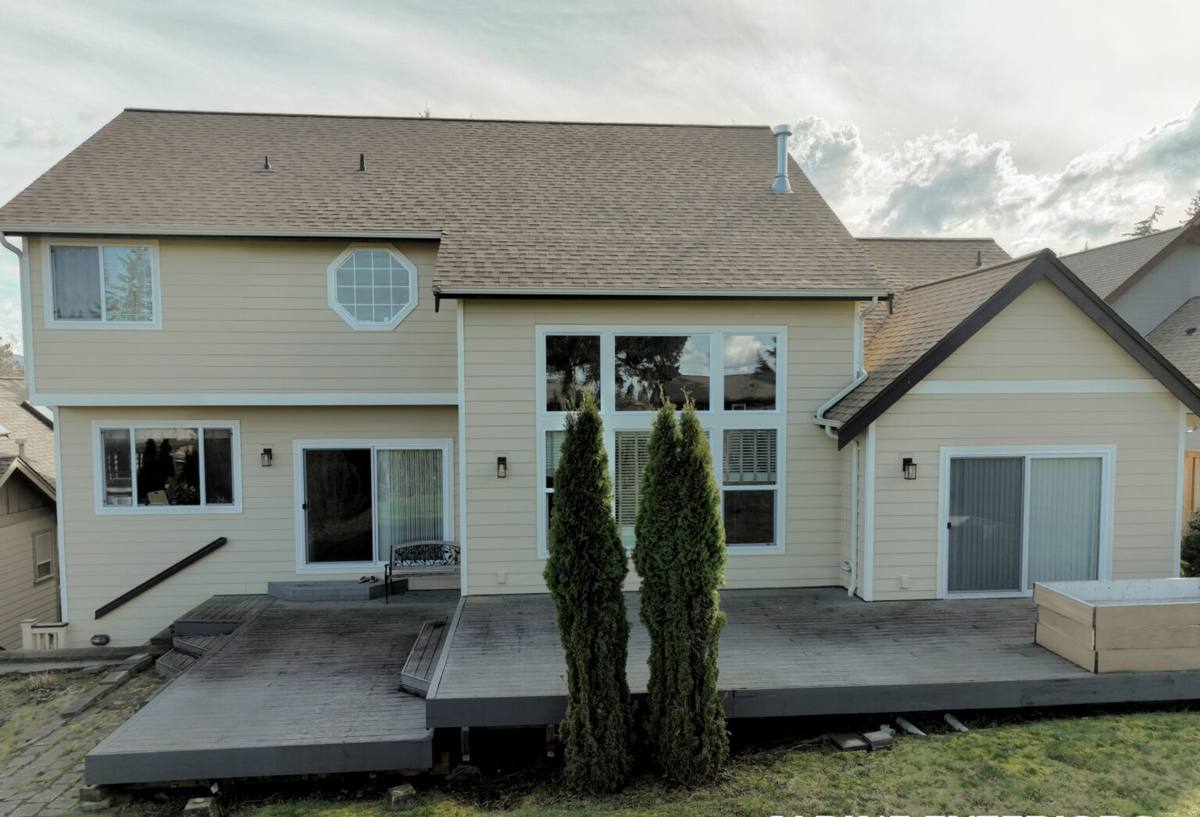
What Guemes Island Properties Actually Need From a Deck
Salt Air and Metal Fatigue
Proximity to saltwater accelerates corrosion on anything metal — fasteners, brackets, railing hardware, even the heads of exposed screws. On a mainland deck a few miles inland, standard coated hardware might hold up fine. On or near Guemes Island's shoreline, that same hardware can start showing rust streaks and weakening within a few seasons. We spec stainless steel or marine-grade coated fasteners and connectors as a baseline on island jobs, not an upgrade.
Driving Rain and Water Management
Storms here rarely come straight down. Wind-driven rain gets pushed sideways into ledger boards, under railing posts, and into any gap in the decking that isn't properly sealed or spaced. A deck that isn't detailed for lateral water intrusion will eventually rot from the inside — usually at the ledger connection to the house, which is the single most common failure point we see on older decks in this region.
Moss, Shade, and Slow Drying
Guemes Island's tree cover keeps a lot of properties in partial shade most of the day. Combined with high humidity off the water, that means decking surfaces stay damp longer after rain than they would in full sun. Moss and algae take hold fast on the wrong surface, and a slick deck isn't just unsightly — it's a fall hazard on stairs and landings. Surface texture and drainage gaps matter more here than in drier parts of the county.
Choosing Materials That Actually Hold Up
There's no single "best" decking material — there's a best material for this lot, this exposure, and this budget. Here's how the common options compare for island conditions:
| Material | Salt Air Performance | Moss/Algae Resistance | Maintenance | Relative Cost |
|---|---|---|---|---|
| Pressure-treated fir/pine | Fair — needs consistent sealing | Low without regular cleaning | Annual cleaning, periodic sealing | Lowest |
| Cedar | Good — naturally rot-resistant | Moderate — still needs cleaning in shade | Periodic oiling or sealing | Mid |
| Composite decking | Very good — won't corrode or rot | Good on capped boards, varies by brand | Occasional washing, no sealing | Mid-High |
| PVC decking | Excellent — fully synthetic | Very good, sheds moisture fastest | Lowest — soap and water | Highest |
We install all of the above and won't push a homeowner toward the most expensive option if it doesn't fit the property. What we do insist on is matching the substructure and fasteners to whatever surface material is chosen — a premium composite deck built on undersized, poorly flashed framing will still fail early, just with better-looking boards on top.
Framing and Fasteners: Where Decks Actually Fail
The decking surface is what homeowners see, but the framing underneath is what determines whether the deck lasts fifteen years or forty. On Guemes Island jobs, we pay particular attention to:
- Ledger flashing. The connection where the deck attaches to the house needs proper flashing and a water-resistant barrier behind it — this is the number one spot we find rot on older decks during inspections or tear-outs.
- Joist protection. Self-adhering joist tape over the top of framing lumber keeps standing water from soaking into end grain, which is where rot typically starts.
- Fastener grade. Stainless steel or high-grade coated structural screws throughout, not just at visible connections. Hidden hardware in contact with treated lumber needs to be rated for it, or galvanic corrosion sets in.
- Footings sized for the soil. Island lots vary from solid ground to areas with more moisture retention. Footing depth and diameter get set based on what's actually in the ground on that lot, not a one-size assumption.
- Ventilation under low decks. Decks built close to grade need enough airflow underneath to let framing dry out between storms — a sealed-off underside traps moisture against the wood.
Permitting and Working on the Island
Guemes Island is unincorporated Skagit County, so permitting runs through the county rather than the City of Anacortes. Requirements depend on the deck's size, height above grade, and proximity to shoreline or critical areas — waterfront and near-shore properties can trigger additional review. We handle the permit submission and know which projects on the island typically need it versus which fall under exempt thresholds, so homeowners aren't guessing.
Logistics matter too. Everything — lumber, hardware, tools, equipment — has to make the ferry crossing, and ferry schedules are a fixed constraint we plan around rather than fight. We batch material deliveries and crew trips to minimize wasted crossings, which keeps the project moving instead of stalling because a load of decking is stuck waiting on the next sailing.
Our Process From Estimate to Finished Deck
- On-site assessment. We walk the lot, check existing structures if this is a replacement, and look at drainage, sun exposure, and access for equipment and materials.
- Design and material selection. We talk through decking material, railing style, and layout based on how the space will actually be used, not just what looks good in a catalog.
- Written estimate. A clear scope of work and cost breakdown before anything is ordered, so there are no surprises mid-project.
- Permitting. We submit what's required through Skagit County and handle any inspections tied to the permit.
- Material staging. Deliveries are scheduled around ferry sailings so materials arrive on-site ready for the crew, not sitting waiting for the next crossing.
- Framing and construction. Ledger, footings, joists, and fastener details all get built to the standard described above before any decking goes down.
- Final walkthrough. We go over the finished deck together, including basic care guidance for the specific material installed.
Maintenance That Actually Matters on Guemes Island
Every decking material needs some upkeep in this climate, but the routine is shorter than most homeowners expect if the deck was built correctly to start. A basic seasonal checklist:
- Sweep debris and needles off the surface regularly — trapped organic matter holds moisture and feeds moss growth.
- Rinse or wash the surface a couple of times a year, more often in heavily shaded spots.
- Check railing posts and stair connections annually for looseness or corrosion at fastener points.
- Look under the deck once a year for standing water, blocked drainage, or signs of moisture at the ledger board.
- Re-seal wood decking (cedar or treated lumber) on the schedule recommended for the specific product — waiting too long lets moisture back into the wood.
- Clear gutters and downspouts near the deck so roof runoff isn't dumping directly onto or under the structure.
Why a Crew That Already Works Guemes Island Matters
A contractor who mainly builds decks in drier, inland parts of Skagit County can still build a structurally sound deck — but they may not default to marine-grade hardware, they may not know which lots near the water trigger extra permitting review, and they haven't already worked out how to move material efficiently onto the island. None of that is exotic knowledge, but it's the difference between a deck that's built once and done, and one that needs early repairs because a detail got missed.
We treat Guemes Island work as routine, not a special trip. That means realistic scheduling around the ferry, materials specified for salt air and shade from the start, and a crew that isn't learning the site conditions for the first time on your project.
Get a Straightforward Estimate
If you're planning a new deck or need to replace one that's showing its age, we're happy to come take a look and give you an honest read on what the property needs — no pressure, no inflated scope. Fill out the form below to get a free estimate for your Guemes Island deck project.