 Anacortes Siding
 Guemes Island's Weather Is Harder on Windows Than It Looks
Guemes Island sits out in the open water of Skagit County, which means homes here take a different kind of weather beating than a house tucked into town. Wind comes off the water with nothing to slow it down, rain arrives sideways more often than straight down, and salt air settles on everything — glass, hardware, trim, siding — day after day. None of that is dramatic on its own. It's the accumulation that gets homeowners: a window that seemed fine for a decade suddenly won't latch right, or the sill has gone soft without anyone noticing until it was too late.
Salt, Wind, and Standing Moisture — The Three-Part Problem
Salt air corrodes metal fasteners, hinges, and balance hardware faster than it would a few miles inland. Wind-driven rain finds any gap in flashing or sealant and pushes water where gravity alone never would. And Skagit County's long, cool, wet stretch of the year — moss season, as most homeowners around here just call it — keeps north-facing trim and sills damp for weeks at a time, which is exactly the environment wood rot and moss need to get going. A window installation on Guemes Island has to be built to handle all three at once, not just one of them.
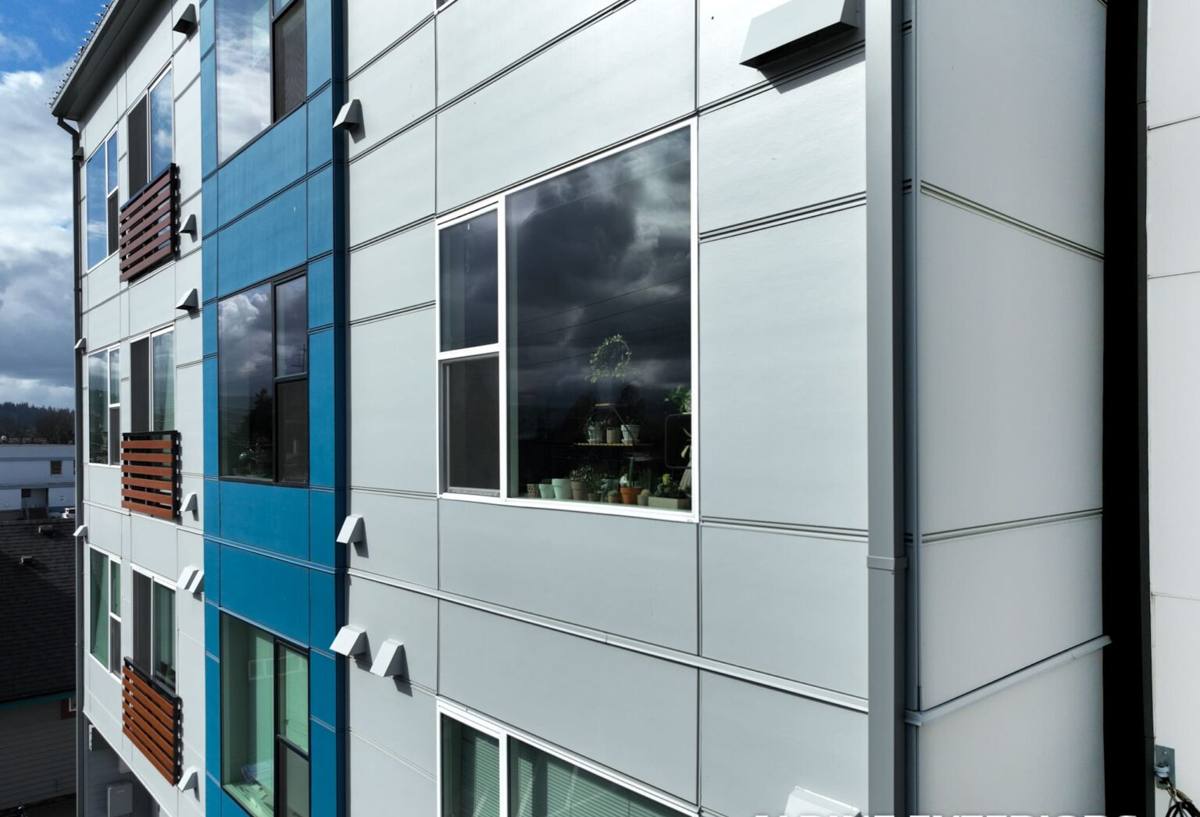
Getting the Work Done on an Island Adds a Layer Most Mainland Jobs Don't Have
Working on Guemes Island means planning around the ferry, not just the weather. Materials, tools, and crew all have to be staged and timed so a run isn't wasted waiting on a sailing, and a job that would take a day and a half on the mainland needs a little more breathing room here. Homeowners who've had mainland contractors take on island work sometimes end up with rushed installs, because the crew is trying to cram the job into a single crossing instead of planning for the trip properly. We build ferry timing into the schedule from the estimate forward, so the install gets the attention it needs instead of getting compressed to fit a boat schedule.
Signs Your Current Windows Are Losing the Fight
Most window failures don't announce themselves — they show up as small annoyances that quietly get worse. On Guemes Island, watch for these:
- Fogging or a hazy film between the panes of a double-pane window (the seal has failed)
- Soft, spongy, or discolored wood at the sill or bottom corners of the frame
- Moss or dark algae growth building up around the frame or on the exterior trim
- Windows that stick, won't latch fully, or have started dropping out of square
- Noticeable drafts or a cold spot near the window even when it's fully closed
- Condensation forming on the inside of the glass regularly, especially in winter
- Visible gaps, cracking, or peeling in the caulk or sealant line around the frame
Any one of these on its own might just mean a repair. Two or three together, especially on a window that's been through several wet seasons, usually means the installation itself — not just the glass — needs attention.
What a Correct Window Installation Actually Involves
A window installation that holds up out here isn't just about setting a new unit into the old opening and running a bead of caulk around the outside. The parts that matter most are the ones you don't see once the job is done.
Why "Just Swapping the Glass" Isn't Enough Here
Correct installation means a sloped sill pan that directs any water that gets past the window back outside instead of into the wall framing, flashing that's properly layered with the weather-resistive barrier so water sheds downward and outward, and sealant chosen to stay flexible and adhere well in a marine climate rather than crack and pull away after a season or two. The window has to be shimmed and leveled so the frame isn't under stress, and the gap between the new frame and the rough opening needs to be insulated — not just stuffed with whatever's handy — so it doesn't become a cold, damp channel behind the trim. Skip any one of these steps and the window can look fine for a year or two while moisture quietly does damage behind the wall.
Choosing a Frame Material for Salt Air and Driving Rain
There's no single "right" window for every Guemes Island home — it depends on the house, the budget, and how much upkeep an owner wants to take on. Here's how the common frame materials generally compare in this environment:
| Frame Material | Salt Air / Corrosion Resistance | Maintenance Needed | Typical Cost Range |
|---|---|---|---|
| Vinyl | Good — won't corrode or rust | Low; occasional cleaning | Most affordable |
| Fiberglass | Very good — stable in wide temperature and moisture swings | Low | Mid to upper range |
| Wood, clad exterior | Good on the exterior face; interior wood needs protection from moisture | Moderate; watch cladding seams | Upper range |
| Aluminum | Prone to corrosion near salt air unless well-coated | Higher; hardware and finish need monitoring | Varies |
We'll walk through these trade-offs against your specific home and exposure during the estimate rather than pushing one material for every job — a window on a sheltered side of the house doesn't need the same spec as one facing open water.
Our Process From Estimate to Cleanup
- On-site assessment — we look at each window opening, check for existing moisture damage, and note exposure to wind and rain on that side of the house.
- Written estimate — clear scope, materials, and pricing, with ferry and scheduling factored in up front so there are no surprises later.
- Material staging — windows and supplies are ordered and confirmed before the crew crosses over, so the job isn't waiting on a delivery mid-install.
- Removal and opening prep — old units come out carefully, and we inspect the rough opening and sheathing for any hidden rot before anything new goes in.
- Flashing and sill pan installation — the moisture-management layer that most installers rush through.
- Window setting, shimming, and insulating — set level, plumb, and square, with the gap properly insulated.
- Exterior sealing and trim — sealant and trim work sized to shed wind-driven rain, not just look finished.
- Walkthrough and cleanup — we test operation on every window and clear the site before heading back to the ferry.
What Affects the Cost of a Window Project on Guemes Island
| Cost Factor | Why It Matters |
|---|---|
| Number and size of windows | More or larger openings mean more material and labor time |
| Frame material selected | Vinyl, fiberglass, and clad-wood carry different price points |
| Condition of the existing opening | Hidden rot or damaged sheathing adds repair time before the new window goes in |
| Window style | Fixed picture windows are simpler than casements, sliders, or custom shapes |
| Access and logistics | Ferry scheduling and material staging factor into project timing and planning |
We don't quote broad numbers on a page like this because every one of these factors shifts the total — a straightforward swap on a sheltered wall is a very different job from replacing a large, weather-exposed opening with hidden sill damage. The estimate is where you get real numbers for your house.
Why Hiring a Crew That Already Works Guemes Island Matters
A contractor who's done work on the island already knows what a realistic timeline looks like once the ferry schedule is part of the equation, and isn't guessing at how Skagit County's coastal exposure affects flashing and sealant choices. That familiarity shows up in small but real ways — not showing up under-supplied for a job that can't just run to the hardware store mid-afternoon, planning around tide and weather instead of getting caught out, and knowing from experience which parts of a house on this kind of exposure tend to need extra attention. It's the difference between a crew that treats the island as an inconvenience to get through quickly and one that treats it as just another place we work.
Keeping New Windows Performing Through Moss Season
A well-installed window still benefits from a little upkeep in this climate. Keep any weep holes along the bottom of the frame clear so water can drain out instead of pooling. Trim back vegetation that shades a window and keeps it damp longer than it needs to be — moss and algae take hold fastest where things stay wet. Wipe down frames and hardware periodically to cut down on salt buildup, and check the caulk line once a year for cracking or separation, since sealant is the first thing to wear in this environment and the easiest thing to catch early. Keeping nearby gutters clear also matters more than people expect, since overflow right above a window undoes a lot of good flashing work.
If your windows are showing any of the signs above, or you're planning a project on Guemes Island and want a straight answer on what it'll take, we're happy to come take a look. Use the form below to request a free, no-pressure estimate.