 Anacortes Siding
 Guemes Island Puts More Stress on a Roof Than a Typical Mainland Job
A house on Guemes Island deals with a different set of conditions than a similar home a few miles away in Anacortes proper. Being surrounded by saltwater means airborne salt is a constant, low-level presence on every exposed surface, including the roof. Add in wind that has a clear run across open water before it hits a roofline, driving rain that gets pushed sideways under loose or aging flashing, and long stretches of shade and dampness that keep moss growing for most of the year, and you have a roofing environment that punishes shortcuts faster than most.
None of this means Guemes Island homes need exotic materials or gimmicks. It means the installation details that get skipped on an easier job — fastener choice, flashing sequencing, ventilation, moss-resistant strategy — matter more here, and matter from day one. A new roof installed with mainland-standard corner-cutting will show its age on Guemes Island years before it should.
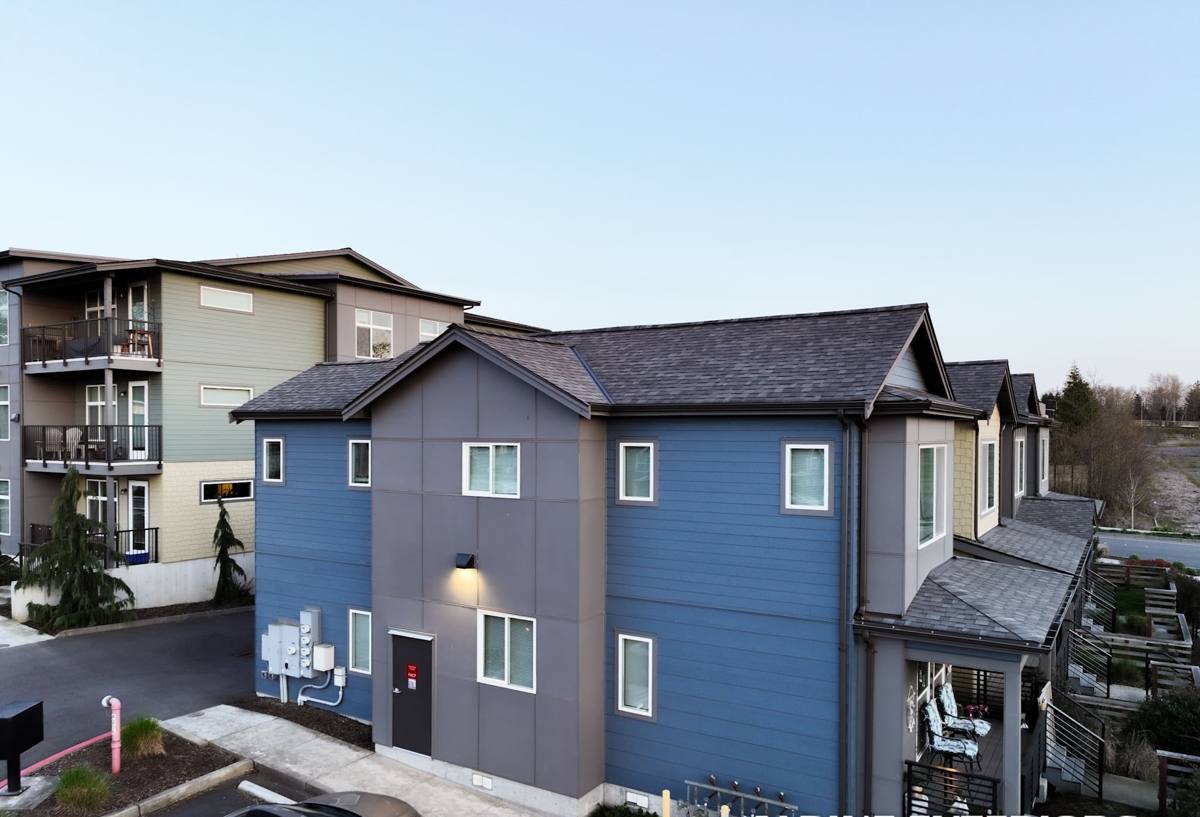
Signs a Guemes Island Roof Has Reached the End of Its Service Life
Homeowners on the island often ask whether a problem area can be patched or whether it's time for a full replacement. A few patterns tend to point toward replacement rather than repair:
- Granule loss heavy enough that you can see bare, shiny patches on asphalt shingles, especially on south- and west-facing slopes that catch the most weather
- Moss mats thick enough to hold water against the shingle surface rather than just staining it
- Soft or spongy spots when walking the roof, which usually means the decking underneath has taken on moisture
- Daylight visible through the roof deck from inside the attic, or consistent damp insulation near the eaves
- A roof that's already had two or more rounds of patch repairs in the same areas — a sign the underlying materials are simply worn out
- Shingles that are curling, cracking, or lifting at the edges, which lets wind-driven rain get underneath
If a roof is showing two or more of these signs at once, patch repairs usually turn into a short-term fix that gets revisited within a year or two. On an island where every service call means a ferry crossing, that's an expensive way to defer the real decision.
What a Correct New Roof Installation Actually Involves
Tear-Off and Deck Inspection
A proper re-roof starts with a full tear-off down to the deck, not an overlay. Overlaying a new layer on top of failing shingles traps moisture problems instead of solving them, and it hides the one thing that actually matters most on a coastal roof: the condition of the decking itself. Once the old roofing is off, every sheet of decking gets inspected. Any wood that's soft, delaminating, or stained from long-term moisture gets replaced before anything new goes down — skipping this step is the single most common cause of early roof failure.
Underlayment and Water-Shedding Details
Given how much driving rain a Guemes Island roof sees, underlayment choice and installation sequence matter. Self-adhering ice-and-water membrane belongs at eaves, valleys, and around every penetration — the places wind-driven rain is most likely to find a way in. The rest of the deck gets a synthetic underlayment that holds up to wind and foot traffic better than old-style felt. Every layer is installed shingle-fashion, meaning water is always directed onto the layer below it, never against a seam or lap edge.
Fasteners, Flashing, and Salt Air
Salt air corrodes ordinary fasteners and flashing faster than most homeowners expect. We use corrosion-resistant fastener and flashing materials suited to marine exposure rather than the cheapest option available, because a rusted-through nail or a corroded step flashing is one of the more common causes of hidden leaks in coastal homes. Flashing at chimneys, skylights, sidewalls, and roof-to-wall transitions gets formed and layered correctly rather than caulked as a substitute for proper metalwork — caulk is a maintenance item, not a waterproofing detail.
Ventilation
A roof that can't breathe traps moisture in the attic, which shortens the life of the decking and the shingles from underneath. Balanced intake and exhaust ventilation is part of a correct installation, not an upsell — it's especially important in a damp, shaded climate where moisture has fewer chances to dry out on its own.
Roofing Materials That Actually Hold Up on Guemes Island
There's no single "best" roofing material for every home — the right choice depends on the roof's exposure, the home's style, and the owner's maintenance tolerance. Here's how the common options compare specifically for a marine, moss-prone climate:
| Material | Typical Lifespan | Moss/Algae Resistance | Wind & Rain Performance | Maintenance Needs |
|---|---|---|---|---|
| Architectural asphalt shingle | 25–30 years | Moderate — improves with zinc/copper strips | Good, with proper fastening and sealing | Periodic moss treatment and gutter checks |
| Standing seam metal | 40–50+ years | High — sheds moss and debris well | Excellent in wind and driving rain | Low; occasional fastener and sealant checks |
| Synthetic/composite shake | 30–40 years | Good, depending on product | Good, varies by manufacturer | Low to moderate |
We don't push one material on every homeowner. We do steer people away from products or installation shortcuts that create long-term moisture or maintenance headaches in this climate — that's a professional standard, not a sales pitch, and it applies whether the job is on the island or anywhere else in the county.
Why Ferry Logistics Change How a Re-Roof Should Be Run
A roof replacement on Guemes Island isn't just a mainland job with a boat ride tacked on. Materials, dumpsters, and equipment all have to move on and off the island on the ferry's schedule, which means the timeline has to be planned around sailing times rather than around a crew's usual habits. Debris hauling is a bigger logistical piece too — old roofing has to come off the island the same way it went on.
A crew that hasn't worked the island before tends to underestimate this. They'll schedule around a mainland job's pace, miss a sailing with a loaded trailer, or discover mid-project that a supply run means another round-trip wait. A crew that already works Guemes Island regularly plans material drops, dumpster timing, and crew arrival around the ferry from the start, which is what keeps an island re-roof from stretching out for reasons that have nothing to do with the actual roofing work.
Our Process, From Estimate to Cleanup
- On-site inspection and measurement, including a look at the attic and any known trouble spots the homeowner has noticed
- A written estimate that breaks out material choice, tear-off scope, and any decking repair allowance
- Scheduling built around ferry sailing times and a real weather window, not just the next open date on the calendar
- Material and dumpster delivery coordinated to arrive on the island ahead of the crew
- Full tear-off, deck inspection and repair, then underlayment, flashing, and shingle or panel installation in that order
- Final walk-through with the homeowner and a clear explanation of what was found and what was done
- Debris and dumpster removal off the island, leaving the property clean
What Drives the Cost of a Guemes Island Re-Roof
Every roof is priced on its own specifics, but a few factors consistently move the number up or down:
| Cost Factor | Why It Matters |
|---|---|
| Roof size and pitch | More surface area and steeper slopes both add labor time and safety requirements |
| Number of existing layers | Tear-off of multiple old layers takes longer and adds disposal volume |
| Decking condition | Rot or soft spots found at tear-off require replacement before new roofing goes on |
| Material choice | Asphalt, metal, and composite products carry different material and labor costs |
| Roof complexity | Valleys, dormers, skylights, and chimneys all add flashing detail and time |
| Island logistics | Ferry-dependent delivery and haul-off adds scheduling and transport cost versus a mainland job |
We walk through these factors on the estimate itself so a homeowner knows what's driving the number, rather than getting a lump sum with no explanation behind it.
Maintenance That Extends the Life of a Marine-Climate Roof
A new roof installed correctly still benefits from a bit of upkeep in this climate. Gutters need clearing more often than they would in a drier area, since clogged gutters back water up under the eave edge. Moss and organic growth should be addressed while it's still light rather than left to build into thick mats — a soft brush and the right treatment go a long way, and metal roofing with proper drip edge detailing sheds most of it on its own. An annual visual check after the wet season, especially around flashing points and valleys, catches small issues before they become deck damage.
Before You Hire: A Guemes Island Homeowner's Checklist
- Ask whether the contractor has worked on Guemes Island before and how they handle ferry-dependent scheduling
- Confirm the estimate includes a full tear-off, not an overlay, and spells out what happens if deck repair is needed
- Ask specifically what underlayment and flashing materials will be used, and why
- Check that fasteners and flashing are rated for coastal/salt-air exposure, not standard mainland-grade materials
- Make sure debris and dumpster haul-off is included and planned around the ferry schedule
- Get the ventilation plan in writing, not just the shingle or panel brand
- Ask how weather delays are handled given the added complexity of rescheduling ferry-dependent work
If your Guemes Island roof is showing its age or you're planning ahead for a replacement, we're happy to take a look and walk you through what your specific roof needs. Fill out the form below for a free, no-pressure estimate — no guesswork, no upsell, just a straight answer about what your home needs and what it'll cost to do it right.