 Anacortes Siding
 Conway's Climate Puts Real Demands on Siding
Conway sits in the low-lying Skagit River delta, a short drive from Anacortes and close enough to Puget Sound that salt-laden air is a daily fact of life, not an occasional nuisance. Add in the driving rain that comes off the water during fall and winter storms, plus the shaded, damp conditions that make moss and algae growth a near-guarantee on north- and west-facing walls, and you have a climate that is genuinely hard on exterior building materials. Homes here don't fail because owners neglected them — they fail because the siding wasn't built for what this stretch of Skagit County actually throws at it.
Wood-based products swell, crack, and rot faster in this kind of sustained moisture exposure. Vinyl can hold up reasonably well against rain but tends to look tired quickly once algae and mildew take hold, and it has real limits in wind-driven rain at seams and corners. Fiber cement, when it's the right formulation and it's installed correctly, is one of the few siding materials engineered specifically to handle constant moisture cycling without warping, delaminating, or feeding mold. That's why it's the only product we install.
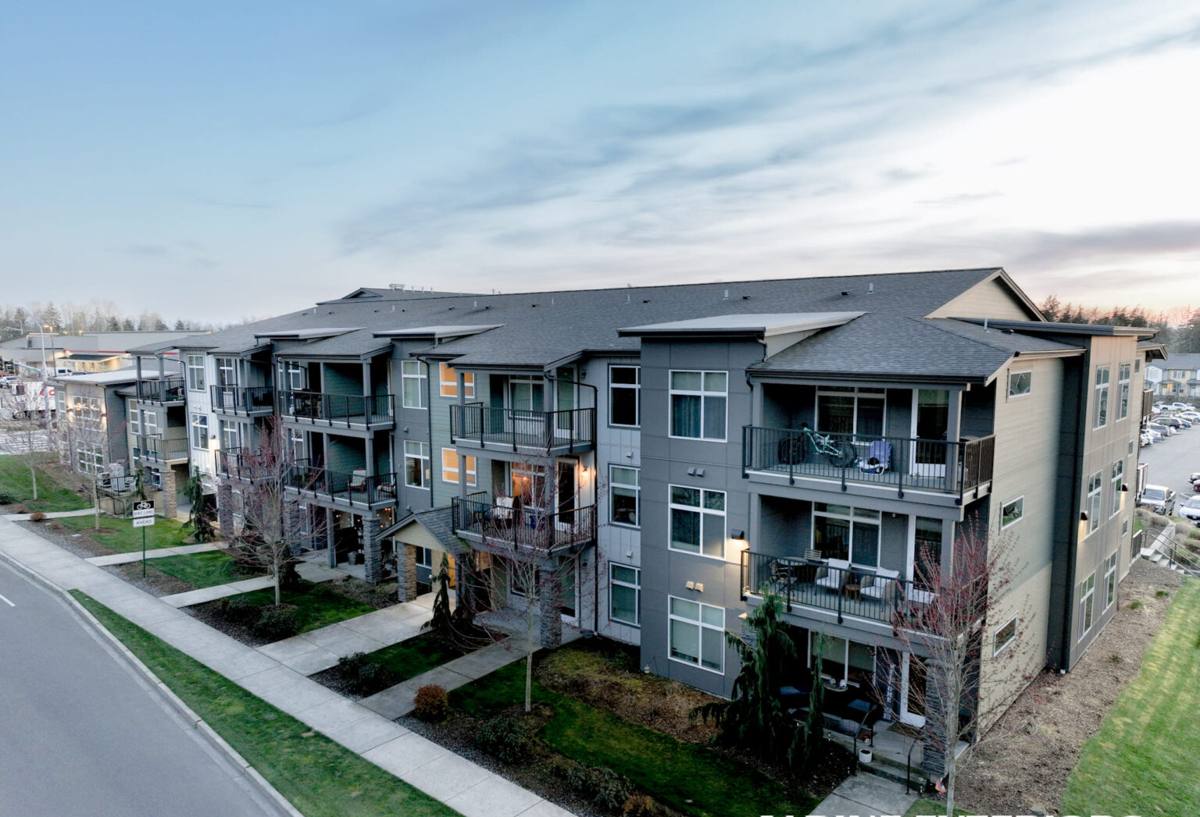
What "Correct" Fiber Cement Installation Actually Involves
Fiber cement siding is only as good as the installation behind it. The material itself resists moisture, but a poorly flashed window, a missing weather-resistant barrier, or panels nailed too tight to the wall will undercut all of that engineering. In a wet, salt-exposed environment like Conway, the installation details matter even more than they would in a drier inland climate.
The details that actually matter
- A continuous weather-resistant barrier behind the siding, lapped correctly so water sheds outward instead of tracking behind the panels
- Proper flashing at every window, door, and roof-to-wall transition — the majority of siding failures start at these penetration points, not in the field of the wall
- Correct fastener placement and spacing per the manufacturer's installation specifications, not "close enough"
- A minimum clearance gap at the bottom of the siding where it meets grade, decks, or patios, so splashback and standing water don't wick into the material
- Factory-primed or factory-finished cut edges sealed in the field, since raw cut edges are the most vulnerable point on any fiber cement panel
- Rainscreen or proper ventilation gap where wall assembly and local conditions call for it, to let any incidental moisture behind the cladding dry out
Skip any one of these and you can end up with moisture intrusion behind siding that looks fine from the curb — a problem that often isn't visible until it's expensive. This is the core reason we treat installation as seriously as the product itself.
Why We Only Install James Hardie
We don't install LP SmartSide, vinyl, Cemplank, Allura, primed spruce, or cedar. That's a deliberate standard, not a lack of options. James Hardie's fiber cement is non-combustible, engineered in region-specific HZ formulations for wet Pacific Northwest climates, and finished with a factory-applied ColorPlus coating that's baked on and warrantied against fading — which matters on a home that's going to sit under gray coastal skies and get scrubbed by wind-driven rain for years. The company backs it with a strong, transferable limited warranty, which gives homeowners real protection if something goes wrong down the line.
Other products have legitimate strengths — LP SmartSide is lighter and easier to install, cedar has a look some homeowners love, vinyl is inexpensive. But each comes with trade-offs we're not willing to put our name behind on a Conway-area home: wood-based products need more maintenance and are more moisture-sensitive over time, field-applied paint systems fade and chalk faster than a factory finish, and lighter cladding materials generally don't match fiber cement's resistance to moss, mildew, and impact damage. We standardized on Hardie because it's the product we're confident holding up to this specific climate for decades, not just for the first few years.
Our Process for a Conway Siding Project
Every project starts with an on-site look at the home, not a phone estimate. We check the current siding and sheathing condition, look closely at trim, window, and roof transitions where water tends to find its way in, and talk through which Hardie product line and color fit the home and the owner's budget.
What happens on-site
- Assessment: we inspect existing siding, sheathing, and trim for hidden moisture damage before quoting anything
- Removal and prep: old siding comes off, sheathing is repaired where needed, and a new weather-resistant barrier goes on correctly lapped
- Flashing first: every window, door, and penetration gets flashed before a single siding panel goes up
- Installation to spec: Hardie panels or lap siding installed per manufacturer fastening and clearance requirements
- Finish work: trim, caulking at appropriate joints, and a final walkthrough with the homeowner
We don't shortcut the removal and prep stage even when it would be faster to side over what's there. In a delta climate like Conway's, whatever is happening behind the old siding — trapped moisture, soft sheathing, failed flashing — needs to be dealt with, not covered up.
Product Lines and Color Options
James Hardie offers several siding profiles, and which one makes sense depends on the home's style and how much wind-driven rain a given elevation takes. HardiePlank lap siding is the most common choice for traditional Skagit County homes. HardiePanel works well for board-and-batten or modern styles. HardieShingle gives a cedar-shake look without the maintenance burden of actual cedar shingles — a detail that matters a lot in a climate where real wood shingles stay damp for extended stretches.
ColorPlus finishes come in a range of options, from muted coastal tones that fit the region's gray-and-green landscape to darker, higher-contrast colors for homes that want more presence. Because the color is baked on at the factory rather than field-applied, it resists the fading and chalking that painted wood or vinyl siding shows after a few Pacific Northwest winters.
Cost Factors for a Conway Siding Project
| Factor | Why It Matters in Conway |
|---|---|
| Home size and wall complexity | More corners, dormers, and transitions mean more flashing and cut-edge sealing labor |
| Existing sheathing condition | Moisture-damaged sheathing found during removal adds repair cost but prevents re-siding over a hidden problem |
| Siding profile chosen | HardiePlank, HardiePanel, and HardieShingle differ in material and labor cost |
| Color and finish | Factory ColorPlus finishes cost more upfront than primed material but avoid future field-painting costs |
| Site access and exposure | Waterfront or high-wind-exposure walls may need additional flashing or rainscreen detailing |
We give straightforward, itemized estimates so homeowners can see what's driving the cost, rather than a single lump number.
Signs Conway Homeowners Should Watch For
Because Conway's moisture and salt exposure accelerate wear, it's worth checking siding condition more often than you might in a drier area. A few warning signs are worth acting on before they turn into a bigger repair:
- Persistent moss or algae streaking that returns quickly after cleaning
- Soft or spongy spots when you press on wood-based siding or trim
- Visible gaps, cracking, or separation at panel seams and corners
- Paint that's peeling or bubbling, especially near window and door trim
- Musty smells or discoloration on interior walls that share an exterior wall with visible siding issues
Any one of these on its own isn't necessarily an emergency, but together they're usually a sign that moisture has been getting behind the cladding for a while.
Why Hiring a Crew That Already Works This Area Matters
Conway isn't a big city with a large pool of contractors familiar with its specific conditions. A crew that regularly works Anacortes and the surrounding Skagit County communities already knows how the delta's damp, low-lying setting behaves differently from siding jobs a few miles inland — where moisture collects at grade, which wall orientations take the worst of the driving rain, and how aggressively moss establishes itself on shaded elevations. That local experience shows up in the details: better flashing decisions, more conservative clearance gaps, and installation choices that account for conditions a generalist crew from outside the region might not think twice about.
It also means faster, more accountable service if something needs attention after the job is done — you're not waiting on a crew that has to drive in from another region.
If your Conway-area home is due for new siding or you want a straight answer about whether repair or full replacement makes more sense, we're happy to take a look and walk you through it. Reach out below for a free, no-pressure estimate.