 Anacortes Siding
 Conway sits low in the Skagit River delta, tucked between farmland and the water, and that setting shapes what a deck needs to survive here. Homes in this part of Skagit County deal with a specific combination of conditions: persistent rain, salt-tinged air moving up from Skagit Bay, high humidity, and shaded, damp ground that keeps moss and algae active most of the year. A deck built without those factors in mind will show problems within a few seasons — soft boards, corroded fasteners, slick moss buildup, and in the worst cases, rot working its way back into the house itself. A deck built for Conway's conditions, on the other hand, can hold up for decades. The difference is almost entirely in the details most homeowners never see: footings, flashing, fastener selection, and airflow underneath the decking.
What Conway's Location Near the Skagit River Means for Deck Footings
Conway's low elevation and proximity to the Skagit River and its delta soils are the first thing we think about before a single board goes down. Soil in low-lying river bottom areas tends to hold more moisture than soil farther up the valley, and it can be softer or less consistent from one spot to the next on the same lot. That matters because a deck's footings are what keep the whole structure from settling, shifting, or heaving over time.
Depending on what we find when we dig test holes, we'll either set traditional concrete footings poured below the frost line and sized for the soil we're working with, or recommend helical piers, which screw into the ground and handle soft or wet soil conditions without needing to pour and cure concrete in a wet hole. Neither option is automatically "better" — the right call depends on the specific lot, drainage patterns, and how close the water table sits to the surface at that location. What matters is not guessing. A footing that's undersized or set too shallow in soft delta soil is the single most common reason a deck starts to feel bouncy, uneven, or develops gaps at the stairs within a few years.
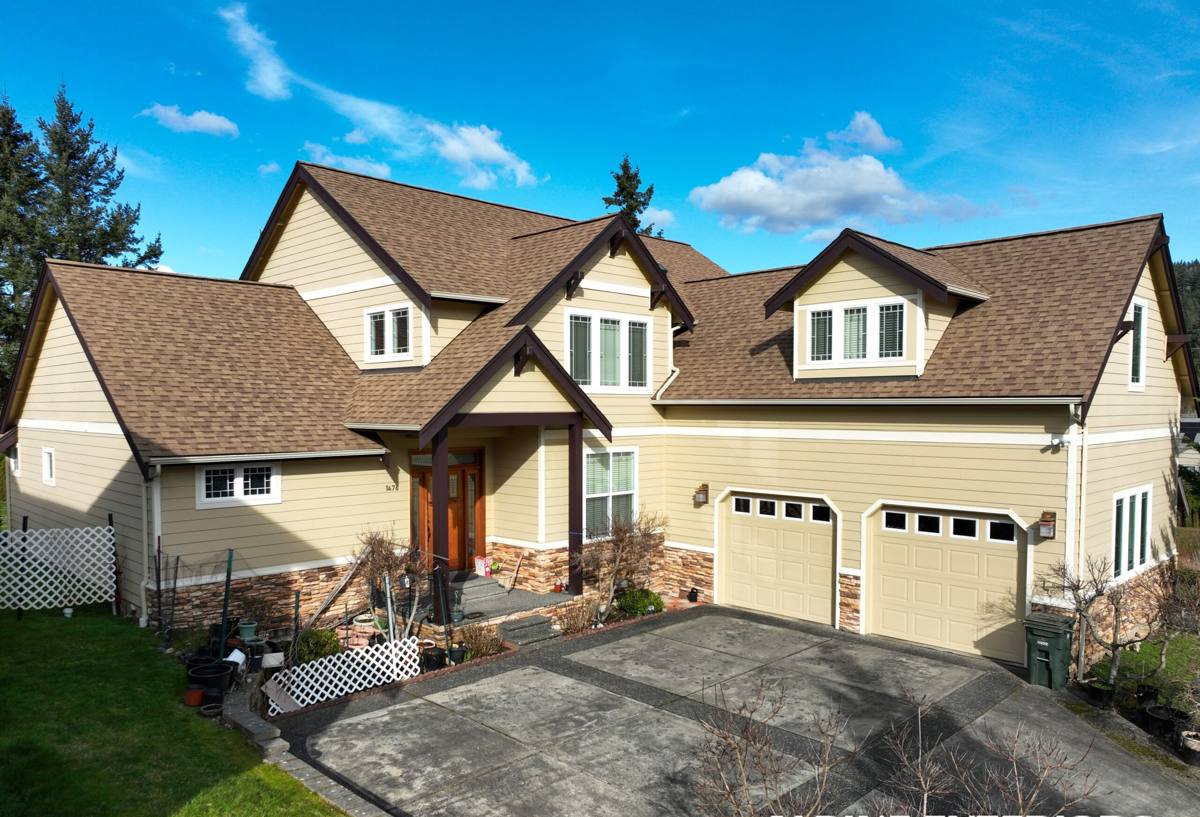
Choosing Decking Material for Rain, Salt Air, and a Long Moss Season
There's no single "right" decking material for every Conway home — it depends on budget, how much upkeep you want to do, and how exposed the deck is. But every option performs differently under wet Skagit County conditions, and it's worth understanding the trade-offs before you pick one.
Wood Decking
Cedar and pressure-treated fir or pine are still popular, mostly for cost and the natural look. Cedar has some natural rot resistance and takes stain well, but it still needs to be sealed or stained on a regular schedule to keep moisture out — skip that maintenance in a climate this wet and you'll see graying, splitting, and moss growth in shaded areas within a couple of years. Pressure-treated lumber is more affordable and rated for ground contact, but it moves as it dries and needs the same ongoing sealing to perform well long-term.
Composite and PVC Decking
Capped composite and PVC decking cost more upfront but don't absorb moisture the way wood does, which matters a great deal in a location that stays damp for months at a stretch. They won't rot, and most manufacturers back them with long material warranties. The trade-off is that composite decking still needs to be cleaned periodically — organic buildup like pollen, leaf debris, and moss spores will grow on any surface that stays wet and shaded, composite included. It just won't rot or splinter the way wood eventually does.
| Material | Upfront Cost | Maintenance | Moss/Algae Resistance | Typical Lifespan |
|---|---|---|---|---|
| Pressure-treated wood | Lowest | Seal/stain every 1-2 years | Low without regular cleaning | 10-15 years |
| Cedar | Moderate | Stain/seal every 2-3 years | Moderate | 15-20 years |
| Capped composite | Higher | Periodic wash, no sealing | Good, but still needs cleaning | 25-30 years |
| PVC decking | Highest | Periodic wash, no sealing | Best resistance to moisture-driven wear | 30+ years |
Framing, Flashing, and Fasteners: The Parts You Don't See
Most deck failures we get called out to inspect in Skagit County don't start with the decking boards — they start underneath, at the ledger board where the deck attaches to the house, or at the framing connections. This is where driving rain does the most damage, because water gets pushed sideways into joints and seams by wind rather than simply falling straight down.
A ledger board that isn't properly flashed lets water track behind the siding and into the house's rim joist, which can rot the structure of both the deck and the house wall it's attached to before anyone notices a problem from the outside. We flash every ledger connection with the same care we'd use on a roof-to-wall detail, and we use joist tape on top of framing members to keep water from sitting in fastener holes and wicking into the wood over time.
Fasteners matter too. Salt-laden air moving inland from Skagit Bay accelerates corrosion on hardware that isn't rated for it. We use stainless steel or coated fasteners and structural hardware rated for exterior and coastal-adjacent use, not standard interior-grade screws that will streak and weaken within a few seasons.
Spacing, Drainage, and Keeping Moss From Taking Over
A long moss season is one of the defining features of building anything outdoors in this part of Washington, and decks are no exception. Moss and algae need moisture, shade, and something to hold onto — a deck with poor airflow underneath and boards spaced too tight gives them exactly that.
Proper board spacing lets water drain through rather than pool on the surface, and adequate clearance underneath the deck lets air move so the framing and the underside of the decking can actually dry out between rain events. On lower decks close to grade, we also pay attention to grading and drainage around the footings themselves, so water isn't sitting against the structure after every storm. None of this eliminates moss entirely — nothing does, in this climate — but it slows growth dramatically and keeps a deck from turning into a slip hazard by winter.
Permits and Skagit County Requirements
Most new deck construction and many significant deck rebuilds in Skagit County require a permit, particularly once you're dealing with a structure attached to the house, elevated more than a modest height off grade, or involving guardrails and stairs. Requirements typically cover footing depth and sizing, ledger attachment, guardrail height and baluster spacing, and stair geometry.
We handle the permitting process as part of the job rather than leaving it to the homeowner to sort out — pulling the right permit, meeting inspection points at the right stages, and building to the code requirements that apply to your specific lot. Skipping this step might save a little time upfront, but it creates real problems at resale, since unpermitted deck work is one of the more common issues that surfaces during a home inspection.
Our Deck-Building Process from Estimate to Final Walkthrough
Every deck project starts with a site visit, not a phone quote. We need to see the actual grade, soil, sun/shade exposure, and how the deck will attach to the house before we can give you numbers that mean anything.
- Site evaluation and design. We look at grade, drainage, sun exposure, and how the deck ties into the house, and talk through material and layout options that fit your budget and how you'll use the space.
- Permitting and footing plan. We determine the right footing approach for the soil we find, submit for permit where required, and schedule inspections around the framing and footing stages.
- Framing and flashing. This is the structural stage — footings, posts, beams, joists, and all the flashing and connection hardware that keeps water out of the structure long-term.
- Decking, railings, and stairs. Boards, railings, and stairs go in per the material and design you chose, with attention to spacing and drainage throughout.
- Final walkthrough. We go over the finished deck with you, including what maintenance (if any) the material you chose will need going forward.
Keeping a Conway Deck Looking Good Year After Year
Whatever material you choose, a little regular attention goes a long way in this climate. Most of what a deck needs is simple, but it's easy to let slide until moss or soft spots show up.
- Sweep leaves, needles, and debris off the deck surface regularly, especially in shaded corners where moisture sits longest
- Wash the surface at least once a year to remove pollen, algae, and early moss growth before it gets established
- Check and re-seal or re-stain wood decking on the schedule the product calls for — don't wait until it's visibly gray or dry
- Keep gutters and downspouts near the deck clear so runoff isn't dumping directly onto the structure or footings
- Trim back overhanging branches and nearby vegetation to cut down on shade and debris buildup
- Check railings and stair connections periodically for movement, which can signal a fastener or framing issue underneath
Why Hire a Crew That Already Works in Conway
A deck built to a generic spec sheet doesn't account for delta soil, salt-laden air, or a moss season that runs most of the year. We work throughout Skagit County, including Conway and the surrounding low-lying areas near the Skagit River, and that means we've already dealt with the soil variability, the flashing details that actually keep water out of a house wall in wind-driven rain, and the material trade-offs that make sense for this specific climate. That's the difference between a deck that needs real work again in five years and one that's still solid in twenty-five.
If you're planning a new deck or replacing one that's showing its age, we're happy to come take a look and give you a straightforward, no-pressure estimate — just fill out the form below.