 Anacortes Siding
 Windows in Conway Take a Different Kind of Beating
Conway sits in the low-lying farm country along the Skagit River, a short drive from Anacortes and the rest of Skagit County's marine climate belt. It's a different micro-environment than the bluffs and shoreline neighborhoods closer to town, but the windows on Conway homes fight the same basic enemy: moisture that never fully lets up. Add in salt-laden air moving inland off Puget Sound, months of driving rain, and a long shaded moss season under the area's tree cover and river fog, and you get conditions that are hard on window frames, seals, and hardware year after year.
We work on homes throughout Anacortes and the surrounding Skagit County communities, including Conway, and we see the same failure patterns repeat themselves. Old wood sashes swell and stick in the wet months, then dry and gap in summer. Aluminum frames pit and corrode faster than people expect. Seals on older dual-pane units fog up from the inside because the argon gas has leaked out and moisture has worked its way between the panes. None of this is a mystery once you understand what the climate is doing to the materials.
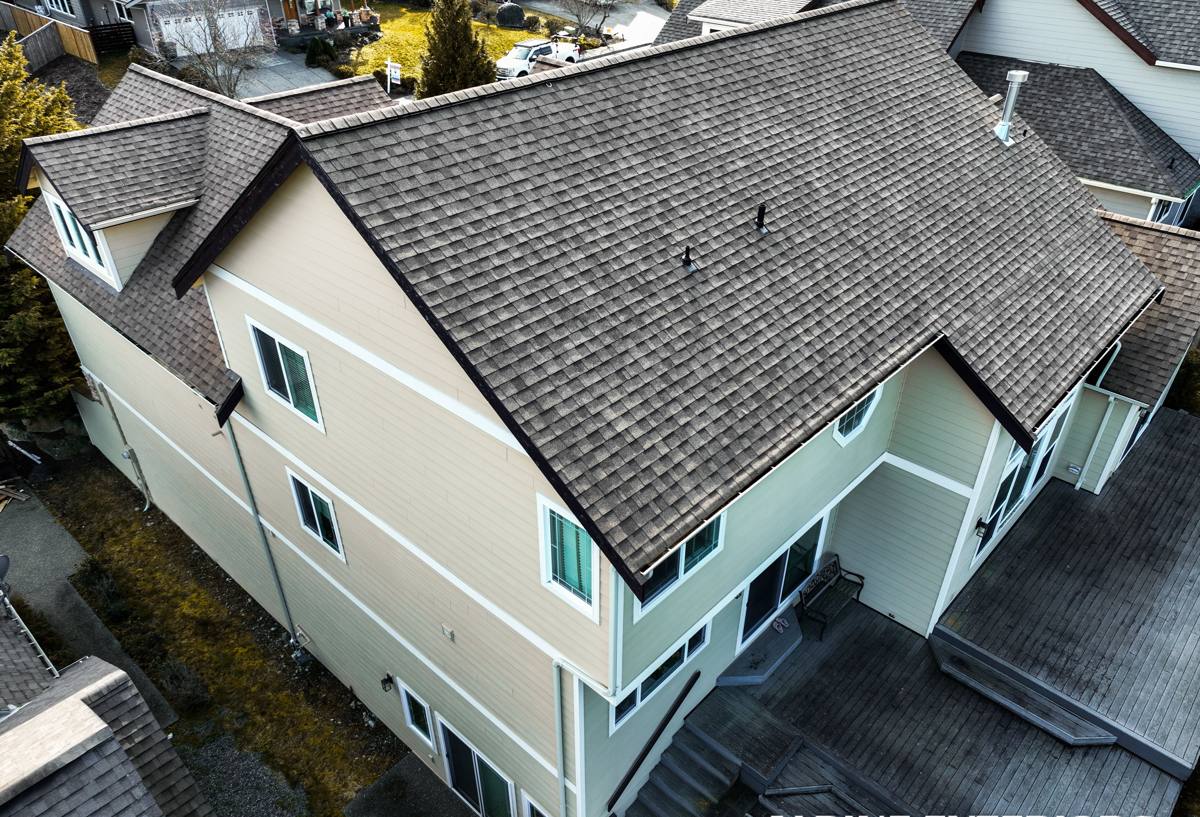
Signs a Conway Home Needs Window Replacement
Homeowners usually call us for one of a handful of reasons. Knowing which one applies to your house helps set expectations for the job.
- Fogging or a milky haze between the panes of a double-pane window — the seal has failed and the insulating gas is gone
- Soft, discolored, or spongy wood around the frame or sill, especially on north- and west-facing walls that stay damp longer
- Windows that are hard to open, close, or lock — a sign of swelling, warping, or a frame that's no longer square
- Visible daylight, drafts, or a noticeable temperature difference near the window in winter
- Persistent condensation on the inside glass even when the home is ventilated normally
- Moss or dark streaking on the exterior trim or sill, which usually means water is sitting there longer than it should
- Rising heating bills with no other obvious cause
Any one of these on its own might just need a repair. Several together, especially on an older wood or original-aluminum window, usually mean replacement is the more honest recommendation.
What a Correct Window Replacement Involves
It Starts With the Opening, Not the Window
The window unit itself is only part of the job. In a climate that gets sustained, wind-driven rain, the flashing and water management around the opening matter as much as the glass. A correct installation includes sill pan flashing that directs any water that gets past the window back outside rather than into the wall cavity, properly lapped house wrap or building paper, and flashing tape at the head and jambs installed in the right sequence — bottom to top, so every layer sheds water onto the layer below it. Skipping this step is the single most common cause of hidden rot behind what looks like a fine window from the outside.
Sealing and Insulating the Gap
Once the new window is set, plumb, level, and square, the gap between the frame and the rough opening needs to be insulated and air-sealed without over-compressing the frame, which can cause it to bow and fail early. We use low-expansion foam or backer rod and sealant appropriate to the gap size, then finish with exterior sealant at the trim joints using a product rated for our wet, temperature-swinging climate rather than a general-purpose caulk that will crack and let water in within a couple of seasons.
Hardware and Fasteners That Won't Corrode
Because Conway is close enough to the Sound and the Skagit delta to get salt-influenced air on top of constant humidity, we favor corrosion-resistant fasteners and hardware rather than standard-grade steel, which can rust and stain siding or trim within a few years.
Choosing the Right Window for a Damp, Salt-Influenced Climate
There's no single "best" window brand for every house — the right choice depends on your home's style, budget, and how much upkeep you want to take on. What matters more is picking a frame material and glazing package suited to sustained moisture exposure rather than a drier inland climate.
| Frame Material | Moisture & Salt Air Performance | Upkeep | Typical Fit |
|---|---|---|---|
| Vinyl | Won't rot or corrode; performs well in humid, salt-influenced air | Low — occasional cleaning | Most Conway-area homes, especially where budget matters |
| Fiberglass | Very stable through wet-dry cycles; strong resistance to swelling and corrosion | Low | Larger openings, homes wanting a longer-term investment |
| Wood (unclad) | Attractive but vulnerable to rot and swelling without diligent, ongoing maintenance | High — regular painting/sealing required | Historic or period-style homes where appearance is the priority |
| Wood-clad | Exterior cladding shields the wood from direct weather, though seams still need attention | Moderate | Homeowners who want a wood interior look with better exterior durability |
| Aluminum (older, unbroken frame) | Conducts cold and moisture readily; prone to condensation and pitting over time | Moderate to high | Generally not what we recommend for new installs in this climate |
We don't push one manufacturer as the only option, because the right call depends on your home. Our standard is straightforward: whatever brand we install has to hold up to sustained rain and humidity, carry a glazing package suited to the Pacific Northwest, and come with a warranty structure that's actually backed by a manufacturer with a track record in this region — not just the lowest bid on the shelf.
Glass and Glazing That Earns Its Keep
Skagit County's climate is defined more by moisture and gray-sky months than extreme cold, so the glazing package matters as much as the frame. Low-E coatings help manage heat loss during the long heating season, and argon- or krypton-filled dual panes cut down on the condensation that's so common on older single-pane or failed-seal windows in damp coastal air. For homes that get more direct exposure to wind and rain, we also look at whether a higher-performance seal system or a slightly heavier glass package is worth the upgrade — that's a conversation we have on site, not a one-size answer.
What Drives the Cost of a Window Replacement
We don't quote prices sight unseen, but the main variables that affect a Conway-area job are consistent enough to lay out honestly.
| Factor | Why It Matters |
|---|---|
| Frame material and glazing package | Vinyl is generally the most economical; fiberglass and wood-clad options cost more but may last longer |
| Number and size of openings | Larger picture windows and multi-unit combinations take more labor and material than standard single units |
| Condition of the existing opening | Rot repair, resizing, or reframing adds time beyond a straightforward like-for-like swap |
| Full-frame vs. insert replacement | Insert replacement reuses the existing frame where it's sound; full-frame replacement is more involved but corrects flashing and structural issues |
| Access and site conditions | Second-story windows, tight rural driveways, or limited staging space can add time |
We walk every job in person before quoting, because a photo or phone description can't tell us what's happening at the sill or inside the wall.
Our Process for Conway Window Replacements
1. On-Site Assessment
We look at every window being considered for replacement, check the surrounding trim and siding for hidden moisture damage, and talk through what's realistic for your home and budget — including which windows genuinely need replacement now versus which can wait.
2. Careful Removal
Old units are removed without unnecessary damage to surrounding siding or interior trim. If we find rot or moisture damage behind the old window — which is common on older homes in this climate — we address it before anything new goes in. Covering that up is how small problems turn into expensive ones.
3. Correct Installation
Sill pan flashing, properly sequenced house wrap and flashing tape, corrosion-resistant fasteners, and appropriate insulation and sealant — installed to hold up to wind-driven rain, not just pass a quick visual check.
4. Cleanup and Walkthrough
We clean up the job site, walk the finished work with you, and make sure every window operates, locks, and seals the way it should before we consider the job done.
Why It Matters That We Already Work in Conway
A crew that regularly works Skagit County's smaller communities, not just the bigger jobs in town, knows the difference between a house that needs a straightforward window swap and one where the real problem is moisture that's been getting in for years. We know what wood rot from long-term dampness looks like versus cosmetic weathering, and we don't recommend replacement just because a window is old — some older units are still sound and just need better sealing or hardware. Being local also means we're not disappearing after the install; if a question comes up about how a window is performing through its first wet winter, we're not far away.
Simple Maintenance That Extends the Life of New Windows
- Rinse salt film and grit off exterior glass and frames a few times a year, especially after storms
- Check exterior sealant joints annually and re-caulk any that have cracked or pulled away
- Keep gutters and downspouts clear so water isn't sheeting down over window heads
- Trim back vegetation and clear moss from nearby trim and siding so windows get some sun and airflow
- Operate locks and hardware periodically through the winter so mechanisms don't seize from disuse
- Address any new condensation or sticking promptly rather than waiting for it to worsen
New windows installed correctly should need very little from you beyond this — that's the point of getting the flashing, sealing, and materials right the first time.
If you're noticing drafts, fogged glass, or sticking windows on a Conway-area home, we're happy to take a look and give you an honest, no-pressure assessment of what's actually needed. Use the form below to request a free estimate.