 Anacortes Siding
 Siding Replacement for Conway Homes
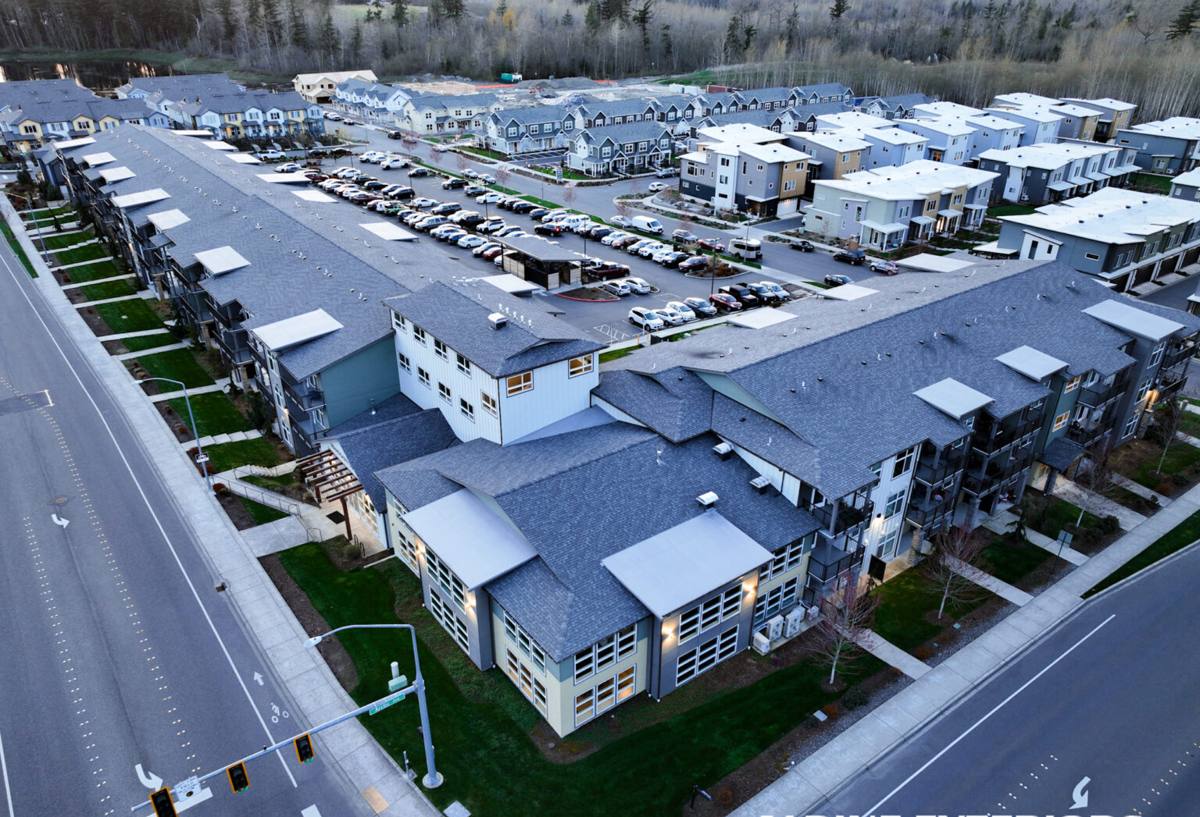
Conway is a small, low-lying farming community in Skagit County, sitting near where the Skagit River reaches Skagit Bay, just off I-5 between Mount Vernon and Stanwood. It's flat, open, agricultural land with water on more than one side — the river, the bay, and the wide delta ground in between — and that combination shapes what a home's exterior has to deal with here more than almost any other factor. We do siding replacement work in Conway and the surrounding delta communities, and this page is specifically about that one job: what the local climate does to siding over time, what a correct replacement actually involves, and why we've standardized on one product for it.
We install James Hardie fiber cement siding exclusively. We don't offer vinyl, LP SmartSide, Cemplank, Allura, primed spruce, or cedar as alternatives, and on a Conway property specifically — flat, exposed, and regularly wet — that's not a preference so much as a conclusion we've reached after years of exterior work in this part of Skagit County.
What Conway's Climate Does to Siding
Salt Air Off the Bay
Conway sits close enough to Skagit Bay that homes here get real marine air influence, not just rain. Salt-tinged moisture in the air accelerates corrosion on exposed fasteners, flashing, and any hardware that isn't rated for coastal exposure, and it keeps painted or coated surfaces wet longer than a drier inland location ever would. Over years, that steady low-grade corrosion is what turns a small flashing gap into a real water intrusion point.
Driving Rain Across Open, Flat Ground
Because the land around Conway is flat and largely open farmland, there's not much terrain or tree cover to break up wind before it reaches a house. Storms push rain sideways into walls rather than letting it fall straight down and shed cleanly off siding, and that wind-driven rain reaches seams, laps, and trim joints that a more sheltered property might never have to deal with. Siding and flashing details that would be adequate on a wooded, wind-protected lot get tested harder out here.
A Moss Season That Runs Most of the Year
Mild temperatures and near-constant moisture from fall through spring give moss, algae, and mildew a long window to establish themselves on shaded and north-facing walls. It isn't just a cosmetic issue — sustained organic growth holds water directly against the siding surface, which is exactly the condition that leads to hidden moisture problems behind the wall if it isn't cleaned and managed.
Low, Wet Ground
Conway sits in delta farmland, and low-lying ground holds moisture differently than a well-drained hillside lot does. Ground-level humidity stays higher for longer after a storm, which matters for how siding is detailed near grade — too little clearance, and the bottom courses of siding are sitting in damp conditions far more often than the rest of the wall.
Signs a Conway Home Needs Siding Attention
- Visible cracking, buckling, or gaps opening up at seams and corners
- Paint or finish that's chalking, peeling, or fading faster than the rest of the house
- Moss or dark staining building up on shaded or north-facing walls
- Soft spots, discoloration, or a spongy feel near window and door trim
- Siding sitting close to grade with little to no visible clearance
- Rising energy bills that suggest the wall assembly isn't sealing the way it used to
Repair or Full Replacement? How We Make the Call
Not every siding problem on a Conway home means a full tear-off. The right call depends on how far the damage has actually spread, not just how bad a section looks from the ground.
| Condition | Repair Usually Makes Sense | Replacement Usually Makes Sense |
|---|---|---|
| One or two impact-damaged panels, sound wall behind them | Yes — patch and match | Only if matching material isn't available |
| Isolated trim failure at a single window or door | Yes — localized repair | Not on its own |
| Widespread cracking or buckling across multiple walls | Rarely a lasting fix | Yes |
| Soft sheathing or rot found once siding is opened up | No — repair won't address the cause | Yes, with substrate repair included |
| Aging non-Hardie product (vinyl, wood, older fiber cement) nearing end of service life | Short-term patch only | Yes, for a lasting fix |
The only way to know which situation you're actually looking at is an in-person inspection. We'll open up a section if needed to check the sheathing underneath before recommending anything, rather than guessing from a visible crack or two.
Why We Install Only James Hardie Fiber Cement
We used to work with a broader range of siding products before narrowing to one system, and that decision came from watching which materials actually held up under sustained Skagit County moisture and wind exposure, and which ones quietly turned into maintenance problems. Vinyl can become brittle and crack under UV exposure and temperature swings, and it isn't a water barrier on its own — it depends entirely on the assembly behind it, which is a real liability on an exposed, wind-driven-rain site like Conway. Wood-based products, including cedar and primed spruce, need consistent repainting and are vulnerable to rot once moisture gets behind them, and that upkeep cycle is tough to stay ahead of in a climate this wet. Other fiber cement brands are a closer comparison, but we settled on Hardie specifically for its factory finish, its climate-engineered product lines, and its warranty structure.
- Non-combustible core: Fiber cement doesn't feed a fire the way wood-based or wood-derived siding can, which matters for household safety and insurance underwriting alike.
- Factory-applied ColorPlus finish: Color is baked on under controlled factory conditions rather than brushed or sprayed on site, so it resists fading, chalking, and moisture intrusion far longer than field-applied paint.
- Climate-engineered HZ product lines: Hardie builds different formulations for different climate zones, including versions engineered for regions with sustained moisture exposure — a real match for a delta property like Conway.
- Dimensional stability: Fiber cement doesn't swell, cup, or warp the way engineered wood siding can after repeated wet-season moisture cycles.
- Strong transferable warranty: Hardie backs its products with a solid warranty structure when installed to spec, giving homeowners real protection rather than a marketing claim.
None of this means the products we don't install are worthless — plenty of homeowners elsewhere are satisfied with vinyl or wood siding. It means that for the specific conditions a Conway home deals with, we made a professional call to put our name behind one system we trust completely rather than offer a cheaper option that tends to shift maintenance costs back onto the homeowner within a decade.
Hardie Product Lines for a Conway Property
| Product Line | Best Use | Why It Fits This Area |
|---|---|---|
| HardiePlank lap siding | Most single-family homes, traditional and farmhouse styles | Standard lap profile sheds wind-driven rain well when overlapped and flashed correctly |
| HardiePanel vertical siding | Gable ends, accent walls, modern or barn-style designs | Common look for the farmhouse and agricultural-style homes found around Conway |
| HardieShingle siding | Craftsman-style homes and accent sections | Textured wood-shake look without the moisture absorption of real wood shingle |
| HardieTrim boards | Corners, window and door casing, fascia | Factory-finished trim resists the same salt-air corrosion and moisture cycling as the field siding |
| HZ10 climate-engineered line | Homes with direct wind, rain, or ground-moisture exposure | Formulated for wetter, harsher climate zones like the Skagit River delta |
Profile and color come down to the individual home, but the underlying product family stays consistent — we spec what fits a Conway property's actual exposure rather than defaulting to whatever's easiest to install.
What Correct Installation Involves
Material choice only gets a Conway home halfway there. The rest comes down to installation detail, and on flat, exposed, low-lying ground those details matter more than they would on a sheltered inland lot.
- Correct clearance between the bottom of the siding and grade, so lower courses aren't sitting in damp ground-level conditions
- A house wrap and weather-resistive barrier that does the real work of keeping water out, rather than relying on caulk to cover gaps
- Flashing that laps correctly at windows, doors, and any wall penetrations, directing water out and away instead of trapping it behind the siding
- Fastening patterns suited to open, wind-exposed sites rather than a generic sheltered-lot spec
- Joints that are lapped and sealed with materials rated for sustained moisture, not simply butted together
On an exposed delta property, cutting corners on any of these steps tends to show up fast — sometimes within a single wet season rather than several years down the line.
Cost Factors for Siding Replacement in Conway
| Factor | What It Affects | Why It Matters Here |
|---|---|---|
| Tear-off vs. overlay | Labor scope and access to the substrate underneath | Tear-off is usually the right call here since it reveals hidden moisture or rot common under older siding in a wet delta climate |
| Substrate condition | Repair costs before new siding can go on | Trapped moisture from prior wind-driven rain exposure can rot sheathing that isn't visible until the old siding comes off |
| Grade and drainage | Siding clearance and moisture management at the base of the wall | Low, flat delta ground holds moisture longer, which affects how the bottom courses are detailed |
| Wind exposure of the site | Fastening pattern and flashing detail | Open farmland around Conway means less natural windbreak than a wooded or in-town lot |
| Home size and trim complexity | Material quantity and labor hours | More corners, gables, and window trim mean more flashing and fitting work regardless of climate |
Exact pricing depends on the specific property, which is why we walk the home in person and give a real number rather than quoting off a generic price sheet.
Why a Local Crew Matters in Conway
A crew that works this specific stretch of the Skagit River delta regularly understands how salt air, wind-driven rain, and low ground moisture behave on real homes here, not just how a product performs on a spec sheet. That shows up in practical decisions on install day: how much clearance a given lot actually needs above grade, which wall orientations take the worst of the wind, and which flashing details are worth the extra time so a homeowner isn't dealing with a callback after the next winter storm. Conway's exposure is different from a sheltered, tree-covered lot elsewhere in the county, and a crew with hands-on experience here treats that difference seriously instead of applying a one-size-fits-all approach.
It also means fewer surprises around permitting and the practical realities of rural, agricultural properties — longer driveways, wider staging needs, and site access that doesn't look like a typical in-town lot.
Our Process
- An on-site walk-around of the existing siding, checking for cracking, staining, soft spots, and clearance at grade
- An honest read on whether you're looking at a targeted repair, a partial re-side, or a full replacement
- Where needed, opening up a section to check the sheathing underneath before finalizing a scope
- A clear explanation of why we recommend James Hardie fiber cement for a property with this kind of exposure
- A written estimate with no pressure to sign on the spot
If your Conway home is showing cracked or fading siding, moss buildup on shaded walls, or soft spots near trim, we're glad to take a look. Reach out using the form below to schedule a free, no-pressure estimate.