 Anacortes Siding
 Anacortes Weather Doesn't Go Easy on Siding
Skyline sits on Fidalgo Island, close enough to the water that homes there take weather most inland Skagit County neighborhoods never see. Wind off the Strait pushes rain sideways into walls instead of straight down, which means siding gets tested on its horizontal joints and butt seams far more than a textbook installation ever accounts for. Add the salt content that rides in on marine air, and you've got a combination that speeds up corrosion on fasteners, trim, and any exposed metal flashing that wasn't detailed correctly the first time.
Then there's the shade. A lot of Skyline lots carry mature fir and cedar cover, which is part of what makes the neighborhood pleasant to live in — and also exactly why moss and algae get a long runway every year. North- and west-facing walls that stay damp and shaded for weeks at a stretch are where we see the earliest paint failure, the first soft spots, and the siding that ages a decade faster than the sunny side of the same house.
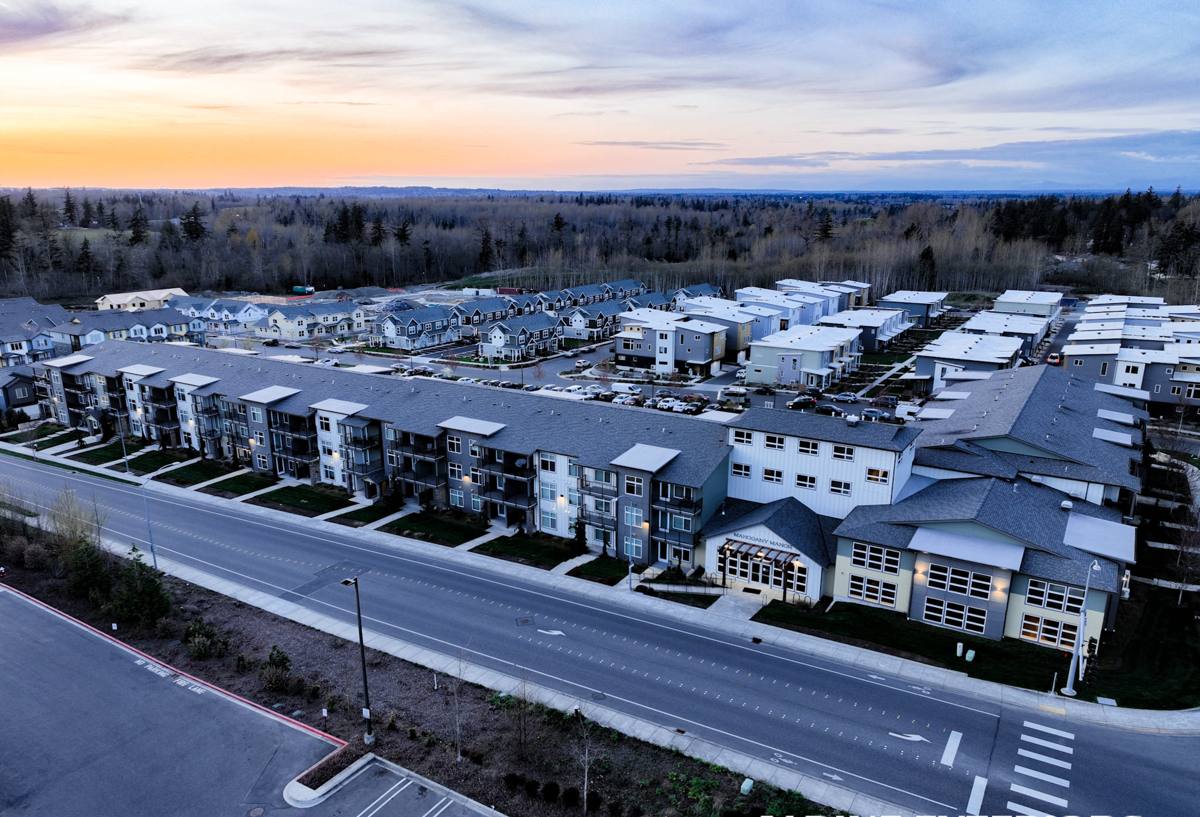
What This Means for a Skyline Home Specifically
None of this is exotic — it's the standard Pacific Northwest coastal problem set, just concentrated. But it does change what "correct installation" means in practice. A siding job that would hold up fine on a dry, sheltered lot inland can fail years early on a wind-exposed, moss-prone Skyline property if the water-resistive barrier, flashing, and fastening aren't done to spec. We don't treat this as a generic siding job dropped into Anacortes — the details we prioritize (drainage plane continuity, flashing at every horizontal transition, corrosion-resistant fasteners) are chosen specifically for what this stretch of Skagit County throws at a house.
Signs Your Siding Is Telling You It's Time
Most siding failures don't show up as a dramatic single event — they show up as a pattern homeowners notice gradually and explain away for a season or two longer than they should. Watch for:
- Paint that's chalking, peeling, or bubbling, especially on north- or west-facing walls
- Soft or spongy spots when you press on the siding, particularly near the bottom courses and around window trim
- Persistent moss or dark streaking that comes back within weeks of cleaning
- Visible gaps, warping, or buckling at seams and butt joints
- Rising interior heating costs or drafts near exterior walls with no other obvious cause
- Rust staining below fasteners or trim, a sign moisture is reaching metal it shouldn't
- Cupping or delamination on panel edges, common on wood-based products that have taken on water
Any one of these on its own might just mean a cleaning or a paint touch-up. Two or three together, especially clustered on the shaded or windward side of the house, usually means the water management behind the siding has already been compromised.
What a Correct Siding Replacement Actually Involves
Tear-off and inspection
Replacement starts with full removal, not a re-side over the old material. That's the only way to actually see the sheathing underneath — and on a Skyline property with any history of moisture intrusion, what's behind the old siding matters more than what's visible on the surface. Soft sheathing, rot at window and door openings, and compromised framing all get addressed before a single new panel goes up. Covering that up to save a day of labor is how a siding job turns into a structural problem five years later.
Water-resistive barrier and flashing
This is the layer that actually keeps a house dry — the siding itself is the second line of defense, not the first. A new water-resistive barrier gets installed with correct overlaps, and flashing goes in at every window, door, deck ledger, and horizontal siding transition, integrated shingle-style so water is always directed outward and down. Given how much wind-driven rain a Skyline wall can take on in a winter storm, this step gets no shortcuts.
Fastening and clearances
Corrosion-resistant fasteners, driven to the manufacturer's specified depth and location, matter more here than in a drier inland climate — salt air accelerates corrosion on anything undersized or improperly coated. Proper clearance from grade, roof lines, and decks also gets maintained so siding isn't sitting in a spot where it stays wet longer than it should.
Finish and trim detailing
Caulking only where the manufacturer specifies it (not everywhere, which traps moisture instead of releasing it), factory-finished panels installed to keep cut edges sealed, and trim detailed so water sheds away from the wall rather than pooling at joints.
Why We Install Only James Hardie Fiber Cement
We standardized on one product line rather than offering a menu of options, and the reasoning is straightforward. Vinyl is inexpensive and low-maintenance, but it expands and contracts with temperature swings, can warp in sustained heat, and doesn't offer the same fire resistance or long-term rigidity homeowners often assume. Wood-based composite sidings (like LP SmartSide) perform reasonably when kept dry and well-maintained, but they're organic-strand products at their core — meaning sustained moisture exposure, the kind Skyline's shaded, wind-driven-rain walls deliver, is exactly the failure mode that shortens their lifespan. Primed spruce and cedar are attractive but demand a repainting and caulking schedule most owners underestimate, and both are combustible in a region where wildfire smoke seasons are becoming a bigger part of the conversation.
James Hardie fiber cement is non-combustible, dimensionally stable in wet-dry cycling, and its HZ product lines are engineered specifically for climates like this one — moisture, freeze-thaw, and marine exposure included. The factory-applied ColorPlus finish is baked on under controlled conditions, which holds up better against UV and moisture than field-applied paint, and it carries a strong transferable warranty. We're not saying other products can't be installed correctly — we're saying that for the climate Skyline homes actually sit in, this is the product we're willing to put our name behind.
How Siding Options Compare in This Climate
| Material | Moisture Behavior in Salt Air / Driving Rain | Maintenance Burden | Fire Resistance |
|---|---|---|---|
| Vinyl | Doesn't absorb water, but seams and fasteners are vulnerable; can warp with heat | Low, but limited repair options once damaged | Combustible, can deform near heat sources |
| Wood-based composite (e.g. LP SmartSide) | Performs when dry; sustained moisture exposure is its primary failure mode | Moderate to high — repainting, caulk maintenance | Combustible |
| Primed spruce / cedar | Requires diligent sealing; prone to cupping and rot without upkeep | High — regular repainting and inspection | Combustible |
| James Hardie fiber cement | Dimensionally stable, engineered HZ lines for wet climates | Low — factory finish, no repainting cycle for years | Non-combustible |
What Drives the Cost of a Skyline Siding Replacement
Every home is different, and we won't quote a number without seeing the walls, but the factors that move the price up or down are consistent:
| Cost Factor | Why It Matters |
|---|---|
| Extent of hidden water damage found at tear-off | Rotted sheathing or framing needs repair before new siding goes on — the biggest source of quote-day surprises |
| Home size and wall complexity | More corners, dormers, and trim details mean more labor and cut waste |
| Existing siding material | Multiple layers or difficult-to-remove materials add tear-off time |
| Access and lot conditions | Steep, tree-covered, or view-lot properties common in Skyline can affect staging and scaffolding needs |
| Trim and accent choices | Board-and-batten accents, custom trim widths, and color selections affect material cost |
| Window and door flashing scope | More openings mean more flashing detail work, which is time-intensive but non-negotiable |
Our Process, Start to Finish
- Walkthrough and assessment — we look at the current siding, check for soft spots and moisture signs, and talk through what we find in plain terms
- Written estimate — scope, material, and a real cost range based on what we actually saw on your walls, not a generic per-square-foot guess
- Scheduling — timed around Anacortes' wetter months where possible, since a multi-day tear-off needs a reasonable weather window
- Tear-off and sheathing inspection — old siding comes off, and any damage underneath gets documented and discussed before we proceed
- Water-resistive barrier, flashing, and Hardie installation — installed to manufacturer spec and Anacortes' climate demands
- Trim, caulking, and final finish — detailed so water sheds correctly at every joint
- Final walkthrough — we go over the finished work with you before calling the job done
Questions to Ask Before You Hire a Siding Contractor Here
- Do you tear off down to the sheathing, or do you offer to install over existing siding?
- How do you handle flashing at windows, doors, and horizontal siding transitions?
- What happens if you find rotted sheathing once the old siding is off?
- Which siding products do you install, and why did you choose them?
- Do you have experience with homes in this specific area, and can you speak to what its climate does to siding?
- What does your warranty cover, and is it transferable if the home sells?
Why Local Experience in Skyline Specifically Matters
A crew that's worked this neighborhood already knows which walls take the worst of the wind-driven rain, how much moss pressure to expect on the shaded side of a tree-covered lot, and what flashing details tend to get skipped by installers who aren't used to marine exposure. That's not a marketing point — it changes real decisions on the job, like where to spend extra time on flashing versus where standard detailing is genuinely sufficient. Anacortes and Skagit County building requirements are also more familiar to a crew that pulls permits here regularly, which keeps the paperwork side of a replacement from becoming its own separate headache.
If you're weighing a siding replacement for a Skyline home, we're glad to walk the exterior with you, point out what we see, and put together a straightforward written estimate — no pressure, no sales script, just an honest look at what your house needs.