 Anacortes Siding
 Roofing in the Skyline Area: A Different Set of Conditions
Homes in and around the Skyline neighborhood sit close enough to the water that the roof over your head is doing more work than a roof twenty miles inland. Fidalgo Island's exposure means salt-laden air, wind-driven rain that comes in sideways off the water, and long stretches of overcast, damp weather that give moss and algae months at a time to get established. None of that is unusual for Anacortes or the rest of Skagit County — but it does mean an asphalt shingle roof here has to be chosen and installed with those specifics in mind, not just installed the same way it would be in a dry inland climate.
This page is about one job, done right, in one area: asphalt shingle roofing for Skyline-area homes. We're not going to tell you asphalt shingles are the only option or the best option in every case — they're not — but for the majority of homes in this area, a properly specified and correctly installed shingle roof is a durable, cost-effective, and good-looking choice. The details below are what separate a roof that holds up here from one that starts showing problems in five or six years.
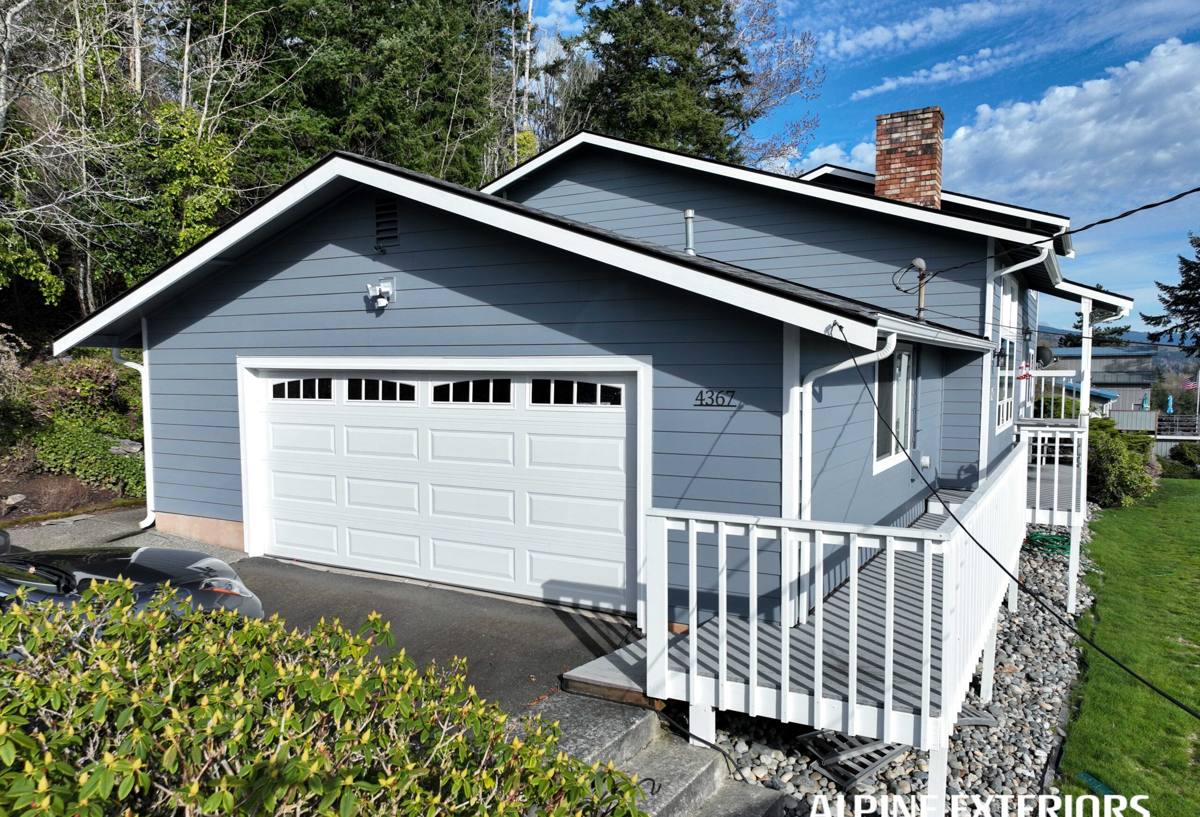
What Salt Air, Rain, and Moss Actually Do to a Shingle Roof
Salt Air
Airborne salt doesn't just affect metal flashing and fasteners — it accelerates the breakdown of the asphalt binder in cheaper shingles and speeds up corrosion on any exposed nail heads, drip edge seams, or vent housings that weren't properly sealed or weren't corrosion-resistant to begin with. Over years, this shows up first at the metal details, not the shingles themselves.
Wind-Driven Rain
Rain that comes in at an angle, rather than straight down, tests every horizontal seam on a roof — valleys, step flashing at walls and chimneys, and the transitions around vents and skylights. A shingle roof can look fine from the ground for years while a poorly flashed valley or wall transition is slowly letting water behind the shingles during storms.
Moss and Algae
Shade, moisture, and mild temperatures are exactly what moss wants. Once moss gets a foothold, it lifts shingle edges, holds moisture against the roof deck, and accelerates granule loss. Algae staining (the dark streaks you'll see on older roofs) is mostly cosmetic, but heavy moss growth is a mechanical problem, not just an appearance issue.
What a Skyline-Area Home Actually Needs From Its Roof
- Shingles rated for higher wind exposure, properly nailed with the correct nailing pattern and nail count for the pitch and exposure — not just stapled or under-nailed to save time
- Algae-resistant shingles (granules treated with copper or zinc) if the roof has any tree cover or north-facing shaded sections
- Corrosion-resistant flashing and fasteners at valleys, walls, chimneys, and vent penetrations
- Ice-and-water shield membrane at eaves, valleys, and other vulnerable transitions, even though this area doesn't see heavy snow — it's the driving rain, not snow load, that matters here
- Balanced attic ventilation so moisture from inside the home isn't adding to what the roof deck is already dealing with from outside
Signs a Skyline-Area Roof Needs Attention
Most roofs don't fail all at once — they give warning signs first. Worth checking for, or having a contractor check for, before a small problem becomes a deck-replacement problem:
- Granules collecting in gutters or at downspout outlets
- Shingle edges that look cupped, curled, or lifted, especially on the side of the house that gets the most weather
- Moss growth thicker than a light surface film, particularly on shaded slopes
- Dark streaking that doesn't wash off with normal rain
- Soft spots, sagging, or discoloration on interior ceilings near exterior walls or chimneys
- Visible daylight or rust at flashing around vents, chimneys, or skylights
- A roof that's approaching or past the 18-25 year mark, depending on the original shingle grade
What a Correct Asphalt Shingle Installation Involves
A shingle roof is only as good as the layers underneath it. The shingles themselves get most of the attention, but the tear-off, deck inspection, and flashing work are where most long-term problems either get solved or get created.
Tear-Off and Deck Inspection
We remove the old roofing down to the deck rather than layering over it. This lets us check the sheathing for soft spots, delamination, or water damage that's invisible from above — common at valleys, chimney bases, and old vent locations. Any damaged sheathing gets replaced before anything new goes down; installing new shingles over a compromised deck just hides the problem for a while.
Underlayment and Ice-and-Water Shield
A synthetic underlayment goes down over the full deck, with self-adhering ice-and-water membrane at eaves, valleys, and any other spot where wind-driven rain is most likely to find a way in. This is the layer that protects the home if a shingle ever gets damaged or lifted in a storm.
Flashing
New step flashing at walls and chimneys, new valley metal, and new flashing at every penetration — not reused old flashing tucked under new shingles. This is the detail that determines whether a roof stays watertight through the wet season or starts leaking at year three.
Shingle Installation
Correct exposure, correct nail placement (typically four to six nails per shingle depending on wind exposure and manufacturer specification), and starter strip at eaves and rakes so the first course is sealed down properly rather than relying on the shingle's factory adhesive alone in cold weather.
Ventilation
Intake at the eaves, exhaust at the ridge or through roof vents, balanced so air actually moves through the attic. Poor ventilation shortens shingle life from underneath, regardless of how good the shingle itself is.
Shingle Options and Cost Factors
There's no single "right" shingle for every home — it depends on budget, roof pitch, how much shade the roof gets, and how long you plan to own the home. Here's how the common tiers compare for this climate:
| Shingle Tier | Typical Lifespan | Wind Rating | Best Fit |
|---|---|---|---|
| 3-Tab (economy) | 15-20 years | Lower | Budget-driven projects, rentals, short-term ownership |
| Architectural / Dimensional | 25-30 years | Higher, class-rated options available | Most Skyline-area homes — the standard recommendation |
| Premium / Designer | 30+ years | Highest, often with impact ratings | Higher-exposure roofs, homeowners planning to stay long-term |
Algae-resistant granules (copper or zinc treated) are worth the small upcharge on almost any home in this area with tree cover or shaded slopes — the cost difference is minor compared to the cost of dealing with established moss a decade later. Cost also depends on roof pitch, number of layers being removed, deck condition once we open it up, and the complexity of valleys and penetrations — we walk through all of that during the estimate rather than quoting a number sight unseen.
How Moss Prevention Actually Works Long-Term
Algae-resistant shingles help, but they're not a substitute for basic maintenance. Keeping nearby branches trimmed back so a roof gets more sun and airflow makes a real difference on shaded lots. Zinc or copper strips near the ridge can help slow moss regrowth on north-facing slopes between cleanings. And when moss does need to be removed, it should be done by soft-washing rather than scraping or pressure-washing directly on the shingles — aggressive removal strips granules and does more damage than the moss itself.
Our Process, Start to Finish
- On-site inspection of the current roof, attic ventilation, and any interior signs of moisture
- Written estimate that breaks out material tier, tear-off scope, and any deck repair contingency — no vague lump-sum guessing
- Material selection based on your budget, the roof's exposure, and how long you plan to stay in the home
- Full tear-off and deck inspection, with any damaged sheathing replaced before moving forward
- Underlayment and ice-and-water shield installed at all vulnerable transitions
- New flashing at every valley, wall, chimney, and penetration
- Shingle installation to manufacturer nailing specifications for this area's wind exposure
- Ventilation check and correction if intake or exhaust is inadequate
- Full cleanup, including magnetic sweep for stray nails
- Final walkthrough so you know exactly what was done and what to expect going forward
Why a Crew That Already Works This Neighborhood Matters
A roofing crew that regularly works the Skyline area already has a feel for how the local exposure plays out house to house — which slopes tend to hold moss, which orientations take the worst of the wind-driven rain, and what it takes to get a roof through a full wet season without callbacks. That's not something you get from a crew that mostly works inland and treats every coastal job as a one-off. Local knowledge also matters for practical things like scheduling around this area's weather windows and knowing what the city permitting process expects for a full tear-off and re-roof.
Maintenance After Installation
A correctly installed asphalt shingle roof in this climate still benefits from a periodic look — gutters cleared so water isn't backing up under the eave line, a visual check for any moss getting started on shaded slopes, and an eye on flashing after any major storm. None of this is intensive, but a five-minute check once or twice a year catches small issues while they're still small.
If your roof is showing any of the signs above, or you're just planning ahead for a replacement, we're happy to come take a look and give you a straightforward, no-pressure estimate — use the form below to get started.