 Anacortes Siding
 Why Skyline Decks Wear Out Faster Than Homeowners Expect
Skyline sits close enough to the water that its homes take on a different weather load than decks just a few miles inland. Anacortes and the rest of Skagit County get plenty of rain in a normal year, but it's the combination of factors that ages a deck here: salt-laden air off the water, wind-driven rain that gets pushed sideways under railings and into seams, and long stretches of overcast, damp weather that never quite lets wood dry out between storms. Add a shaded north or west exposure, which many Skyline lots have because of tree cover and water-facing orientation, and you get months where a deck surface simply stays wet.
Salt air is the part people underestimate most. It doesn't just sit on the surface — it works into fastener heads, joist hangers, and any exposed metal, accelerating corrosion well before it's visible from the top. Combine that with moss, which thrives in the mild, moist Pacific Northwest winters, and you get a slow, steady breakdown of both the decking boards and the structure underneath them. None of this means a deck in Skyline is doomed — it means it needs to be built and replaced with that exposure in mind, not with a generic approach that works fine in a drier climate.
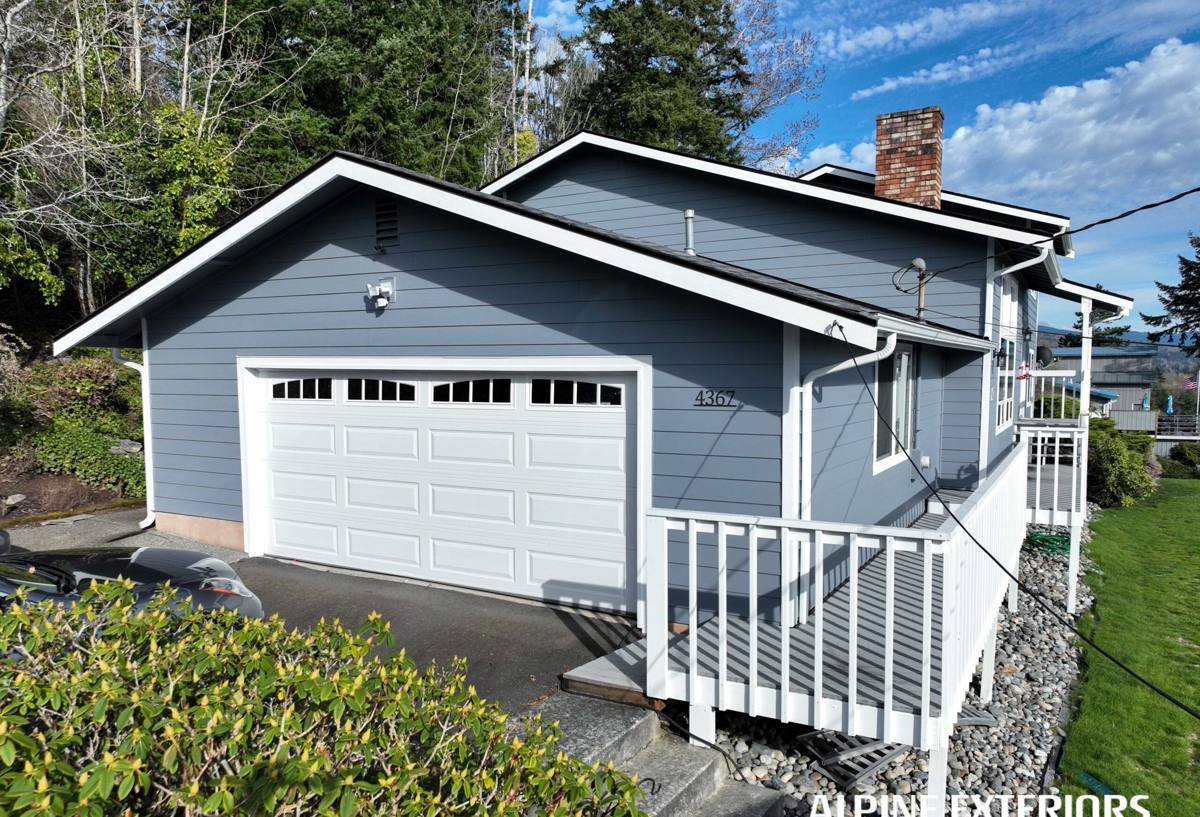
Signs Your Skyline Deck Has Reached the End of Its Life
Not every tired-looking deck needs full replacement — sometimes a repair, a board swap, or a re-fastening job is enough. But there's a point where patching stops making sense and a full tear-off and rebuild is the honest recommendation. Common signs we look for on Skyline homes include:
- Soft, spongy, or springy spots in the decking, especially near the ledger board or in shaded corners
- Visible gaps opening between boards, or boards cupping and splitting
- Rust streaks running down from fastener heads or joist hangers
- Persistent moss or algae growth that returns within weeks of cleaning
- Any separation, gap, or staining where the deck ledger meets the house
- Railing posts that wiggle or feel less solid than they used to
If you're seeing more than one of these at once, that's usually a sign the structure — not just the surface — has been compromised.
What a Correct Deck Replacement Actually Involves
A deck replacement done right is a structural project first and a finish project second. The boards on top are what everyone notices, but the parts you don't see are what determine whether the deck lasts eight years or twenty-five in a climate like this one.
Ledger Board and Flashing — the Most Common Failure Point
The ledger board, where the deck attaches to the house, is the single most common source of long-term deck failure in wet climates. If it isn't properly flashed and sealed against the wall, water finds its way behind it and starts rotting both the ledger and the rim joist of the house itself. On a replacement, this connection gets torn back to bare framing, inspected, and rebuilt with proper flashing and structural fasteners — not just re-lagged to the old wood and covered up.
Framing: Joists, Beams, and Footings
We check every joist, beam, and post for rot, insect damage, and corrosion at the connectors before deciding what gets reused versus replaced. On older Skyline decks, it's common to find that the visible decking looks worse than the frame, or the opposite — decking that still looks decent sitting on a frame that's quietly failed underneath. Footings get inspected for movement or settling, which matters on sloped or waterfront lots where drainage patterns can shift soil over time.
Fasteners and Hardware Rated for Coastal Use
Standard galvanized fasteners corrode faster in salt air than most homeowners realize. For Skyline rebuilds we spec stainless steel or higher-grade coated fasteners and connectors rated for coastal or treated-lumber exposure, because replacing a handful of screws is a lot cheaper than replacing a deck again in half the expected time.
Choosing a Decking Material That Can Handle This Climate
There's no single "best" decking material — there's a best fit for your budget, your maintenance appetite, and how much sun versus shade your specific spot gets. Here's how the common options actually compare in a salt-air, high-moisture environment:
| Material | Moisture Behavior | Maintenance | Typical Lifespan | Relative Cost |
|---|---|---|---|---|
| Cedar | Naturally rot-resistant but still absorbs moisture; needs to breathe and dry | Annual cleaning and re-sealing to hold color and resist moss | 15–20 years with upkeep | Mid |
| Pressure-Treated Pine | Resists rot chemically but swells/shrinks with moisture cycles | Regular sealing; watch for splitting and fastener pop | 10–15 years | Lowest |
| Composite | Doesn't rot, but can trap moisture at fastener points if not detailed correctly | Occasional washing; no sealing or staining required | 25–30 years | Higher |
| PVC / Capped Polymer | Fully non-organic, sheds water and resists mold/moss growth on the surface | Lowest — rinse as needed | 25–30+ years | Highest |
We're honest with Skyline clients about trade-offs. Wood costs less up front but asks for yearly attention if you want it to look good and last. Composite and PVC cost more initially but hold up better against the moss and moisture cycle that wears wood down here, which is often the deciding factor for a waterfront-adjacent property where upkeep time is limited.
Railings, Stairs, and Local Code Requirements
Deck replacements in Anacortes and unincorporated Skagit County generally require a permit and inspection, particularly when the structure is being rebuilt rather than just re-decked. Guardrails, baluster spacing, and stair rise and run all follow the residential building code adopted locally, and inspectors will check that framing spans and footing sizes match what's allowed for your deck's height and load. We handle the permit process as part of the job so you're not left tracking down inspections yourself, and we build to pass on the first visit — not to the bare minimum that just barely gets by.
Our Deck Replacement Process
- On-site assessment — we inspect the existing deck's framing, ledger connection, and footings to determine what's salvageable and what isn't
- Written proposal — clear scope, material options, and pricing, with no vague allowances hidden in the fine print
- Permit and scheduling — we pull the necessary permits and coordinate timing around weather windows
- Demolition and disposal — full tear-off of the old deck, hauled off site
- Structural rebuild — ledger, flashing, framing, and footings brought up to current standards
- Decking, railing, and stair installation — installed to manufacturer specs for whichever material you've chosen
- Final walkthrough and inspection — we review the finished deck with you and confirm it passes local inspection
Cost Factors for a Skyline Deck Replacement
Every deck is different, so we don't quote sight-unseen prices, but the factors that move a bid up or down are consistent:
| Factor | Why It Matters |
|---|---|
| Deck size and footprint | Larger square footage means more material and labor hours |
| Condition of existing framing | Rotted joists, beams, or footings add rebuild scope beyond the surface |
| Decking material | Wood, composite, and PVC carry different material costs and install methods |
| Height and railing complexity | Multi-level decks and custom railings add labor and hardware |
| Site access | Waterfront and sloped Skyline lots can require extra staging or hand-carrying material |
| Permit and inspection requirements | Structural rebuilds typically require permitting fees and scheduled inspections |
As a general range, straightforward wood deck replacements tend to sit at the lower end of the cost spectrum, while larger composite or PVC decks with custom railings and difficult access run higher. We'll walk your specific deck and give you real numbers rather than a number pulled from a national average that doesn't reflect Skagit County labor, material delivery, or your site's access.
Maintenance That Actually Protects a New Deck Here
A new deck is only as good as the upkeep it gets in a climate like this one. A short list of habits makes a real difference in how long it lasts:
- Rinse the deck surface periodically to clear salt residue, especially after storms with onshore wind
- Keep gutters and downspouts clear so roof runoff isn't dumping extra water onto or near the deck
- Treat moss and algae early in fall and spring before it gets established and starts holding moisture against the boards
- Trim back overhanging branches and vegetation to let the deck surface get airflow and occasional sun
- Check fastener heads and railing connections once a year for corrosion or looseness
- Reseal wood decking on a yearly or every-other-year schedule depending on sun exposure
- Sweep standing debris out of board gaps so water has a clear path to drain
Why Hiring a Crew That Already Works in Skyline Matters
A contractor who's replaced decks throughout Skyline already knows how the wind comes off the water, which orientations hold moisture longest, and how waterfront-adjacent lots typically drain. That translates into fewer surprises once demolition starts and a build that's designed for the specific conditions your home sits in, not a one-size-fits-all approach copied from an inland job. It also means a working relationship with local permitting and a realistic sense of scheduling around Skagit County's wetter months, so your project isn't guesswork on either end.
If your deck is showing its age or you're just not sure whether it needs repair or full replacement, we're happy to take a look. Fill out the form below for a free, no-pressure estimate — we'll tell you honestly what your deck needs, not just what's easiest to sell.