 Anacortes Siding
 Building Decks for Skyline, Not for a Catalog Photo
Skyline sits up on the bluff above Anacortes with some of the best water and mountain views in Skagit County, and that view is exactly why so many homes here lean on their decks. A deck in this neighborhood isn't a side yard afterthought — it's where people eat dinner, watch the ferries, and spend most of their outdoor time. That means it has to hold up to constant use and to a coastal climate that is genuinely harder on wood, metal, and fasteners than most inland decks ever see.
A deck built to a generic spec sheet, without accounting for salt-laden wind off Rosario Strait and Skagit County's long wet season, tends to show problems within a few years: rust bleeding from fastener heads, soft spots at the ledger board, slick moss buildup on the walking surface, and railings that loosen before their time. A deck built correctly for this specific site and this specific climate will outlast that by a wide margin, often for the cost difference of better fasteners and a little more attention during framing.
What Skyline's Climate Actually Does to a Deck
Three conditions do most of the damage to decks in this part of Anacortes, and a good build plans around all three from the start.
Salt Air
Being elevated on the bluff means more direct exposure to salt-carrying wind off the water. Salt air accelerates corrosion on any exposed metal — screws, joist hangers, railing brackets, post bases — faster than it would a few miles inland. Standard coated deck screws that work fine in a landlocked yard can start showing rust streaks within a couple of seasons up here.
Driving Rain
Skagit County gets sustained wet weather for a good chunk of the year, and Skyline's exposure means rain often comes in sideways rather than straight down. That drives water into places a flat-roof mindset doesn't account for: behind ledger boards, under railing post bases, and into end grain on stair stringers.
Moss Season
The same damp, shaded conditions that make this area green also grow moss on any deck surface that doesn't drain and dry properly. Moss holds moisture against the decking material, and on wood surfaces it becomes a genuine slip hazard well before it becomes an eyesore.
None of these are exotic problems, but they compound. A deck that ignores even one of them tends to age noticeably faster than a deck built with them in mind.
What a Correct Deck Build Involves Here
Ledger Attachment and Flashing
The ledger board — where the deck attaches to the house — is the single most common source of rot and structural failure on decks in wet climates. Correct flashing (a proper Z-flashing and self-adhering membrane behind it, not just caulk) keeps water from tracking behind the ledger and into the house's rim joist. This is the detail we spend the most time getting right, because it's also the detail that's nearly impossible to inspect once the decking is down.
Fasteners and Hardware
Given the salt exposure on Skyline, we don't treat fastener choice as a minor line item. Stainless steel or heavy hot-dip galvanized hardware costs more up front than standard coated fasteners, but on a bluff-exposed deck the difference in corrosion resistance is the difference between hardware that lasts the life of the deck and hardware that needs replacing in five to seven years.
Joist Protection
Joist tape or a comparable protective barrier over the top of each joist keeps standing water out of the wood where deck boards are fastened down — the single spot most prone to rot on an otherwise sound frame. It's inexpensive relative to the whole project and it's one of those things you can't add later without pulling the decking back up.
Drainage and Air Circulation Underneath
A deck that sits low to grade or against a slope, which describes a fair number of Skyline lots, needs deliberate attention to drainage underneath. Standing water and poor airflow under the frame is what turns a damp winter into a rot problem two or three years later. Grading, gravel, and adequate clearance under the frame all factor into this.
Choosing a Decking Material for This Climate
There's no single "best" decking material — it depends on how much upkeep you want to do and what you're willing to spend up front versus over time. Here's how the common choices actually compare for a Skyline, Anacortes property:
| Material | Upfront Cost | Moss/Moisture Behavior | Maintenance |
|---|---|---|---|
| Pressure-treated wood | Lowest | Absorbs moisture, needs regular sealing to resist moss and rot | Annual cleaning and periodic sealing/staining |
| Cedar | Moderate | Naturally rot-resistant but still needs finish maintenance in this climate | Cleaning and refinishing every few years |
| Composite decking | Higher | Doesn't absorb water like wood, but surface can still grow moss film if not cleaned | Occasional washing, no sealing/staining |
| PVC/capped polymer | Highest | Best resistance to moisture and staining of the group | Lowest — periodic washing only |
We'll walk through this trade-off honestly during the estimate. Composite and PVC products cost more to install but remove most of the moss-and-moisture maintenance burden that wood decks carry in this climate. Wood costs less up front but only performs well if it's actually maintained on schedule — a deck that gets ignored for a few winters in a row will show it.
Railings, Stairs, and Code Requirements
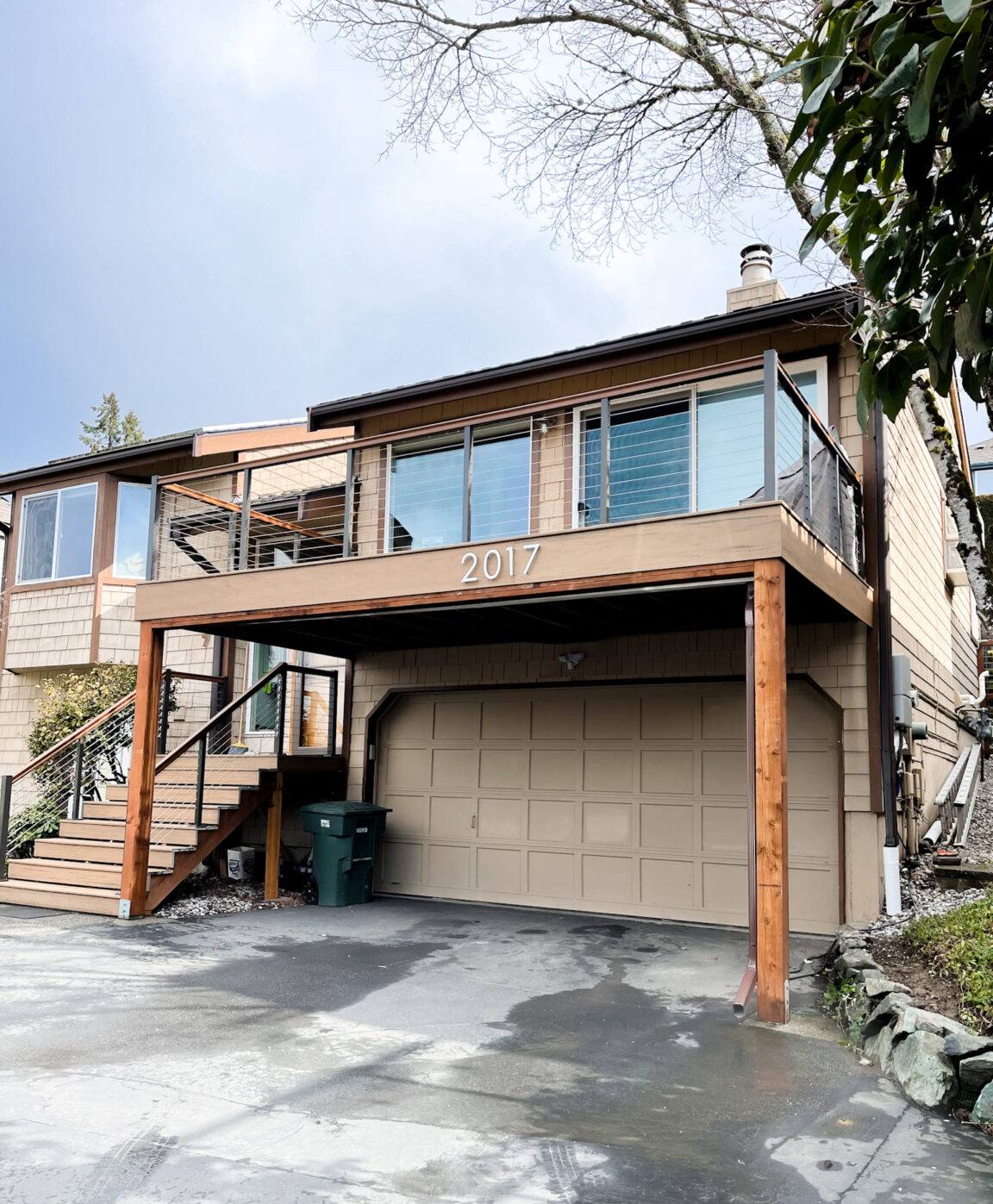
Washington's residential building code sets minimum requirements for guardrail height, baluster spacing, and stair rise/run, and those requirements apply regardless of which neighborhood you're in. What changes with a bluff-exposed lot like many in Skyline is the added wind load on railings and the added corrosion exposure on any metal railing hardware or cable systems. We spec railing hardware the same way we spec deck fasteners — for the coastal exposure this property actually gets, not the minimum that would pass in a sheltered yard.
Stairs deserve particular attention on sloped Skyline lots. Correct stringer support, proper drainage away from the base of the stairs, and non-slip tread surfaces all matter more here than on a flat inland lot, especially once moss season sets in.
How Our Process Works
- Site visit and honest assessment. We look at the slope, sun/shade exposure, existing structure (if it's a rebuild), and how the deck will actually be used before recommending a design.
- Material and design discussion. We walk through wood versus composite versus PVC trade-offs in plain terms, based on your maintenance tolerance and budget — no upsell pressure either direction.
- Permitting. Most new decks and significant rebuilds in Skagit County require a permit. We handle that process rather than leaving it on the homeowner.
- Demolition (if applicable) and framing. Old decking and any compromised framing come out first; we don't build a new deck surface over a frame we haven't verified.
- Ledger flashing, joist protection, and structural framing. This is the stage that determines how the deck ages — done right, it's invisible once the project is finished.
- Decking, railings, and stairs. Final surface installation, railing systems, and stair construction to code.
- Final walkthrough. We go over care and maintenance specific to the material you chose before we consider the job done.
Living With a Deck in Skyline: Realistic Maintenance
Even a well-built deck needs some seasonal attention in this climate. Here's what we recommend to Skyline homeowners regardless of which contractor built the deck:
- Sweep or blow off leaves and debris regularly through fall — trapped organic matter is what feeds moss growth
- Clean the deck surface at least once a year, ideally before the wet season sets in, to knock back moss before it establishes
- Check railing posts and hardware annually for looseness or early rust staining, especially on bluff-exposed sides of the house
- Reseal or restain wood decking on the manufacturer's recommended schedule — skipping a cycle in this climate shows up faster than it would inland
- Keep gutters and downspouts near the deck clear so runoff isn't dumping extra water onto or under the structure
- Check the ledger board area for any staining or soft wood, which can indicate a flashing issue worth catching early
Why a Crew That Already Works Skyline Makes a Difference
Skyline's lots vary a lot in slope, exposure, and access — a build that's straightforward on a flat inland lot can involve real logistical planning here, from material staging on a steep driveway to sequencing work around a view that everyone involved wants to protect. A crew that's already worked in this specific area knows the county's permitting process for Anacortes properties, has a feel for how exposed a given part of the bluff actually is, and isn't guessing at fastener and flashing specs — they're using what's already held up on decks a few doors down through the same weather.
That local familiarity doesn't replace a careful site-specific assessment of your property, but it does mean fewer surprises during the build and a design that starts from realistic assumptions about what this climate will do to it.
Get a Straightforward Estimate
If you're planning a new deck or replacing one that's showing its age in Skyline, we're happy to come take a look and walk you through what a correctly built deck involves for your specific property — no pressure, no inflated scope. Use the form below to request a free estimate.