 Anacortes Siding
 Building a Deck That Actually Holds Up in Skyline
Skyline sits on Fidalgo Island, close enough to saltwater that the air itself works against wood, metal, and fasteners year-round. A deck built the way it might be built inland — standard hardware, no real drainage plan, decking laid without airflow underneath — will show problems within a few years out here. We build custom decks for Anacortes homeowners with that reality in mind from the first sketch, not as an afterthought once boards start cupping or fasteners start bleeding rust.
This page covers what a Skyline deck specifically needs, what a correct build looks like step by step, and how we run the job from first call to final walkthrough. If you're comparing bids, the details below are the ones worth asking any contractor about.
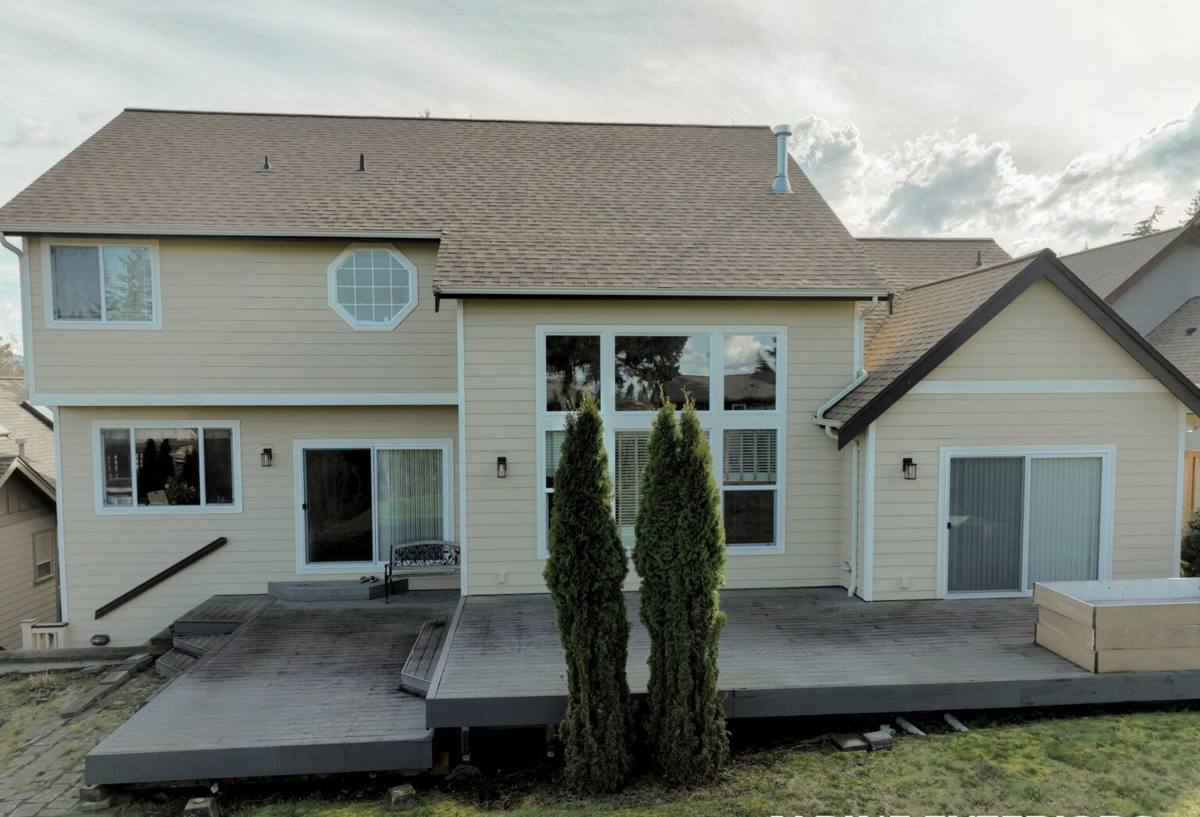
What Salt Air, Rain, and Moss Do to a Skagit County Deck
Anacortes' climate is mild compared to a lot of the country, but "mild" doesn't mean easy on a structure. Three things do most of the damage to decks in this area:
- Salt-laden air — even a mile or two from the water, airborne salt accelerates corrosion on fasteners, joist hangers, and any exposed metal railing hardware. Standard zinc-coated screws and brackets can start rusting well before a wood-rated warranty period is up.
- Driving rain — wind-driven rain doesn't just fall straight down here; it gets pushed sideways into ledger boards, under poorly lapped flashing, and into end grain on stair stringers and rail posts. Most rot we find starts at a joint where water was allowed to sit or wick in, not on a flat, well-drained surface.
- A long moss season — shaded decks, north-facing decks, and anything under fir or cedar cover stay damp long after a storm passes. Moss and algae take hold in that dampness, and once established they hold even more moisture against the decking surface, which speeds up wear on wood and can make boards slippery underfoot.
None of this means a deck in Skyline can't last decades — it means the build has to account for moisture movement and material choice from the start, not rely on caulk and paint to cover for a bad detail.
What a Correctly Built Deck Includes
Framing, Flashing, and Fasteners
The ledger board — where the deck attaches to the house — is the single most common failure point on older decks we're asked to repair or replace. A correct ledger installation uses proper flashing that directs water out and away from the house band board, not just a bead of caulk behind the board. We use fasteners and structural hardware rated for the corrosive, wet-marine exposure our code officials expect near Puget Sound, since standard interior-rated hardware corrodes faster here than it would inland.
Drainage and Airflow
Decking needs a gap between boards and enough airflow underneath to dry out between rain events. On grade-level or low-clearance decks, we pay close attention to slope away from the house and to keeping vegetation and debris from trapping moisture against the framing. A deck that can't dry out between storms is a deck that rots or grows moss no matter what decking material sits on top.
Decking Material
Wood, composite, and PVC all perform differently in a marine climate. We'll walk through the honest trade-offs with you rather than pushing whatever's easiest to install — see the comparison below.
Comparing Decking Materials for Skyline's Climate
| Material | How it handles salt air & rain | Moss/algae resistance | Maintenance |
|---|---|---|---|
| Pressure-treated wood | Good if fasteners and flashing are corrosion-rated; wood itself can still cup or check over time | Lower — porous surface holds moisture, needs regular cleaning | Annual cleaning, periodic sealing/staining |
| Cedar | Naturally rot-resistant but still needs correct flashing and gapping; softer surface | Moderate — still needs cleaning in shaded areas | Periodic oiling/sealing to hold color and resist weathering |
| Composite decking | Doesn't absorb water the way wood does; fastener and framing corrosion protection still matters | Higher on most modern composites, though shaded/damp spots still need occasional washing | Occasional washing, no staining or sealing |
| PVC decking | Fully synthetic, doesn't take on moisture; strong option for wet, shaded areas | High — smooth, non-porous surface sheds moss and algae more easily | Lowest — soap and water as needed |
There's no single "correct" material for every deck — a sun-exposed, view-facing deck in Skyline has different needs than a shaded one tucked under fir trees. We'll size up your specific site before recommending anything.
Permits, Footings, and Site Conditions on Fidalgo Island
Deck projects in and around Anacortes generally require a building permit once you're past a certain size or height off grade, and footing depth has to account for our local frost and soil conditions. We handle the permitting conversation as part of the process rather than leaving it for you to sort out, and we design footings and structural framing to the load and wind exposure of your specific lot — a deck on an open, elevated, view-facing site takes more wind load into account than one tucked into a sheltered yard.
If your property has notable slope, ledge rock, or limited access — common on view lots around Skyline — that affects how we approach footings and equipment access, and we'll walk that with you during the site visit rather than guessing from a bid sheet.
Our Process, Start to Finish
- Site visit and assessment — we look at sun/shade exposure, drainage, existing structure (if it's a replacement), and how the deck will be used.
- Design and material selection — honest conversation about wood, composite, or PVC based on your budget, maintenance appetite, and the deck's exposure.
- Permitting — we handle the paperwork and coordinate any required inspections.
- Demo (if replacing an old deck) — including checking the ledger and framing behind it for hidden rot before anything new goes up.
- Framing and flashing — corrosion-rated hardware, proper ledger flashing, correct joist spacing for your decking material.
- Decking, railing, and stairs — installed to manufacturer spec, with attention to fastener spacing and gapping for drainage.
- Final walkthrough — we go over care and maintenance specific to the material you chose before we consider the job done.
Maintaining a Custom Deck in This Climate
Even a well-built deck needs some seasonal attention in Skagit County. A short list of what actually matters:
- Keep gutters and downspouts clear so runoff isn't dumping extra water onto or near the deck
- Sweep off fir needles, leaves, and debris regularly — trapped organic matter holds moisture and feeds moss
- Rinse shaded or north-facing sections periodically to slow moss and algae buildup before it takes hold
- Check railing hardware and fasteners annually for early signs of corrosion, especially closer to the water
- Re-seal or re-stain wood decking on the schedule the product calls for — don't wait until it's visibly gray and dry
- Watch the ledger area and any post bases for standing water or staining, which can signal a drainage problem
Why a Crew That Already Works Skyline Matters
We're an Anacortes-based crew, and we build and repair decks all over Skagit County, including the Skyline area. That matters for a few practical reasons: we already know which hardware and fasteners hold up against the salt air out here, we're used to the wind and rain exposure of view-facing lots, and we're familiar with the local permitting process so your project doesn't stall waiting on paperwork we're figuring out for the first time. A crew that's built decks up and down this stretch of Fidalgo Island isn't guessing at what this climate does to a structure over ten or twenty years — we've already seen it.
Deck Build Checklist
Whether you're hiring us or comparing bids, a correctly specified deck project should cover:
- Corrosion-resistant fasteners and structural hardware rated for coastal/marine exposure
- Proper ledger flashing that directs water away from the house structure
- Footings sized for local soil conditions and the wind/load exposure of your specific site
- A decking material choice that matches your deck's sun/shade exposure, not just your budget
- Adequate board spacing and under-deck airflow for drying between rain events
- A clear permit and inspection plan before work begins
- A maintenance rundown at the end of the job, specific to the materials installed
If you're planning a new deck or replacing one that's showing its age, we're happy to take a look and give you a straightforward, no-pressure estimate. Use the form below to get started — we'll walk your site, talk through material options honestly, and give you a clear picture of what the job involves before any work begins.