 Anacortes Siding
 Board & Batten Siding for Skyline Homes in Anacortes
Skyline is one of those Anacortes neighborhoods where the house and the water are never far apart. That's a big part of the appeal of living here, and it's also exactly why the siding on a Skyline home has to work harder than siding almost anywhere inland. Board and batten is a popular choice in this part of Fidalgo Island because of its clean, vertical lines and the way it reads as both modern and classic depending on the trim and color choices around it. But the look is only half the story. The other half is whether the material and the installation actually hold up to a marine climate year after year.
This page is specifically about board and batten siding for Skyline-area homes — what the local climate demands, what a correct installation actually involves, and why our crew's experience working this specific stretch of Anacortes matters more than most homeowners realize until something goes wrong.
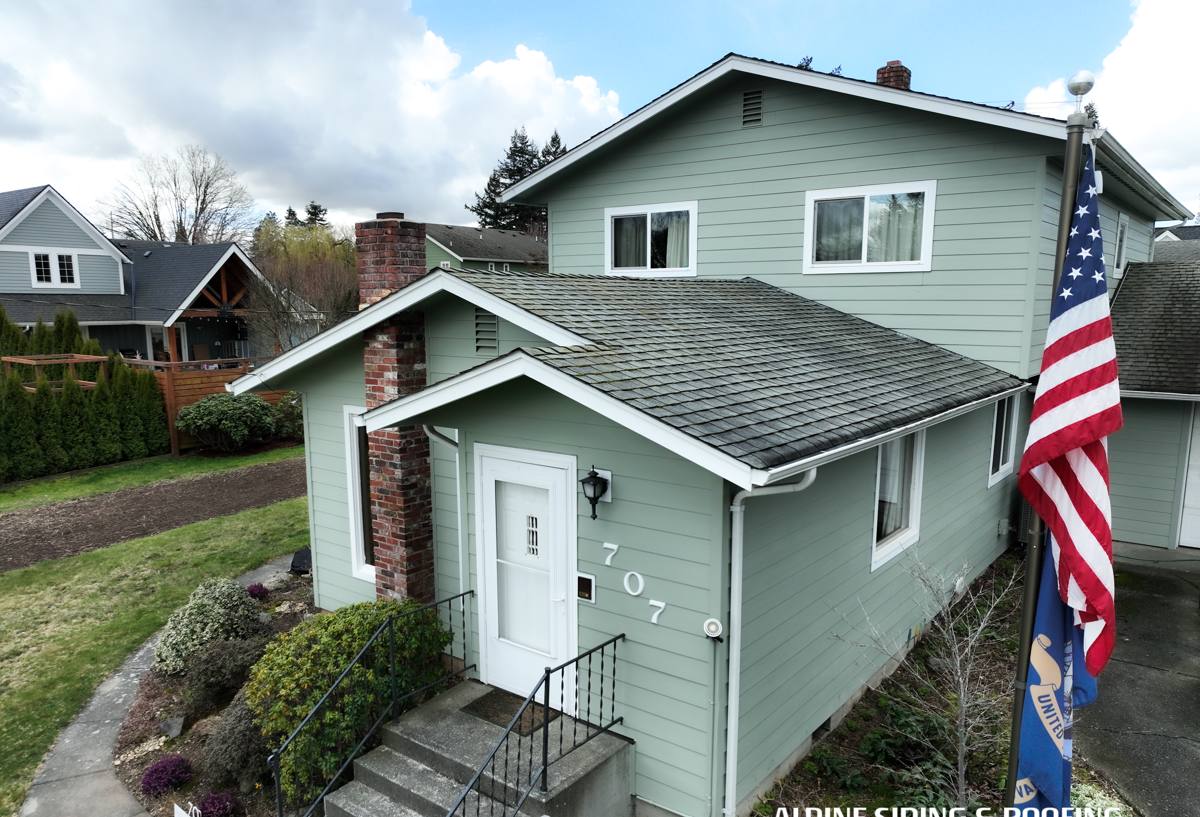
Why Skyline's Climate Is Tougher on Siding Than It Looks
Skagit County doesn't get hurricanes or hailstorms, so it's easy to assume the siding here has an easy job. It doesn't. The combination of factors specific to this part of Anacortes creates a slow, steady kind of wear that's different from — and in some ways harder to defend against than — dramatic weather events.
Salt Air
Proximity to the water means airborne salt is a constant, low-level presence on exterior surfaces. Salt accelerates corrosion on fasteners, flashing, and any metal trim components, and it can degrade lower-quality paint and coatings faster than a homeowner would expect based on the product's marketing.
Driving Rain
Wind off the water doesn't just drop rain straight down — it drives it sideways into walls, seams, and butt joints. Board and batten siding has more vertical seams per square foot than lap siding, and each one is a potential entry point for wind-driven moisture if it isn't detailed correctly.
Moss Season
Anacortes has a long wet season, and shaded or north-facing walls in tree-lined neighborhoods like Skyline can stay damp for extended stretches. That's an ideal environment for moss and algae to establish on siding surfaces, which holds moisture against the substrate even longer and accelerates any underlying vulnerability.
None of these three factors is dramatic on its own. Together, over ten or twenty years, they're exactly the conditions that separate siding systems that were engineered for this climate from ones that weren't.
What Correct Board & Batten Installation Actually Involves
Board and batten is a simple-looking siding pattern, which is part of why it gets installed poorly more often than people expect. The vertical battens cover the seams between the wide boards, but that only works as a weather barrier if everything underneath is built correctly first.
- Weather-resistive barrier and drainage plane: A properly lapped and taped house wrap or building paper behind the siding, installed to let any moisture that gets past the cladding drain back out rather than pool against the sheathing.
- Rainscreen or furring strips: A small air gap behind the siding lets bulk water drain and lets the wall assembly dry out between rain events — critical in a climate where "between rain events" can be short.
- Batten spacing and fastening: Battens need consistent spacing for a clean look, but more importantly they need to be fastened into structural framing, not just through sheathing, with fasteners rated for the coastal exposure.
- Flashing at every penetration: Windows, doors, hose bibs, light fixtures, and vents all need proper flashing integrated with the drainage plane — not caulk used as a substitute for flashing.
- Bottom clearance and kickout flashing: Board and batten siding needs to stop short of grade, decks, and roof lines with correct clearance and kickout flashing at roof-to-wall intersections, so water is directed away from the wall rather than behind the siding.
Skip any one of these steps and the siding may look fine for a few years. In a driving-rain, salt-air environment, the problems tend to show up as trapped moisture, not obvious leaks — which means they're often discovered late, after damage has already started.
Why We Install James Hardie Board & Batten — Not the Alternatives
We are a James Hardie-only siding company. We don't install vinyl, LP SmartSide, cedar, primed spruce, or other fiber cement brands, and board and batten is actually one of the clearest cases for why.
Vertical Seams Are Where Weak Materials Fail First
Board and batten's vertical seams and butt joints are exactly the spots where wind-driven rain concentrates. Materials that swell, absorb moisture at cut edges, or degrade under repeated wet-dry cycles are more likely to show problems first at these seams — which is a bigger issue on a pattern that has more seams than horizontal lap siding.
Non-Combustible and Dimensionally Stable
James Hardie fiber cement is non-combustible and doesn't expand and contract with moisture the way wood-based products can. On a pattern like board and batten, where clean, straight vertical lines are the whole visual point, dimensional stability keeps the reveal lines and joints looking sharp instead of cupping or gapping over time.
ColorPlus Factory Finish
Hardie's ColorPlus finish is baked on at the factory under controlled conditions, rather than field-applied. That matters directly for the salt-air issue above — factory finishes are formulated to hold up to UV and coastal exposure longer than a job-site paint job, and touch-up product is available for the rare nick or scratch.
HZ5 Product Engineering
Hardie manufactures its siding in climate-specific HZ (HardieZone) formulations. For the Pacific Northwest's wet, moderate climate, the HZ5 line is engineered for moisture exposure patterns like the ones Anacortes sees — this is a meaningful difference from a one-size-fits-all product.
We're not going to tell a homeowner that every other product on the market is worthless — plenty of them have legitimate uses. What we will say is that after years of doing this work specifically in coastal Skagit County conditions, we standardized on one system because it's the one we're comfortable standing behind on a house that's going to face salt air and driving rain for the next several decades.
Board & Batten Siding Options Compared for This Climate
| Material | Behavior in Salt Air / Driving Rain | Long-Term Maintenance | Our Position |
|---|---|---|---|
| James Hardie Fiber Cement (HZ5) | Non-combustible, dimensionally stable, factory-finished for coastal UV/moisture exposure | Periodic caulk/inspection; ColorPlus finish resists fading and chalking | What we install |
| Cedar / Primed Spruce | Attractive natural look but absorbs moisture at cut edges and seams; vulnerable to moss and rot in shaded, damp areas | Regular refinishing, sealing, and moss treatment needed | Not installed |
| Vinyl | Can warp or become brittle with temperature swings; seams and battens are harder to detail cleanly in this pattern | Low maintenance but limited repair options if damaged | Not installed |
| LP SmartSide / Other Fiber Cement | Varies by product; engineered wood products carry different moisture-exposure warranties than fiber cement | Depends on manufacturer specs and field finish quality | Not installed |
Our Process for a Skyline Board & Batten Project
- On-site assessment: We walk the property, check current siding and moisture conditions, and look specifically at shaded walls, roof-to-wall intersections, and any areas with visible moss or algae buildup.
- Detailed estimate: We scope the drainage plane, flashing, batten layout, and color/reveal spacing before any work starts, so there are no surprises mid-project.
- Tear-off and inspection: Where we're replacing existing siding, we inspect the sheathing underneath for hidden moisture damage before closing the wall back up.
- Weather barrier and rainscreen installation: Proper lapping, taping, and an air gap behind the siding — the part of the job that's invisible once finished but determines how the wall performs for decades.
- Hardie board and batten installation: Fastened to code and manufacturer spec, with attention to consistent batten spacing and clean, straight lines.
- Flashing and sealant details: Every window, door, and penetration flashed correctly, with sealant used where it belongs — not as a substitute for flashing.
- Final walkthrough: We review the finished work with the homeowner and go over the warranty coverage.
Why a Crew That Already Works Skyline Matters
Anacortes isn't a uniform climate zone — a home a few blocks from the water faces different exposure than one set back and sheltered by trees, and a shaded north wall in a place like Skyline can hold moisture much longer than a sun-exposed south wall on the same house. A crew that already works this specific area has seen these patterns repeatedly and knows where to pay extra attention: which wall orientations need more rainscreen ventilation, which roof-to-wall intersections tend to trap water, and where moss establishes fastest. That's knowledge you don't get from a general contractor who does one Anacortes job a year — it comes from repeated, local, hands-on experience with this exact combination of salt air, rain, and shade.
What Skyline Homeowners Should Check Before Hiring Anyone
- Ask specifically how they handle rainscreen/drainage gap installation — not just what siding brand they use.
- Ask how they flash roof-to-wall intersections and window/door penetrations, and ask them to explain it in plain terms.
- Confirm whether they're a manufacturer-certified installer for the specific fiber cement product being proposed.
- Ask how the warranty works — is it the manufacturer's warranty, a workmanship warranty, or both, and who's responsible for what.
- Ask about their experience with moss and algae growth on shaded walls in this specific area, and how installation choices address it.
- Get the estimate in writing with material specifics, not just a flat total.
Signs Your Current Siding May Already Be Struggling
If your home already has board and batten siding — in wood, an older fiber cement product, or another material — a few warning signs are worth watching for, especially heading into another wet season: soft or spongy spots when pressed gently, visible gaps or cupping at seams, persistent moss or algae in the same spots year after year, peeling or bubbling paint, or staining around window and door trim. Any of these can indicate moisture has been getting behind the cladding, and catching it early is a lot less costly than discovering it after it's reached the sheathing.
If you're planning a siding project in Skyline or elsewhere in Anacortes, we're happy to take a look and give you an honest assessment — no pressure, no obligation. Fill out the form below for a free estimate.