 Anacortes Siding
 Windows That Actually Hold Up in Skyline
Skyline sits close enough to the water that every window on a house is doing double duty: keeping heat in during the wet months and standing up to a steady diet of salt-laden air, wind-driven rain, and long stretches of gray, damp weather. A window that performs fine in a drier inland climate can start failing here years ahead of schedule — fogged glass, swollen sashes, soft trim, drafts you can feel with your hand. Energy-efficient windows done right in this neighborhood aren't just about lower heating bills, though that matters. They're about picking materials and installation details that are actually suited to a marine environment, not just whatever's on sale at a big-box store.
We work on homes throughout Anacortes and Skagit County, and Skyline has its own particular mix of exposure — some homes catch wind straight off the water, others are more sheltered by trees and terrain but deal with heavier moss and shade instead. Either way, the fundamentals are the same: good glass, a well-sealed frame, and flashing detail that doesn't let water find its way behind the siding.
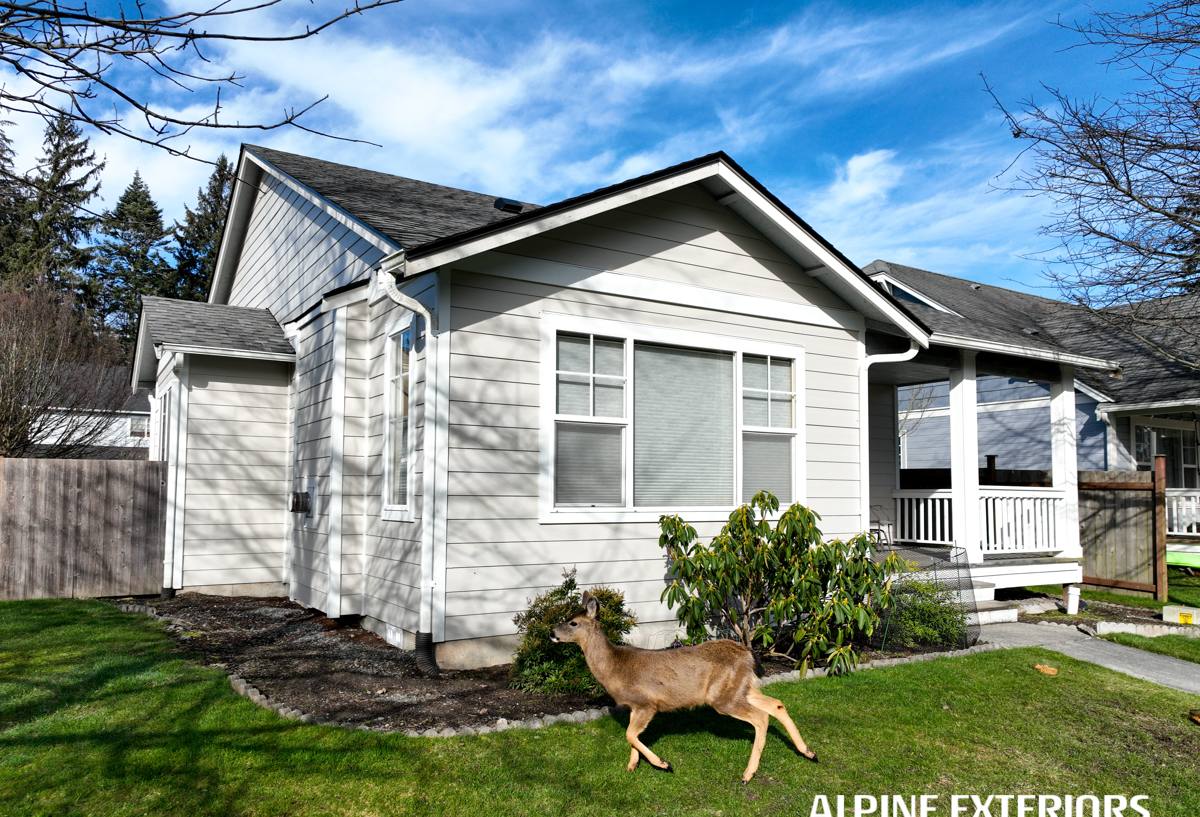
What Salt Air, Driving Rain, and Moss Season Do to Windows
Three things wear on windows here more than almost anywhere else in the state, and they compound each other over a typical Skagit County winter.
Salt Air
Airborne salt accelerates corrosion on any exposed metal — hinges, cranks, screws, and especially lower-grade aluminum components. It also breaks down cheap weatherstripping and finishes faster than a normal inland climate would. Windows with unprotected or low-quality hardware tend to show pitting and stiff operation years before they should.
Driving Rain
Wind-driven rain doesn't just hit a window head-on — it gets pushed sideways and upward, testing every seam, sill, and flashing detail. A window that's watertight in a calm rain can still leak in a Skyline windstorm if the installation wasn't detailed for wind-driven moisture. Most window leaks we find aren't a bad window at all — they're a flashing or sealant failure at the rough opening.
Moss Season
The long wet season here means moss, algae, and lichen get a real foothold on north-facing and shaded exteriors, including window sills, trim, and the siding around openings. Trapped moisture under moss-covered trim rots wood fast. Windows installed without proper sill pans or back-caulking give that moisture a path straight into the wall cavity.
What a Correct Energy-Efficient Window Installation Involves
"Energy-efficient" gets used loosely in this industry. A window can carry a good efficiency rating on paper and still perform poorly if it's installed wrong. The rating describes the glass and frame assembly tested in a lab — it says nothing about whether your installer flashed the opening correctly or used the right sealant for our climate. Both parts matter equally.
Frame Materials
Vinyl, fiberglass, and clad-wood frames all show up in this market, and each has real trade-offs worth understanding before you choose:
- Vinyl — lowest maintenance, good thermal performance, wide price range; quality varies a lot between manufacturers, so we're selective about which lines we install.
- Fiberglass — very stable dimensionally, holds paint well, handles temperature swings without warping; typically a higher upfront cost.
- Clad-wood — attractive from the interior, but the cladding seams and any exposed wood need careful detailing in a wet climate; we treat these as a higher-maintenance option and say so upfront.
Glazing and Gas Fill
Double-pane with a low-E coating is the baseline we'd recommend for this area; argon-filled units add a meaningful efficiency bump for a modest cost increase. Triple-pane exists but is rarely necessary for our winter temperatures — it's a bigger upcharge for marginal additional benefit here, and we'll tell you honestly when it's not worth it.
Flashing and Water Management
This is the part that separates a window that lasts from one that fails early, and it's where a lot of installations quietly go wrong. A correct install includes a sloped sill pan so any water that gets past the window has somewhere to go, properly lapped flashing tape integrated with the house wrap (not just caulk slapped over the gap), and back-dammed sill details so wind-driven rain can't push water backward under the frame. None of this is visible once the trim goes back on — it's the part you're trusting your installer to get right.
Our Installation Process
- On-site assessment — we look at each opening individually: current window condition, signs of past water intrusion, framing condition, and sun/wind exposure for that specific wall.
- Product selection — we walk through frame material, glazing package, and grille or hardware options based on your home's style and budget, without pushing a product line just because it's what we happen to stock.
- Removal and opening prep — old windows come out carefully, and we inspect the rough opening for rot or moisture damage before anything new goes in. Any framing repair happens now, not after.
- Flashing and sill pan installation — sloped sill pan, integrated flashing tape, back-dam detail. This step gets done the same way whether the opening is on the sheltered side of the house or catching the full wind off the water.
- Window setting and shimming — the unit is set level, plumb, and square, then shimmed and fastened per the manufacturer's spec so it doesn't bind or leak over time.
- Insulation and air sealing — low-expansion foam or backer rod and sealant around the frame, sized correctly so it seals without bowing the frame.
- Exterior trim and sealant — trim goes back with a sealant rated for our climate and UV exposure, not a generic caulk that'll crack within a couple seasons.
- Final check — operation, locking, and a visual water-management check before we call the job done.
Comparing Frame Options for Skyline Homes
| Frame Type | Maintenance | Typical Lifespan Here | Best Fit |
|---|---|---|---|
| Vinyl (quality line) | Low | 20–30+ years | Most homes wanting efficiency without ongoing upkeep |
| Fiberglass | Low | 30+ years | Homes with heavy sun/wind exposure or wanting paintable trim |
| Clad-wood | Moderate to high | Varies with upkeep | Homes prioritizing interior wood aesthetics over low maintenance |
| Aluminum (older/budget) | High | Shorter, especially near salt air | Generally not what we recommend for this climate |
Cost Factors to Understand Before You Get Quotes
Window pricing varies a lot from house to house, and quotes that look far apart are often not comparing the same scope of work. The honest cost drivers are:
| Factor | Why It Moves the Price |
|---|---|
| Number and size of openings | More glass, more material and labor |
| Frame material | Vinyl, fiberglass, and clad-wood sit at different price points |
| Condition of the rough opening | Rot or framing repair adds labor that only shows up once old windows are out |
| Access and site conditions | Second-story or hard-to-reach openings take more time and equipment |
| Glazing upgrades | Argon fill, upgraded low-E coatings add incremental cost |
We don't quote a per-window flat rate over the phone, because the honest number depends on what we find once we're actually looking at your openings. A broad range for a full-house replacement in this area typically spans a wide window depending on size and materials — we'll give you a real number after we've seen the house, not a teaser rate designed to get us in the door.
Signs Your Skyline Home Might Need New Windows
- Visible fog or moisture between panes — the seal has failed and can't be repaired
- Drafts you can feel near the frame, especially during windstorms
- Windows that are hard to open, close, or lock, or that have swollen or sticking sashes
- Soft or discolored trim or sill wood, or moss holding moisture against the frame
- Condensation forming on the inside of the glass regularly through fall and winter
- Noticeably higher heating costs without another clear explanation
- Visible daylight or gaps around the frame from outside
Why Hiring a Crew That Already Works Skyline Matters
Window installation looks straightforward from the outside — pull the old one, set the new one — but the details that determine whether it lasts are entirely in the flashing, sealing, and framing work that gets covered up by trim. A crew that regularly works this specific area already understands which walls in Skyline take the worst of the weather, how moss and shade affect certain exposures differently than others, and what level of water-management detail actually holds up through a full Skagit County winter rather than just looking finished on install day. That local pattern recognition is hard to get from a crew that's mostly worked drier inland climates.
We also stand behind the work with a clear warranty on our installation labor, separate from whatever coverage the window manufacturer provides on the product itself — worth understanding as two different things when you're comparing quotes.
Maintenance That Keeps New Windows Performing
Energy-efficient windows are a long-term investment, and a little upkeep goes a long way in this climate. Rinse salt residue off exterior frames and glass a few times a year, especially after storms. Keep moss and organic debris cleared off sills and surrounding trim before it holds moisture against the frame. Check exterior caulk lines annually for cracking or separation, and address it before water gets behind it. None of this is labor-intensive, but skipping it is exactly how a good window installation loses years off its life.
If you're weighing whether it's time to replace windows on your Skyline home, we're happy to come take an honest look — no pressure, no inflated urgency, just a straight assessment of what your windows actually need. Reach out for a free estimate using the form below.