 Anacortes Siding
 Siding Repair in Skyline: What the Climate Actually Demands
Skyline sits close enough to the water that homes here take a different kind of weathering than siding just a few miles inland. Salt-laden air off Fidalgo Bay and the surrounding waterways works into seams, fasteners, and any exposed wood trim. Driving rain off Rosario Strait and the Salish Sea doesn't fall straight down here — it hits siding at an angle, which means laps, corners, and butt joints take on water that a calmer climate would never push through. And Skagit County's long, wet moss season means anything shaded by mature trees or facing north stays damp for months at a stretch, which is exactly the environment moss, algae, and rot organisms need to get established.
None of that is unusual for the area — it's just what siding in Skyline has to stand up to, year after year. The problem is that a lot of siding on the market wasn't engineered for it, and a lot of repairs get done as quick patches rather than as fixes that actually address why the damage happened in the first place. This page is about doing siding repair in Skyline the right way: understanding what's failing, why, and what a correct repair looks like on a home in this specific part of Anacortes.
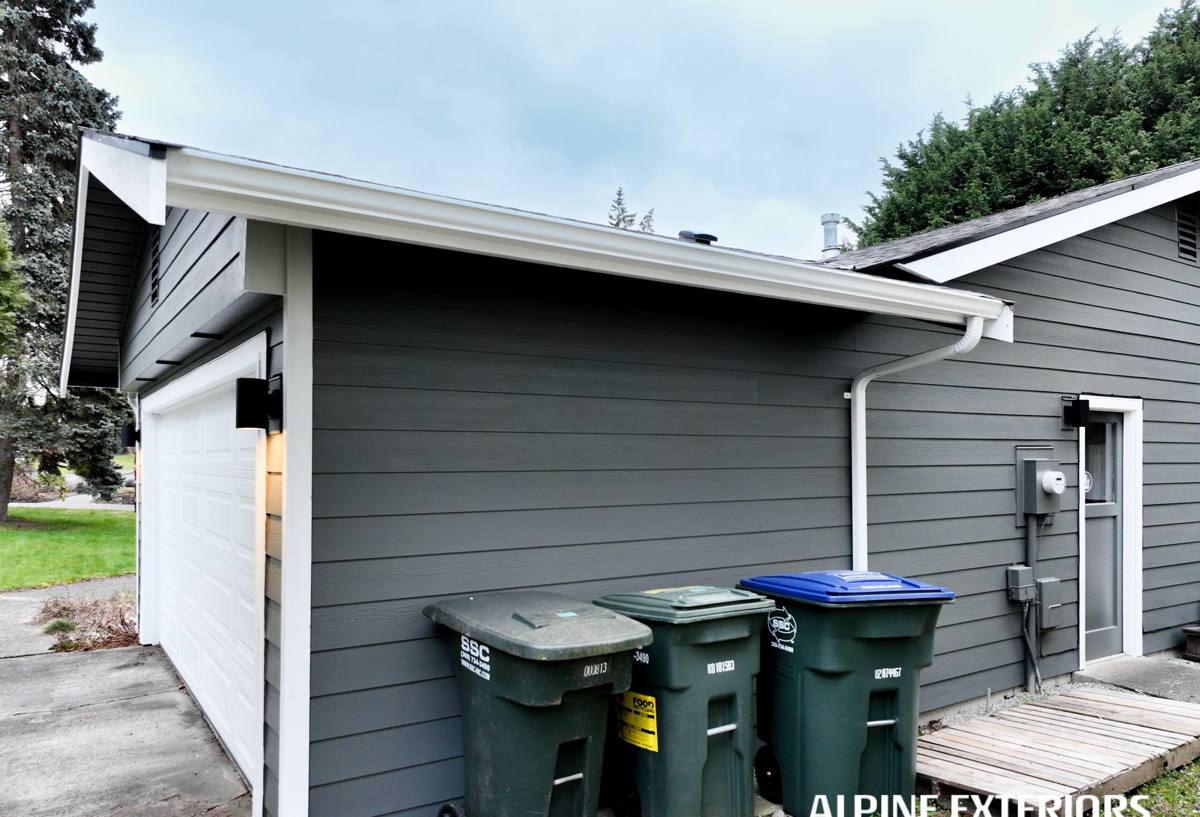
Common Failure Points We See on Skyline Homes
Caulking and Joint Failure
Caulk is the first line of defense at butt joints, corners, and trim intersections, and it's also the first thing to fail under repeated wet-dry cycling. Once a joint opens up, wind-driven rain gets behind the siding instead of running down the face of it. On a home exposed to Skyline's typical weather pattern, that can happen years before the siding itself shows visible damage.
Lower Courses and Moisture Wicking
The bottom few courses of siding on any home take the most abuse — splash-back from grade, snow piled against a foundation, or simple proximity to damp ground. Older siding materials that aren't dimensionally stable can absorb that moisture and wick it upward, which shows up later as bubbling paint, soft spots, or a change in how the siding sounds when you tap it.
Trim, Corners, and Fastener Lines
Outside corners and trim boards see more direct rain impact than flat wall sections, and every fastener penetration is a potential entry point if it wasn't sealed or set correctly the first time. Corroding fasteners are a particular giveaway in salt-air locations — you'll sometimes see rust streaking below a nail or screw long before the siding around it visibly fails.
North-Facing and Shaded Walls
Anything shaded by trees or a neighboring structure, especially on a north or west elevation, holds moisture longer after every rain event. Combined with Skagit County's mossy, overcast winters, these walls are where we most often find algae staining, soft trim, and paint failure well ahead of the rest of the house.
What a Correct Repair Actually Involves
A quality siding repair isn't just about replacing the board that looks bad. It's about figuring out why that board failed and making sure the fix doesn't just fail again in three or four wet seasons.
Diagnosing Past the Visible Damage
Visible rot or a cracked panel is usually a symptom, not the whole story. We check the flashing above and below the damaged area, the condition of the house wrap or building paper behind it, and whether water has traveled sideways from the actual entry point. Repairing the visible board without addressing the water path behind it just delays the next repair.
Matching Material and Profile
Patch-in repairs need to match the existing siding's exposure, profile, and thickness, or the repair will be visible and can actually create a new water-shedding problem at the transition. When the original siding is a discontinued profile or a product we don't install, we'll say so plainly and talk through whether a full-section replacement makes more sense than a mismatched patch.
Proper Water Management, Not Just a New Board
Every repair we do re-establishes correct water shedding: flashing lapped the right direction, house wrap integrated properly, and fasteners set where they belong — not just wherever holds the new piece in place. This is the step that gets skipped in a lot of "quick fix" repairs, and it's the step that determines whether the repair lasts.
Finish and Color Match
A repair that fixes the water problem but leaves an obvious patch of mismatched color or sheen isn't a finished job. We factor finish matching into the repair plan from the start rather than treating it as an afterthought.
Repair or Replace? How We Help You Decide
Not every damaged section needs a full re-side, and not every homeowner needs to hear "replace it all" from a contractor with an incentive to sell a bigger job. Here's generally how we think through it:
| Factor | Favors Repair | Favors Replacement |
|---|---|---|
| Extent of damage | Isolated to one or two areas | Recurring across multiple elevations |
| Underlying material condition | House wrap and sheathing sound | Water has reached sheathing or framing |
| Siding material | Material still available/matchable | Discontinued profile, poor original install |
| Age of existing siding | Mid-life, otherwise performing well | Near end of service life |
| Root cause | Localized failure (one bad joint, one impact spot) | Systemic issue (wrong product for climate, failed original install) |
If the underlying structure is sound and the damage is contained, repair is usually the honest recommendation — and we'll tell you that even though a full re-side is the bigger job. If we find water damage that's spread behind multiple sections, that's a different conversation, and we'll walk you through exactly what we found and why.
Our Process for Skyline Siding Repairs
- On-site inspection: We look at the damaged area and the surrounding sections, checking flashing, fasteners, and any signs the moisture has traveled beyond what's visible.
- Written scope and honest recommendation: You get a clear explanation of what's failing, why, and whether repair or replacement is the right call — no upsell, no guesswork left unexplained.
- Material and color matching: Where the existing siding can be matched, we source it. Where it can't, we discuss options rather than forcing a mismatch onto your home.
- Removal and inspection behind the siding: Damaged material comes off, and we check the house wrap, sheathing, and framing underneath before anything new goes back on.
- Correct water management on the way back together: Flashing, fastener placement, and joint sealing are done to spec, not just "close enough."
- Finish work and cleanup: Final caulking, touch-up finish, and a clean site when we're done.
Why We Use James Hardie Fiber Cement for Repairs and Replacement
We install exclusively James Hardie fiber cement siding — we don't install vinyl, LP SmartSide, Cemplank, Allura, primed spruce, or cedar. When a repair calls for new material rather than a salvaged match, that's what goes on the wall, and here's the honest reasoning behind it.
Vinyl is inexpensive and low-maintenance in mild climates, but it can become brittle in cold snaps and doesn't hold up well to direct wind-driven impact the way fiber cement does. Engineered wood products like LP SmartSide perform reasonably well when installation and maintenance are followed exactly, but they're wood-based, which means ongoing vigilance against moisture intake is part of the deal for the life of the siding. Cedar and primed spruce are attractive materials with real character, but in a salt-air, high-moisture environment like Skyline's, they demand a maintenance schedule most homeowners don't sign up for when they choose them.
James Hardie's fiber cement is non-combustible, dimensionally stable in wet-dry cycling, and its HZ5 product line is engineered specifically for climates with the kind of moisture exposure Western Washington delivers. The factory-applied ColorPlus finish resists the fading and chalking that repainting cycles are meant to fix on other materials, and it gives us a much better shot at matching color on a future repair, since the finish isn't hand-mixed on site. It's also backed by a strong transferable warranty when installed to Hardie's specifications — which is a large part of why correct installation, not just correct material choice, is the whole point.
Signs a Skyline Homeowner Should Call for a Repair Now
- Soft or spongy spots when you press on the siding, especially near the bottom courses
- Visible gaps or cracked caulk at joints, corners, or trim
- Paint that's bubbling, peeling, or chalking unevenly in one area
- Rust streaking below fasteners
- Persistent moss, algae, or dark staining on shaded or north-facing walls
- Warping, buckling, or a section that no longer sits flat against the wall
- A musty smell or visible staining on interior walls that share an exterior wall with damaged siding
Any one of these on its own might be minor. Several together, especially clustered on one elevation, usually points to a water path that's been active for a while and is worth having looked at before it spreads.
Why a Crew That Already Works Skyline Matters
Repair work in this part of Anacortes benefits from familiarity with how the local climate actually behaves — which elevations take the worst of the driving rain, how quickly moss establishes on shaded walls here versus a drier part of the state, and what Skagit County's permitting and inspection process expects for exterior work. A crew that already works this neighborhood isn't guessing at any of that on your job. They've also usually seen how a given era or style of home in the area was originally sided and detailed, which speeds up diagnosis and helps avoid repair mistakes that come from unfamiliarity with local building patterns.
After the Repair: Keeping It From Happening Again
A correct repair should reduce your maintenance burden going forward, not just paper over the current problem. Once the repair is done, a simple annual check — walking the exterior, looking at caulk lines and low corners, and knocking back any moss or algae buildup on shaded walls — goes a long way in a climate like this one. If you're seeing repeated failures in the same area of the house even after a repair, that's usually a sign of a design or ventilation issue rather than the siding material itself, and it's worth having that looked at directly rather than repairing the same spot again next year.
If you're seeing any of the signs above on a Skyline home, or you just want a second opinion on a repair someone else has recommended, we're happy to take a look. Fill out the form below for a free, no-pressure estimate.