 Anacortes Siding
 Decks in Ship Harbor Take a Different Kind of Beating
Ship Harbor sits close enough to the water that homes here deal with a different weather pattern than a deck a few miles inland in Anacortes proper. The air carries salt off Rosario Strait and the surrounding shoreline, the rain comes in sideways more often than it falls straight down, and shaded corners hold onto moisture long after the rest of the yard has dried out. A deck built or repaired without accounting for that combination tends to look fine for a year or two, then starts failing all at once — soft boards, rusted fasteners, and a substructure that's been rotting quietly underneath a deck that still looked okay on top.
We replace decks in this part of Skagit County regularly, and the pattern is consistent: the decks that fail early are almost never the ones that were poorly designed. They're the ones where the materials and hardware weren't matched to the exposure. A deck replacement done right here isn't just swapping old boards for new ones — it's addressing the specific way salt air, driving rain, and a long moss season attack a structure, and building something that's going to shrug that off for the next couple of decades instead of the next few years.
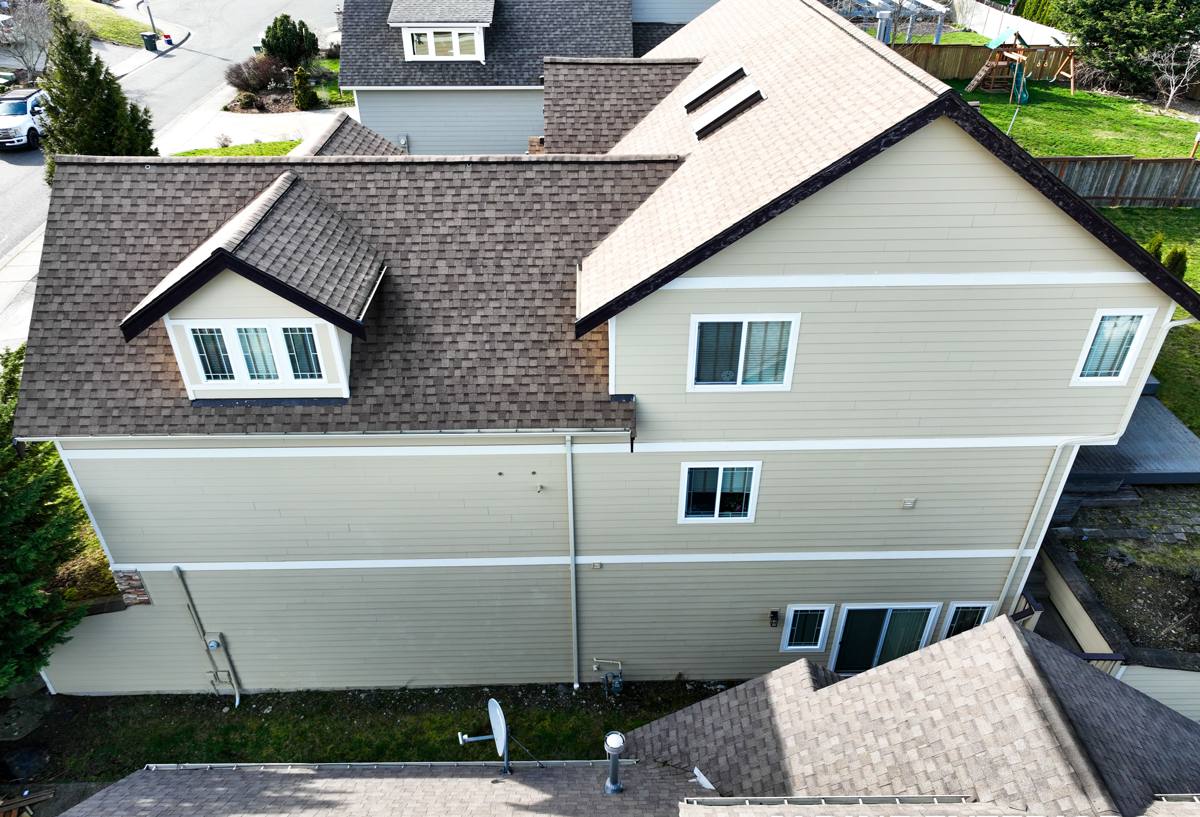
What the Marine Climate Actually Does to a Deck
Salt Air and Fasteners
Salt-laden air accelerates corrosion on anything metal that isn't rated for it. Standard galvanized screws, joist hangers, and bolts can start showing rust streaks and pitting well before a deck's wood components show any wear. Once a fastener corrodes, it loses holding strength — and a failing fastener buried in a joist or ledger board is invisible until something moves or a board comes loose underfoot. This is the single most common shortcut we see in decks built by crews unfamiliar with waterfront-adjacent exposure: correct-looking hardware that simply isn't built for this air.
Rain, Drainage, and Rot
Anacortes gets plenty of rain, but it's the combination of volume and wind-driven angle near the harbor that causes problems. Water gets pushed into joints, under ledger flashing, and into end grain that isn't sealed. Add a deck surface that doesn't shed water quickly — flat boards, clogged gaps, poor slope away from the house — and moisture sits. Wood rot doesn't need standing water to take hold; it just needs repeated wetting without enough drying time in between, which is exactly what a long Skagit County wet season delivers.
Moss, Shade, and Slip Risk
Decks on the shaded or north-facing side of a house, or under tree cover, grow moss for a good chunk of the year. Beyond looking bad, moss holds moisture against the deck surface and turns boards slick and genuinely dangerous underfoot, especially on stairs. A deck surface and finish chosen without moss exposure in mind will need constant pressure-washing and re-treating to stay safe and presentable — maintenance most homeowners don't want to sign up for indefinitely.
Signs a Ship Harbor Deck Needs Replacement, Not Just Repair
Not every tired-looking deck needs to come out entirely. But there's a point where patching individual boards is just delaying a bigger, more expensive problem. Look for:
- Soft or spongy spots when you walk across the deck, especially near the house or stair landings
- Rust staining bleeding out from screw heads or around joist hangers
- Persistent moss or algae that comes right back within weeks of cleaning
- Gaps or movement where the ledger board meets the house — a sign water may be getting behind the siding
- Railing posts that wiggle, even slightly, when pushed
- Visible daylight or gapping between deck boards that's widened noticeably over a year or two
- A substructure (joists, posts, beams) more than 15–20 years old, even if the surface boards were replaced more recently
If it's mostly cosmetic — faded finish, a few worn boards, loose railing hardware — repair or refinishing can make sense. Once the framing itself is in question, replacement is almost always the more honest recommendation, because a new deck surface on a compromised structure just hides the real problem for a little while.
What a Correct Deck Replacement Involves Here
Framing and Ledger Details That Matter on the Water
The ledger board — where the deck attaches to the house — is the single most important detail on any deck, and it's even less forgiving in a wet, salt-air environment. Proper flashing that directs water away from the house, correct fastener spacing, and hardware rated for corrosive exposure aren't optional add-ons; they're the difference between a deck that lasts and one that quietly rots the rim joist behind it. We also pay close attention to joist protection — flashing tape or a comparable moisture barrier on top of every joist — since exposed end grain and fastener penetrations are where rot starts, not usually the middle of a board.
Decking Material Choices for Salt Air and Moss
There's no single "best" decking material for every home — it depends on budget, maintenance appetite, and how exposed the deck is to shade and salt air. Here's how the common options actually compare in this specific climate:
| Material | Salt Air / Rain Performance | Moss Resistance | Maintenance |
|---|---|---|---|
| Pressure-treated wood | Good if properly sealed and re-sealed regularly | Moderate — needs regular cleaning in shaded areas | Annual cleaning and re-sealing recommended |
| Cedar | Naturally decay-resistant, but softer and needs upkeep | Moderate — same moss exposure as any wood | Periodic sealing to maintain appearance and lifespan |
| Composite decking | Very good — doesn't absorb moisture like wood | Good, but can still grow surface moss in deep shade | Occasional washing; no sealing or staining needed |
| PVC / capped composite | Excellent — fully sealed surface, no wood fiber to rot | Best of the group, though still needs occasional cleaning | Lowest ongoing maintenance |
We'll walk through these trade-offs honestly during an estimate rather than pushing whatever has the best margin. A well-built wood deck, sealed and maintained, can perform fine here — it just asks more of the homeowner over time than composite or PVC does.
Our Process for a Ship Harbor Deck Replacement
- On-site assessment — we inspect the existing structure, ledger connection, and any hidden rot before quoting anything, since what's visible on top rarely tells the whole story
- Material walkthrough — we go over decking, railing, and hardware options based on your budget, sun/shade exposure, and how much upkeep you actually want to do
- Full tear-off — old decking, framing, and any compromised structural members come out completely; we don't build new surfaces over questionable framing
- Rebuild with corrosion-rated hardware — stainless or coated fasteners and connectors suited to salt-air exposure, proper ledger flashing, and joist protection
- Decking and railing installation — installed with correct spacing and drainage in mind, not just tight boards that look good on day one
- Final walkthrough — we check the deck with you before calling the job done, including how it drains and how the railing feels
Permits and Working Near the Shoreline in Anacortes
Depending on how close a property sits to the water, deck replacement work in and around Ship Harbor can involve permitting through the City of Anacortes and, in some cases, shoreline-related regulations that apply to waterfront and near-waterfront parcels in Skagit County. Requirements vary based on setback, elevation, and whether the footprint or height of the deck is changing versus a like-for-like rebuild. We handle this conversation as part of the estimate rather than leaving it for you to sort out — if a permit is needed, we'll tell you before work starts, not after.
What Actually Drives Cost
Every deck is different, but the same handful of factors move the price up or down more than anything else:
| Factor | Why It Matters |
|---|---|
| Deck size and layout | Square footage, multiple levels, and stairs all add material and labor |
| Decking material | Pressure-treated wood costs less upfront; composite and PVC cost more but need less upkeep |
| Substructure condition | Rotted framing or posts found during tear-off adds cost but shouldn't be skipped |
| Railing style and hardware | Corrosion-rated hardware and certain railing materials cost more than basic options |
| Site access | Tight lots, slopes, or limited equipment access can add labor time |
| Permitting | Shoreline or setback reviews can add time to the schedule, not just cost |
We'd rather walk a homeowner through these variables in person and give a number based on the actual deck and site than quote a broad range that doesn't mean much until we've seen the property.
Why a Crew That Already Works Ship Harbor Matters
A deck built by someone who hasn't worked the Anacortes shoreline before can still look right the day it's finished — the problems here show up later, in the fastener corrosion, the ledger flashing that wasn't quite enough, or the decking material that wasn't chosen with moss and shade in mind. Working this area regularly means we're not guessing at how salt air and Skagit County's wet season treat a given material or hardware choice — we've seen it firsthand, on decks a lot like yours. That's the difference between a deck that needs attention again in five years and one that just keeps working.
If your deck in Ship Harbor is showing its age, or you're planning ahead before it gets worse, we're happy to take a look and give you a straight assessment. Use the form below to request a free, no-pressure estimate.