 Anacortes Siding
 Oak Harbor Sits Right in the Path of Puget Sound Weather
Oak Harbor faces the open water of Puget Sound, and that location shapes everything about how siding performs there. Wind off the water carries salt spray onto exterior walls, driving rain comes in sideways during fall and winter storms, and the shaded, damp conditions common on the west side of homes create a long moss and algae season that can run most of the year. None of this is unique to one street or one subdivision — it is the baseline climate reality for homes near the water anywhere in this part of Western Washington, including the Anacortes and Skagit County area our crew calls home.
Siding that is not built and installed for this environment shows it fast: chalky or peeling paint, soft spots where moisture has worked into seams, black-green streaking on north- and west-facing walls, and trim that rots from the back before anyone notices a problem from the street. Homeowners in Oak Harbor are not dealing with a hypothetical — they are dealing with a specific, predictable set of conditions, and the right siding choice and installation approach account for that from day one.
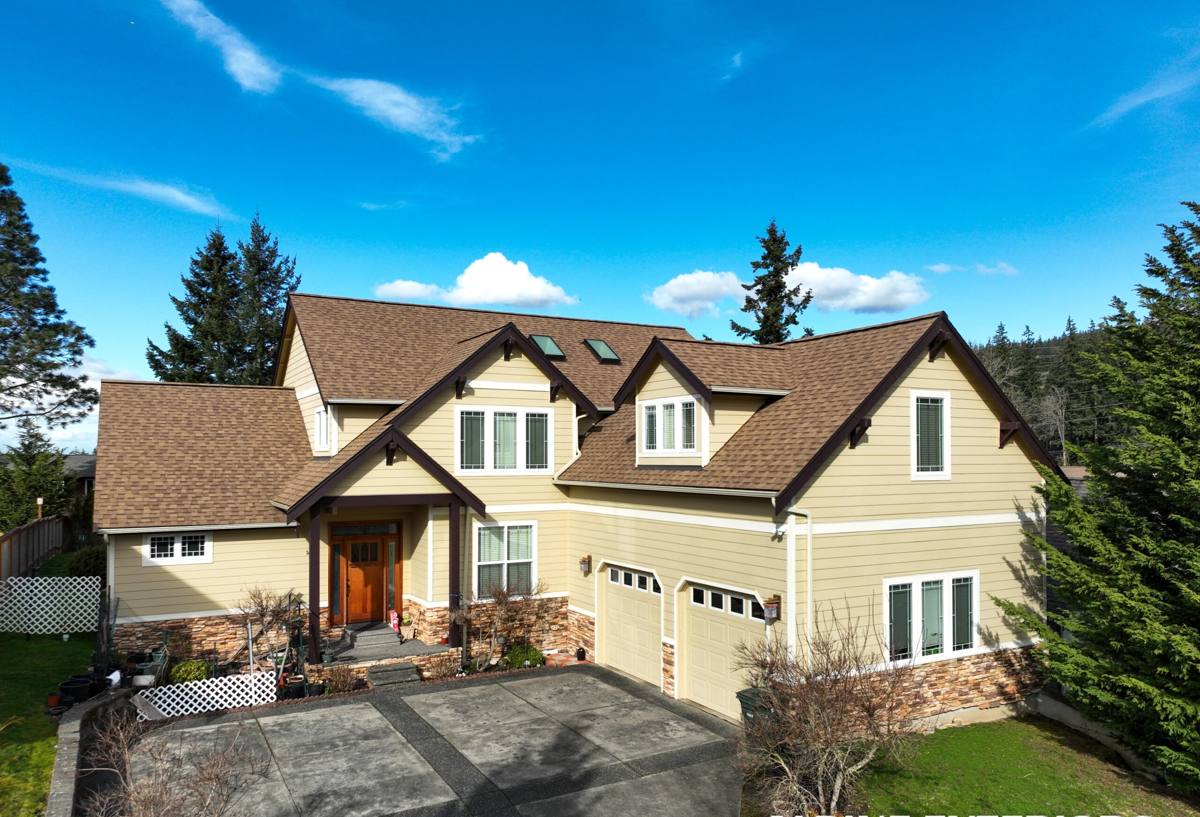
Why We Only Install James Hardie Fiber Cement Here
We install James Hardie fiber cement siding exclusively — no vinyl, no LP SmartSide, no cedar, no primed spruce, no other fiber cement brands. That is not a marketing preference; it is a standard we hold because of what we see happen to other products in exactly this kind of marine climate.
Built for Damp, Not Just Painted for It
Hardie's fiber cement is a non-combustible mix of cement, sand, and cellulose fibers, engineered to hold its shape and resist moisture intrusion far better than wood-based or wood-alternative products. James Hardie also makes climate-specific product lines — including an HZ5 formulation intended for regions with more moisture and temperature swing — so the boards going on the wall are matched to the climate rather than being a one-size-fits-all product.
The Finish Matters as Much as the Board
Most of what we install carries Hardie's ColorPlus factory finish: a baked-on, multi-coat finish applied under controlled conditions before the boards ever reach the job site. In a place with this much rain and UV exposure over the years, a factory finish resists fading and chalking far longer than a field-applied paint job, and it comes backed by its own finish warranty separate from the substrate warranty on the board itself.
We are upfront that fiber cement is not the cheapest option on the market and that other products can look similar from the sidewalk. The difference shows up ten and twenty years out, which is the timeline that actually matters for a siding investment.
What a Correct Fiber Cement Installation Actually Involves
Fiber cement is only as good as its installation. A high-quality board installed against manufacturer specification will fail early in a wet climate, and the failure usually happens behind the wall, out of sight, until it is expensive.
Moisture Barrier and Flashing Come First
Before a single piece of siding goes up, the weather-resistive barrier underneath has to be continuous, correctly lapped, and integrated with flashing at every window, door, deck ledger, and roof-to-wall intersection. This is the step that determines whether wind-driven rain stays out of the wall assembly — and it is also the step that is easiest to shortcut and hardest to inspect after the fact.
Clearances and Fastening
Hardie's install specs call for specific clearances from grade, roof lines, decks, and other siding-to-trim intersections, along with a minimum gap between panels and any dissimilar material. Skipping these clearances is one of the most common causes of moisture wicking into the bottom edge of a board. Fastener placement, spacing, and depth also matter: over-driven nails crack the board's protective coating, and incorrect spacing leaves panels loose enough to work moisture into the seams over time.
Cut Edges and Caulking
Every field cut exposes raw fiber cement that needs to be sealed — either with touch-up paint matched to the ColorPlus finish or with the appropriate sealant at the joint, depending on where the cut falls. Joints and penetrations get a paintable, high-quality exterior sealant rated for the movement and moisture exposure of a marine climate, not a bargain caulk that shrinks and cracks within a couple of seasons.
What Drives the Cost of a Siding Job Like This
Every Oak Harbor home is a little different, but the same handful of factors determine most of the price variation we see on fiber cement siding jobs in this climate.
| Factor | Why It Matters |
|---|---|
| Tear-off and substrate condition | Old siding with hidden water damage means repairing or replacing sheathing before new siding goes on |
| Home size and wall complexity | More corners, dormers, and roof intersections mean more flashing and cutting labor |
| Trim and accent choices | Board-and-batten accents, trim boards, and multiple colors add material and labor time |
| Site access | Waterfront lots, steep grades, or tight setbacks can slow staging and require extra safety measures |
| Existing moisture damage | Rot found once old siding comes off is common in this climate and should be priced as a contingency, not a surprise |
Any honest bid should walk through these factors with you specifically, not just hand over a flat per-square-foot number with no explanation.
How We Approach an Oak Harbor Project
Our process does not change because a job is on Whidbey Island rather than in Anacortes proper — but the inspection gets more attention on homes exposed directly to the water.
- On-site assessment of the existing siding, trim, and any visible moisture damage or rot
- Careful tear-off with a check of the sheathing and framing underneath before anything new goes up
- Repair or replacement of any compromised sheathing, framing, or trim found during tear-off
- Installation of a continuous weather-resistive barrier with proper flashing at every penetration
- Fiber cement installation to manufacturer clearance and fastening specifications
- Sealing of all cut edges, joints, and penetrations with climate-rated sealant
- Final walkthrough covering the finished work and basic care going forward
We do not skip the tear-off inspection step to save time. In a marine climate, what is hidden under old siding is often the real story, and finding it before new siding goes on is far cheaper than finding it five years later.
Why It Matters That Our Crew Already Works This Area
A crew that regularly works Oak Harbor and the surrounding Puget Sound communities has already seen how wind-driven rain behaves against west- and north-facing walls near the water, how quickly moss establishes on shaded siding, and where salt exposure tends to concentrate wear. That familiarity shows up in small decisions — where to add extra flashing attention, which wall orientations need closer inspection during tear-off, how aggressively to seal joints — that a crew unfamiliar with this specific climate might not think to make.
Being based out of Anacortes and Skagit County also means we are not driving in from out of the region for a one-time job. If a question comes up after installation, or if you want a maintenance check a few years down the road, you are calling a crew that is still local and still working in the same weather your siding lives in every day.
Questions Worth Asking Before You Sign a Siding Contract
- Is the crew certified to install the specific James Hardie product line being quoted?
- Does the written scope specify flashing and weather barrier work, not just "install siding"?
- Which Hardie product line and finish (ColorPlus versus field paint) is actually being quoted?
- What happens if rot or moisture damage is found once old siding comes off?
- Is the warranty transferable, and does it cover both the board and the finish?
- Has the crew worked on homes with similar water exposure or wind exposure to yours?
Living With Fiber Cement Siding in a Mossy, Wet Climate
Even the right product installed correctly still lives in a demanding climate, and a little routine attention keeps it performing for decades. Rinsing siding annually removes salt residue and slows moss growth on shaded walls. Keeping gutters clear and downspouts directed away from the foundation prevents localized soaking at the base of the wall. Trimming back vegetation that shades siding year-round reduces the damp conditions moss needs to take hold. None of this is heavy maintenance — fiber cement does not need repainting on the schedule wood siding does — but a five-minute visual check each fall for cracked caulking or loose trim catches small issues before winter rain turns them into bigger ones.
If you own a home in Oak Harbor and want an honest look at what your siding needs, we offer a free, no-pressure estimate. There's no obligation — just a straightforward assessment from a crew that already knows this climate, using the form below.