 Anacortes Siding
 Burlington sits low in the Skagit Valley, close enough to Skagit Bay and the broader Puget Sound system to pick up salt-laden air on a regular basis, and shaded enough on many lots that moss finds a foothold and never really lets go. Homes here take on driving rain that comes in sideways off Pacific storm fronts rather than falling straight down, which is a different problem for a wall assembly than rain most siding products were designed around. This page is specifically about James Hardie fiber cement siding for Burlington homes — what the climate actually demands from it, what a correct installation involves, and how we approach the work when we're the crew doing it.
What Burlington's Climate Actually Does to Siding
Three conditions do most of the damage to exterior siding in this part of Skagit County, and they rarely act alone — they compound each other over years rather than showing up as a single dramatic failure.
Salt Air Off Skagit Bay and Puget Sound
Salt-laden air moving inland corrodes exposed fasteners and accelerates the breakdown of lower-grade paint finishes faster than it would happen further from the water. It's a slow process, but it's a constant one, and it doesn't skip a season.
Wind-Driven Rain in a Low-Lying Valley
Burlington's position in the valley floor means storms push rain sideways into wall assemblies instead of shedding straight off a roofline. That kind of rain finds any gap in flashing, any seam that wasn't lapped correctly, and any joint that was caulked as an afterthought rather than planned into the installation sequence.
A Moss Season That Doesn't Take a Break
Shaded, north-facing walls and tree-lined lots around Burlington grow moss on a schedule that's longer than most homeowners expect, because the valley doesn't get the extended dry stretches that burn moss back faster in drier parts of the state. Moss holds moisture against a wall long after a storm has passed, keeping that section of the house wet far longer than an open, south-facing wall two lots over.
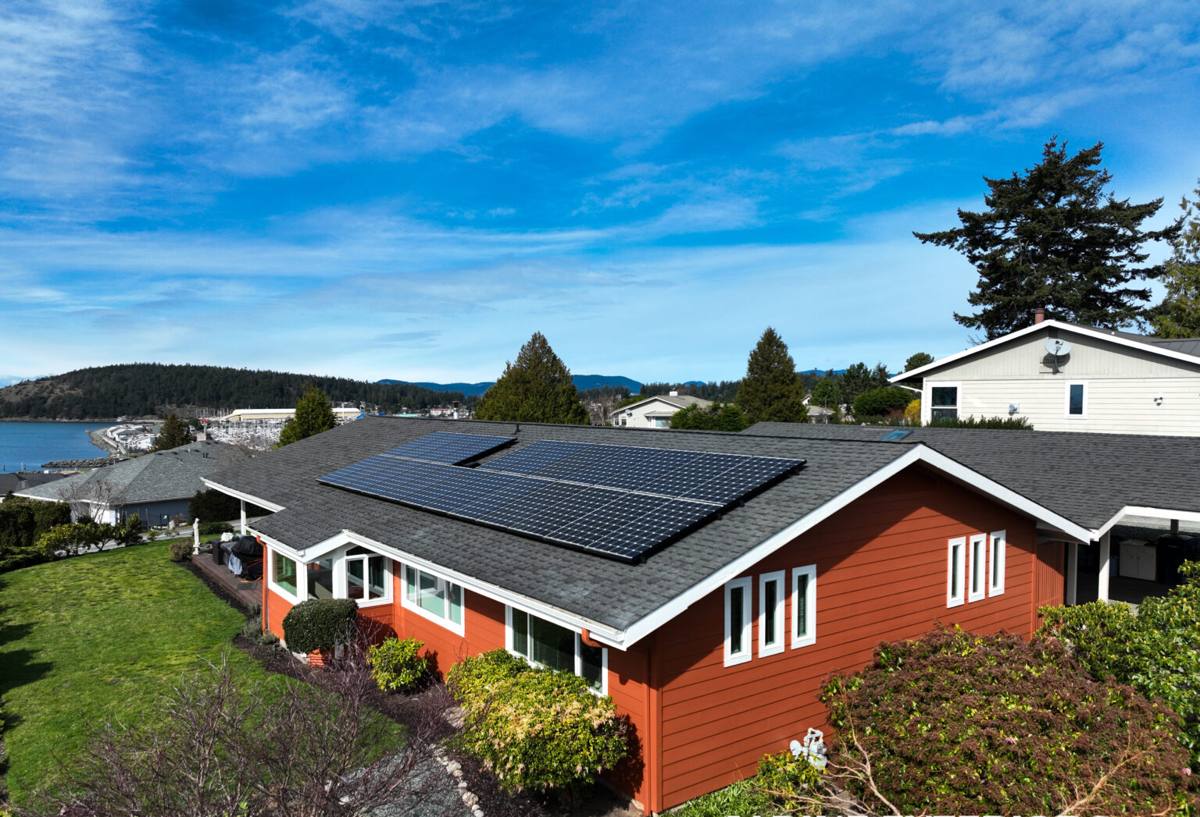
Why We Only Install James Hardie Fiber Cement Here
We install one siding product on Burlington homes: James Hardie fiber cement. We don't offer vinyl, LP SmartSide, Cemplank, Allura, primed spruce, or cedar, and that's a professional standard we hold, not a limited lineup we're stuck with. Every one of those alternatives gets something right, and it's worth being honest about that before explaining why we still don't install them.
Vinyl is inexpensive and low-maintenance in milder climates, but it can warp and grow brittle with age and temperature swings, and its seams and J-channels are exactly the kind of gap wind-driven rain works into over time. LP SmartSide and other engineered wood products install quickly and take paint well, but they still have an organic strand-based core underneath, which depends on flawless field priming and caulking at every cut edge to keep sustained moisture out — a demanding standard to hold across an entire crew, on every cut, for the full life of the siding. Cemplank and Allura are also fiber cement and get the basic non-combustible, non-organic advantage right; our reason for standardizing on Hardie over them comes down to the specific climate engineering of Hardie's HZ product lines and how the ColorPlus finish and warranty structure work together as one package, not a claim that competing fiber cement can't perform. Primed spruce and cedar are genuinely attractive, traditional materials, but they're organic, and in a valley that doesn't offer much of a dry season to recover in between storms, that means real ongoing upkeep — refinishing, sealing, and moss control — to keep performing.
Fiber cement handles the core problem differently because it isn't organic. There's no wood substrate for moisture to work into, and it doesn't feed moss and mildew growth the way wood-based products can. That single difference is what makes it the right call for a climate like Burlington's.
The James Hardie Product Lines That Make Sense for This Area
HZ5 Engineering for a Cold, Wet Climate Zone
For homes in the Pacific Northwest, including Burlington, we install Hardie's HZ5 product line — engineered specifically for colder, wetter climate zones rather than sold as one generic formulation nationwide. The board itself is formulated for the moisture cycling this region sees, which is a decision baked into the product before color or profile ever enters the conversation.
ColorPlus Factory Finish vs. Field-Applied Paint
Most Hardie siding we install carries ColorPlus Technology, a finish baked onto the board at the factory under controlled conditions rather than rolled and brushed on-site after installation. That matters in a place like Burlington, where long gray stretches and limited dry windows make it hard for field-applied paint to cure properly. A factory finish resists fading, chipping, and cracking better than typical field paint, and it comes with its own finish warranty separate from the substrate warranty on the board.
Plank, Panel, and Trim Options
HardiePlank lap siding is the most common choice for Burlington homes, giving a traditional horizontal reveal. HardiePanel vertical siding works well as an accent on gables or a more modern-style home. Matching HardieTrim and soffit products round out the envelope so flashing and joint details stay consistent across the whole exterior rather than mixing systems at transitions, which is often where problems start.
What a Correct Installation Involves on a Burlington Home
A siding product is only as good as the installation behind it, and that's especially true in a climate that punishes shortcuts. A correct Hardie installation here is built around a specific sequence of details, not a general "put the boards up" approach.
- Proper clearance from grade, decks, and patios so the bottom edge never sits in standing moisture
- Flashing integrated at every window, door, and roofline transition — not caulked over after the fact as a patch
- Fastener pattern and spacing matched to the specific Hardie product line and Burlington's wind exposure
- Weather-resistive barrier and rainscreen detailing that gives the wall assembly a way to drain and dry
- Joint and seam treatment that accounts for each wall's actual sun and shade exposure, since shaded walls need different attention than sun-exposed ones
- Factory-finish color matched at trim and touch-up points instead of a mismatched field repaint
Our Process for a James Hardie Project in Burlington
Inspection and Existing Condition Assessment
We start by walking the property and assessing the existing siding, trim, and wall condition wall by wall — noting which faces get direct sun, which stay shaded and damp, and where moss or past moisture intrusion has already left a mark. That assessment shapes the flashing and joint plan before a single board goes up.
Tear-Off and Moisture Check
Once old siding comes off, we check the sheathing and framing underneath for hidden rot or moisture damage. This is the point where problems that have been building for years, often invisible from outside, get caught and addressed before new siding goes over them and hides them for another decade.
Installation to Manufacturer Specification
Installation follows James Hardie's published fastening, clearance, and flashing specifications, adjusted for Burlington's specific wind and moisture exposure rather than a generic national spec. We don't treat the manufacturer's instructions as a floor to work above when convenient and ignore when it's faster not to.
Final Walkthrough and Warranty Registration
We walk the finished exterior with the homeowner, point out what to watch for on that specific house, and handle the paperwork to register the applicable Hardie warranty. You should leave that walkthrough understanding exactly what was done and why, not just that the old siding is gone.
Comparing a Generic Install to a Climate-Specific One
| Factor | Generic, National-Average Approach | Burlington-Specific Approach |
|---|---|---|
| Siding material | Whatever's cheapest or most common regardless of region | James Hardie HZ5 line engineered for sustained moisture and coastal exposure |
| Flashing detail | Standard, one-size-fits-all approach | Sized to wind-driven rain coming off a low valley floor |
| Finish | Field-applied paint on a recoating schedule | Factory-baked ColorPlus finish, less dependent on dry curing weather |
| Moss and shade exposure | Not factored into joint or wall-by-wall planning | Considered per wall based on sun, tree cover, and drainage |
| Product knowledge | Crew works several different siding brands and systems | Crew works Hardie exclusively and knows its spec sheet cold |
Cost Factors for James Hardie Siding in Burlington
We don't publish blanket pricing because it wouldn't be an honest number — the real drivers are specific to the house in front of us. The factors that move a project's cost up or down are consistent enough to lay out plainly, though.
| Factor | How It Affects Cost |
|---|---|
| Existing wall condition | Hidden moisture or rot found during tear-off adds repair scope before new siding goes on |
| Home size and wall complexity | More corners, gables, and penetrations mean more flashing and labor time |
| Siding profile chosen | Lap siding, vertical panel, and board-and-batten each carry different material and labor costs |
| Trim package | Heavier trim detailing runs higher than a standard, simple trim package |
| Site access | Tree cover, tight lot lines, or difficult staging can extend labor time |
Why a Crew That Already Works Burlington Matters
A contractor who regularly works Burlington and the surrounding Skagit County valley has already seen how a shaded, moss-prone wall ages compared to an open one, and adjusts flashing, joint spacing, and maintenance advice accordingly. That judgment builds up from doing the work repeatedly in this exact climate, not from reading a Hardie spec sheet written for the whole country. It also means someone local is reachable if a warranty question comes up years later, rather than chasing down a crew that's moved on to a different region entirely.
Keeping Your James Hardie Siding Performing for Decades
Even a correctly installed Hardie exterior benefits from basic seasonal attention in a valley climate like this one. Keeping gutters clear ahead of the wet season prevents overflow from soaking siding and trim at the eaves. Periodically checking shaded, north-facing walls for early moss growth and addressing it before it spreads keeps moisture from sitting against the surface for extended periods. Inspecting caulked joints at trim and penetrations every year or two catches small gaps before wind-driven rain finds them. Fiber cement doesn't demand the refinishing schedule that wood-based siding does, but it still benefits from a homeowner who knows what to watch for on their specific house.
If you're weighing James Hardie siding for a home in Burlington, we're glad to take a look and give you a straight assessment of what your house actually needs — no pressure, no generic sales pitch. Reach out for a free estimate and we'll walk the property with you and talk through what we see.