 Anacortes Siding
 Metal Roofing for Bow Homes: Built for This Specific Climate
Bow sits close enough to the water and open farmland that its roofs take a different kind of beating than homes tucked into town. Salt-laden air off Samish and Padilla Bay, driving rain that comes in sideways during winter storms, and long stretches of shade under fir and cedar canopy that keep roofs damp for days at a time — all of it adds up. If you're weighing metal roofing for a home in Bow, the material itself is only half the equation. The other half is whether the installation actually accounts for what this specific area throws at a roof year after year.
We install and repair metal roofing throughout Skagit County, and Bow comes with its own set of conditions worth understanding before you sign off on any bid.
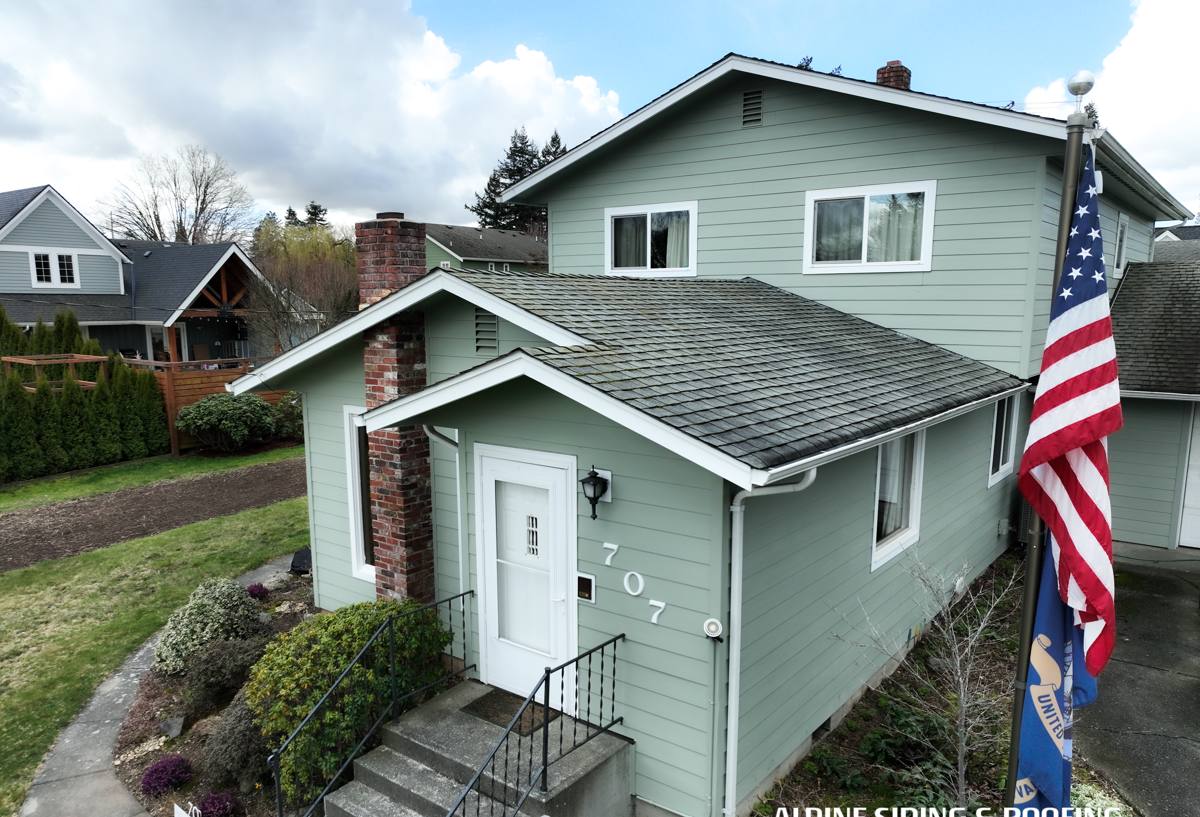
Why Metal Makes Sense Out Here
Metal roofing has earned its reputation in the Pacific Northwest for a few practical reasons, not because it's trendy. It sheds water fast, which matters when you're getting sustained rain rather than short bursts. It doesn't hold moisture against its surface the way organic materials can, which slows the moss and algae growth that's constant in this part of Skagit County. And a properly coated panel handles salt exposure better than untreated fasteners or raw metal ever will.
That said, metal isn't automatically the right call for every home, and it isn't automatically low-maintenance just because it's metal. The performance depends entirely on the panel type, the coating, the fastening system, and how the details around penetrations and edges are handled.
What Salt Air Actually Does to a Roof
Properties near the bay deal with airborne salt that settles on every exterior surface, roofing included. Over years, salt exposure accelerates corrosion on any metal that isn't properly coated or that uses mismatched, uncoated fasteners. This is why fastener selection and panel finish matter more in Bow than they would fifteen miles inland — a coating rated for general Pacific Northwest use isn't always the same as one rated for coastal exposure.
What Driving Rain and Shade Do Together
Bow gets plenty of straight-down rain, but it also gets wind-driven rain that pushes water sideways into laps, ridges, and flashing details that were never designed to shed water horizontally. Combine that with tree cover that keeps sections of a roof shaded and damp longer than open areas, and you get the conditions moss loves — and moss doesn't just sit there looking bad, it holds moisture against the roof surface and can work its way under panel edges and around fasteners over time.
What a Correct Metal Roof Installation Involves
A metal roof is only as good as the details underneath and around it. This is where a lot of the difference between a roof that performs for decades and one that causes headaches in five years actually gets decided.
Underlayment and Deck Prep
Before any panel goes down, the deck needs to be sound and dry, and the underlayment needs to be suited to metal roofing specifically — not a generic felt product. In a climate with this much sustained moisture, a quality synthetic or self-adhering underlayment at eaves, valleys, and penetrations is not optional. It's the backup layer that protects the structure if wind-driven rain ever gets past the panels themselves.
Fastener Selection
Fasteners are one of the most overlooked details on a metal roof, and they're often where corrosion starts first — especially this close to the water. Matching the fastener material and coating to the panel, and using proper washers and spacing, keeps small metal-on-metal reactions from turning into leaks or streaking down the road.
Flashing, Valleys, and Penetrations
Chimneys, vents, skylights, and valleys are where most roof leaks actually originate, regardless of the roofing material. On a metal roof, flashing needs to be formed and layered correctly so water is directed off the roof rather than channeled toward a seam or fastener line. Wind-driven rain finds any shortcut taken here.
Ventilation
A metal roof over a poorly ventilated attic can trap moisture underneath just as easily as any other roofing type. Proper intake and exhaust ventilation keeps condensation from building up on the underside of the deck, which matters in a region where indoor-outdoor temperature swings and persistent humidity are the norm for much of the year.
Panel Types and What They're Actually Good For
Not every metal roofing product performs the same way in coastal, damp, tree-covered conditions like Bow's. Here's a general comparison of what we typically see requested or recommended in this area.
| Panel Type | Typical Use | Coastal/Moss Considerations |
|---|---|---|
| Standing seam (concealed fastener) | Full roof replacements, higher-end residential | Fewer exposed fasteners means fewer corrosion points; excellent water shedding on steep pitches |
| Exposed-fastener panels (5V, corrugated) | Outbuildings, shops, budget-conscious residential | Performs well if fasteners and washers are rated for coastal exposure and checked periodically |
| Stone-coated steel | Homes wanting a shingle or shake appearance | Textured surface can trap debris and moisture in shaded, tree-covered lots — needs periodic clearing |
| Aluminum panels | Homes very close to saltwater exposure | Naturally corrosion-resistant, often preferred over steel directly along the water |
Maintenance Reality: What Metal Doesn't Eliminate
Metal roofing reduces certain problems but it doesn't make a roof maintenance-free, especially in Bow's mix of shade, moisture, and salt air. Homeowners considering the switch should plan for:
- Periodic clearing of needles, leaves, and debris from valleys and low-slope sections where trees overhang the roof
- Visual checks of fastener heads and flashing after major windstorms, which are common off the water in fall and winter
- Gutter maintenance, since clogged gutters back water up under eave edges regardless of roof material
- Occasional soft washing to remove moss and algae buildup in consistently shaded areas, using methods that won't damage panel coatings
- Prompt attention to any scuffed or scratched coating, since exposed bare metal is where corrosion gets a foothold
Our Process for Bow Metal Roofing Projects
Every project starts with an on-site assessment, not a phone estimate. We walk the roof, check the deck condition where accessible, look at existing ventilation, and take note of tree coverage, shade patterns, and proximity to open water — all of which shape our recommendation for panel type, coating, and underlayment.
From there we put together a straightforward scope: what's being removed, what underlayment and flashing details are going in, what panel and fastener system we're recommending and why, and a realistic timeline. We don't upsell products that don't fit the home, and we don't cut corners on the underlayment or flashing work just because it's not the visible part of the job — that's usually where roofs actually fail.
Once the work starts, our crew stays on the job through completion rather than bouncing between multiple sites, which matters for quality control on flashing and detail work that can't be rushed.
Cost Factors Homeowners Should Understand
| Factor | Why It Affects Price |
|---|---|
| Panel type and gauge | Standing seam and heavier-gauge panels cost more upfront than exposed-fastener systems |
| Roof complexity | Valleys, dormers, and multiple penetrations require more flashing labor |
| Tear-off vs. overlay | Removing an existing roof adds cost but allows deck inspection and repair |
| Access and pitch | Steep or hard-to-access roofs require more safety setup and labor time |
| Coating and fastener grade | Coastal-rated finishes and fasteners cost more but reduce long-term corrosion risk |
Broadly, metal roofing tends to sit above asphalt shingles in upfront cost but with a longer service life, which is worth weighing against how long you plan to own the home and how much annual maintenance you're willing to take on.
Why Local Experience with Bow Homes Matters
A crew that regularly works in Bow already knows which areas see the heaviest tree shade, which parts of the neighborhood catch the most wind off the water, and how quickly moss returns on north-facing slopes here compared to more open, sun-exposed lots elsewhere in Skagit County. That local pattern recognition shapes real decisions — underlayment choices, ventilation adjustments, fastener specs — rather than applying a one-size-fits-all install used everywhere from Bellingham to Everett.
It also means a crew that can respond quickly if something needs a look after a storm, rather than one that has to schedule a trip out from farther away.
Signs Your Current Roof May Be Struggling With Bow's Conditions
- Persistent moss or algae streaking on shaded slopes that returns shortly after cleaning
- Rust staining around fasteners, flashing, or panel seams
- Water stains or musty smell in the attic, especially after wind-driven storms
- Visible gaps or lifted edges at valleys, ridges, or penetrations
- Granule loss or curling if you currently have asphalt shingles and are considering a switch to metal
If you're seeing any of these, it's worth having someone take a real look rather than waiting for a small issue to become a deck-level repair.
If you're weighing metal roofing for a home in Bow, we're happy to come take a look and walk you through what your specific roof, tree coverage, and exposure actually call for — no pressure, no generic sales pitch. Use the form below to request a free estimate.