 Anacortes Siding
 Decks Built for Old Town Anacortes, Not a Catalog Photo
Old Town Anacortes sits close to the water on Fidalgo Island, and that proximity shapes everything about how an outdoor structure ages here. A deck built the way it might be built in a dry inland suburb will not hold up the same way a few blocks from the Anacortes waterfront. Salt-laden air, long stretches of driving rain, and a shoulder season where moss and algae get a real foothold all work against wood and hardware that isn't chosen and installed with this climate in mind. We build decks specifically for this environment, not a generic version of a deck that happens to sit in Skagit County.
This page is about one service, in one neighborhood: deck building for the homes of Old Town Anacortes. If you're weighing a new deck, a full rebuild of a tired one, or a repair that's turned into "just replace it," here's what actually matters for a structure that's going to sit outside in this climate for the next few decades.
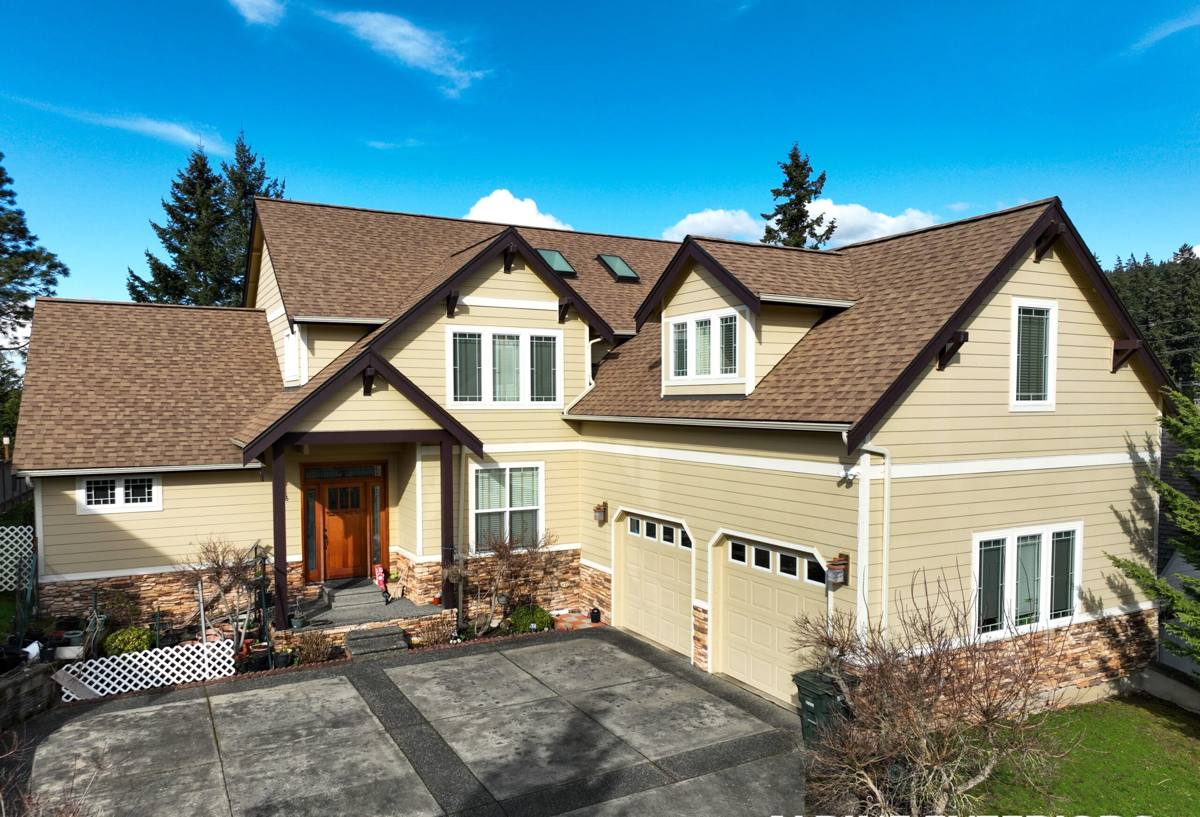
What Old Town Anacortes Homes Need From a Deck
Salt Air and Corrosion
Homes near the water deal with airborne salt that settles on every exposed surface, including fasteners, flashing, and connector hardware buried inside the structure. Standard hot-dip galvanized fasteners can hold up reasonably well inland, but in a marine-influenced setting they corrode faster than most homeowners expect. Corrosion in a visible railing bracket is an eyesore. Corrosion in a hidden joist hanger or ledger bolt is a structural problem that doesn't announce itself until something fails.
Driving Rain and Drainage
Anacortes gets weather that comes in sideways off the water, not just straight down. That means decking boards, ledger connections, and any transition where the deck meets the house siding need to shed water actively, not just tolerate it sitting there. Poor flashing at the ledger board is one of the most common causes of hidden rot we find when we're called out to inspect an older deck — the surface looks fine, but the wall behind it has been wet for years.
Moss, Shade, and Slip Hazards
Old Town Anacortes has plenty of mature trees and shaded lots, which is part of what makes the neighborhood attractive — and part of what feeds moss and algae growth on any north-facing or heavily shaded deck surface. Beyond the maintenance headache, a mossy deck board is genuinely slippery, especially on stairs. Board selection, gapping, and even deck orientation all factor into how much of a moss problem you'll be fighting every fall and winter.
Choosing the Right Decking Material
There's no single "best" decking material — there's a best fit for your budget, your maintenance appetite, and how exposed your particular lot is to sun, shade, and salt air. Here's how the common options actually compare for a home in this part of Skagit County.
| Material | Upfront Cost | Maintenance | How It Handles This Climate |
|---|---|---|---|
| Pressure-treated wood | Lowest | Annual cleaning, periodic staining/sealing | Fine if maintained; neglected boards absorb moisture and moss takes hold fast |
| Cedar | Moderate | Regular sealing to hold color and resist moisture | Naturally rot-resistant but still needs upkeep against constant damp |
| Capped composite | Higher | Occasional washing, no staining | Resists moisture and moss buildup well; consistent surface for wet weather |
| PVC decking | Highest | Lowest — mostly rinsing | Fully moisture-proof board; strongest option where shade and dampness are constant |
We'll walk through this table with you against your actual lot — how much sun the deck gets, how close you are to the water, and how much time you want to spend maintaining it — rather than steering everyone toward the same product.
What a Correctly Built Deck Involves
The decking surface is the part everyone sees, but it's the smallest factor in whether a deck lasts. The parts that determine longevity are mostly hidden once the job is done.
- Footings sized and set to frost depth and soil conditions — undersized or shallow footings are the root cause of most sagging and heaving decks we get called to fix.
- Ledger board flashing that actually sheds water away from the house — not just caulk, which fails long before the deck does.
- Joist spacing matched to the decking material — composite and PVC boards often need tighter joist spacing than lumber; using lumber spacing under composite boards leads to bounce and premature sagging.
- Corrosion-resistant structural hardware throughout — not just on the parts that show.
- Proper gapping between boards for drainage and airflow, which directly affects how much moss and mildew you'll deal with later.
- Stair and railing connections built to code, not just to "feel solid" — this is where most deck injuries happen when it's skipped.
Fasteners and Hardware for Coastal Conditions
Given the salt air common to homes near the Anacortes waterfront, we default to stainless steel or coated fasteners rated for corrosive environments on structural connections, rather than standard galvanized hardware. It costs more upfront. It also means the hardware holding your deck together isn't quietly weakening behind boards you can't see. This is a place where cutting cost on materials creates a problem that's expensive and disruptive to fix later, since it usually means tearing up decking to get at the frame.
Our Deck Building Process
Every deck we build in Old Town Anacortes follows the same sequence, adjusted for your specific lot, sun exposure, and how the house is oriented relative to the weather.
- On-site assessment — we look at drainage, sun/shade exposure, existing structure if there is one, and how the deck will tie into the house.
- Design and material selection — sized to how you'll actually use the space, with decking material chosen against your maintenance preference and budget.
- Permitting — most decks attached to the house or built above a certain height require a permit through the City of Anacortes; we handle that process rather than leaving it on you.
- Footings and framing — built to spec for our soil and climate conditions, with corrosion-resistant hardware throughout.
- Ledger flashing and waterproofing — done correctly at the house connection, since this is the single most common failure point on older decks.
- Decking, railing, and stairs — installed with proper gapping and code-compliant railing and stair connections.
- Final walkthrough — we go over the finished deck and what maintenance it actually needs, honestly, not a generic care sheet.
Maintenance Checklist for Anacortes Deck Owners
A deck built correctly still needs some seasonal attention in this climate. Here's a realistic list for what keeps a deck in this area performing well:
- Sweep leaves and debris off the deck surface regularly through fall — trapped organic matter is what feeds moss and holds moisture against boards.
- Rinse or lightly scrub shaded and north-facing sections at least once or twice a year to stay ahead of moss and algae.
- Check and clear drainage gaps between boards so water isn't pooling anywhere on the surface.
- Inspect railings and stair connections annually for looseness — hardware working loose is often the first sign of a problem, not the last.
- For wood decks, reseal or restain on the schedule the product calls for; skipping a cycle in a wet climate compounds fast.
- Look at the ledger flashing where the deck meets the house once a year, especially after a hard winter.
Why Hire a Crew That Already Works Old Town Anacortes
A deck builder who mostly works drier, inland areas will make reasonable decisions for that climate — decisions that aren't necessarily wrong, just not matched to a home a few blocks from Puget Sound. Knowing how much moss shows up on a shaded, north-facing deck by the second winter, or which hardware actually holds up against salt air over years rather than months, comes from building and maintaining decks in this specific setting, not from a general contracting background.
We also know the practical side: what the City of Anacortes permitting process looks like for deck projects, how older Old Town homes are typically framed and sided, and what tends to go wrong on decks in this neighborhood specifically, because we've been called out to fix it. That local pattern recognition is worth as much as any product choice on the material list.
Get an Honest Look at Your Deck Project
Whether you're planning a new deck, replacing one that's past its prime, or just want an honest read on whether an existing deck is sound, we're glad to come take a look. We'll give you a straightforward assessment, walk through material options that make sense for your lot's sun and shade, and put together a free, no-pressure estimate using the form below.